Category Archives: Travels

From the edge of the boreal

I’ve just returned from a short trip to northwest Ontario where I listened to some trees and rocks (a purpose that did little to impress when recounted to immigration officials).

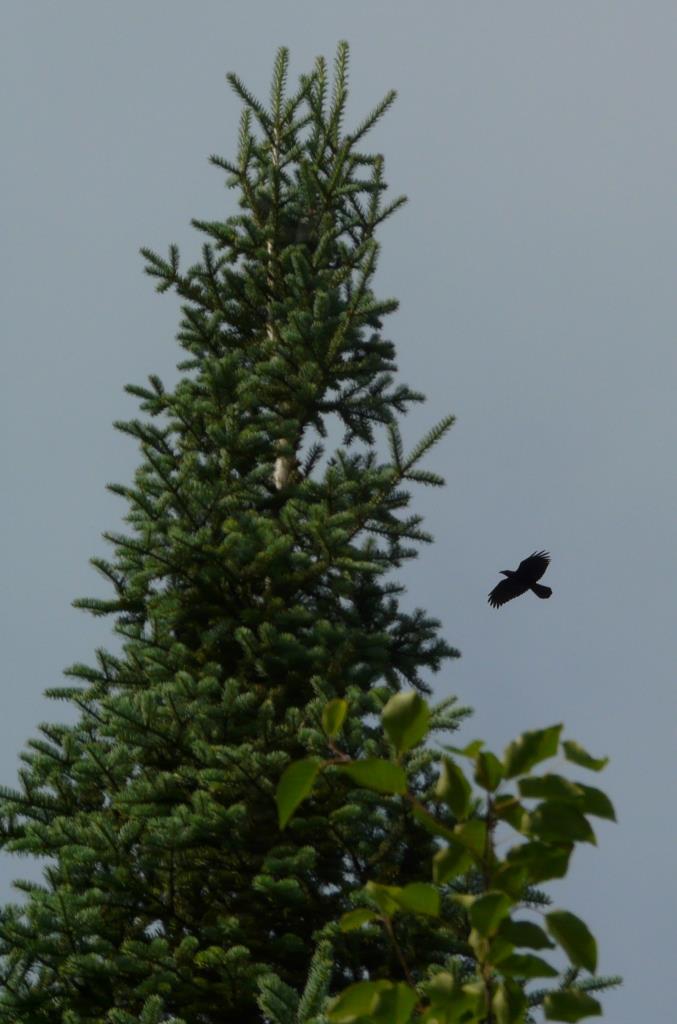
KakabekaViewAmong the boreal delights were ravens, a species that according to the Objibwe, the First Nations people of the region, brought the world into being and gave the two mainstays of life: water and fish. In the presence of these highly social, intelligent, garrulous birds it is obvious why the Objibwe regard ravens with such respect. Awesome creatures.
ravenfir

Raven fly-by. Balsam fir and serviceberry in foreground.

A fledgling raven sat in the tree above my tent, calling to its sib and two parents. The following recording, made amid a haze of mosquitoes, captures some of the birds’ vocalizations. The loud, insistent squawk is the youngster. The Objibwe name for raven is gaagaagi and young ravens are known as gaagaagiins, names that capture the talkative nature of these birds.

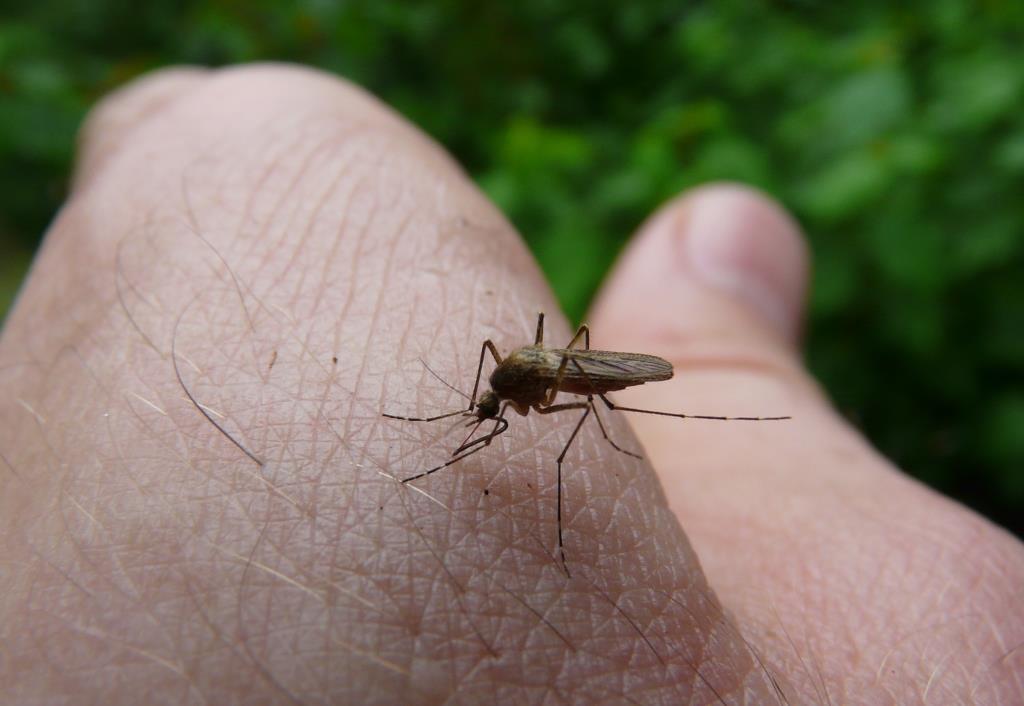
And as we listen, insects gather to gather atoms for the regional taxation system. Naked mammals are in the highest tax bracket. Note the backcurved sheath, exposing the penetrating stylet. Her hind legs are twitching in delight.
mossiekakabekaUnder the ravens, insects and balsam firs: old, old rocks.

chertBIFThese cherts (from the Gunflint formation) are 1.88 billion years old and contain the oldest known fossils of any lifeform in North America. Until some Australian and African finds beat the record, they were the oldest known fossils from anywhere: life’s first recorded mark upon the Universe. J. W. Schopf’s 2000 PNAS paper has some great photos of these microscopic cells, our (great)^1,880,000,000-grandparents.

In lieu of interpretative signage at this site of Universal importance, we have ♥KIMI blazed on a fir tree. What is amazing to me is not that someone would put their mark on a tree, but that Kimi or her friend came walking in the boreal forest prepared with a can of pink spraypaint just in case. Gotta love Homo sapiens’ complicated inner world, all jumping out of our nerve cells: those microfossils gave rise to some interesting phenomena.
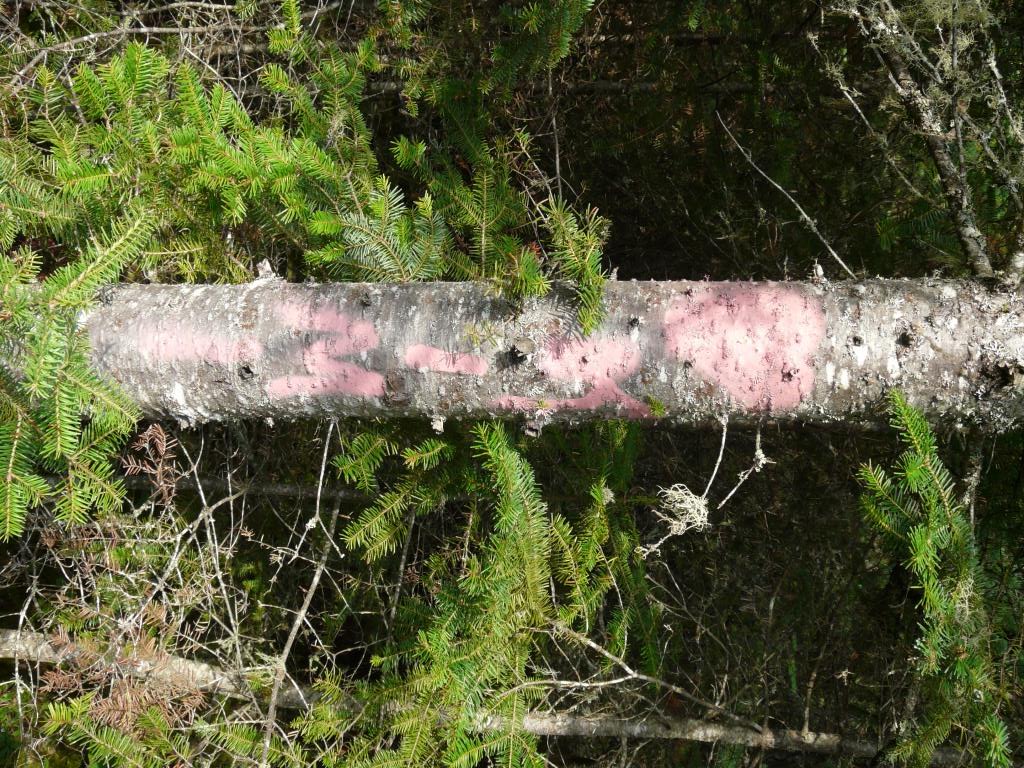
kimi

The lichens grow on, poking fresh new growth from under their pigmented parts. If we knew the growth rate of the lichens, we could date this new Gunflint stratum quite accurately.

kimilichen

Alligator flows down, flies up

Dead alligators move fast. In just a few days, all the heft of the alligator’s body has gone, like smoke in a heavy wind. Flies and beetles carried some of the body’s remains down; putrefying bacteria and purifying vultures carried other molecules aloft.

All that remains are bones and rubbery skin. A deflated inner tube lies over limestone rock fragments.

alligatordeadalligatordead3The most unusual of the animal’s bones are the dermal scutes, bony plates that form an exoskeleton down the animal’s back. The scutes of young alligators are covered in skin, but this quickly wears away. The alligator therefore has both an endoskeleton (like us) and an exoskeleton (like the arthropods).

alligatordead2

Happy 4th of July from the eroding edge of the USA.

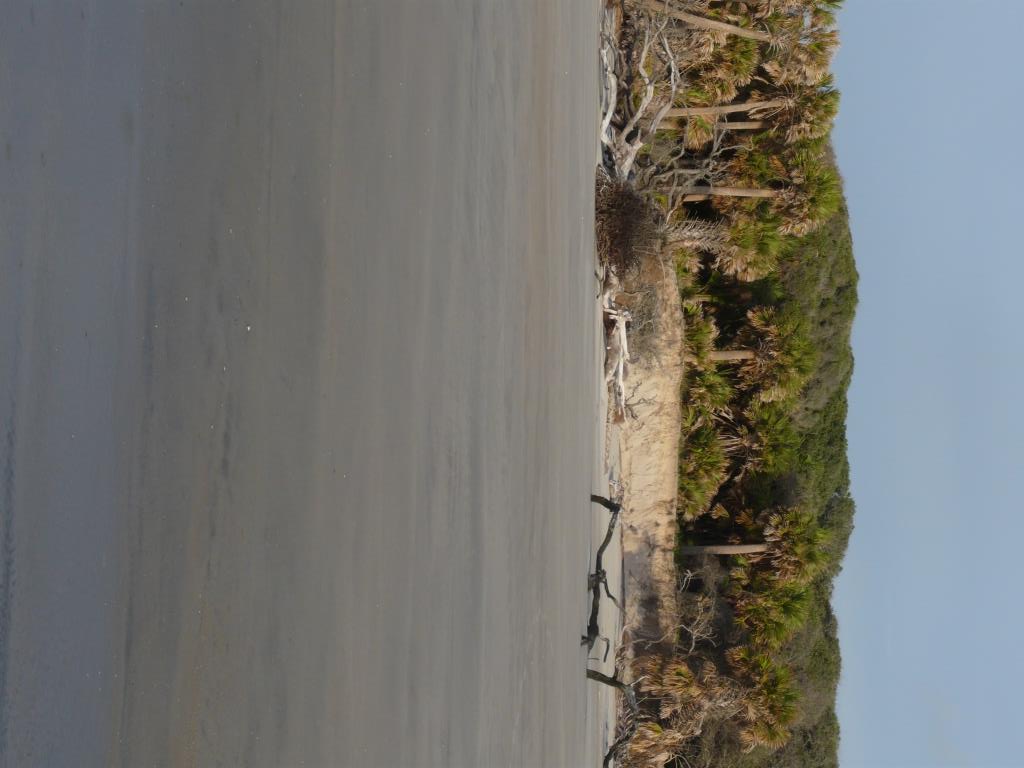
blufferosionI’m on St Catherine’s Island, spending the day working with students on data analysis and presentations. No rest for those on a schedule, although we did have a class reading of the Declaration.

Of note to patriots: the ocean appears to be robbing the USA of land. Diminishment. The coast is eroding here at a rate of at least one and a half meters per year. A little further south, the rate is closer to seven meters each year. For the whole stretch of coast on St Catherine’s Island, only one or two small areas are accreting (growing), the rest is in retreat. Damming of rivers and dredging of sea ports starve the beach of new material. This, combined with a rising sea level, results in loss of land.

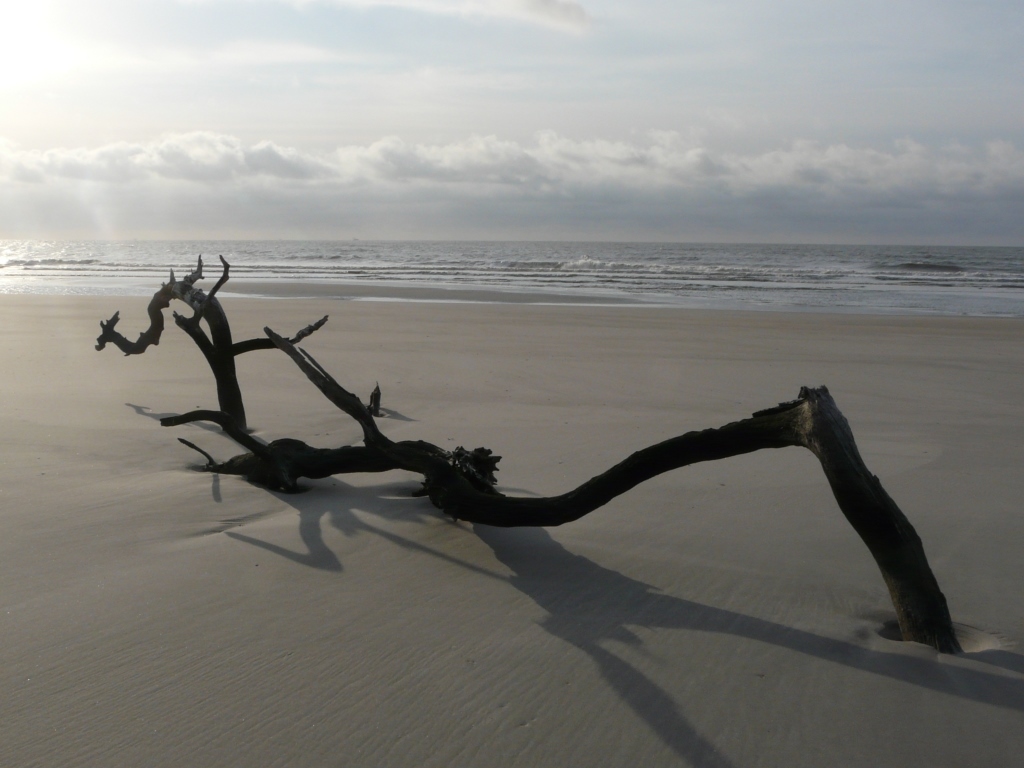
Erosion first exposes the roots of palms, live oaks and other shoreline vegetation, then topples the trees, leaving picturesque “boneyards.”

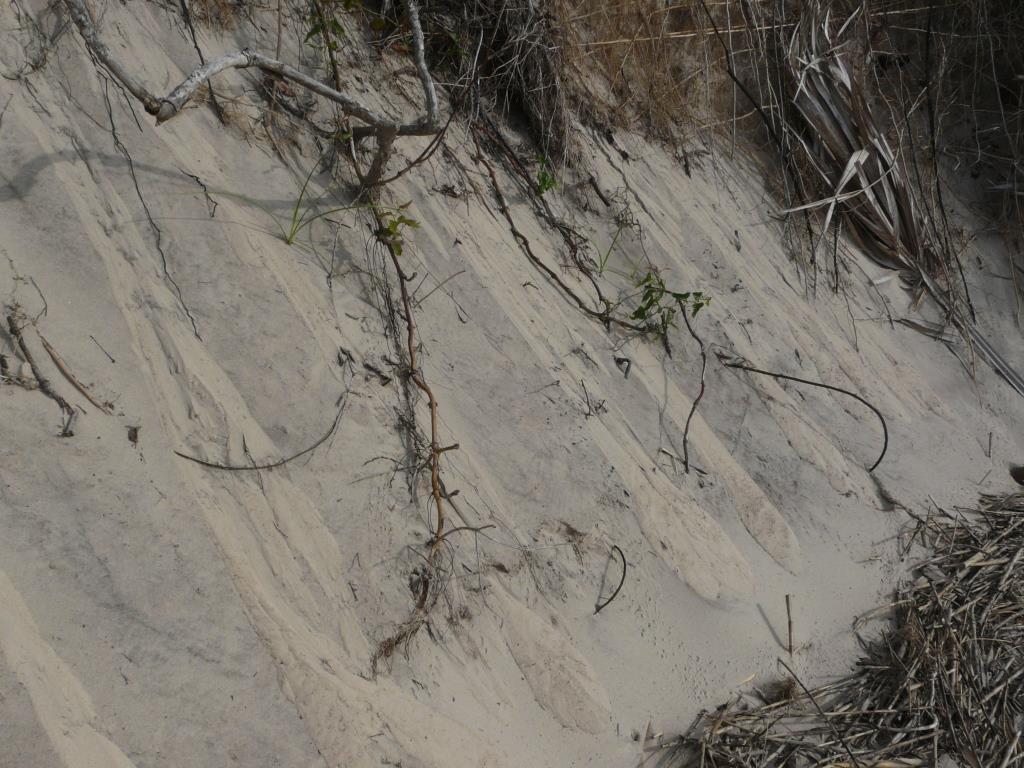
palm rootsboneyarddeadwoodStorms cause much of the erosion, but even on calm days the steep slope of the sea-facing bluffs are continually disturbed by small landslides: rivulets of North America sliding into the Atlantic.

erodingsandCoastal erosion is underway over much of the eastern shore of the continent. Huge areas  of land are lost from the Mississippi delta every year. How does all this add up? Does erosion outpace accretion on a country-wide level? Certainly as the world warms, it will. But is the USA smaller today than it was in 1776? The answer is hard to come by, but it seems that for the last few decades at least: yes, shrinkage is occurring.

Eastern diamondback rattlesnake

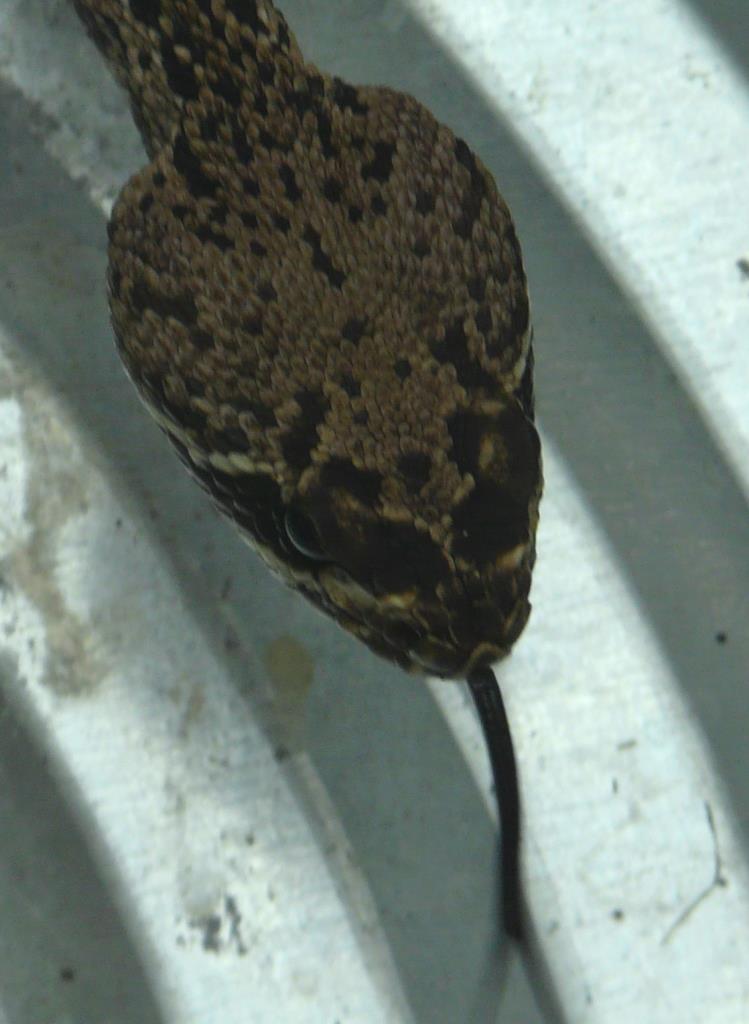
In the last few weeks, the genus Crotalus seems to be sliding its coils into my life with some regularity. This one was nestled in the short grass in front of the cabin that I’m staying in on St Catherine’s Island. A good reason to remember the flashlight at night.

The diamond markings (and face mask — like a raccoon) on this species (C. adamanteus) are quite different from the mottled colors of the timber rattlesnake (C. horridus). The diamondback lives in the coastal plain and prefers open piney woods, meadows and the edges of salt marshes. All these habitats are in decline, so the species is not doing well in most places. Extensive persecution doesn’t help. St Catherine’s Island is one exception: the animals are fairly common there. This one was relocated to an area away from heavy foot traffic.

eastern diamondback rattlesnake 009eastern diamondback rattlesnake

Flotsam and jetsam

Marine debris found in 1 by 10 meter transects along the wrack line on St Catherine’s Island, GA. Each photo is the collection of all man-made objects greater than 1 cm long within the transect. These were collected this morning by students in my part of Sewanee’s Island Ecology program. This exercise can be thought of as proto-archaeology or a study of the ecological slip-stream of a successful vertebrate species. The mayo jar with fossilizing mayo still present within was my favorite find.

For a closer look, click on the photos.

For recent news on debris that is too heavy to wash ashore, see here.

Turtle tracks

Tracks left by young snapping turtle. Body length, about two inches. May 1st, Sewanee TN.

Tracks left by young snapping turtle. Body length: about two inches. May 1st, 2013, Sewanee TN. Habitat: puddle on gravel road between Alabama and Willie Six Avenues.

loggerhead crawl2

Tracks left by adult female loggerhead sea turtle. Body length: about forty inches. July 6th, 2012, St Catherine’s Island, GA. Habitat: large salty puddle between America and Africa.

Arboreal bear

Todd Crabtree, a naturalist extraordinaire and botanist at Tennessee’s Division of Natural Areas, sent me the following photos as a follow-up to my discussion of bear corn. Todd was leading a hike above Abrams Creek during the annual Smoky Mountain Wildflower Pilgrimage and saw this bear high in an ash tree. The photos are taken from a ridge looking down into the tree tops. The bear appeared to be nipping at the ash flowers.

BearInAshBearInAshCloseBearDescends

Photo Credits: Todd Crabtree, 2013.

Although this is a startling sight (how do the branches hold that weight?) studies of black bears report this kind of behavior across the species’ range. In some places, the bears’ hunger for tree flowers is a significant source of damage for many trees. In southeast Alaska, for example, bears like to climb cottonwoods, staying close to the trunk then breaking off branches to munch on catkins.

Omnivore defined.

A nature walk for the Supreme Court Justices: my op-ed in the NY Times

This morning the New York Times published my op-ed about nature and same-sex marriage.

Please follow the link above to read the article. What follows is an abbreviated list of links to documents that are relevant to the piece.

Supreme Court documents from docket. Specifically, I quote from: 12-144 Brief of Petitioners on the Merits.

Pope Benedict’s Christmas greetings to the Roman Curia

Roy Moore’s re-election and statements.

Language from the TN Bill that died in the State House this week.

Oscar Wilde trial quotes: here and here.

Japanese cherries: Two cultivars make up most of the Washington DC cherries, the Yoshino Cherry and the Kwanzan Cherry. Photos of bisexual flowers here and here and here.

Elms: The whole genus Ulmus, to which elms belong, is bisexual (e.g., page 369 in Flora of North America, Volume 3. 1997. Edited by the Flora of North America Editorial Committee. Oxford University Press).

Ginkgo: Peter Crane’s 2013 book, Ginkgo, Yale Univ Press discusses both the separation of male and female (page 53) and “spontaneous partial sexual switches” (pages 63-64).

Controversy in the medical literature about how human intersex: Blackless, Fausto-Sterling, and Sax.

Data on the frequency of homosexual bonds and sex in birds: MacFarlane.

The Forest Unseen paperback edition; copies for course adoption available

paperback3DThe Penguin paperback edition of The Forest Unseen went on sale this week. Having read and enjoyed hundreds of books adorned with the smart little penguin, I’m very happy to see my book published under this imprint. All the other editions of the book — the hardcover, the various e-books — are still available. I’m hoping that this new edition will make the book available and attractive to new readers.

One such group of readers are students. The book is already in use in a few biology, environmental studies, literature, religion and philosophy classes, with great results so far. If you’re a teacher and would like an examination copy, Penguin has free copies available for “course-use consideration.” If you’re interested, please e-mail academic@penguin.com with your shipping address, course title and enrollment, and decision date. Please include “The Forest Unseen, ISBN: 978-0-14-312294-4” in the email. Penguin does not ship to P.O. boxes, so you’ll need to give a physical address. If you encounter any problems with the process (unlikely), just let me know and I’ll make sure that the books get where they need to go.

I’d be very grateful if you could spread the word to friends and colleagues who might be interested. (To make sharing easier here is the shortlink for this webpage: http://wp.me/pKjPz-19T)

To the many readers who have supported the book since its publication last year: Thank you! I’ve been bowled over by your generosity and enthusiasm.

Rambles will continue tomorrow. On the docket (literally): sex, nature and the Supreme Court, with a little help from the Grey Lady.