Author Archives: David George Haskell

Upcoming events: The Forest Unseen

This weekend and next week I have several book readings and lectures in east and middle Tennessee. If you live close by, I hope that you’ll consider attending. All are welcome. Please email me (dhaskell@sewanee.edu) if you have questions.

Chattanooga, TN: Artifact, 6-9pm, Saturday June 23rd, 2012. Hand-made Book Fair. In the words of the organizers: “It will be weird, it will be awesome, there will be useful handmade books on sale starting at 10 bucks! There will be a reading! There will be two readings! BYO refreshments, though we will have a short supply of wine at first.” I’ll do a short reading, as will Aubrey Lenahan. 1080 Duncan Ave, Chattanooga, TN. The folks at Artifact have designed a great poster which you can view on their website. Free and open to the public.

Nashville, TN: Sigourney Cheek Literary Garden, Cheekwood, 1200 Forrest Park Drive, Nashville, Tennessee. 3pm, Sunday, June 24th, 2012. I’ll give a reading and talk about the context for the book. There is no additional charge for the event but the usual Cheekwood admission price applies ($12 for adults; discounts for students, retired, etc).

Sewanee, TN: Sewanee School of Letters. Gailor Auditorium, Gailor Hall, University of the South. 4:30pm, Wednesday, 27th June, 2012. I’m speaking as part of the Guest Lectures series. Free and open to the public.

Monteagle, TN: Monteagle Assembly lecture. 11am, Thursday, 28th June, 2012. In Warren Chapel. The Assembly was “established in 1882 as a Chautauqua, a place where our members and guests gather in the summer for fellowship and for spiritual and intellectual growth.” If you’re coming from outside the Assembly, allow some extra time to get through the gates, parking, find the lecture, etc. One of the Assembly’s charms is its forest-like labyrinthine layout. I believe that this lecture is free and open to the public.

And, for a break from “What do you read, my lord? / Words, words, words,” David Coe and I are leading the annual butterfly census (our 15th year, I think) on Saturday June 30th. We leave from the Lake Cheston Pavilion in Sewanee at 9am, then the TN Ave Memorial Cross at 1pm. This is part of the continent-wide annual NABA survey, so our data is combined with data from hundreds of other surveys to give a large-scale and long-term view of butterfly populations.

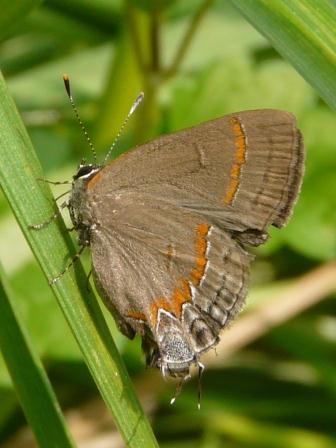
As a sampler, here is a red-banded hairstreak that I photographed last April:
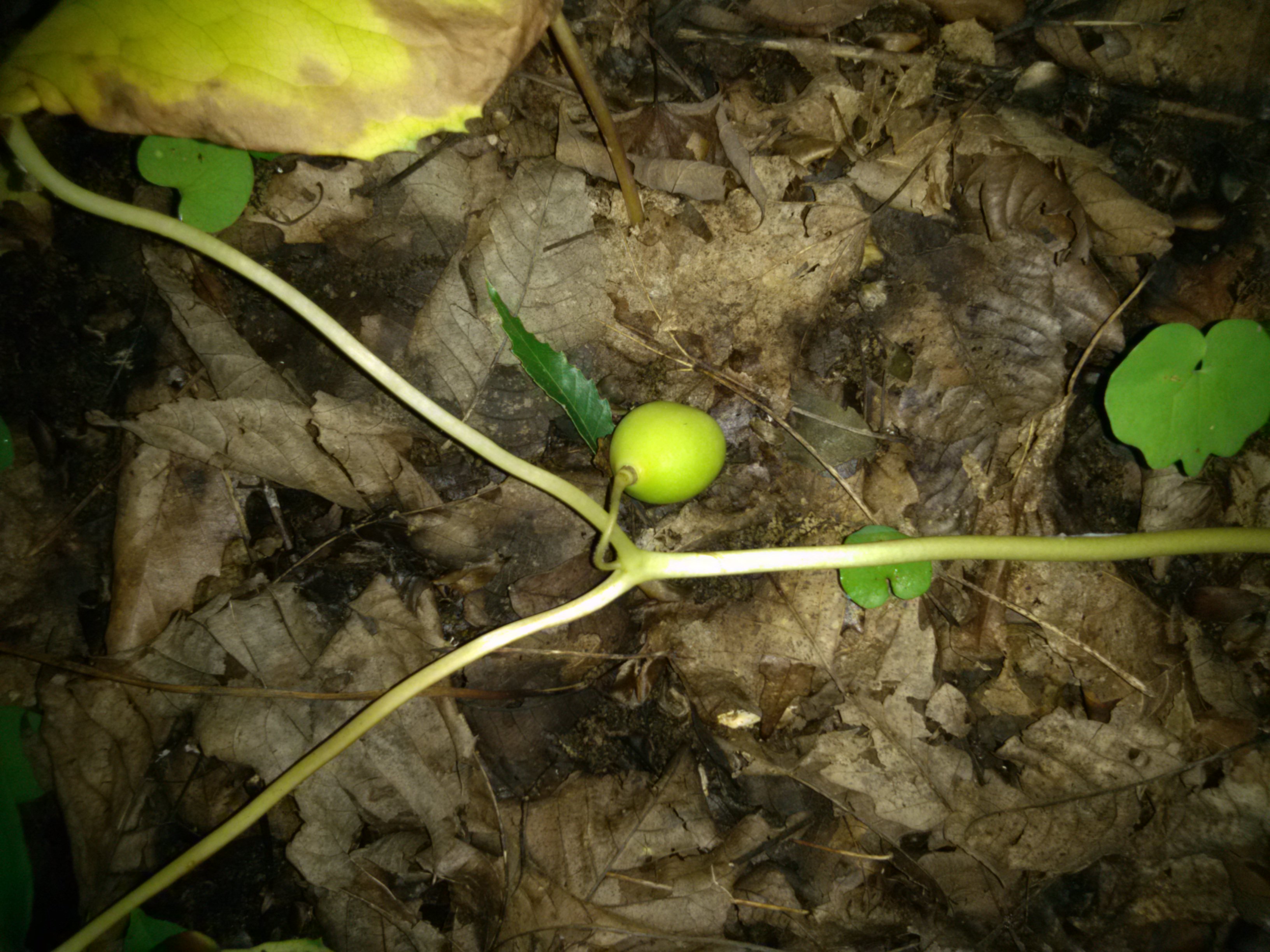
Mayapple fruit

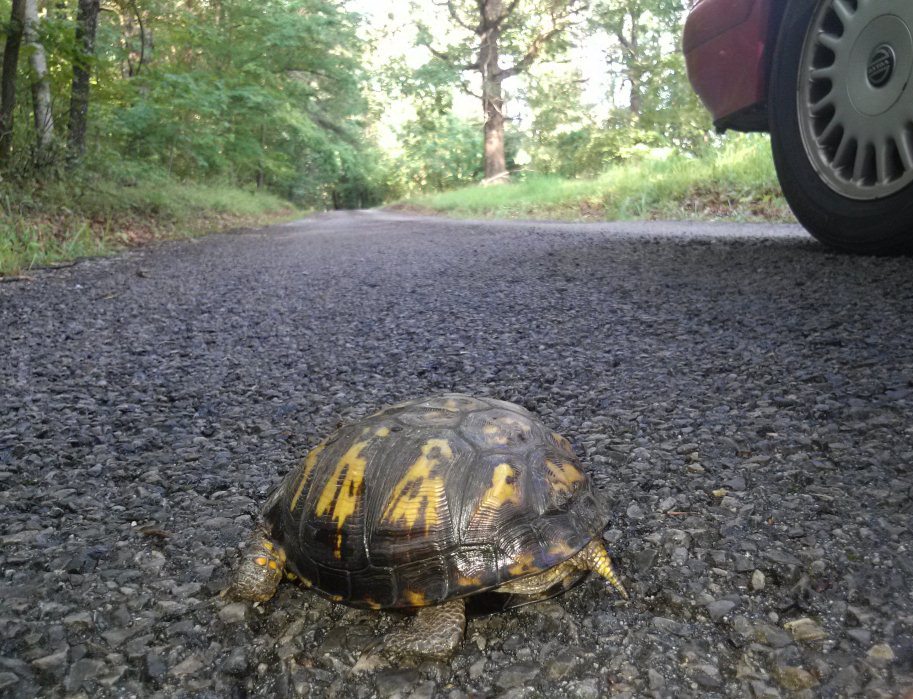
On a recent walk in Shakerag Hollow I ran across this mayapple (Podophyllum peltatum) plant lying prostrate on the ground, its fruit resting on the leaf litter surface. This is box turtle food. Turtles love the fruits and serve as seed dispersers for the plant. The fruit is the size of a small lemon.

Mayapple contains chemicals that are used in anti-cancer drugs, so our health depends, in small part, on the ecological services provided by box turtles. One more reason to drive carefully? I moved this fellow (red eyes, domed plastron = a male) out of the way last week…

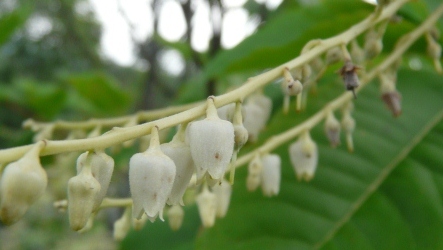
Sourwood in bloom

Most local trees bloom in the spring or early summer, but sourwood (Oxydendrum arboreum) waits until summer is well underway to grow its graceful clusters of small white flowers. These clusters arch out from the tips of twigs and, although each flower is quite small, the mass of flowers is visible from some distance. Bees love the nectar of this tree and in places where sourwood is plentiful “sourwood honey” is considered a fine complement to a slice of bread (I’m afraid that my bee-keeping knows no such temporal precision — whatever the bees gather over the course of the summer is what I get in the jar).

Sourwood is something of a botanical misfit. It grows as a small tree, yet its closest local relatives in the “Heath” family (Ericaceae) are all shrubs or tiny herbaceous flowers: mountain laurel, blueberry, azalea, wintergreen, and so forth. Like these kin, sourwood grows mostly on poor, acidic soils and relies on symbiotic fungi to help its roots find nutrients in these challenging conditions. Sourwood doesn’t quite fit with the “trees” either. Even when full grown, it is never as large as the oaks and hickories with which it grows; its trunk is seldom straight, usually leaning to one side; and, like its cousins the shrubs, it often sprouts more than one stem from the base.

The kinship to blueberries is evident in the flowers which are shaped like urns or bells. Unlike blueberries, sourwood fruits are, unfortunately, mere dry capsules.

Rejuvenating redwoods, dying oaks, The Grateful Dead, et al.

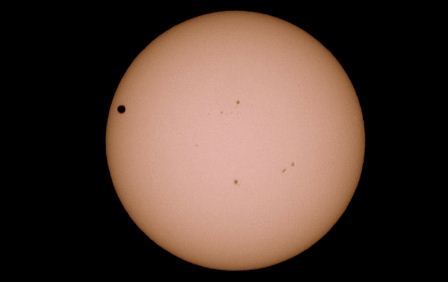
The last few posts have suffered from an excess of coherence and narrative continuity, so here are some true ramblings from Santa Cruz, CA (and for those who are still in awe of planetary motion, my last post also has some new Venus photos from a grad student that I met at the viewing at UCSC who kindly shared his images via email)…

Santa Cruz sits at the intersection of the cold ocean, the foggy redwood forests, and the blazing hot oak savannahs. Walking for thirty minutes in almost any direction will carry you into a new ecosystem. So variegation of microclimate is extreme.

San Francisco was built from lime and wood taken from this area, so almost all the forests are full of redwood trees growing in little clusters around huge, hundred-year-old stumps. The younger trees are still impressive: very very tall. There is almost no light in the understory, so even on a bright sunny noon, you gaze through the aromatic gloom. These trees drink water from the air. Even though their roots are dry, they get enough moisture from the near daily dousing in ocean fog to keep growing even in rainless months. How do we know this? The oxygen isotope ratios in fog differ from those in rain, so plant physiologists can read the isotopic “fingerprint” of oxygen in the trees, then deduce the source of water.

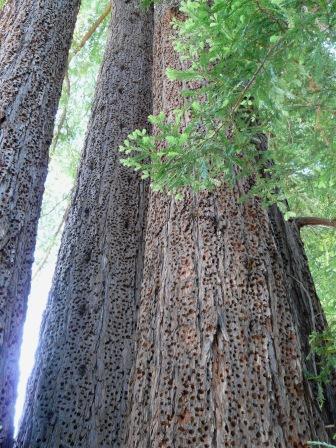
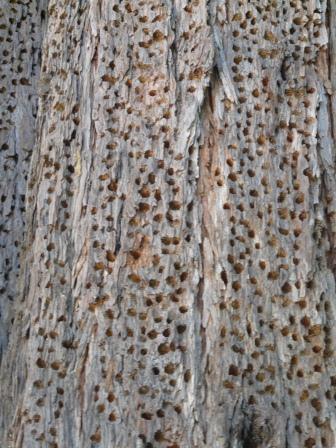
The redwood below has been adopted and turned into a granary by a family of acorn woodpeckers. Each hole is a storage place for an acorn. The family makes its nest in the tree then defends their nest, their stored food, and their honor from other woodpecker families, all of whom are thieves and cheats. Very much like Scotland, with less rain.

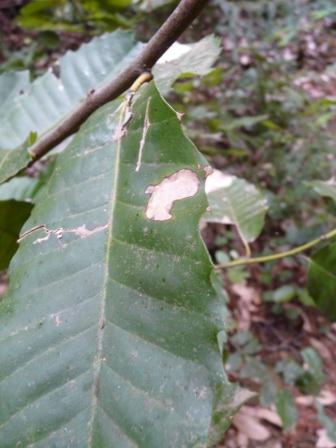
Oaks in California are being slammed by “sudden oak death,” a descriptive enough name for the disease (caused by an exotic species of protist, Phytophthora ramorum, the same genus that causes blight in potatoes, die-offs in peppers, and all kinds of destruction in many other tree species). The disease starts as lesions on leaves (these are tan oak leaves)…

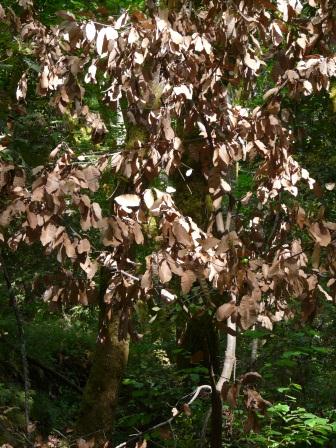
…then kills the whole tree in about a year. Most of the tan oaks in the understory seemed to have the disease. (And, yes, I thoroughly washed my shoes on my return to Tennessee).

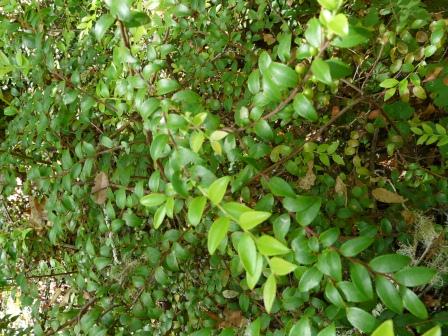
Other understory plants are doing much better. These are huckleberries, a close relative of the blueberry:

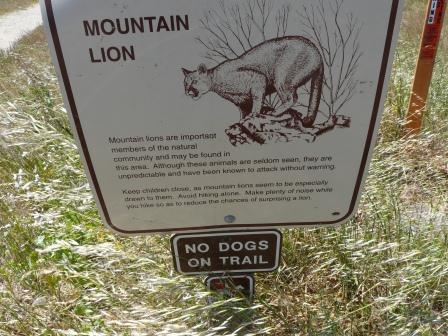
Mountain lions roam the woods and occasionally come into town. Warning signs are dotted over campus and the state parks. It is not clear whether the “no dogs” part of the sign is meant as a statement of a regulation or a summary of the outcome of past events:

The coast is continually raked by an incredible strong cold wind. Seabirds are abundant. These are Brandt’s cormorants:

Snails were common in the sandy coastal scrub. They were all, as far as I could tell, the invasive European immigrant, Cornu aspserum, the same species favored in France for eating:

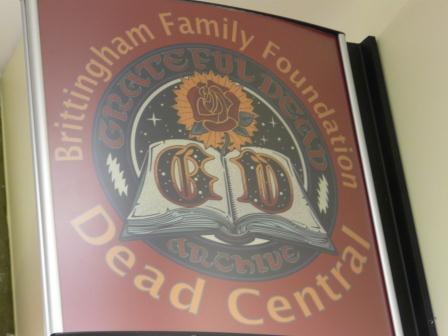
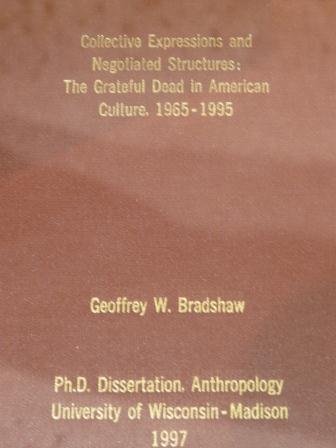
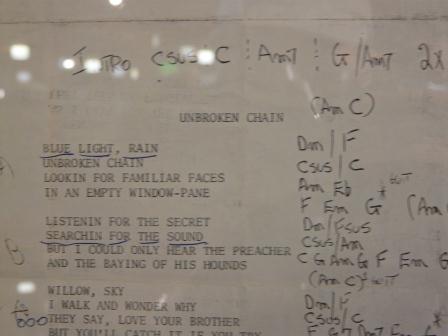
Back on campus, we briefly visited the University library and the Archives of the Grateful Dead, a carefully curated collection of posters, notes, letters, and so forth relating to the band’s long tenure. I was particularly taken by the Ph.D. theses. I know that several of the followers of this blog are Dead fans, so take note: the official opening is coming up at the end of June. There is a slight air of incongruence about an academic archive of Grateful Dead documents, but this strangeness, even dissonance, would have pleased Mr. Garcia, I think.

My visit to Santa Cruz was sponsored by the Department of Environmental Studies and initiated by the graduate students in the department who brought me in as their seminar speaker for this semester. Thank you. And special thank you to Leighton Reid and Rachel Brown who welcomed me and showed me around during my visit.

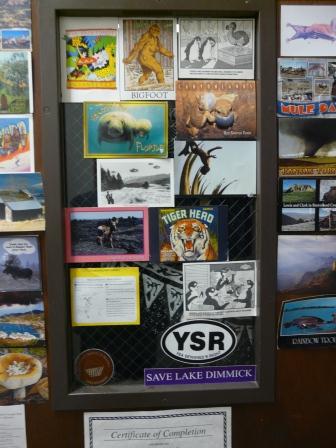
I’ll close with a shot of a door to a grad student office, chosen almost at random. Sewanee residents may remember those great students who protested the Lake Dimmick development, packing Convocation Hall and speaking with forceful clarity to the Regents. That spirit has now been carried to some far flung parts of the world.

Mass (viewing of) transit

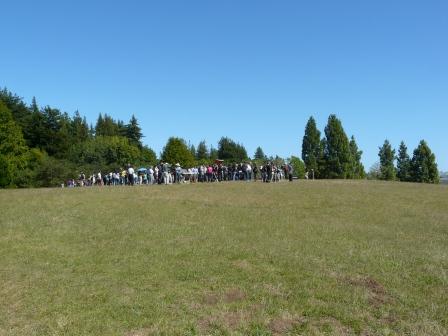
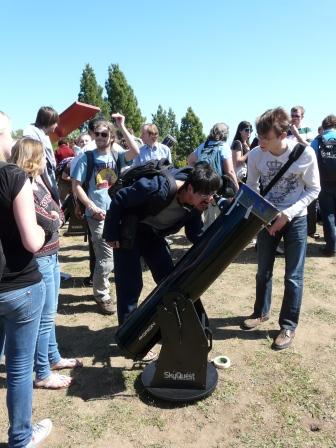
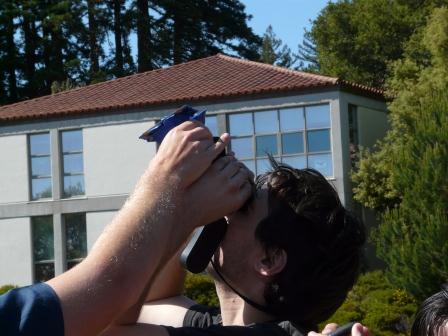
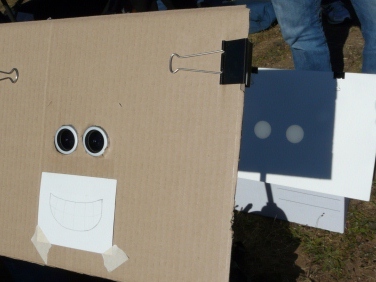
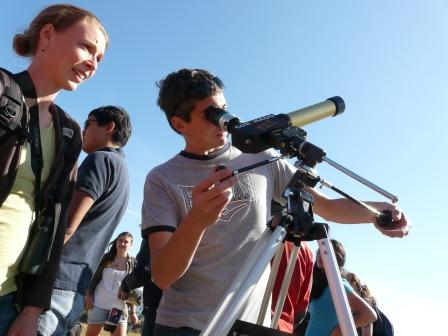
The astronomers at UC Santa Cruz set up a motley army of observational devices on a small knoll on the edge of campus. A hundred or so people squinted through eyepieces, metal tubes, silvery sunglasses with paper frames, kiddie binoculars strapped to paper flipcharts, and heavily shielded cameras. All gazed up.

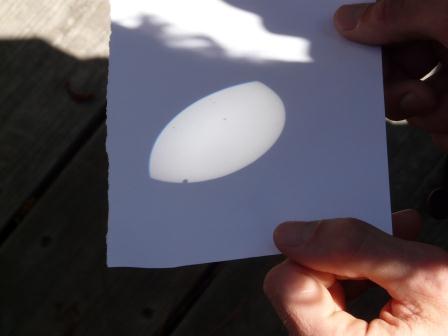
And there was Venus, an inscrutable black disc pimpling the bright sun. I expected that she’d hurl herself across the sky, but she took her time, lingering for hours as she scribed her twisted route. Most surprising of all was the frequency with which the knobs on the telescopes had to be tweaked to reorient the lens. We live on a surface of a planet that is spinning terribly fast. This was a disorienting realization, a jarring yank out of the complacency of my pathetically small day-to-day “world” and into the enormous reality of the chunk of flying space rock that we live on. I felt that I ought really to hold onto something to keep my feet steady as my eyes watched a gyrating Venus from the window of this bullet-train earth. Instead, I pulled myself together and snapped some photos.

The transit’s start:

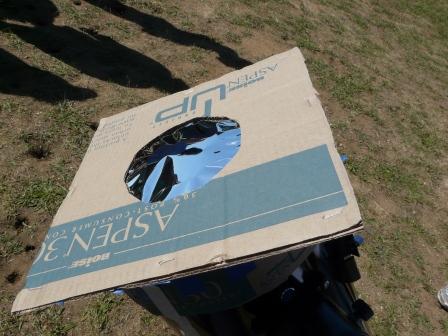
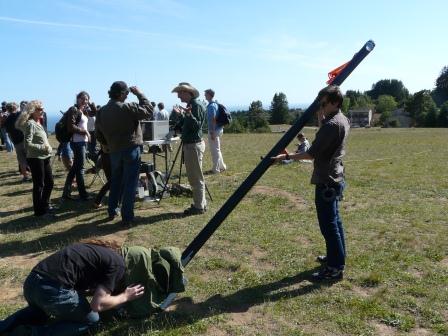
Various viewing devices:

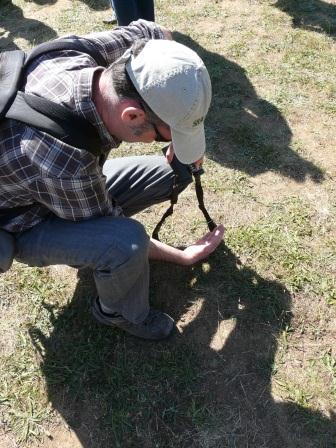
I’m focusing the hot image onto my tender palm using binoculars:

This scope was incredible. The filters in the scope filtered out everything except the 656.28 nm wavelength (see here for the cool background — this is the wavelength created by one type of electron change in Hydrogen). The roiling surface of the sun was visible; flares and loops of light arched from the sun’s edge:

Place your head inside the box at the end of the long tube and observe the image formed by the pinhole:

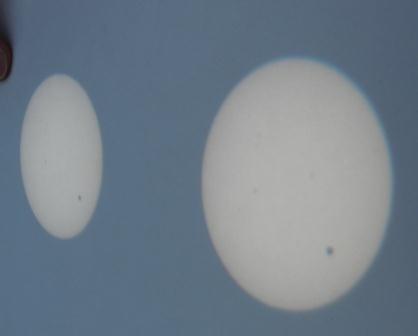
Out of their usual context, binoculars are weird. These photons have traveled together all the way from the sun to this spot on Earth, only to be split apart at the last moment. Venus and her twin:

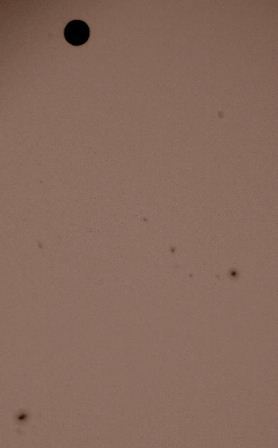
The following photos come from UCSC grad student Tuguldur Sukhbold who was taking photos through his shielded camera. I asked whether he would mind sharing the results and he was kind enough to send me these (with sunspots also visible):

Banana slugs

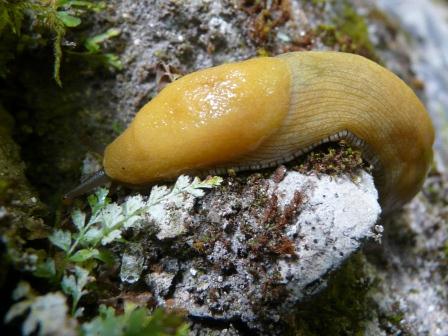
The hilly redwood forests of Santa Cruz are home to a spectacular gastropod, the Slender Banana Slug (Ariolimax dolichophallus). These sulfurous-yellow slugs are large: many are over six inches long. They creep through the forest floor and across trails in broad daylight, munching on fallen leaves, fungi, and low-growing plants. Apparently, they don’t eat redwood seedlings, so they keep the competition down in the understory, helping the redwoods to regenerate.

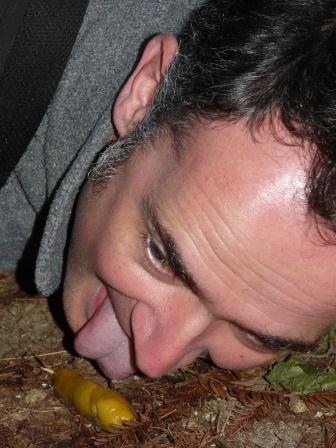
A general rule of natural history is that brightly colored animals that wander around in the open without any visible means of defense or escape are likely to be poisonous in some way. As far as I can tell, the chemical ecology of banana slugs has not been fully analyzed, but among Santa Cruz naturalists there is a tradition of experiential investigation of these slugs, an experience that is mediated through the tongue. So, eager to join the inner circle of initiates, I genuflected then prostrated myself before a large specimen on the trail. The animal was strangely unperturbed by my licking. The same could not be said about my tongue. I did not taste much in the way of noxious secretions, but for half an hour afterward I had a layer of gelatin firmly adhered to the top of my tongue.

Note for Tennessee readers: please do not try this at home. Thanks to the action of the 2012 state legislature, this kind of behavior is considered “gateway activity” and may result in your having to repeat a grade in school, the revocation of your concealed weapon permit, or both.

Following this encounter, I learned that the tangy stalks of redwood sorrel (Oxalis ¿oregana?) do a great job of “cleansing the palate” (an expression that I believe originated somewhere a little more classy than among the Ariolimax-lickers of California). For those of you whose thoughts are turning to hallucinogens: you’re thinking of toad-licking. Believe me, lying flat out on a redwood forest floor licking a giant yellow slug is experience enough for me. What could a hallucination possibly add?

The slug is endemic to the Santa Cruz area (two other species are found elsewhere on the west coast) and is the mascot of UC Santa Cruz. The T-shirts say: “Banana Slugs: No Known Predators” which is catchy but not entirely true. The less well-informed Pacific giant salamanders eat them, as do snakes and some other creatures.

I looked into Mead’s original 1943 description of this species and the diagnostic character  is the length of the penis: “not infrequently of greater length than the slug itself.” Mead was so breathless with amazement that he added an exclamation point in the scientific description, a form of punctuation that is as rare as the smiley face in taxonomic journals. Quite why the famously enterprising undergrads of UCSC have not developed a T-shirt emphasizing this zoological phenomenon in their hermaphroditic mascot, I don’t know.

Thank you to my friend and former student Leighton Reid for being my host for this visit and guiding me in the ways of the banana slug.

Forest Unseen, update II

I just learned that The Forest Unseen is now in its second printing, which is great news. I know that the enthusiasm of many of the followers of this blog is part of the reason for this success: thank you. A paperback version will be coming out in spring of 2013.

Some recent reviews include one in the NRDC’s magazine, OnEarth, and inclusion in John Sutherland’s essay about the direction of modern “nature writing” in the Financial Times. I was particularly honored to be included in this essay alongside authors whose work I greatly admire.

I am in Santa Cruz, CA, today giving a talk at UCSC. Banana slugs are underfoot, ravens overhead, and redwoods surround buildings on campus. What passes for rain in these parts is falling outside, what Tennesseans might call a vigorous, organized mist; apparently this may be the only precipitation until the autumn.

“Under the spreading chestnut tree…” (via telescreen)

Hill Craddock and Tom Saielli visited Sewanee today with four hybrid chestnut trees to plant in our forest. Hill is in the Biology Department at UT Chattanooga and has worked for many years on American chestnut breeding and restoration; Tom is the Southern Regional Science Coordinator for the American Chestnut Foundation.

Photo credit for this photo and all others in this post: Buck Butler. Thank you, Buck!

Some backstory: the American chestnut (Castanea dentata) was formerly one of the dominant trees in our region, comprising half of all the trees in many forests. In some places the species grew in pure stands, a fact that is commemorated in many place names (Chestnut Ridge, Chestnut Hollow, etc). Chestnuts produced annual crops of tasty nuts and many animals depended on this massive burst of autumnal nutrition to make it through the year. In the late 1800s a fungus (Cryphonectria parasitica, an ascomycete) came into the U.S. on trees (of another chestnut species) imported from Japan. The fungus spread from the New York City area across the entire Eastern U.S., wiping out chestnuts as it went. From about 1900 to 1940, almost every tree was killed. The ecology of our forests was forever changed; other trees increased in abundance and many animal populations undoubtedly declined significantly due to the loss of the chestnut crop. These changes took place at the same time as the forest was being hit hard by unsustainable logging and grazing, so these were not happy decades for woodlands.

These days, the chestnut survives in the wild mostly as scattered small trees that grow for a few years, then get knocked back to their roots by the fungus. The fungus also infects scarlet oak, an unfortunate state of affairs because scarlet oak now acts as a continual reservoir of spore-producing fungus ready to attack chestnut saplings. A few large trees survive, either through luck or through the presence of a fungus-weakening virus that keeps the infection in check. But in the big ecological picture, the tree is functionally extinct.

All may not be lost. For many years now, scientists have been crossing the American chestnut (obtaining pollen and nuts from a few survivors) with the Chinese chestnut, a different species that is more resistant to the fungus. The resulting hybrids are indeed resistant to the fungus, but they have many characteristics of the Chinese parent that make them unsuitable for becoming true ecological “substitutes” for our lost Americans (e.g., their growth form is more bushy, they are more vulnerable to late freezes, etc). So, these hybrids (F1s, in biological lingo) are back-crossed to the American chestnuts for several generations (summarized here). These crosses produce plants that are nearly all American, with a few Chinese genes thrown in. The important step is then to pick out the offspring of these back-crosses that are truly disease resistant. This is where the trip to Sewanee comes in. Only by placing thousands of back-crossed seedlings in the forests, then testing them for disease resistance, can we ascertain which trees have inherited the right combination of genes.

So today we planted four seedlings in an area that had previously been cleared of planted pine. We hope in the future to establish a larger test area with hundreds of seedlings. The seedlings today were B3s — meaning that they are the result of three generations of back-crosses.

I’ll close with thanks to my colleagues Nate Wilson and Ken Smith who arranged for this visit and planting, and to Hill (in the green shirt above) and Tom for sharing their plants, their expertise, and their good cheer.

A peek inside the cabinet

Thanks to a kind invitation from my friends and colleagues at The Land Trust for Tennessee, I was able to attend a meeting today with Ken Salazar, Secretary of the Interior. The meeting was focused on the top priorities in the state of Tennessee under the Obama administration’s America’s Great Outdoors program. This program is focused on land and water conservation and on providing access to “the outdoors,” especially in urban areas. Other attendees included representatives from local, state, and federal agencies and offices; conservation NGOs; foundations; and a few other academics.

The specific projects under discussion were: (1) the proposed new National Wildlife Refuge in the Paint Rock River watershed (just south of Sewanee), (2) the Tennessee Riverwalk in Chattanooga, and (3) the Harpeth River project in and around Franklin. Background information the first two projects is here; the third is described here.

In all three cases, private donors, NGOs, and local, state, and federal agencies have worked together to make long-term plans that enhance both “the environment” and human well-being. In the case of the Paint Rock, one of the Eastern U.S.’s crown jewels (if you’ll excuse the royalist metaphor in this republic) of biodiversity would be protected, with the additional benefit of providing public access (including hunting) to large areas of unfragmented forest, access that is becoming harder and harder to secure as the last remaining “open” lands get closed off by development and other pressures. I am delighted that this project has received such high priority — it would be a major win for the people of Tennessee and Alabama (and for the world‘s biodiversity — few places can rival the Paint Rock River).

The other two projects are in more urban areas. The first of these involves continuing the Riverwalk in Chattanooga, extending it into lower-income areas and completing the original plan for interconnecting different parts of the city. I’ve ridden this fabulous walkway many times on my bike and I am continually impressed by how many people use the walkway, how diverse their backgrounds seem to be, and how flat-out delightful it is to pedal along the Tennessee River for miles. I know less about the Harpeth River project, but when it is complete (after dam removal, for one), it will restore the river to an entirely free-flowing state, one of the few such rivers in Tennessee. In addition, the project will provide public access, assist with riverbank restoration, and integrate with the freshwater supply in Franklin. This project is being looked to as an example for how other communities can move forward with river restoration and increased quality of life for human communities along rivers (i.e., most of our towns and cities).

Salazar impressed me with his genial nature, his ability to remember names in a room of fifty new people, and his careful questions, designed both to affirm the good in these projects and to sniff out without undue fuss any hint of problems. I can’t say that I agree with his positions on some issues, but I came away understanding a little bit more about what it takes to get good work done in complex political contexts.

Kudos to the amazing folks at The Land Trust for Tennessee for arranging this meeting on very, very short notice. Salazar’s schedule allows literally just hours to get things together (his full-time schedule man looked kinda worn out…).

Venus swinging past the sun…get ready

When I first heard about the upcoming transit of the planet Venus across the sun, I confess that my first thought was: ho-hum, kinda interesting but planets and stars move around all the time, so what if Venus swings across the face of the sun? Then I listened to the interview with Andrea Wulf on the Nature podcast (direct link to the interview is here; the podcast is also on iTunes, etc). How wrong I was in my initial judgment (which grew entirely from my ignorance — the world is only a ho-hum place when your head is buried in the sands of your own limitations).

The transit will certainly be less dramatic than lunar and solar eclipses, but unless any of us are planning to be around in 2125, this is our only shot. But rarity is not the main attraction. When the little dark disc of Venus hits the sun, we’ll be able to witness a natural phenomenon that changed the shape of the world of ideas. Now that is worth paying attention to.

The two transits in the 18th century — in 1761 and 1769 — allowed astronomers to estimate the distance of the sun from the Earth. This was a major achievement, made possible first by the heliocentric view of the solar system (unless you assume that the planets orbit around the sun, your trigonometry is very wrong) and, second, by the calculations of Edmond Halley (of comet fame) who correctly predicted in 1716 that Venus’ transit would offer an excellent alignment of celestial angles, allowing astronomers to get an accurate estimate of the distance to the sun from the Earth (this video has a great overview of how these estimates are made; in this case, we’re using parallax).

Halley did not just point out the scientific potential latent in Venus’ transit, he developed a detailed plan for how to take advantage of this opportunity, although he knew that he would be dead by the time the transit happened. The plan was necessary because an accurate estimate of the distance depended on timing the transit from multiple points on the Earth’s surface, preferably with these points being spread far apart (triangulation works best when the two people conducting the measurement are located at some distance from each other). And so this transit became the motivating force behind large, government-funded, collaborative international expeditions. Astronomers trekked to far-flung places with huge boxes of gear, then hoped for a clear day. Never before had such an enterprise been undertaken and science was forever changed by the success of the project. It is not too much of a stretch to say that the intellectual history of the West was nudged by this event: the measurement of the distance to the sun through the use of scientific principles and predictions was both a product of the Enlightenment and a spur to its further development. So let’s go out on June 5th and pay homage.

The website transitofvenus.org has much useful information about the upcoming event, including how to view the event without being blinded by Enlightenment (a useful skill, especially for those at liberal arts colleges). If you have binoculars, use them to project an image of the sun onto paper (as shown here), being careful not to look at the sun through the binocs — ouch.

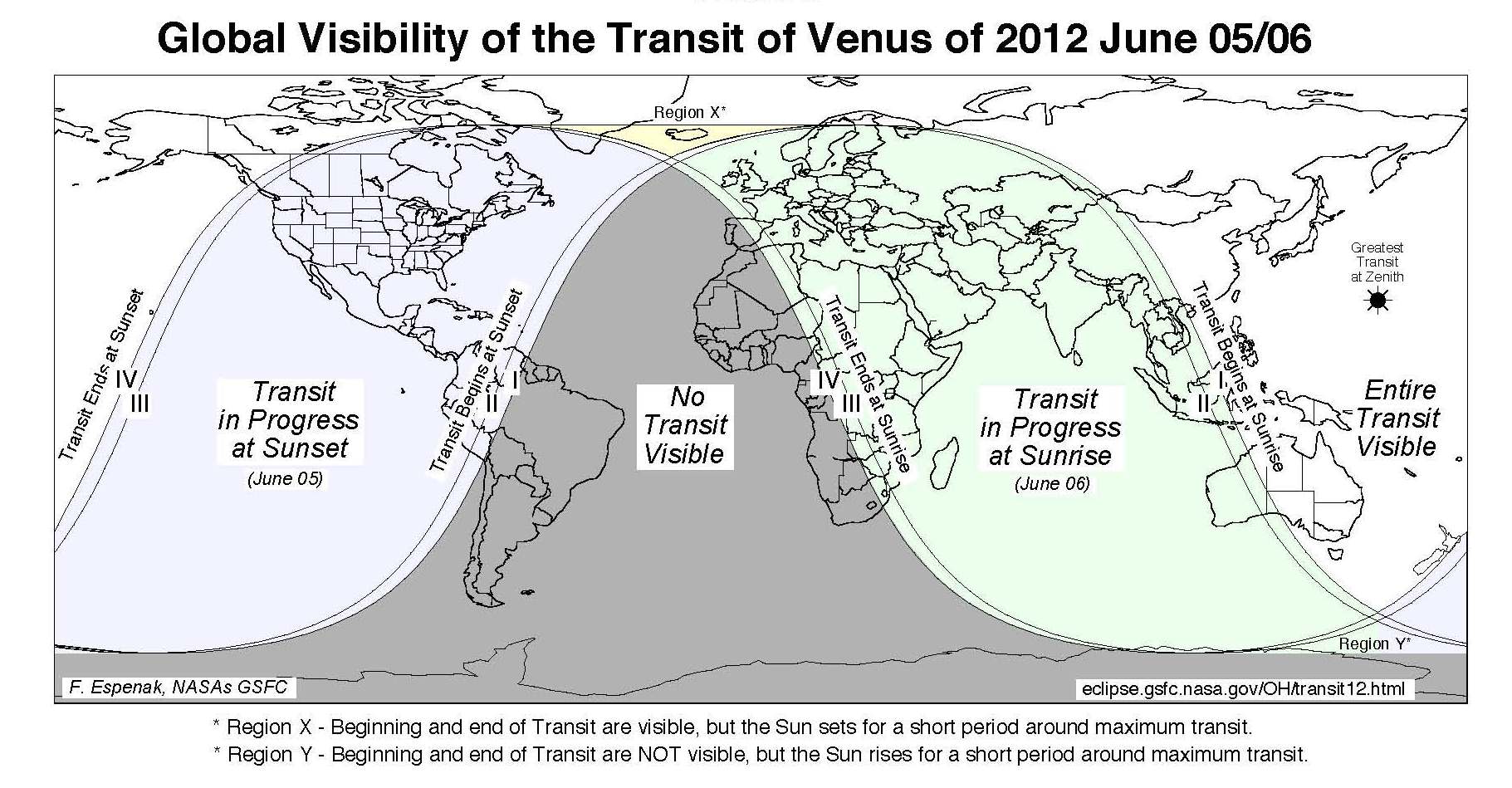
I found the maps on the site particularly helpful:

Map showing where and when you can see the transit (from transitofvenus.org)

For a more precise indication of when you should look, enter your location here. You’ll get a nice set of times and mock-ups of what the transit should look like. Here are the data for Sewanee, TN, where the transit will be visible from 5pm until the sun goes down:

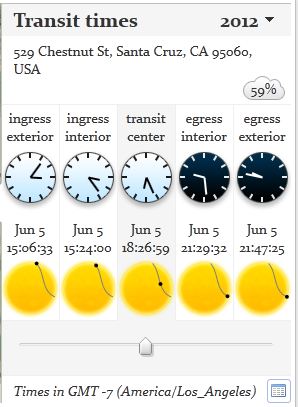
And Santa Cruz, CA (where I’ll be — please, please let it be “sunny California”):

Last, for some musical accompaniment for the event, John Philip Sousa’s Transit of Venus March (who knew?) might be suitable (available in high school bandwidth here).