Category Archives: Uncategorized

All Saints’ Day, Ediacaran Edition

In honor of Life Triumphant, all the ancestors, known and unknown.

ediacaran-fossils-1

ediacaran-fossils-2

ediacaran-fossils-3

These are Dickinsonia fossils from the Flinders Range in Australia. They’re about 570 million years old, from the “Ediacaran.” They are among the earliest known fossils of any multicellular creature on Earth. Make that: of any multicelluar creature in the Universe.

I came across these specimens during my visit to the Yale Peabody Museum a few years ago. I was there to look at a different group of fossils (youngsters, just 33 million years old) and walked past a cabinet with “Ediacaran” on the label. Gob-smacked, I begged a look and my hosts casually opened a drawer to reveal The Tomb of the really, really ancients. Could I feel the reworked remnants of their DNA squirming and leaping in my every cell? Did my cranium feel hairline fractures rush every which way as my skull’s apex lifted in astonishment? Did my pentadactyl limbtips and opposable thumbs quiver as I held the camera?

Ah, beatific visions.


Now we see through a glass, (darkly, nope…) Tiffany, Chihuly

At the Museum of Fine Arts in Boston, light streams through vitrified pigmented sand:

From Louis Comfort Tiffany, Parakeets and Gold Fish Bowl, a piece made in about 1893. Tiffany’s use of glass to evoke the birds’ colorful and varied head patterns is stunning.

tiffany parrots

Sadly, the work now stands as an unwitting eulogy. By 1910 the Carolina Parakeet was extinct in the wild and the eastern US had lost its only native parrot. A few lingered for half a dozen years in zoos, but these individuals died without leaving offspring. Occasionally, the birds’ reflections surprise us with a gleam in museum galleries, but their light is almost entirely gone.

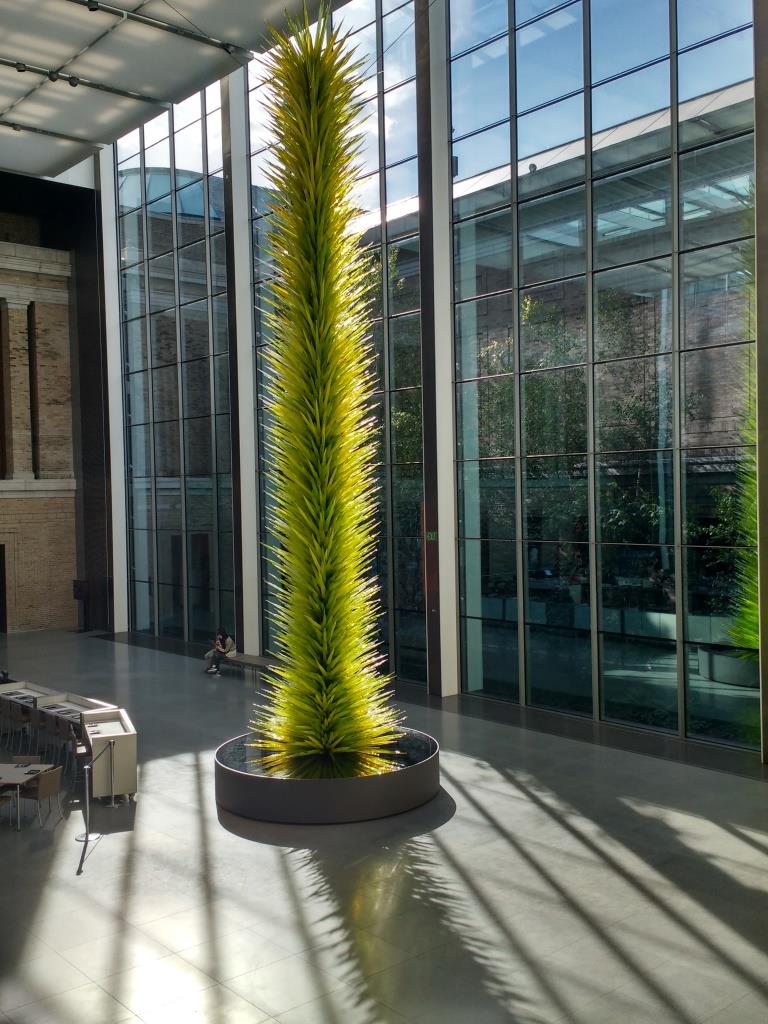
A few steps away, Dale Chihuly’s Lime Green Icicle Tower (2011) uses some of the same palate, but without direct representation and, I hope, presaging of extinction.

chihuly1

The piece is 40 feet high, about 10,000 lbs of glass in conversation with the sun, the museum’s atrium windows, and the vegetation outside. From some angles, inner and outer reflective surfaces combine and tangle. Intended or not, this creates a coda to Tiffany’s work: what we conceptualized as Nature is now, whether we like it or not, wrapped into Humanity. Understanding this, might we, perhaps, perhaps, snuff and shadow less light?

chihuly2

New England clam preparation, gull style

Drifts of smashed clam shells lie on the exposed rocks at the high tide mark.

1drifts

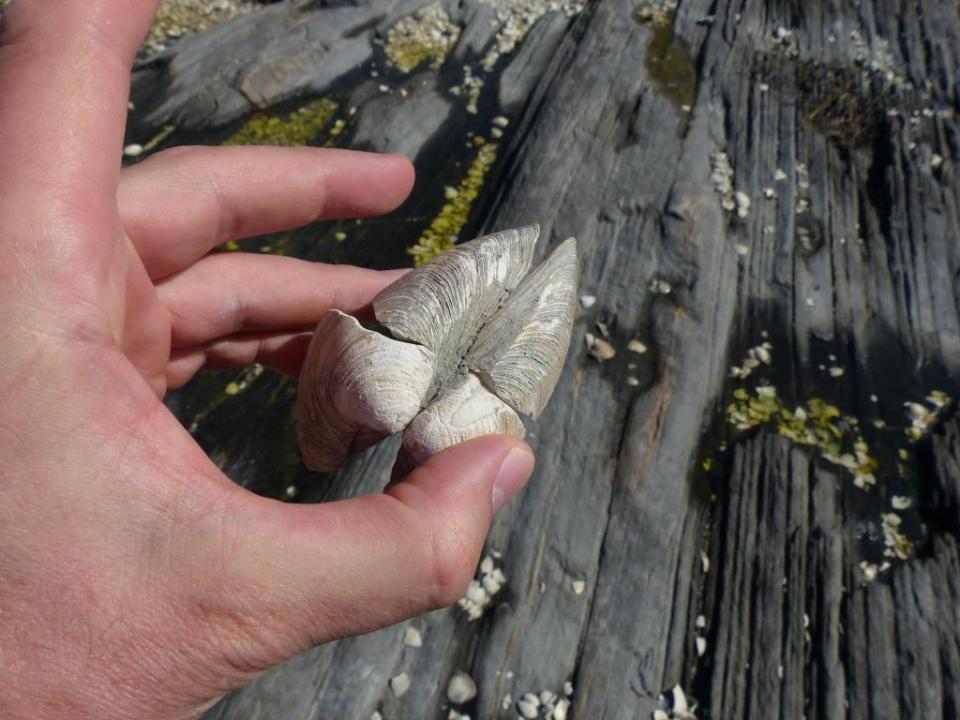
These are the leavings of aerial bombardment by herring gulls. As the tide recedes, mud flats are revealed and, buried in the gray ooze, quahog clams. These are big, heavy-shelled creatures, sometimes as large as my hand.
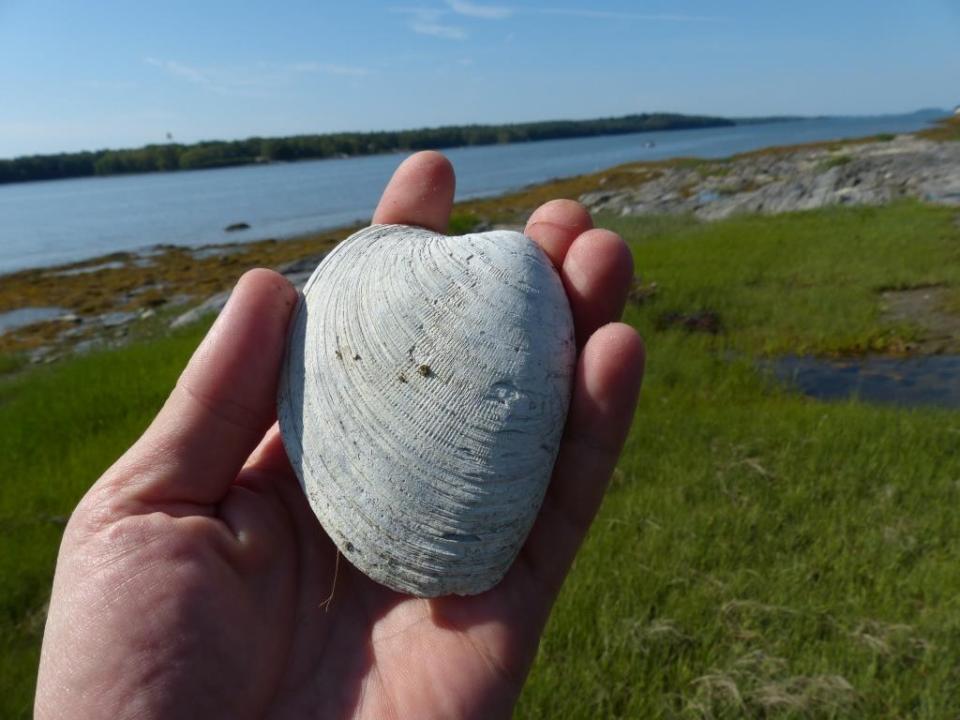
1inhand

Their interior surface is blushed with purple at one end. Beads made from this colored shells were used as wampam currency by some of the American Indians of this region and, later, by European settlers. In the 17th century, tuition at Harvard could be paid with “1,900 beads of purple quahog and white whelk.” The scientific name of the clam, Mercenaria mercenaria, derives from the species’ importance in human mercantile transactions.

Purple from gastropods was also highly valued on the other side of the Atlantic: Tyrian purple favored by the Imperial elites of the Mediterranean and, later, Christian bishops, came from sea snails. Lately, molluscs have fallen from favor as status symbols, a loss for human aesthetics, but a gain for clams and snails.
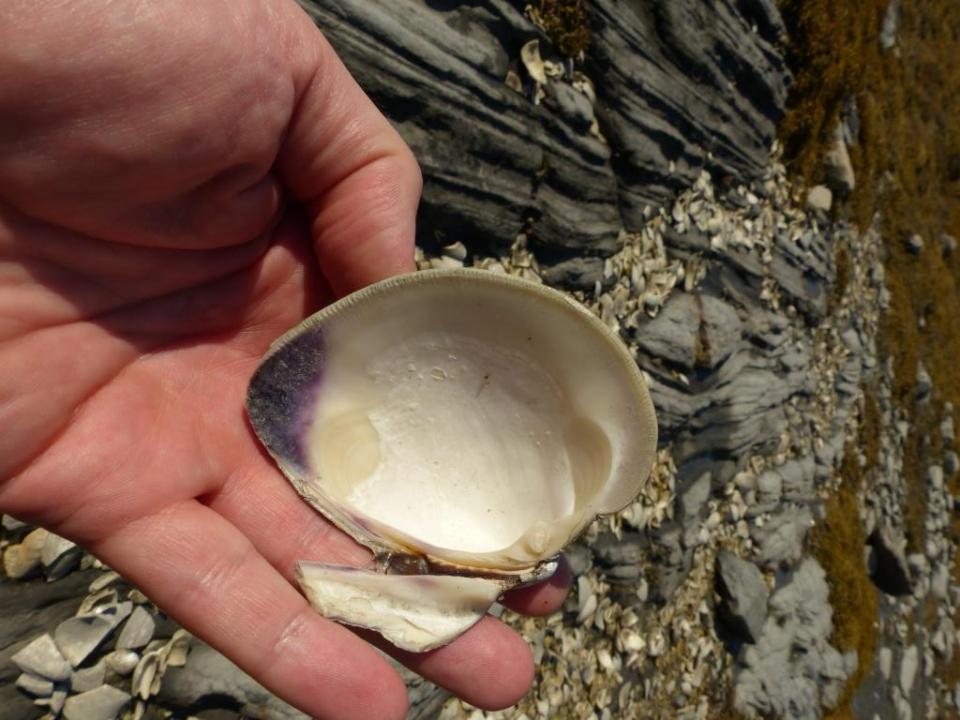
1purple

As the tide falls, herring gulls gather quahogs from the mud, then fly to the rocky shore:

1inbeak

Just before they reach the rocks, the birds oar their wings to gain altitude, then toss the clam from their beak toward the ground:
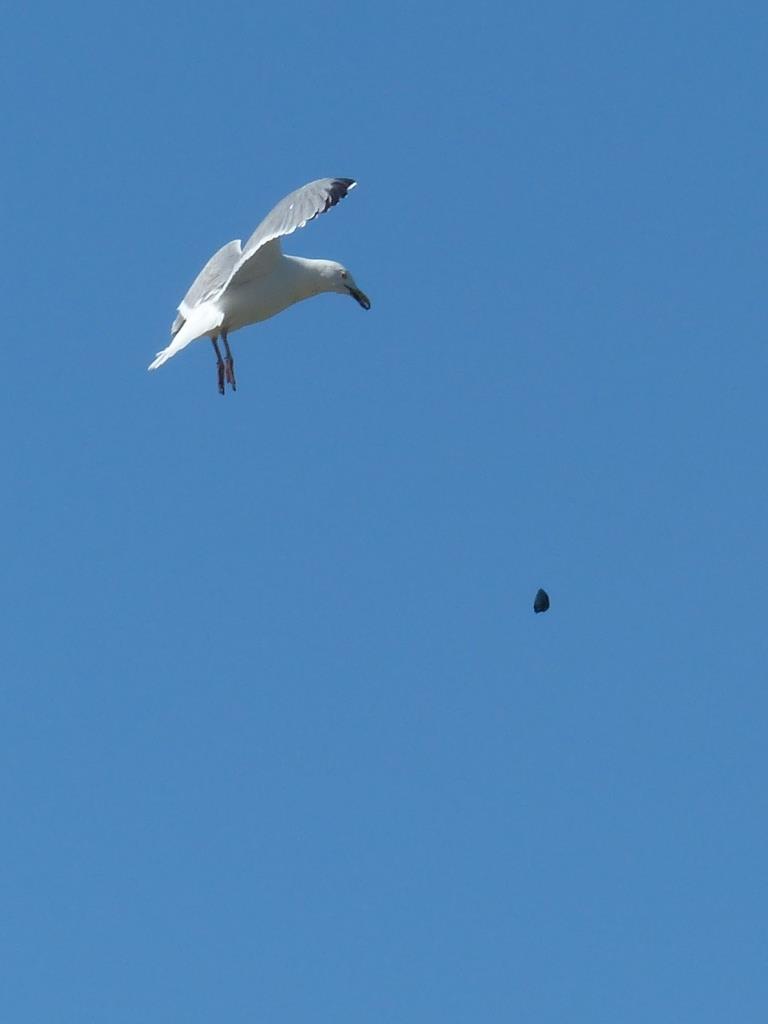
1drop2

The clams accelerate as they fall, but also move horizontally, carried by the forward momentum of the gulls’ flight. The birds know exactly when to release their clams, the crack of  impact always falls on rock, even when birds release the clam while still winging over mud or grass. Like humans who can throw a newspaper from a moving bike and always hit the mark, gulls are well-practiced at lobbing their food at the best shell-splitting rocks. On this short stretch of coastline, the birds have three favorite sites and each one is smothered in shell remains.
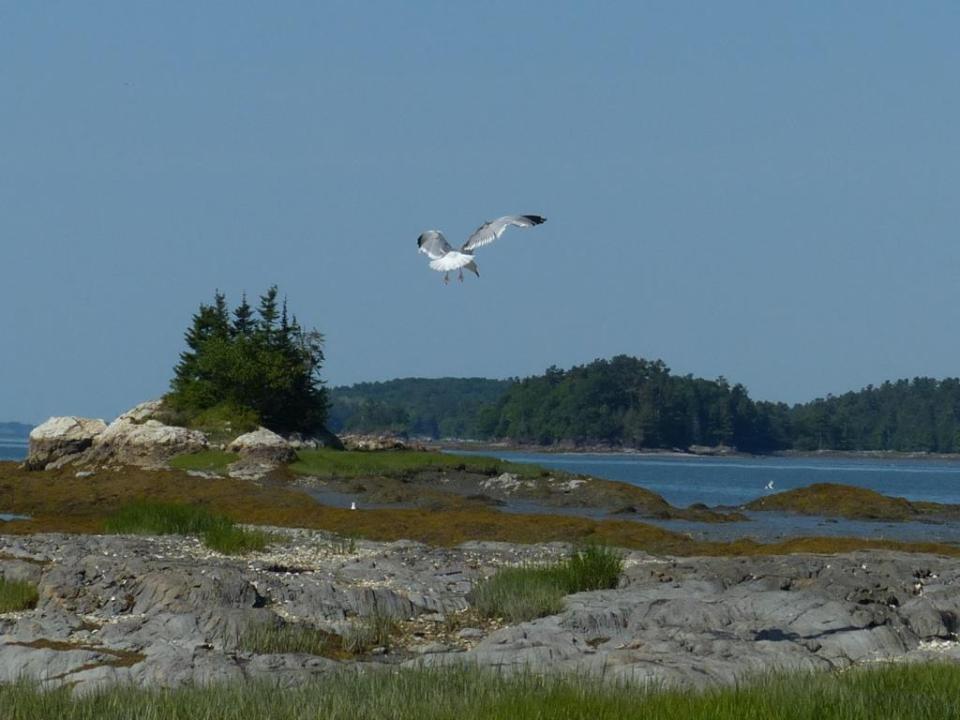
1swoop

The violence of the fall is enough to break open the hard shells of the quahog clams:
1smash

Gulls quickly consume clam’s innards, a sizeable meal for a bird (a few large quahogs are enough to make a chowder that will fill a human belly). But the clam’s afterlife continues beyond gull gizzards. Within minutes of a gull’s departure, springtails colonize leftovers, munching on protein and fat:
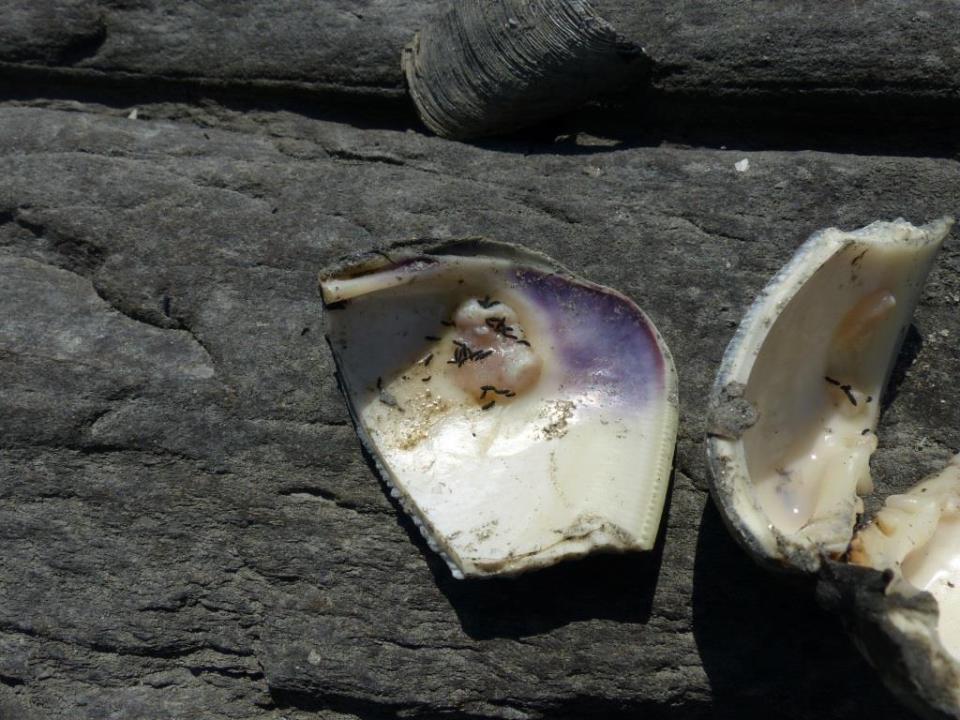
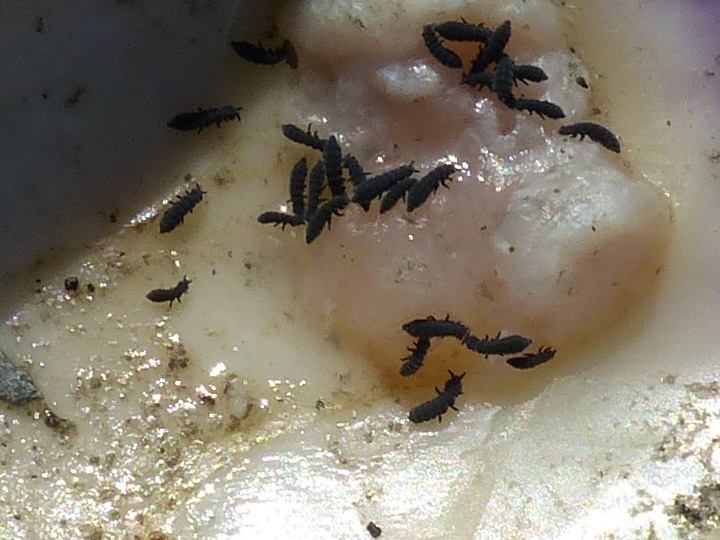
1coli

1col

Then, when the tide returns, algae colonize the leftover shells, gastropods graze over calcium-rich surfaces, and small fish and crabs take refuge under shelly eaves.
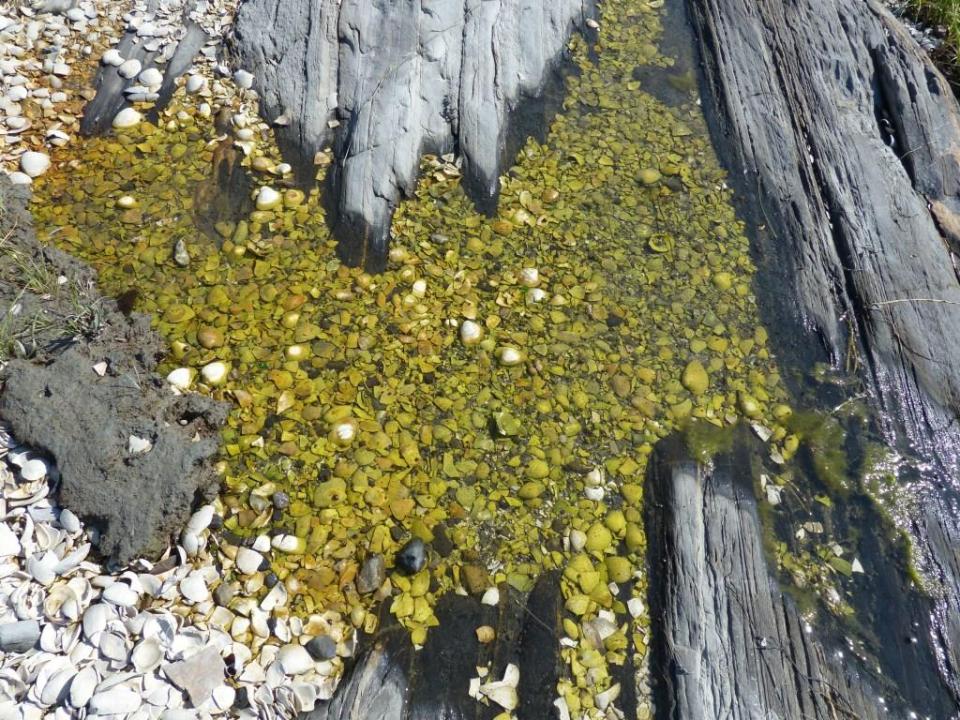
1pool

1poolclose

1litter

Gulls are not the only foragers. People — “clammers” — also follow the tide, raking the mud for quahogs and soft-shelled clams.
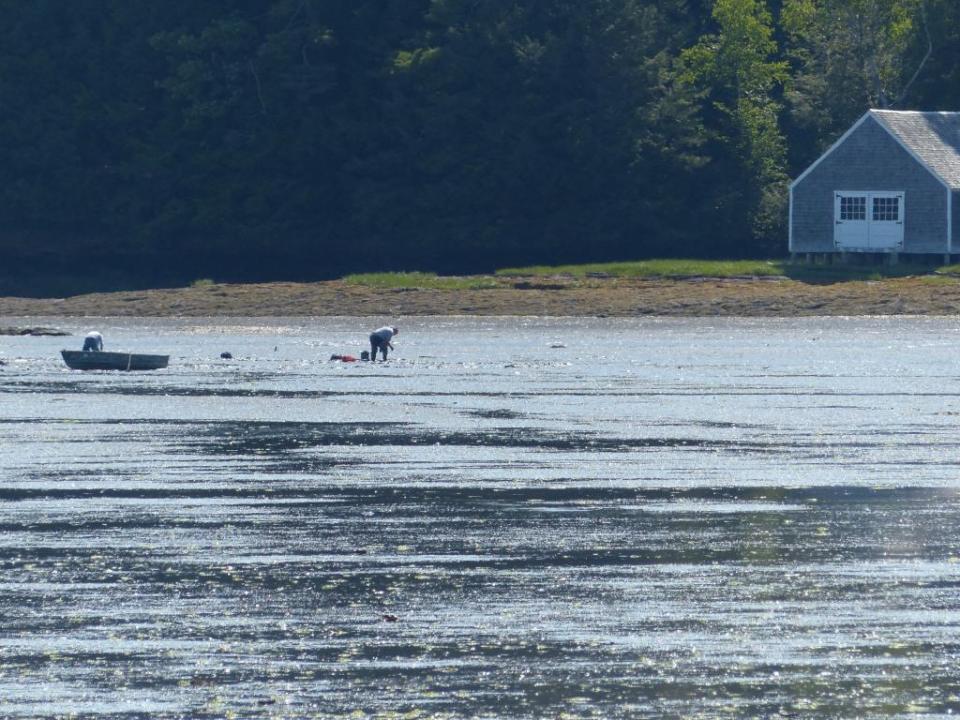
1clammers

Clams are the third largest fishery in Maine, one rife with controversy about the right way to manage clams in the face of invasive predatory green crabs, warming waters, and pollution.

While humans fret (with good reason), herring gulls play (also, I think, with good reason). On warm days, the birds drop then re-catch clams seemingly for the joy of it. The feelings of clams about all this are, as yet, unstudied by students of animal behavior. Complete the aphorism, The unexamined clam is

End Times and the interrogative mood.

My phone tells me:

earthhasstopped

Questions ensue:

In what way could this be OK? Can we imagine ways in which this might not be OK? Does the use of “Unfortunately” and OK in the same statement evince an emotionally mature mélange of acceptance and willingness to move on, or is it simply a sign of careless typing? To whom should we REPORT? Would the recipients of the REPORT care? Does the Android operating system have a way of reaching said recipients and, if so, can I buy the messaging upgrade? Can I REPORT other occurrences that alarm me or cause me anxiety? Or should I, in those anxious moments, be more OK? Where, finally, is the UNDO button?

Fiddlehead gastronomy

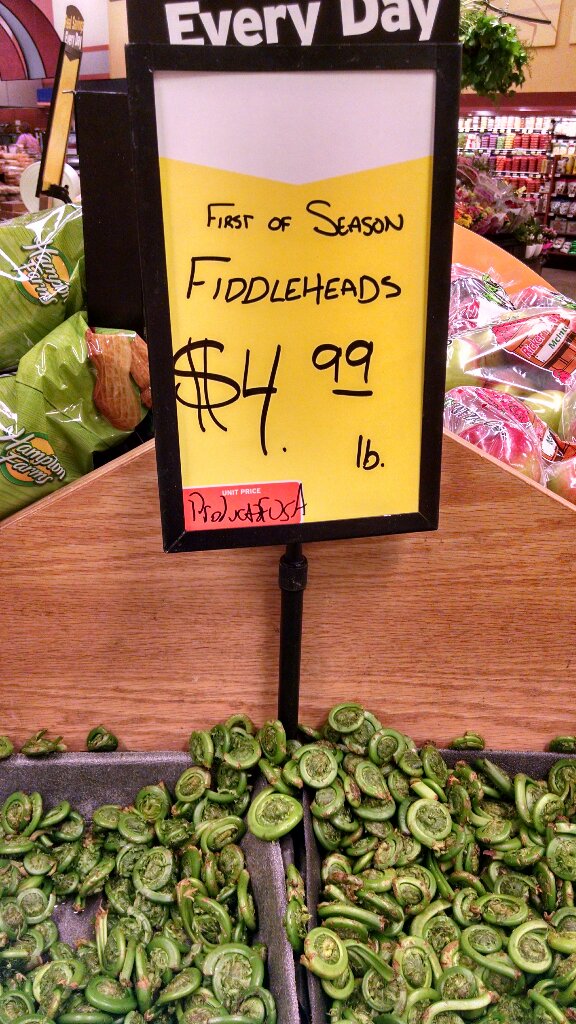
You know you’ve arrived in Maine when the supermarket has a fern fiddlehead special in the produce section:

fiddleheadsHana

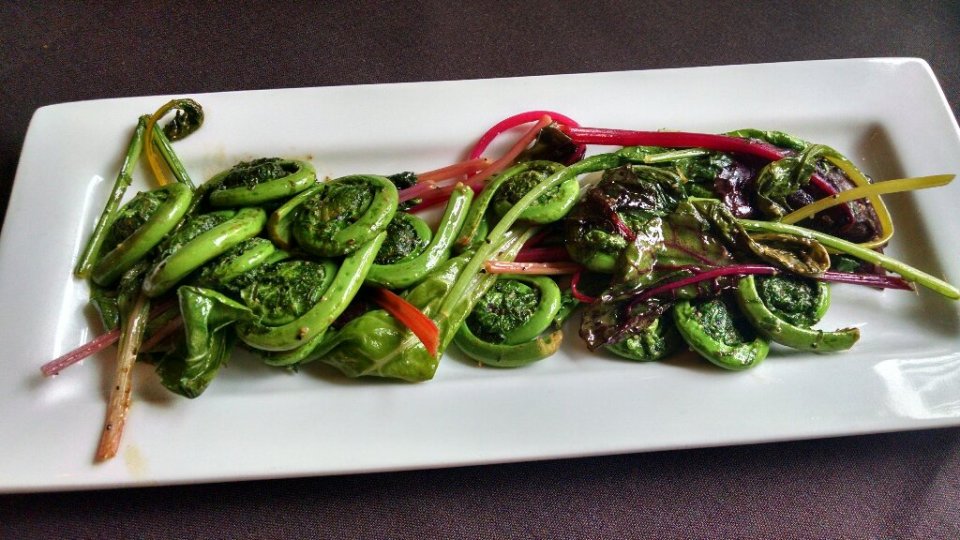
And Portland restaurants find ways of preparing the ferny curls with chard and dressing:

fiddleheadsandchard

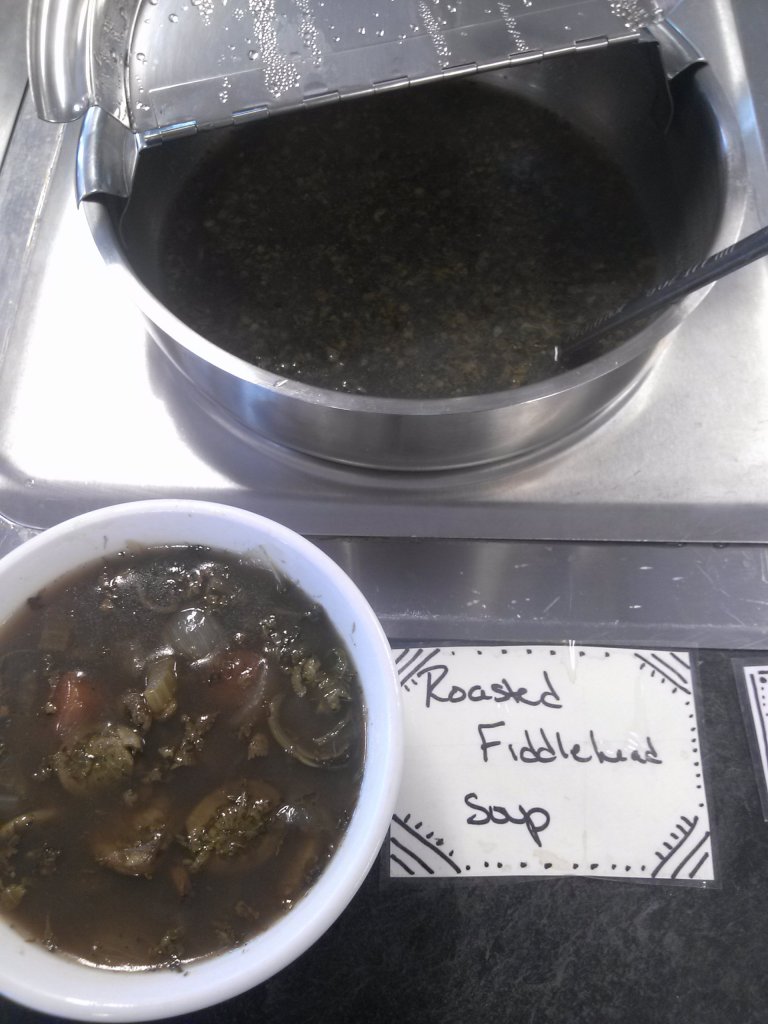
And, a few weeks later, when the wild ferns have fully unfurled, the remnant kitchen fiddleheads are roasted and turned to soup:

fiddleheadsoup

Ferns are well defended both mechanically (tough to chew on) and chemically (how many insects do you see munching on fern leaves?), so they seldom appear on human plates. After a long winter, though, anything green looks good to vitamin-starved mammals, so people cut the young unfurling fronds of ostrich fern — fern furls curtailed forever, very poignant — and eat them raw, lightly steamed, or roasted. Ferns can bear a small amount of harvesting, but repeated cutting will kill the plant.

Ferns are also harvested for food in Korea and Japan, always as fiddleheads. I’d be interested to know of examples from other cultures. In the non-human realm, the European woodmouse loves to chew on ferns, perhaps echoing the dietary preferences of sauropod dinosaurs?


Lesson from Carthage: How to catch an octopus, defeat an empire

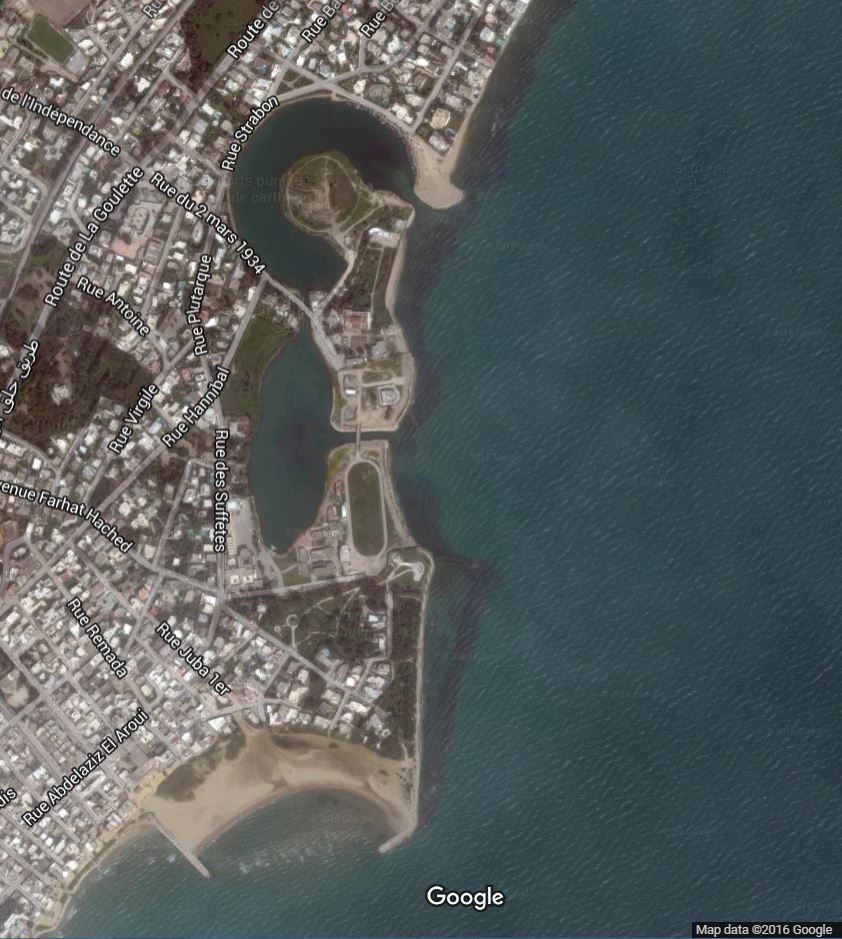
Almost all that remains of the ancient city of Carthage is a small harbor on the peninsula outside Tunis. The Romans leveled and burned the rest of the city at the end of the Third Punic War. Many more recent cities have since been built over the rest of the Carthaginian remains. “Carthage” is now an upscale suburb of Tunis.
IMG_20160316_050846041

From Google Maps:

gmaps

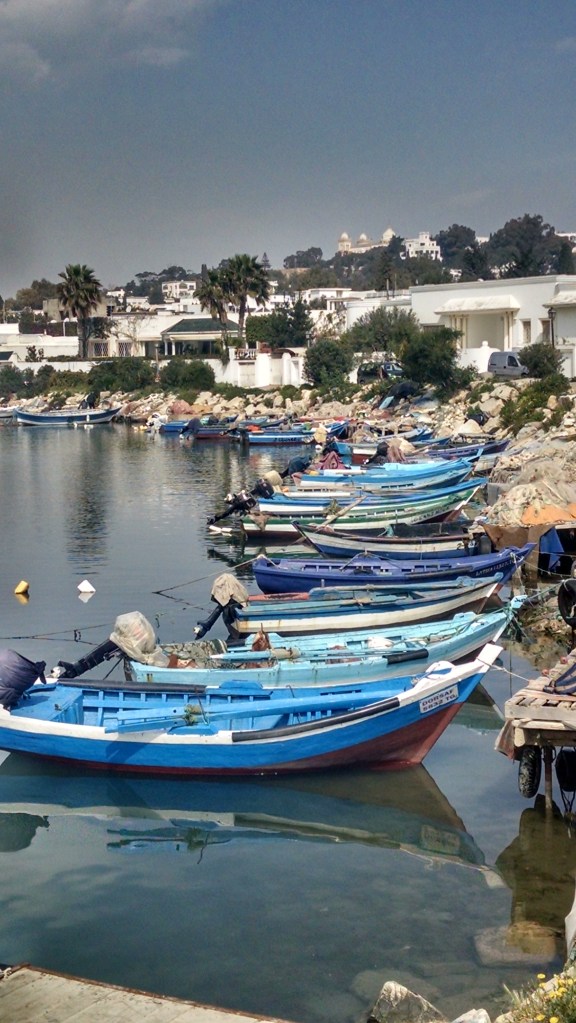
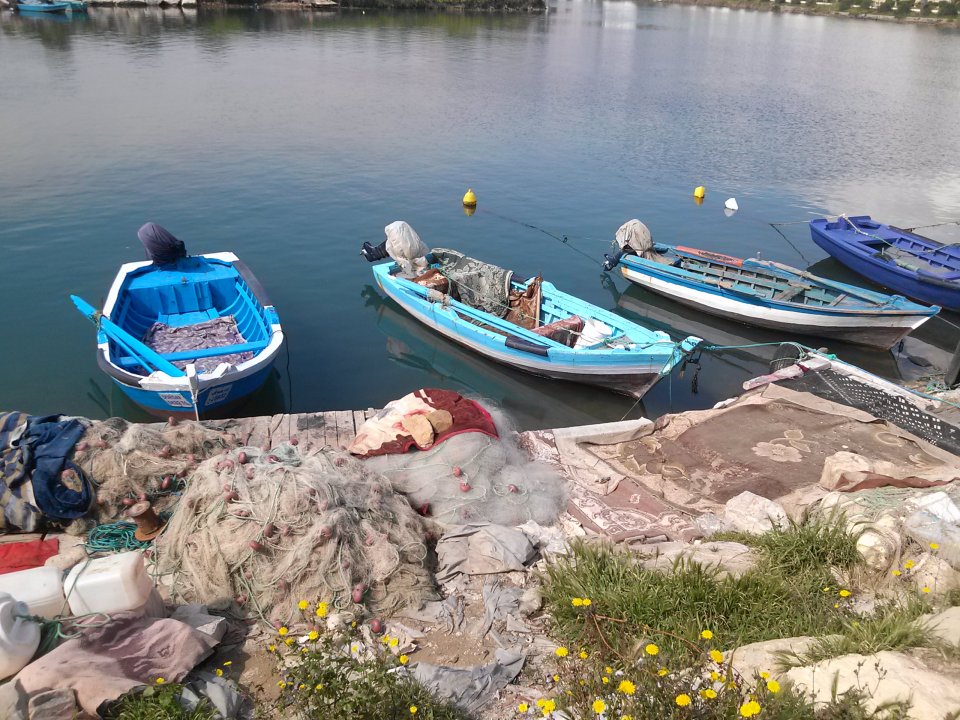
The harbor is now a fishing port, used by the small, colorful boats that are common in many Tunisian ports.

IMG_20160316_051453012_HDR


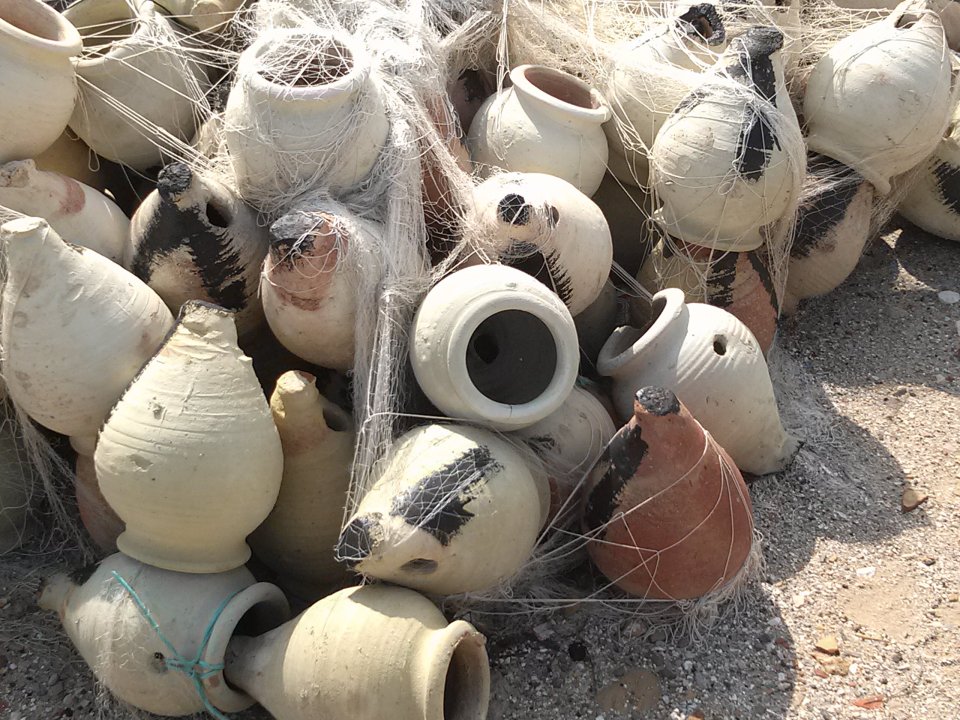
IMG2587Stacked along the dock were piles of ceramics, each threaded with ropes or netting. These are octopus traps. Thinking they have found a good rock nook, octopuses slide inside the submerged containers. When the fishermen pull on cords, the jostling alarm causes the octopus inhabitants to hunker down. Fear is their undoing. There is an unfortunate echo of the two-thousand-year-old history of this harbor, as the Carthaginians used a similar strategy of holing up, one that the Romans overcame, ending Carthage’s rule.
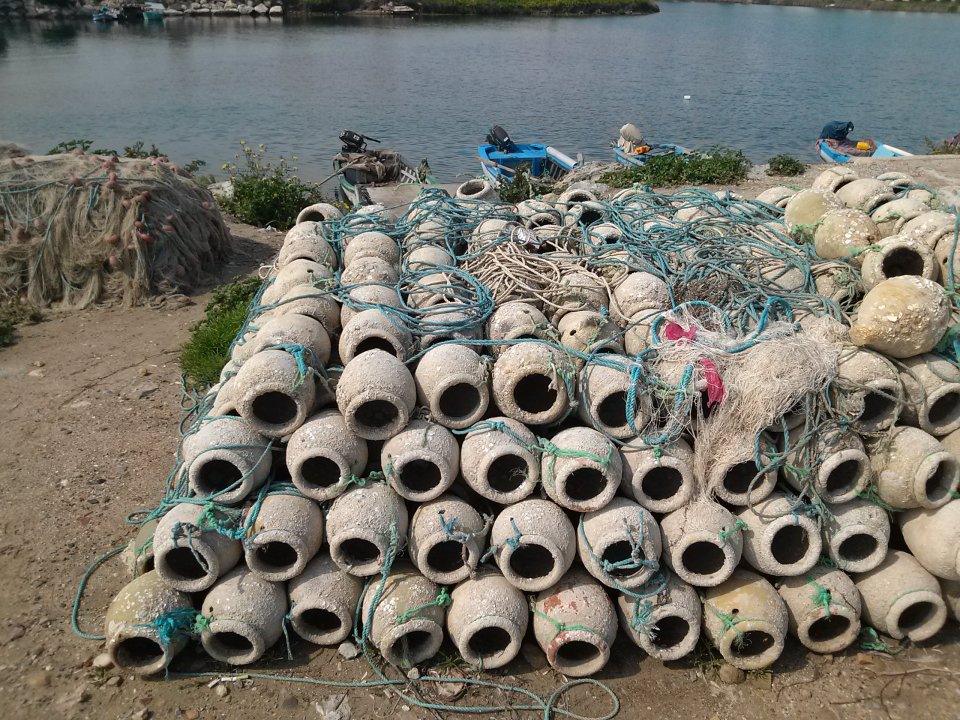
Now, though, the harbor is peaceful, inhabited by fish-scrounging cats, a few local kids at play, and fishermen joking as the stow their pots.

IMG_20160316_051836127_HDRIMG2591IMG2583


Birding at the Bardo

Some of the world’s best preserved Roman mosaics are housed at the Bardo Museum in Tunis, Tunisia, and the Archaeological Museum in El Jem, just a little south of Tunis. They date from the time of the “Roman African Province,” 146 BCE–435 CE, a time of great prosperity (for some). After the defeat of the Carthaginians, what is now Tunisia become a trading and agricultural hub in the Roman empire. The wealthy built many large, lavish houses, some of which were eventually buried under sands and rubble until the last century. Now, they stand in fabulous museums in Tunisia.

The mosaics are often huge, several meters in both dimensions. A few are comprised of geometric designs, but most show scenes from mythology and everyday life. The mosaic artists’ work is remarkable for its attention to the particularities of natural history: local birds, fish, and other species are represented with skill and often a touch of humor.

A painful beach scene:

IMG_20160316_093616079_HDR

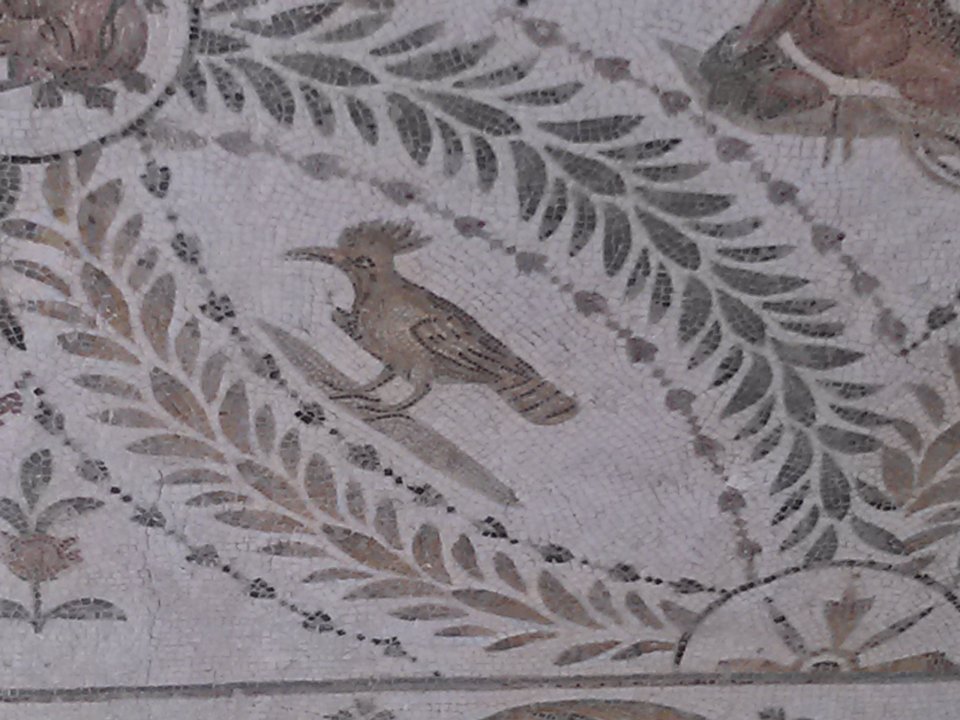
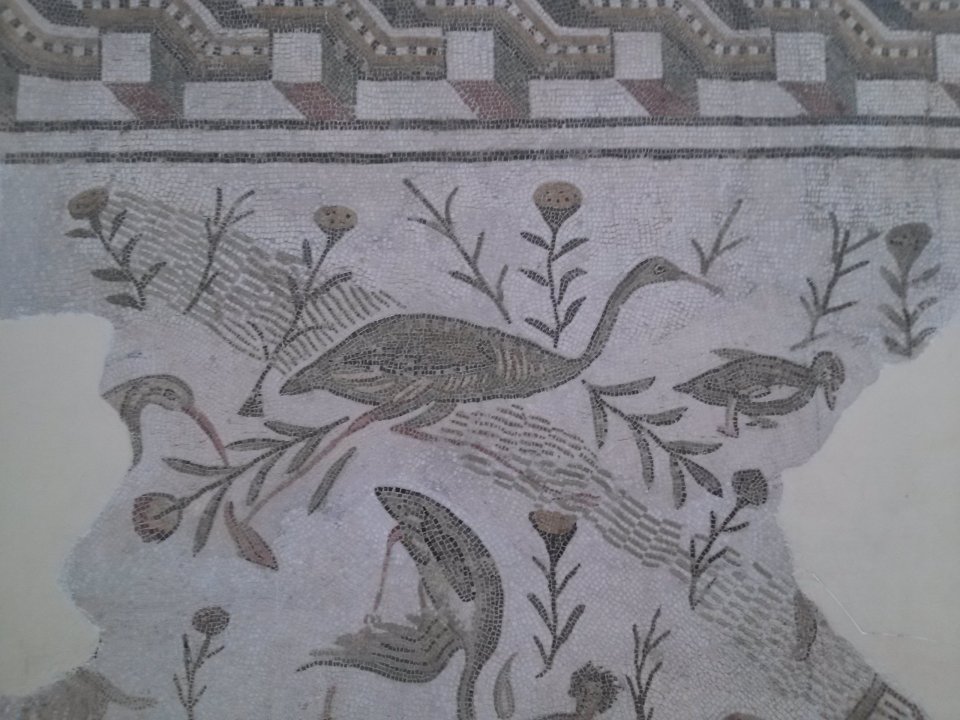
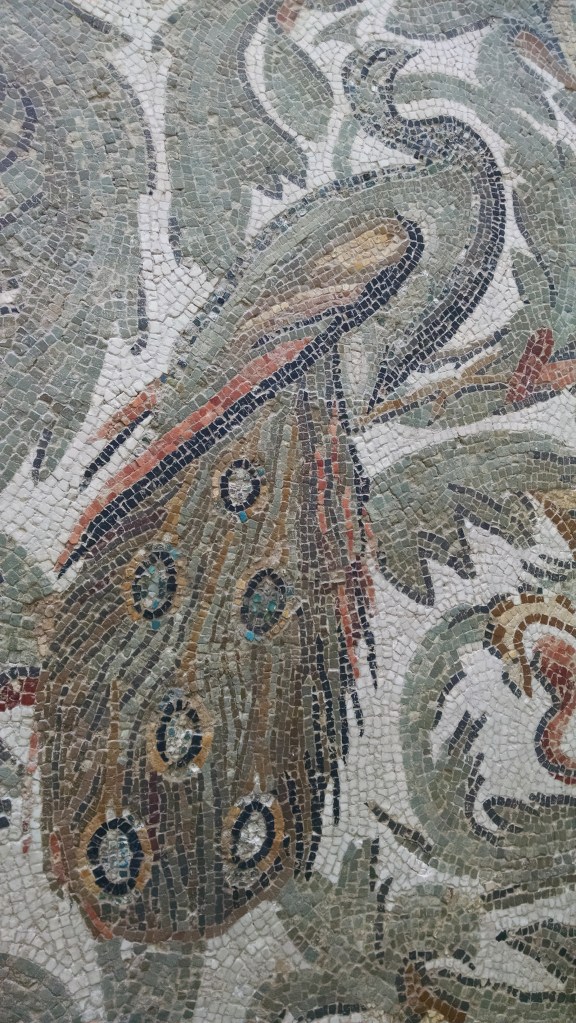
Some ornithology: swallow, hoopoe (fairly common in rural areas, even today), crane, owl (standing as a symbol of defeat over envy, according to the signage), a peacock, moorhen, quail, what appear to be some thrushes ready to be made into pie, and, finally, a bird being made into pie.

IMG_20160313_112306924

IMG2395

IMG2410

IMG2402

IMG_20160316_101602249

IMG_20160316_101621912

IMG_20160316_100340669

IMG_20160316_101018493_HDR


IMG2737Sadly, the museums are empty of visitors. We walked through hall after hall, alone save for museum employees. The same is true in much of Tunisia. A country whose coasts were thronging (and thonging) beach holiday resorts and whose cultural sites were popular destinations for history and archaeology buffs now receives few foreign visitors. Miles and miles of beach hotels stand completely empty, as if the Rapture had taken away all the lovers of blue seas, discos, and seafood. Historical sites — Roman, Carthaginian, Byzantine, French colonial — are visited by local schoolkids and few others. Two bombings by extremists succeeded in closing down a thriving tourist economy. The terrorists got exactly what they wanted: travel warnings from Western countries that stemmed the flow of foreign money to the only remaining Arab Spring democracy.

We tolerate all kinds of risks in life, but if a minuscule risk comes from a jihadist, our governments capitulate, promulgating the message of fear, enclosure, avoidance. Travel in the last years in the West Bank and Jerusalem, and now in Tunisia, all areas flagged as “dangerous” by State Department warnings, suggests to me that a more productive approach might be one of informed engagement.

To whet the appetite, the Roman amphitheater at El Jem. Seating for 35,000. Gladiator and animal rooms still intact. Walk right in…only a nesting kestrel in the high arches and some schoolkids for company:

IMG_20160313_104908771

IMG2327

IMG_20160313_105240462

IMG_20160313_110147773

Photo credits: David Haskell, Katie Lehman

Nature writing cult…

“They are haunted by visions. They are visited by strange dreams. They are – like Muhammad on Jabal al-Nour and George Fox on Pendle Hill – vouchsafed revelations in high places. They are the nature writers, and they bring us wisdom from the wilderness.

The question is, why do we listen to them?”

This from Richard Smyth’s latest piece in the New Humanist, The Cult of Nature Writing. I was delighted to be interviewed for the essay and I’m greatly enjoying Richard’s insight and wit.

“Go birdwatching or bug-hunting; take a hike. Experiences of this kind shouldn’t require the mediation of a prophet.” Yes, indeed. Let’s take off the prophet’s robes. Then, perhaps, write a short essay about what the defrocking experience teaches us about chickadee physiology?

Ginkgo

Ah, the ginkgo’s gold returns. In their honor, I’m reposting this from a few years’ back. Long may the ginkgo continue to confound our naso-horticultural aesthetics.

David George Haskell

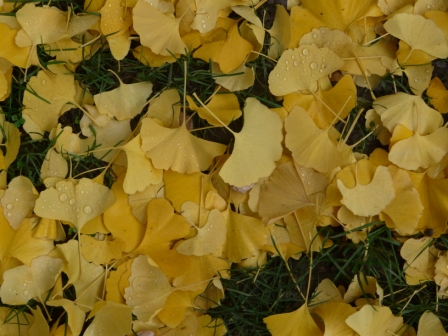
The golden leaves of Ginkgo trees are just spectacular this week.

I have a special fondness for this species: its kin date back to the Permian (>250 million years ago), so the Paleozoic lives on right here on our campus lawns. The Ginkgo is also remarkably robust and is able to live in even the most polluted cities. Ginkgo trees were among the few living creatures to survive the horrors of the atomic bombs that were dropped onto Japan. Survivors, indeed.

In addition, the species refuses to conform to our narrow notions of botanical beauty. It is dioecious (female and males are separate individuals) and female trees are currently scattering their extremely pungent seeds all over tidy lawns (the smell is butyric acid — rancid butter). The philosophical underpinning of a lawn denies the realities of biology: death and sex are nowhere in evidence on a “nice” lawn. The Ginkgo violates these…

View original post 132 more words