Category Archives: Archosaurs

Young vertebrates enjoying the South Platte River in Colorado

High in the mountains, in Eleven Mile Canyon:

A Common Merganser with her brood. She incubated the chicks in an old woodpecker hole and will stay with them as they learn to forage. These “sawtooth” ducks dive under the water to snatch fish. They’ll also feed on invertebrates such as snails and mayflies.

merg

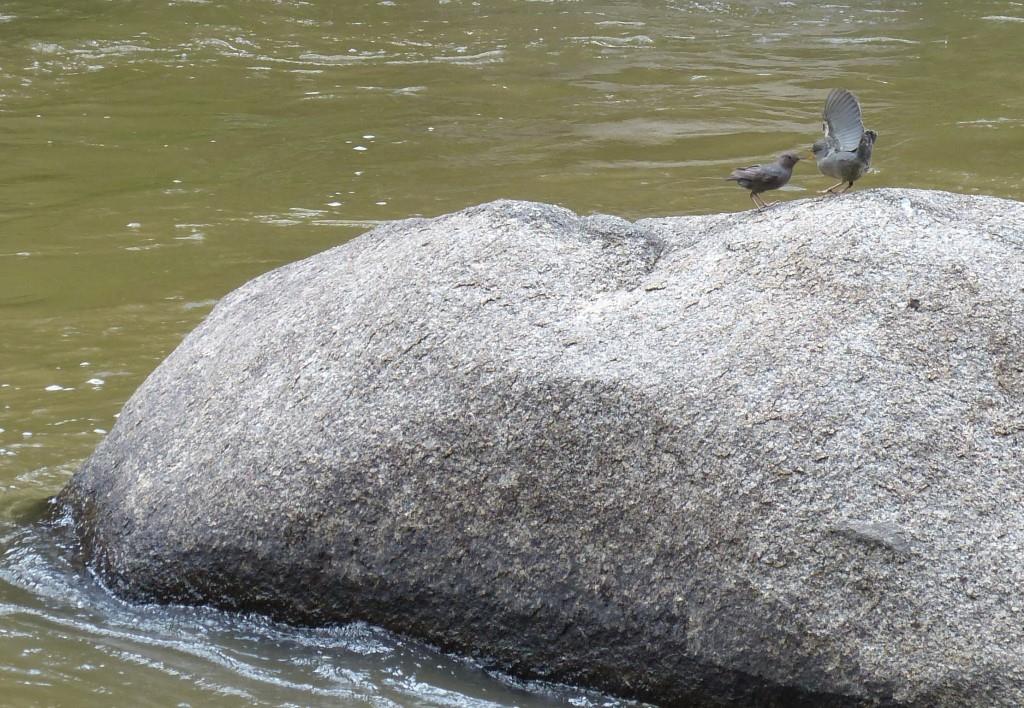
American Dipper fledgling. This young bird left the nest a week or so ago. It waits for the parent to appear…

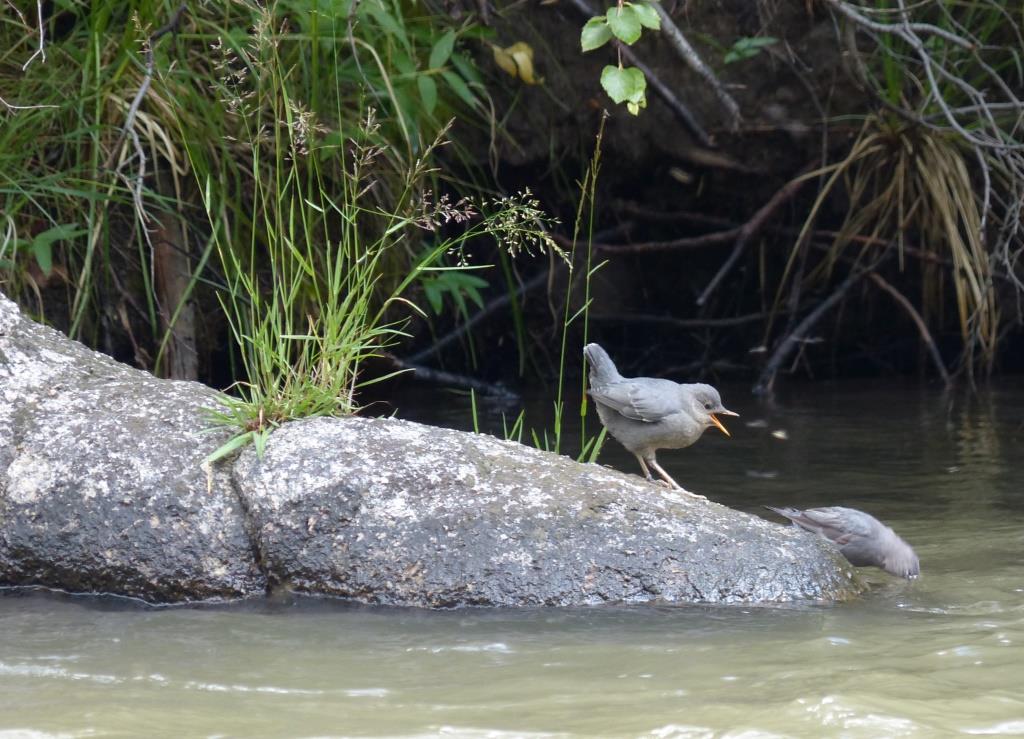
dipper1…from beneath the fast-flowing water. Dippers dive into mountain streams and walk along the bottom, gripping with their toe-nails for all they’re worth, plucking stream insects from rocks. Once emerged, the adult is met with the youngster’s loud whistles, sounds that cut through the roar of the water. When food is stuffed into the gullet of the noisy birdchild, the sound changes to delighted chirping.

dipper2


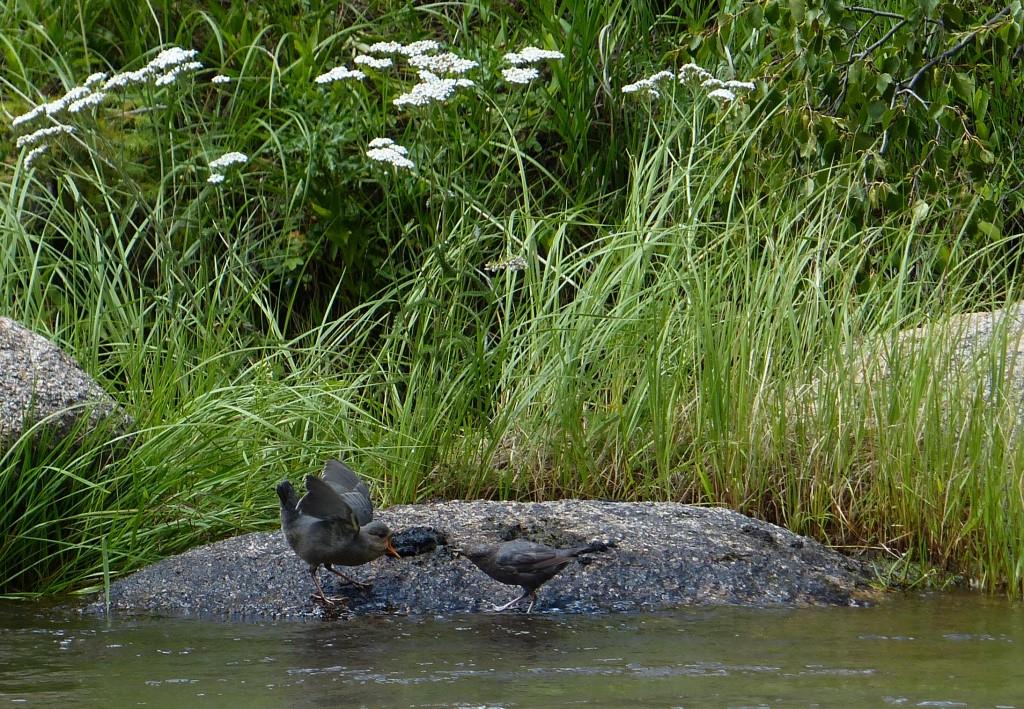
And when the feeding is done, it is time for more piercing begging cries, delivered at the water, below which the parent feeds.

dipper3Another gullet-stuff, another flurry of chirps:

dipper4

Downstream, in the heart of Denver:

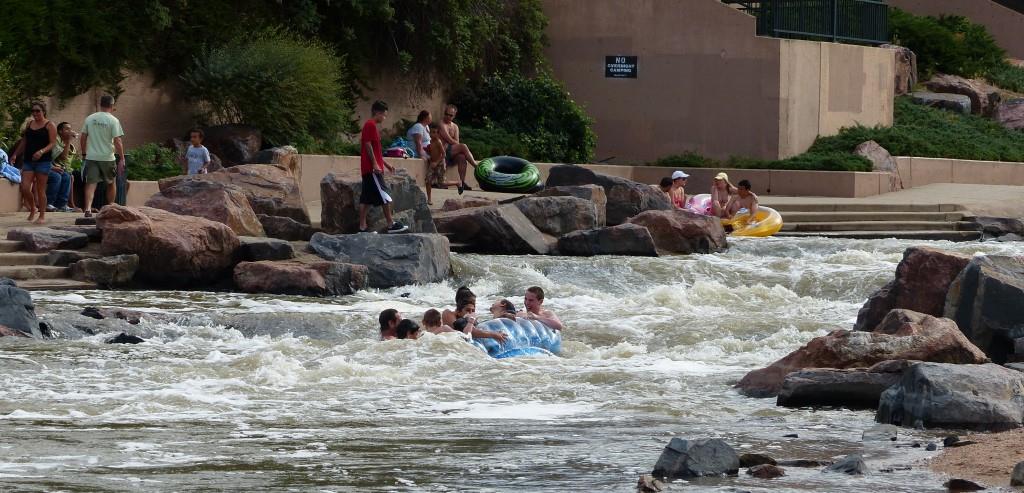
At Confluence Park, in the center of the city, the South Platte has been engineered to provide a series of chutes and rapids for the amusement of Denverites. In the photo below a youth leader takes one of several disabled kids on a paddle ride down the rapids. I’ve blanked the faces because I was not able to ask whether it was OK to post these two water-lovers’ faces on my blog (sorry, dippers and mergansers, speciesism…). As he lurched through the spray, the kid’s face went from apprehensive frown, to a big O of surprise, to a grin of delight. A (mile-)high-five ended the ride.

confluence

In the 1960s and 1970s, this stretch of river was the most junky, polluted part of the whole city. Old cars, tires, and mattresses were heaped along the banks; factories piped effluent directly into the river; oil oozed from every bank. Thanks to the very hard work of the Greenway Foundation, The City of Denver, and many other partners, this is one of the most popular places in town for people of all races, incomes, and levels of physical ability. One hundred miles of riverside trails radiate out from here, punctuated with parks of all kinds.

The river flows onward from here, east through Colorado and Nebraska, hopefully encountering a few more young lifeforms reveling in its waters.

Summer Solstice…zoological celebration

A few of the creatures we’ve run into on St Catherine’s Island, GA, during the Island Ecology class:

Anhinga in morning backlight

Anhinga in morning backlight

Carapace of loggerhead turtle washed up on beach. Cause of death is unclear.

Carapace of loggerhead turtle washed up on beach. Cause of death is unclear. Turkey vulture didn’t care about cause of death, but sea turtle program and State of Georgia did. Turkey vulture proceeded without paperwork; humans went to work with datasheets and calipers.

Great egret chicks.

Great egret chicks.

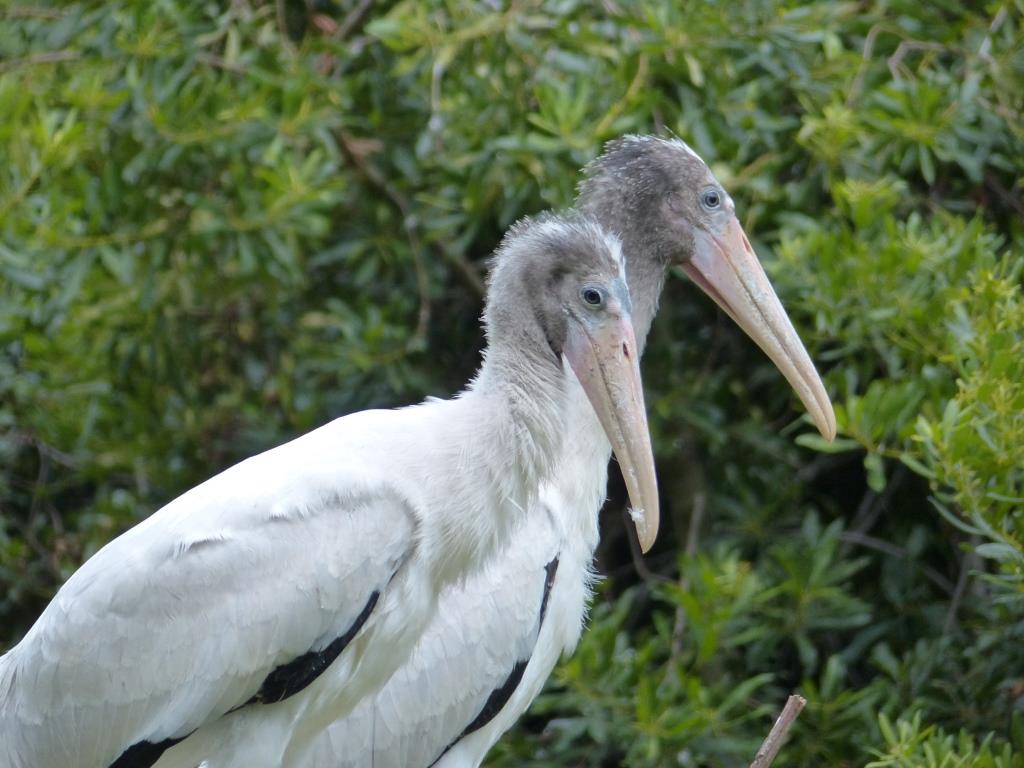
Nestling woodstorks in goofy stage. They still have fluffy heads. All these cute down will fall away to reveal the characteristic bare skin of the adult. This naked head allows them to forage in muddy water without fouling (...fowling...) their feathers.

Nestling wood storks in goofy stage. They still have fluffy heads. All these cute down feathers will fall away to reveal the characteristic bare skin of the adult. The naked head allows them to forage in muddy water without fouling (…fowling…) their feathers.

Dead horseshoe crabs eyes the beach.

Dead horseshoe crab eyes the beach. In addition to these compound eyes, they have smaller eyes on their telson (tail), near their mouth, and on top of their carapace.

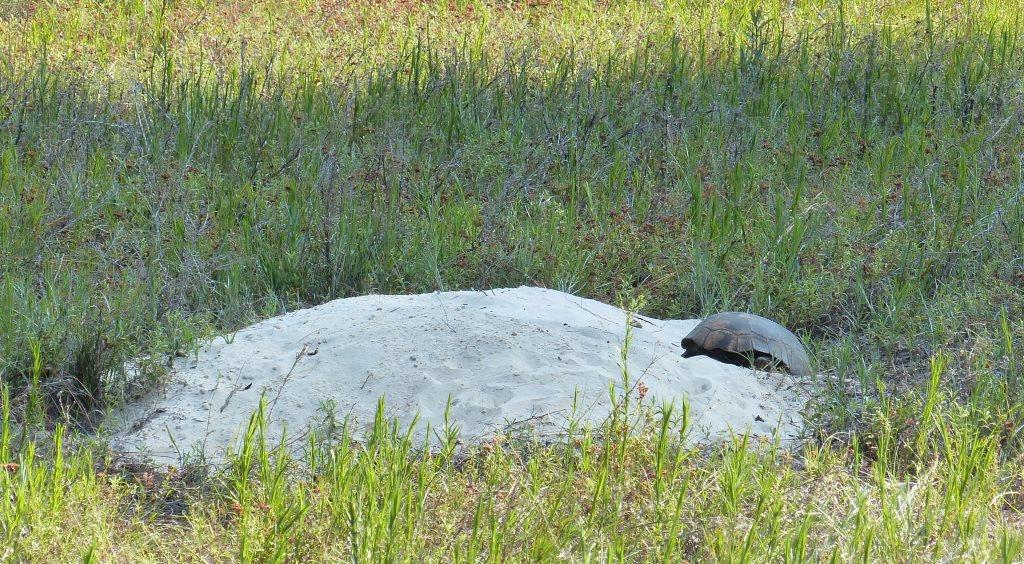
Gopher tortoise on its apron of sand. Its burrow extends many meters below the ground.

Gopher tortoise on its apron of sand. The tortoise is headed for its burrow which extends many meters below the ground.

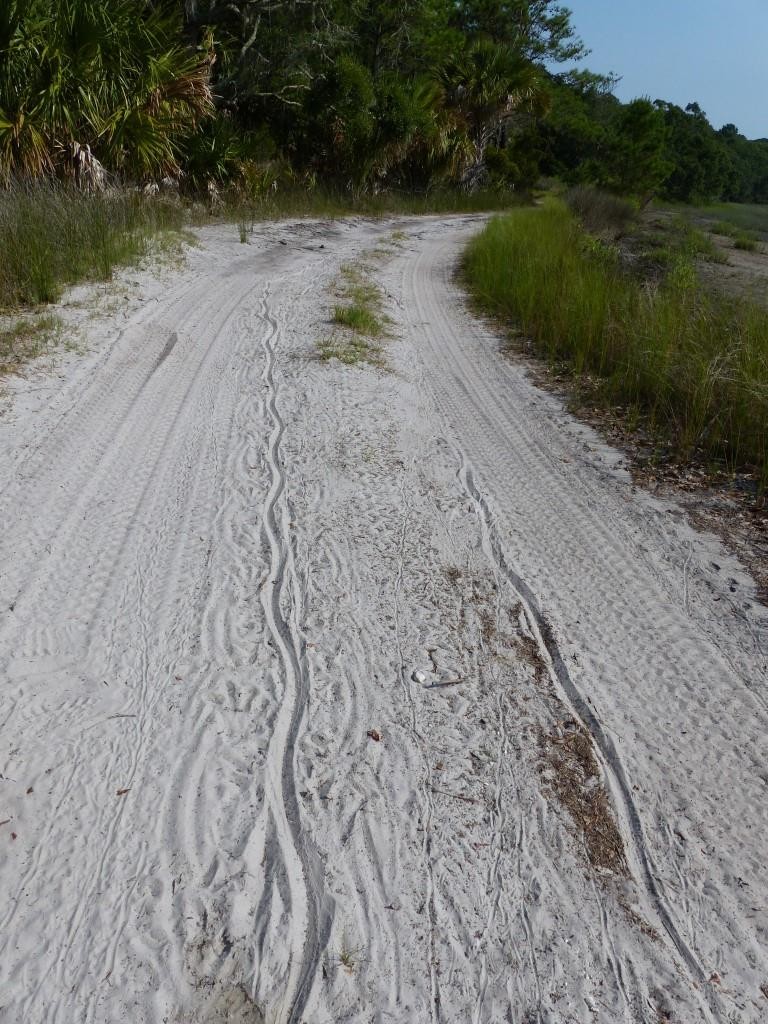
Alligator tracks on the sandy road.

Alligator tracks on the sandy road.

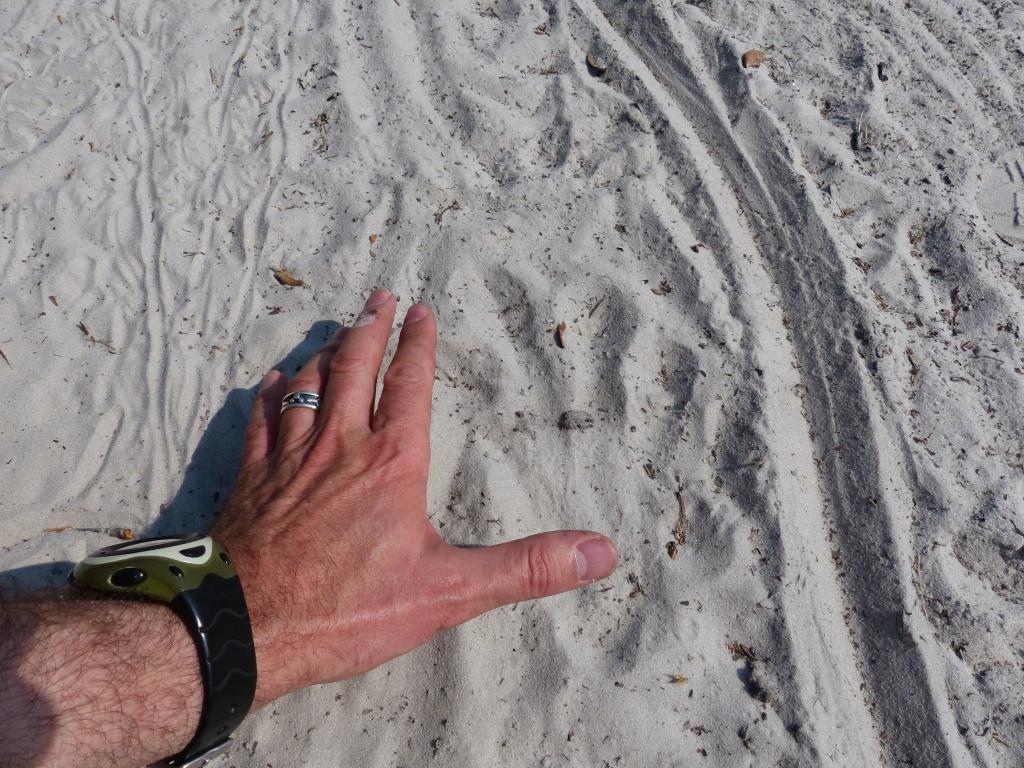
Big Moma Gator footprint and tail drag.

Big Moma Gator footprint and tail drag.

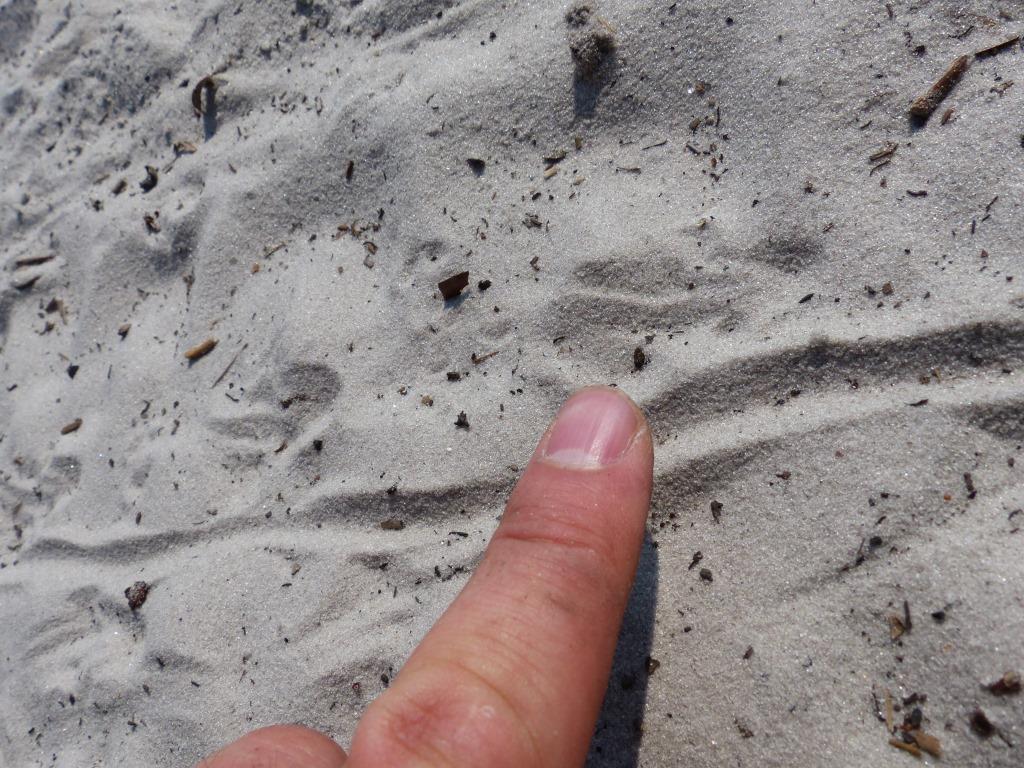
Baby Gator footprint and tail drag.

Baby Gator footprint and tail drag.

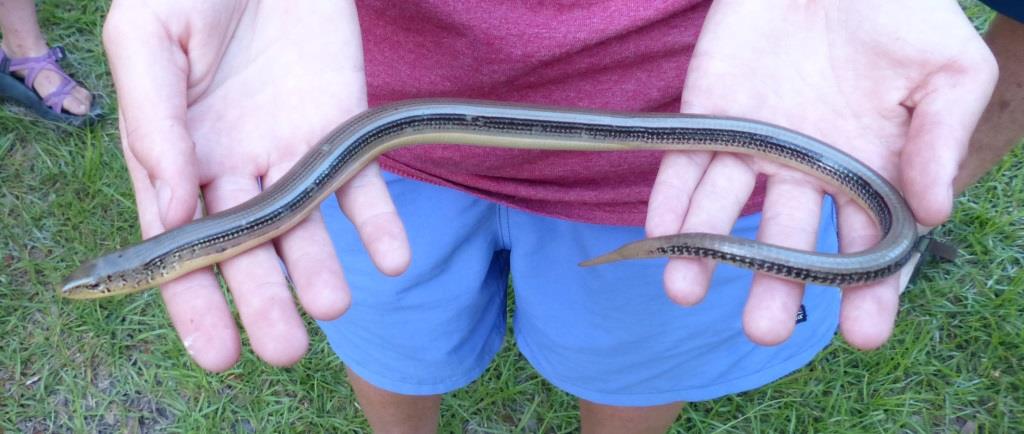
Eastern glass lizard, a legless lizard. This one has lost and regrown its tail. They get their vitrine name from the fragility of the tail.

Eastern glass lizard, a legless lizard (found by Hali Steinmann). This one has lost and regrown its tail. They get their vitreous name from the fragility of the tail.

Glass lizard: note ticks attached in the fold of skin down its flank. The island is amply endowed with ticks. A never-failing succession of them.

Glass lizard: note ticks attached in the fold of skin down its flank. The island is amply endowed with ticks. A never-failing succession of them, in fact.

Vetebra from dolphin. Found by Annya Shalun on beach.

Vertebra from dolphin. Found by Annya Shalun on beach.

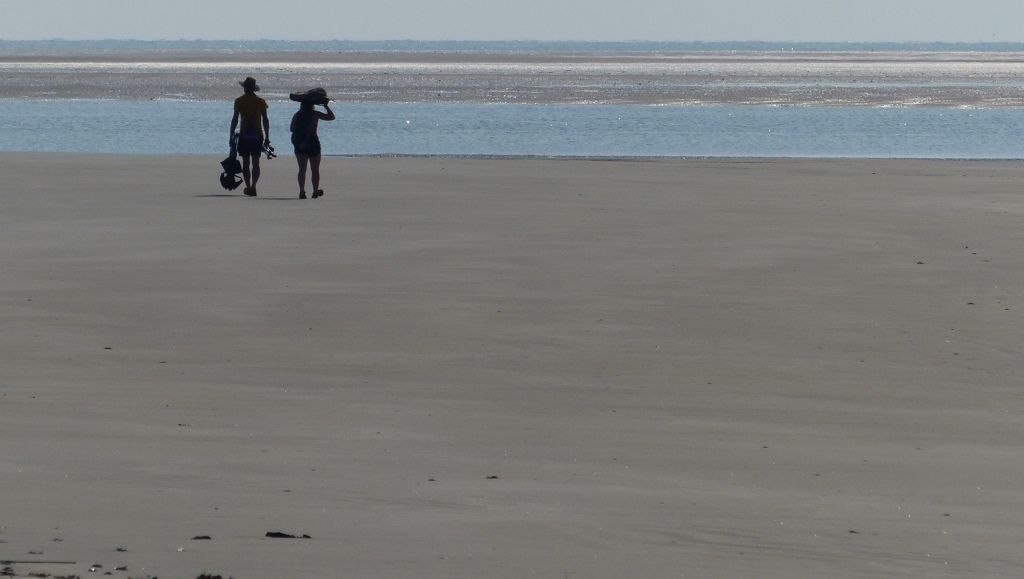
Homo sapiens students headed out to gather data on shorebirds.

Homo sapiens students (Annya Shalun and Alec Hill) headed out to gather data on shorebirds.

Ramble, the noun: Birding Central Park.

I made a very brief trip to Manhattan earlier this week. As I rambled between meetings, I found The Ramble, proper noun.

IMG712_rambleI thought the claim to being one of the “top bird-watching locations in the United States” was a little hubristic. Sure, there are tons of birders in the megalopolis, but could this little patch of woods in Central Park truly yield “top” numbers of birds? Despite the rain and my skepticism, I walked on.

Forty-five minutes later, I repented of my woodsy Tennessee haughtiness. I’ve never seen so many catbirds, ovenbirds, waterthrushes, and other migrant species crammed into so small a space. I saw thirty four species and many more must have lurked behind the veil of hazy drizzle. The full list is appended at the end of this post. (Three Northern Waterthrushes in the space of a few yards? Outrageous.)

No doubt the profusion of birds reflects the paucity of habitat all around (I spent several hours watching street trees away from the park and saw just one warbler). The Ramble is therefore a refuge for these migrants, an atoll of green in a sea of gray. Pity the insects, worms, and snails here. So many hungry birds must clean out the food supply pretty quickly. But for bird-watchers: a top place indeed. The health and diversity of the herbaceous and woody plants was also impressive.

The Ramble offers fine opportunities to observe the behavior of birders. Every walkway and prospect was enlivened by the movement of binocular-wielding bipeds. Some snuck, some sauntered, and not a few moved with great haste from place to place blasting iPod recordings into the bushes to draw out the birds. This latter group also pished and squeaked with great gusto. (These are vocalizations peculiar to birders, nominally uttered to attract birds, but whose psycho-spiritual origin is perhaps found in the atavistic impulse to appease the gods of the woods and simultaneously repel non-believers.)

All in all, a fine place to ramble.

IMG717_cpViewIMG718_nycOn a similarly feathered topic, the second installment (of three) of the New-York Historical Society’s Audubon exhibit is open until later this month. I wrote about the first exhibit here. I also strongly recommend this current show. Getting close to his graphite and pigment is a stirring experience.

The Rambler’s list (via ebird.org):

Crazy-ass birders: lots
Canada Goose  2
Mallard  4
Double-crested Cormorant  4
Green Heron  1
Rock Pigeon (Feral Pigeon)  12
Mourning Dove  5
Red-bellied Woodpecker  1
Northern Flicker  1
Red-eyed Vireo  1
American Crow  1
Ruby-crowned Kinglet  2
Veery  2
American Robin  8
Gray Catbird  16
European Starling  9
Cedar Waxwing  1
Ovenbird  7
Worm-eating Warbler  1
Northern Waterthrush  3
Common Yellowthroat  3
American Redstart  2
Northern Parula  3
Magnolia Warbler  2
Blackburnian Warbler  1
Yellow Warbler  1
Blackpoll Warbler  1
Black-throated Green Warbler  2
White-throated Sparrow  2
Northern Cardinal  3
Red-winged Blackbird  1
Common Grackle  2
Baltimore Oriole  1
House Finch  1
House Sparrow  19

Icy

I’m in northwestern Ontario, paying a visit to some long-buried ancestors. As a bonus, I get to experience some chilly weather

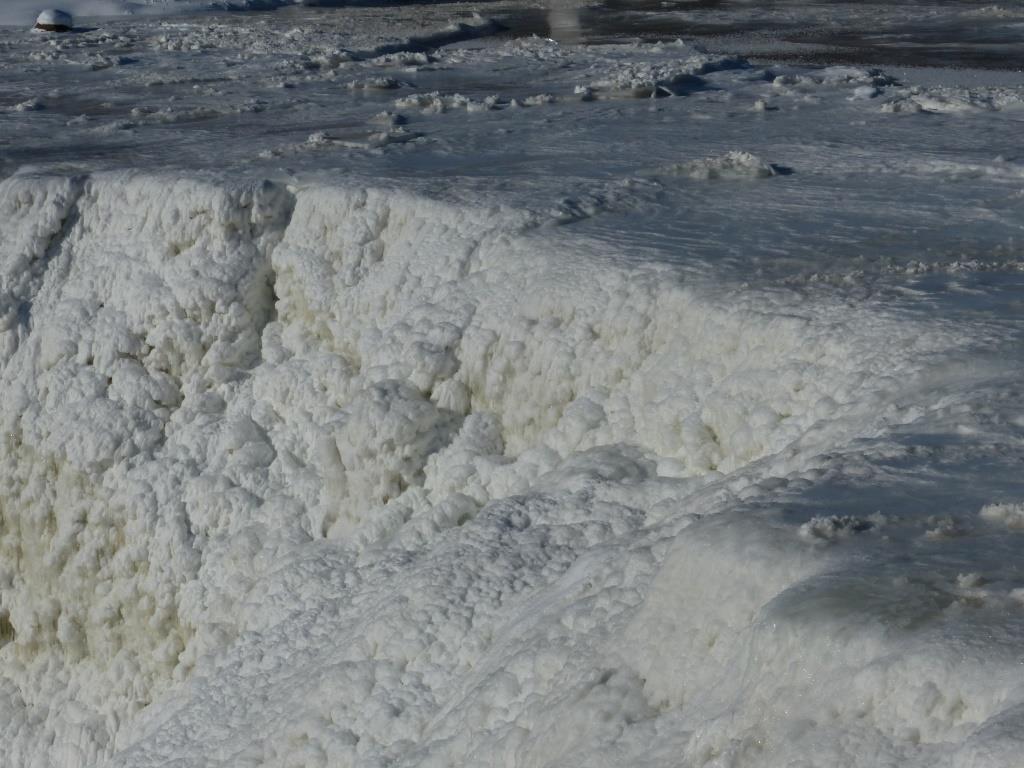
Here’s what happens to a waterfall in a chilly breeze at -25 (-13 Fahrenheit):

The lip of Kakabeka Falls in summertime...

The lip of Kakabeka Falls in summertime…

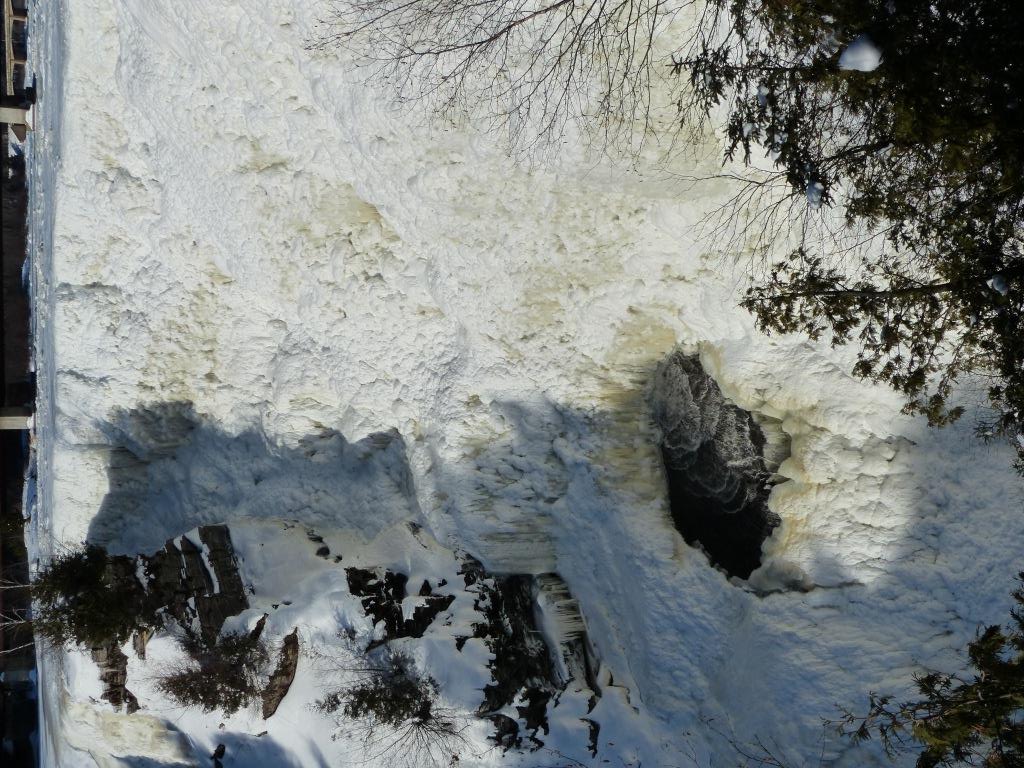
...and in the winter. All motion ceases.

…and in the winter. All motion ceases.

kakabeka_falls_ice

Some of the upstream river is still unfrozen and it slides behind the “ice falls,” briefly appearing in a pool below, before diving back down.

All this is very impressive, but the birds and mammals are even more staggering. Chickadees bounce among the branches, a goshawk chatters, ravens wing by, and red squirrels are out foraging. I took off my gloves (idiot) to snap a few bird photos. One minute later, the wind and cold did their work and I lost all feeling in my thumb. Its skin still tingles, hours later.

I salute you, boreal masters of mikwan, ice.

kakabeka_chickadee

Black-capped chickadee

Pine grosbeak

Pine grosbeak

Rusty Blackbird

A very unusual visitor came to our bird feeder this morning: a male rusty blackbird. Although scattered flocks of them occur in the wet woodlands in the valley, this is the first one that I’ve seen in the Sewanee uplands. He ate some of the chickens’ corn, then took off.

Photo by Blake Matteson, used from Flickr under Creative Commons Attribution-NonCommercial 2.0 Generic (CC BY-NC 2.0)

Photo is by Blake Matheson, taken in California. From Flickr under Creative Commons Attribution-NonCommercial 2.0 Generic (CC BY-NC 2.0). Blake’s photostream: http://www.flickr.com/photos/34328261@N02  Rusty feather edges are seen in winter only. The males turn all glossy blue-green-black in the summer. Females are gray-brown. Both sexes have a pointed, slightly downcurved beak.

Rusty blackbirds nest in the far, far north, all the way to the tree line. They build large nests in trees alongside beaver ponds, muskeg swamps, and other watery habitats. The nests are so sturdy that other species, especially solitary sandpipers, like to use them in subsequent years.

Range of the rusty blackbird during June and July. Data are compiled from ebird.org. The darker purple indicates more frequent reports of birds.

Range of the rusty blackbird during June and July. Data are compiled from ebird.org. The darker purple indicates more frequent reports of birds.

In the winter, the birds flock in bottomland wetland forests in the southeast, sometimes mingling with larger flocks of grackles and red-winged blackbirds, but sometimes keeping to themselves.

Range of the rusty blackbird during December to February. Data are compiled from ebird.org. Note the concentrations in the wetter lowlands.

Range of the rusty blackbird during December to February. Data are compiled from ebird.org. Note the concentrations in the wetter lowlands.

Unfortunately, this species appears to be in free-fall. The available data show a 90% decline since the 1960s. The cause of these plummeting numbers is not fully understood. Changes in the availability of forests on either the summer or winter grounds could be part of the explanation. Northern forests are being increasingly logged and disturbed, and climate change is drying them out and causing more frequent fire. Acid rain and mercury are also significant problems in the north. Here in the south, hardwood forests are cleared for agriculture, housing, and pine plantations. But neither of these habitat trends seems severe enough to account for the decline. Some as yet unknown form of contamination or disease might be involved. Or the decline might be rooted in the supply of the rusty blackbirds’ favorite foods, grasshoppers and other insects.

All this bad news is made a little sadder by the recent death of Russ Greenberg, the ornithologist whose work brought to light and highlighted the plight of this species. Russ was brilliant, genial, hard-working, and inspiring. He was especially kind to greenhorn grad students like my younger self, generous sharing his time and insights. He also pioneered the study and promotion of the ecological benefits of shade-grown coffee, and made many contributions to our understanding of bird biology. Part of his legacy is a continent-wide effort within the academic and conservation community to better understand the rusty blackbird’s decline. If you’re a birder, I encourage you to stay tuned to ebird for news about the upcoming rusty blackbird “blitz” in the spring of 2014, a survey effort designed to learn more about their wintering grounds.

Much of the natural history information in this post comes from:

Avery, Michael L. 2013. Rusty Blackbird (Euphagus carolinus), The Birds of North America Online (A. Poole, Ed.). Ithaca: Cornell Lab of Ornithology; Retrieved from the Birds of North America Online: http://bna.birds.cornell.edu.bnaproxy.birds.cornell.edu/bna/species/200    doi:10.2173/bna.200

Red: A ticket outta here (for travelers that have already come a long, long way)

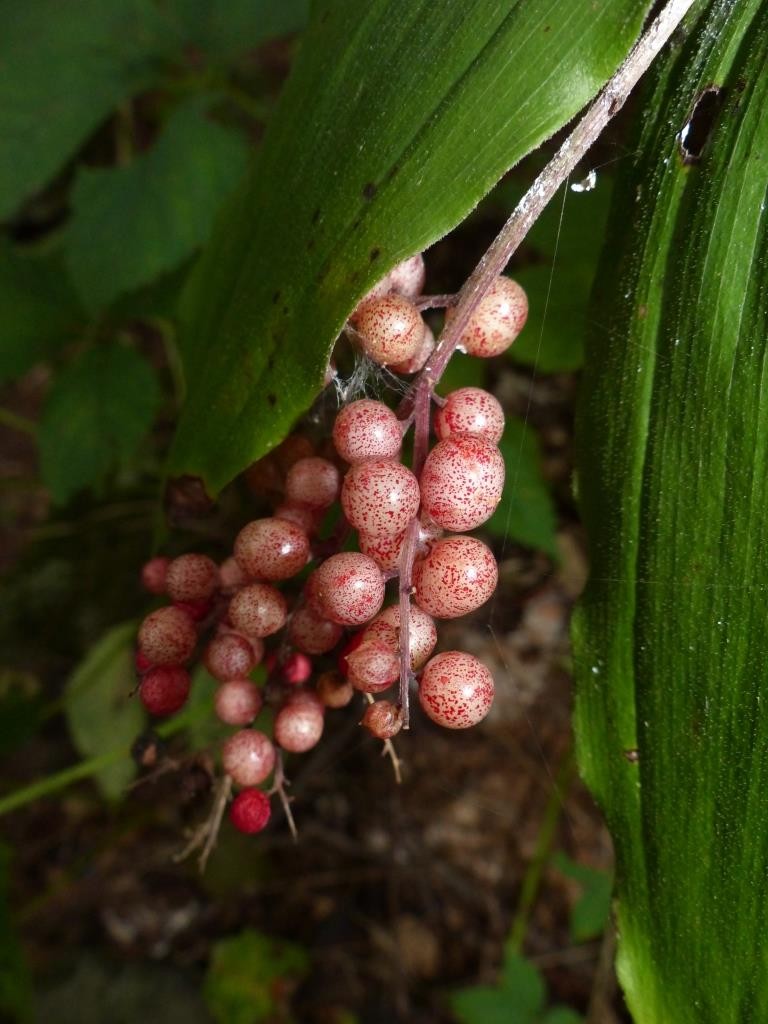
The coming wave of songbird migration has plants getting excited: finally they can get the kids out of the house before winter’s rigors set in. As thrushes, vireos and warblers move southward by the millions, their hunger creates an opportunity for seed dispersal that many plants have grabbed with enthusiasm. Look around in the late summer woods and you’ll see berries fattening up, preparing the bribe for passing birds. Bright red is the color of choice, the hue most likely to seduce an avian eye, so berries tend toward the garish, not the subtle blush.

We’re a few weeks away from the peak of migration (late September through early October brings the largest numbers), but the plants are ready. These eager food vendors include spicebush, dogwood, yellow Mandarin, Jack-in-the-pulpit, and Solomon’s plume.
prosartes lanuginosa fruit

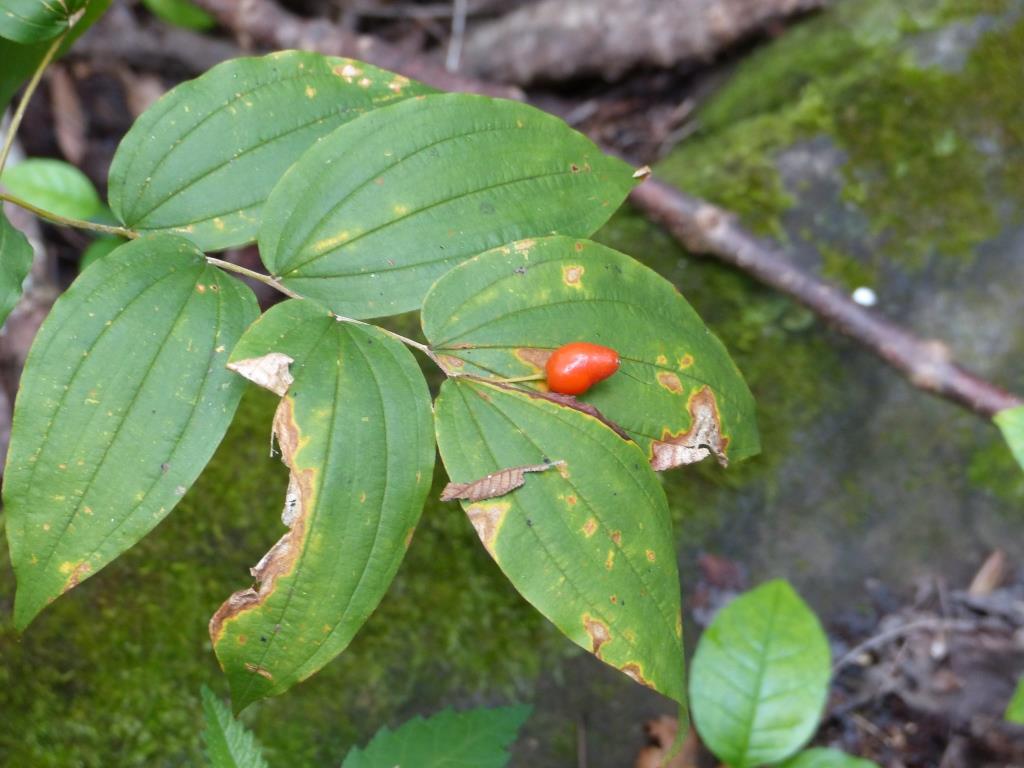
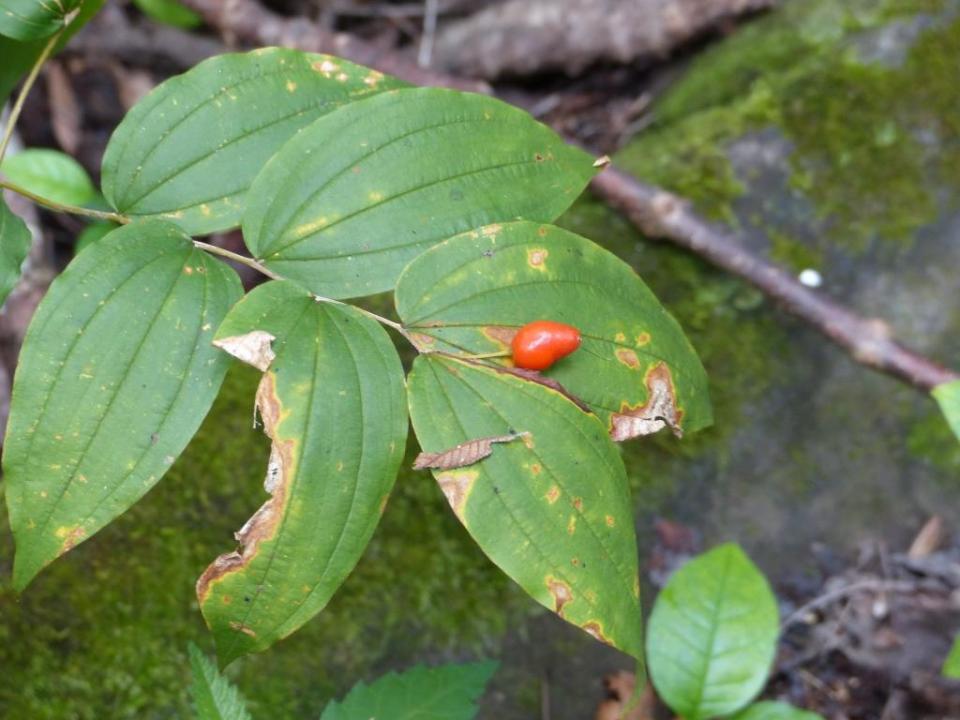
Fruit of Yellow Mandarin (also known as Fairybells, Prosartes lanuginsoum)

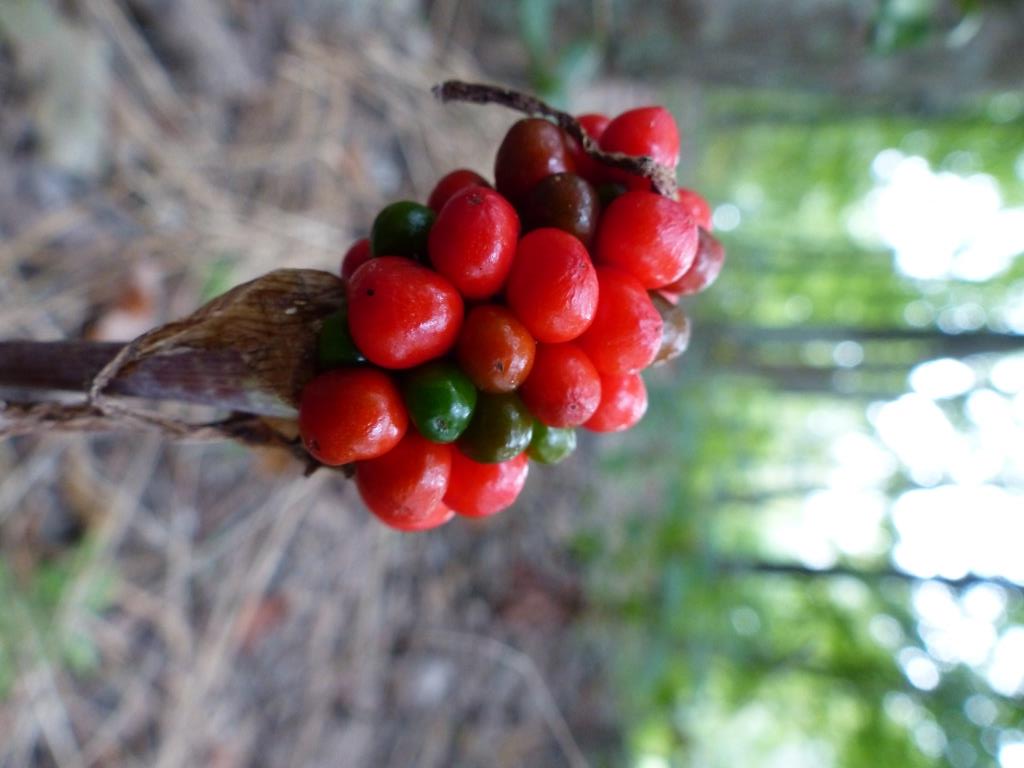
Jack-in-the-pulpit fruits (Arisaema triphyllum)
Jack-in-the-pulpit fruits (Arisaema triphyllum)

Fruits of Solomon's plum (Yellow Mandarin (Maianthemum racemosa). Often also called "False Solomon's Seal."

Fruits of Solomon’s plume (Maianthemum racemosa). Often also called “False Solomon’s Seal.”

Yellow Mandarin has an interesting family tree. It has a few siblings in North America, but all its other close relatives are Asian species. This whole clan was for years classified in one genus, Disporum, but the North American species are now recognized as distinct enough to merit placement in their own genus, Prosartes. Solomon’s plume and Jack-in-the-pulpit also have close relatives in Asia. This Asia-America connection is echoed by the biogeography of many other species, especially among the plants of the Southern Appalachians which often have close affinities to species in East Asia. Boufford and Spongberg, scientists from the Harvard Herbaria, summarized the situation:

The similarities of the forests of Japan, central China, and the southern Appalachians in appearance as well as in ecological associations are in many instances so great that a sense of déjà vu is experienced by botanists by one of the regions visiting the other.

The list of Appalachian species with very close East Asian kin is long and, surprisingly, is much longer than the same list for plants with close kin in western North America. Japan is closer than Oregon, it seems. A few of the more familiar examples include: tuliptree, magnolia, dogwood, Virginia creeper, mayapple, ginseng, partridge-berry, blue cohosh, witch hazel, and honey locust. And, of course, the aptly-named “Mandarin.”

Donoghue and Smith’s analysis of this pattern concludes that close evolutionary connections between East Asian and Eastern North American species are “exceptionally common in plants, apparently more so than in animals.” Their work suggests that “many temperate forest plant groups originated and diversified within East Asia, followed by movement out of Asia at different times, but mostly during the last 30 million years.”

These botanical connections are reminders that Asian and American temperate forests were once connected, a connection that was severed as the world dried and cooled in the late Cenozoic. But it is also the result of a few long-distance dispersal events between climatically similar areas.

Animals move to the beat of a different biogeographic drummer. Their kinship patterns are more predictable: western and eastern North America share many close relatives, connections south to the tropics are also common.

So the migration of American birds is powered by Asian food. The botanical restauranteurs hope that the birds opt for the take-out option, carrying seeds away from the parental storefront. Most of these seeds will land a few meters from the parents, but a very small number might make a huge leap, perhaps landing in southern Mexico or on the coast of South America. There, they’ll likely perish. But the biogeographic future is written by the one or two that can put down roots and flourish.

The same is unfortunately true for plant diseases. A few long-distance migrants are reshaping the forests of the world. It is no accident that so many of the more notable plant-killing invasive diseases in the Southern Appalachians have their origins in Asia. Once they get over here they find a “home way from home,” minus the constraints that they experienced in their homeland.

I’ve rambled about the color red before, both here on the blog (“Quite possibly the most overused image of North American birdlife”) and in The Forest Unseen (“November 5th — Light”). I’ll note briefly here that until the leaves fall in a few weeks, the plants face an uphill battle against the physics of light in the forest. It is dark in the woods these days (photography is impossible without steadying the camera on my boot or using a flash). The summer tree leaf canopy is not only robbing most of the light, it is selectively stripping out the reds. Only when a shaft of sun sneaks through a canopy opening do these fruits truly shine. As autumn comes on, the botanical beacons will light up more often.

Thrushes: get ready.

“…beauty on the water, and the great heron feeds”

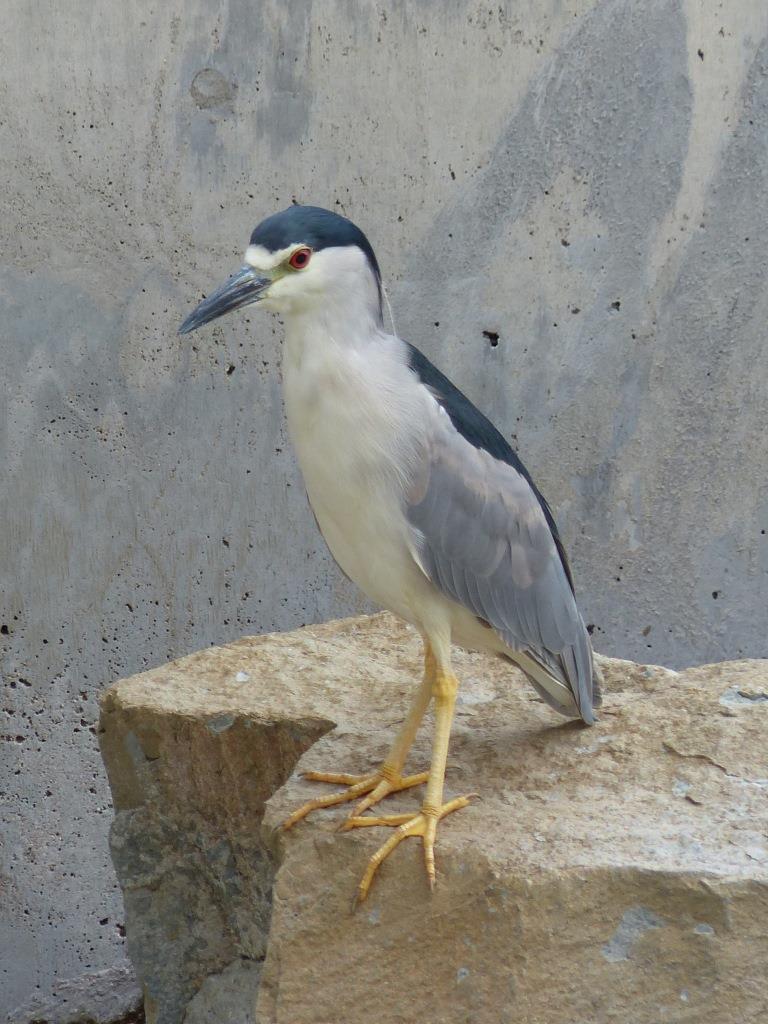
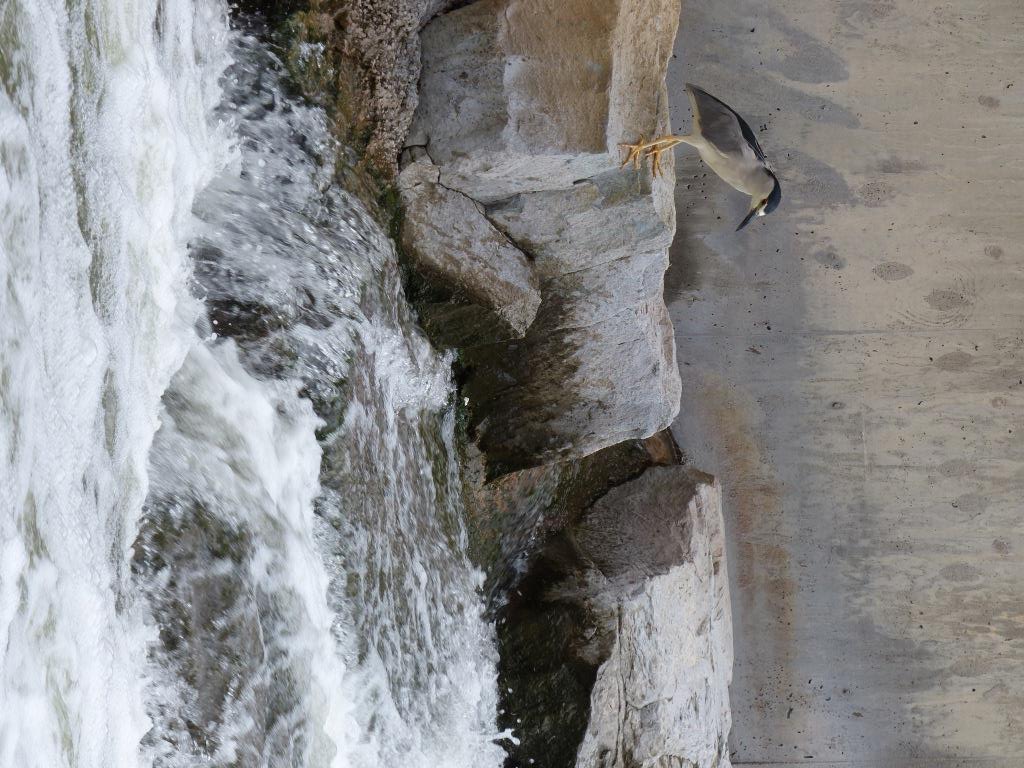
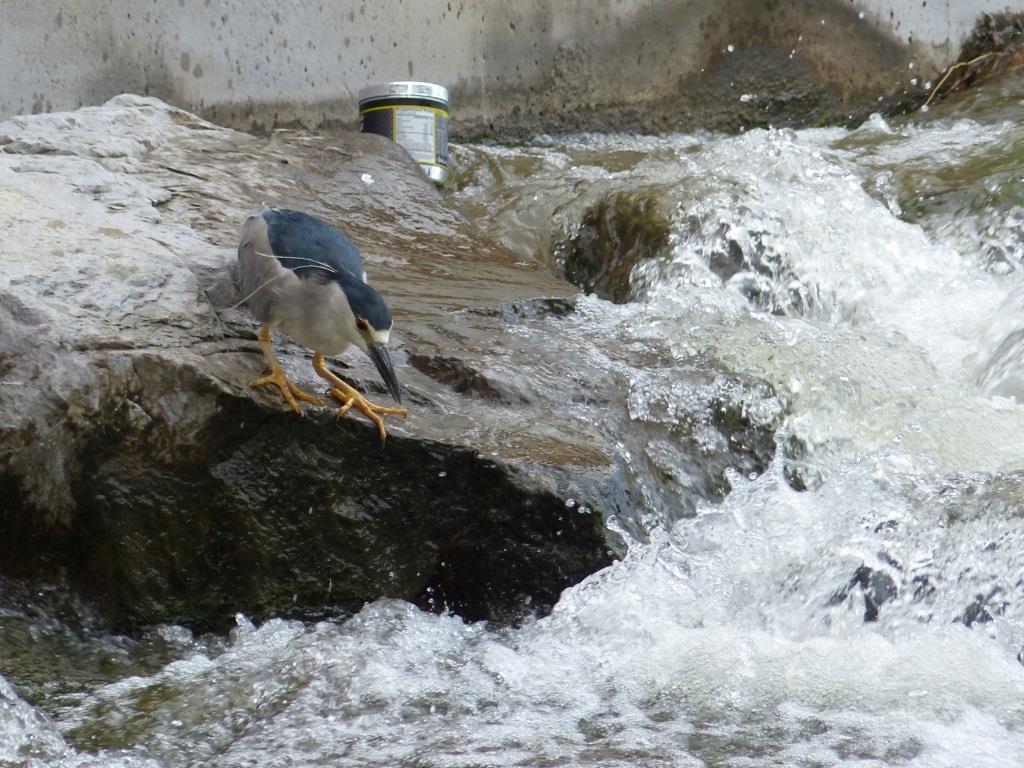
This black-crowned night-heron was stalking the hissing water along Cherry Creek in Denver. The walkway and bike trail along the creek is used by hundreds of people each day, so the bird paid no heed to the human traffic. Just like the famous animals of the Galapagos, urban animals (human and non-human alike) can be observed in close quarters.

nightheronclosenightherongazenightheroncrouchnightheronjoggerCherry Creek runs through the heart of town. On its banks Denver’s history has played out: the brutal removal of Arapahoe Indians, the booming population of immigrant settlers whose incomprehension of flash floods caused early versions of Denver to wash downstream, typhoid epidemics as the creek’s waters served both as drinking water source and sewer, extensive industrialization that turned the creek into an inaccessible tangle of railroads and warehouses, and the work of generations of civil servants whose commitment to reclaiming the vitality of the creek has turned it into a much-used garland of greenways and parks.

On Saturday afternoon, the confluence of Cherry Creek and the South Platte hosted nearly two hundred picnickers, swimmers and walkers. Hundreds more passed on the riverside trails. This is a phenomenal achievement for Denver: no longer are the joys of Colorado’s waters available only to those with the money and time to drive to wilderness fly-fishing spots. Some of that wild water flows right through the city, bringing fish to the night-heron and pleasure to the weekend amblers. The water erodes just a small part of the many, many barriers that divide our society.

south platte denver

Alligator flows down, flies up

Dead alligators move fast. In just a few days, all the heft of the alligator’s body has gone, like smoke in a heavy wind. Flies and beetles carried some of the body’s remains down; putrefying bacteria and purifying vultures carried other molecules aloft.

All that remains are bones and rubbery skin. A deflated inner tube lies over limestone rock fragments.

alligatordeadalligatordead3The most unusual of the animal’s bones are the dermal scutes, bony plates that form an exoskeleton down the animal’s back. The scutes of young alligators are covered in skin, but this quickly wears away. The alligator therefore has both an endoskeleton (like us) and an exoskeleton (like the arthropods).

alligatordead2

Fledgling Hooded Warbler

My ears found this one for me. I was studying a beech tree when the mother’s chup chup calls grabbed my attention. She got closer and the calls jumped into a higher register, tink tink. Surely a nest must be close by. Junebug The Hound and I saw it at the same time: not a nest but a tiny fledgling in a blueberry bush.

fledgling hooded warblerEight days ago this creature was inside an egg. Twelve days before that, the bird was just an egg and a sperm cell, yet to unite. In a couple of months this youngster will, with luck, be in the forests of the Yucatan in Mexico.

May the big raccoon that I saw up a neighboring tree find its dinner elsewhere tonight.