Author Archives: David George Haskell

What is a “seahawk” anyway?

A sports team of ambiguous nomenclature and symbolism takes the field today. The seahawk logo matches the appearance of no Seattle bird that I know of. The logo design itself appears not to be a hawk, but an eagle, a design taken from the Kwakwaka’wakw transformation mask of the Coastal Indians. Even though the NFL knows all about property rights and branding, no Indian got any royalties, to my knowledge.

The captive bird that flies out before games is an Augur hawk from Africa, a distant relative of the red-tailed hawk, in the Buteo genus. It is not a seabird, but feeds in mountains and grasslands. Thanks to the Smithsonian Magazine for that interesting tidbit. This captive needed some serious training to prepare it to face the whooping Seattle fans.

“Seahawk” might refer to either an osprey (not a hawk, but a bird in its own family, a relative of hawks and eagles) or a skua (a fierce cousins of gulls). The osprey has a bold eyestripe, not a two-tone head, so the color match with the sports team logo is imperfect, as is the size of the beak. Ospreys feed by swooping down on fish with great skill and elegance. Skuas, our other contender for “seahawk,” look nothing like the logo. They feed by robbing other birds, eating the afterbirth of marine mammals, preying on the eggs and young of other seabirds, scavenging dead meat, and generally scraping the barrel of respectable behavior. We’ll see how the game goes, then decide which bird is the better fit.

Sandhill Cranes at Hiwassee Wildlife Refuge, TN

2015-01-16 Sandhills 037Tens of thousands of cranes gather at Hiwassee. Gruuu gruuu: sound resonates within the trachea coiled within their sternum. Horn section of the avian band. An ancient sound; Sandhill Cranes have flown across North America for at least ten million years.

In this recording, made on my phone, you’ll hear the cranes overhead, and the ack-ack artillery of photographers shooting their pixel flak skyward:

2015-01-16 Sandhills 028“…not quite the world’s” William Stafford, Watching Sandhill Cranes

“…so stears the prudent Crane/Her annual Voiage, born on Windes;/the Aire
Floats, as they pass, fann’d with unnumber’d plumes…” John Milton, Paradise Lost

“The crane’s legs/have gotten shorter/in the spring rain” Basho (Matsuo Kinsaku)

2015-01-16 Sandhills 022

Je suis Charlie?

Charlie Hebdo is back in circulation. But freedom of expression is of course massively restricted in many parts of the world. Je suis Charlie? Unfortunately the answer is too often, no.

For a couple of practical steps that you can take to help one writer experiencing egregious punishment for setting up a blog in Saudi Arabia, see these pages at PEN America and Amnesty International.

Christmas’ long strange trip to oil towns in the Amazon

A Christmas nativity scene in Coca, Ecuador. Coca is a rough, booming oil town on the edge of the Amazon, one of the hubs of the rapidly expanding oil and mineral extraction industry in the region.

Coca sits almost exactly on the equator, yet the nativity scene carries marks of the temperate zone: the meandering, anastomosing cultural rivers of Christmas. One stream was born in the deserts of the Levant, another in the forests of Northern Europe, yet another in the imaginations of department store marketing executives in the US. They all wash against the shores of Coca’s Napo river, merging into wells of local culture and the flow of five hundred years of Christian colonialism in the region.

The main tableau features Middle Eastern figures with Old World farm animals, set against a backdrop of the Andes. Some tundra animals also make an appearance: reindeer arranged along the Andes’ foothills.

cocaMore reindeer, dressed in European holly and pine, hang from plastic boughs of boreal spruce:

reindeerSnowy European gingerbread houses intermingle with post-colonial Andean villages:

snowhousesvillageIn a town just down the road, the total lack of snow in this ever-hot climate has not prevented creative constructions of snowmen at many street corners:

snowmanLike Christmas celebrations everywhere, people have created a cultural syncretism, a mash-up of our inheritances. Christianity has some opinions about its own power and the status of other systems of belief. Therefore Christmas nativity scenes in Coca, as is true around the world, exclude many dimensions of local human and non-human diversity of life. So syncretism has its limits, and these limits deracinate Christmas from local soil.

In the Western Amazon, this unrooting has profound political and ecological consequences (more on these later). It also results in a great loss of aesthetic opportunity for community celebrations. The tropical forest could add some spectacular local color to a manger scene. Might a tapir or shaman be allowed into the picture? Might we, in North America, let bison and medicine women into the circle? Locavore religion? We shall see.

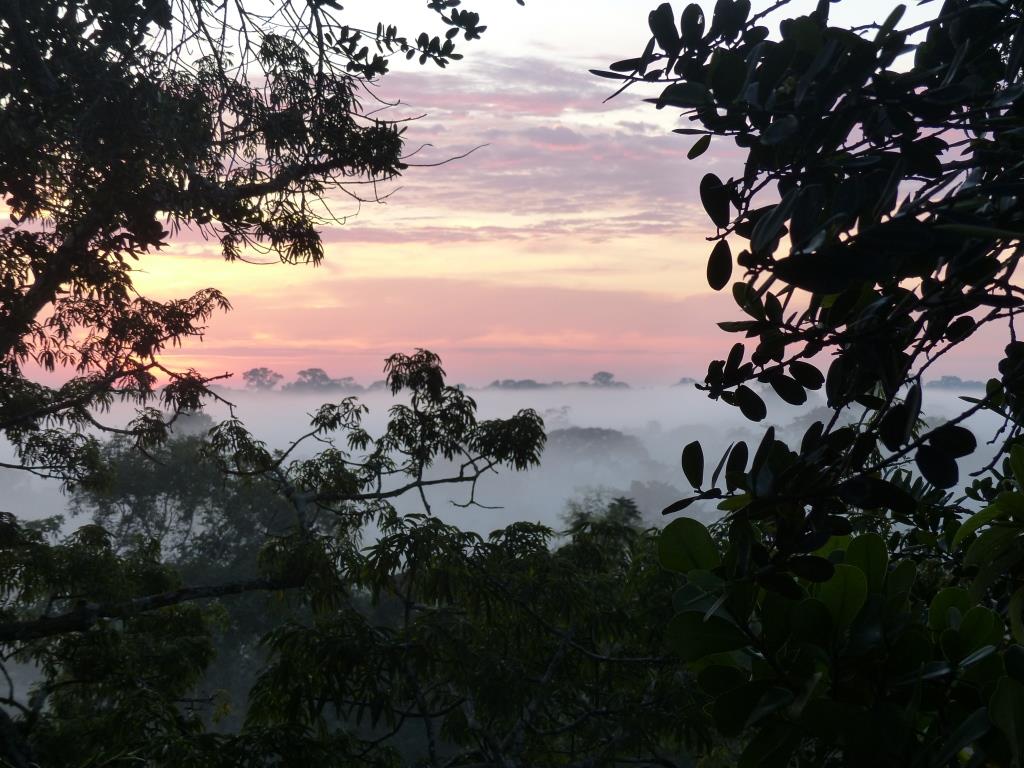
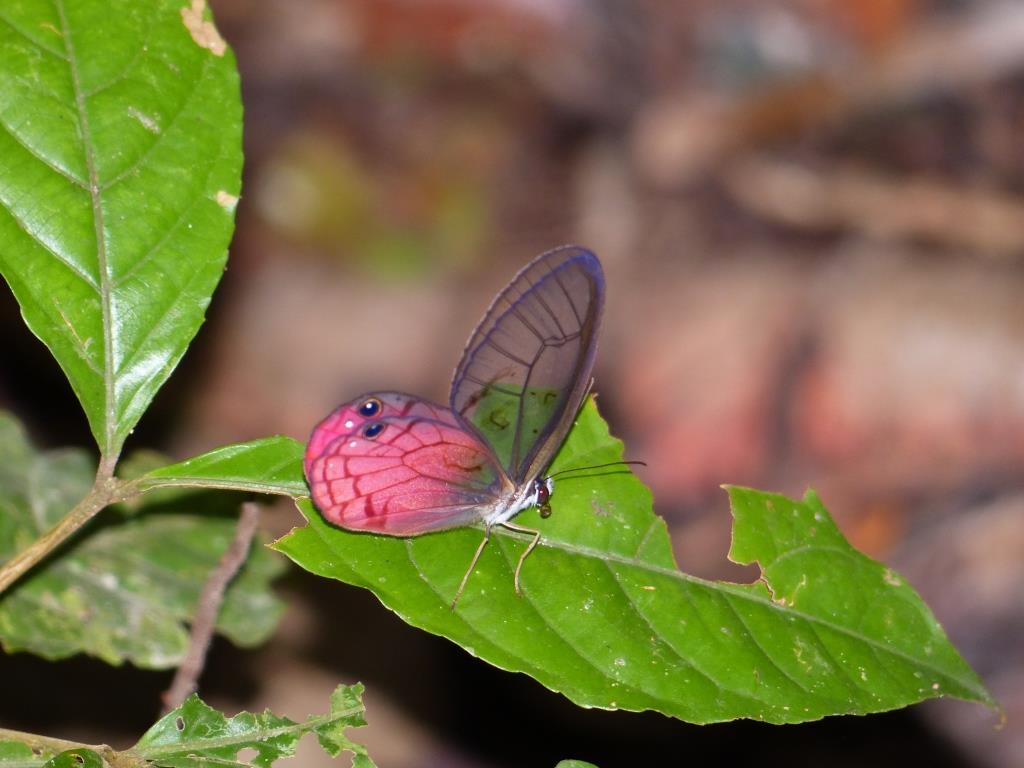
sunrisesunsrise2And a clearwing butterfly, surely a suitable symbol for a tree angel?

clearwing

The dancing oysters of Hiroshima’s market

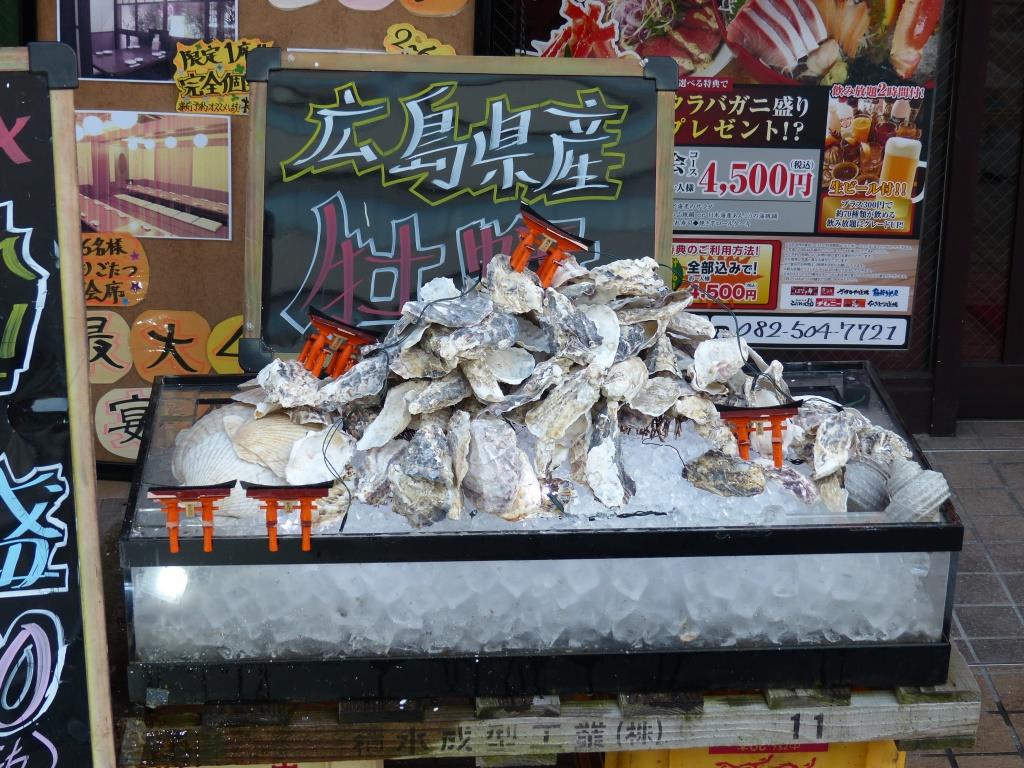
oystersThese oysters were harvested in the Seto Sea off the coast of Hiroshima. This sea has thousands of bamboo rafts floating on its surface, each raft home to huge colonies of oysters dangling from ropes in the water below. The region produces tens of thousands of tons of oysters every year, a large portion of total Japanese production. There are so many of these oyster farms that the filter-feeding activities of the oysters have a significant cleaning effect on water pollution in the region. Unfortunately, the accumulated toxins mess with the sex lives of the bivalves (an aphrodisiacal irony?) and possibly the health of those who eat them. Fortunately, in the last few decades, wetland restoration efforts have helped to restore vitality to the sea and reduce these problems.

Back to the market: The oysters were not just quietly lying on ice, as oysters so often tend to do. Not only were the oysters decorated with miniature representations of the torii gates at Itsukushima Shrine, these oysters had a funky groove. I took a short video of this zoological son et lumière show.

乾杯, 高貴なカキKanpai, noble oysters!

Jericho

The city of Jericho is most famous for the unkind things that Joshua is reputed to have done to Jericho’s populace after God gave him the nod to move in. But Jericho’s history is far more complicated than the Biblical story. Jericho is likely the oldest continually inhabited city in the world and archaeologists have unearthed more than twenty distinct physical “layers” of remains, evidence of dozens of city cultures that waxed and waned over ten thousand years. Old stone tools show that before the cities, hunter-gatherers lived in the region, extending human habitation of the region back another thousand years or so.

All this history literally heaped upon itself and built a hill, Tell es-Sultan, a mound that seems like a natural dome, but is in fact built entirely from the accumulated stone and sand of these cultures accreting on the remains of their predecessors.

towerThe photograph above looks down about twenty meters into a trench that has exposed walls that date to 8000 BCE. At that time Jericho was already a fortified city. People appear to have lived in and around ever since. Why? Water. The Ain es-Sultan spring runs year-round and has given life to Jericho for thousands of years, supporting agriculture in a landscape that is otherwise astoundingly dry for much of the year. The spring is sometimes called “Elisha Spring,” for the prophet who we’re told sweetened its waters. The archaeological evidence, though, suggests that the water was good before Elisha wandered past.

springThe fountain above uses a small portion of the water from the spring, the main outflow is contained within a building a few steps from here. The dragonflies that visit are separated from their kin by many, many miles. And because Jericho sits more than two hundred meters below sea level, these may be the lowest dragonflies on the planet:

dragJoshua was hardly the last person to clear a city in God’s name (although Jerusalem must surely beat Jericho in the league table of crusades and other bids for the “promised” land). After Israel’s declaration of independence in 1948, a portion of the seven hundred thousand refugees from the newly formed state moved to a camp in Jericho. In the 1967 war, many of these refugees relocated to Jordan, so the Jericho camp is one of the smaller remaining refugee camps.

Jericho has also been the site of violent attacks from both sides in the ongoing conflict over the West Bank. The city is currently run by the Palestinian Authority, under the eye of the Israeli army (who carry guns called “Jericho 941“). An Israeli army post sits just outside the city. During my brief visit, Palestinian men were lined up outside, summoned by the Israeli military for interviews.

Tell es-Sultan has yet to see the end of layers upon layers.

Caterpillars taking their tithe of the carrot tops

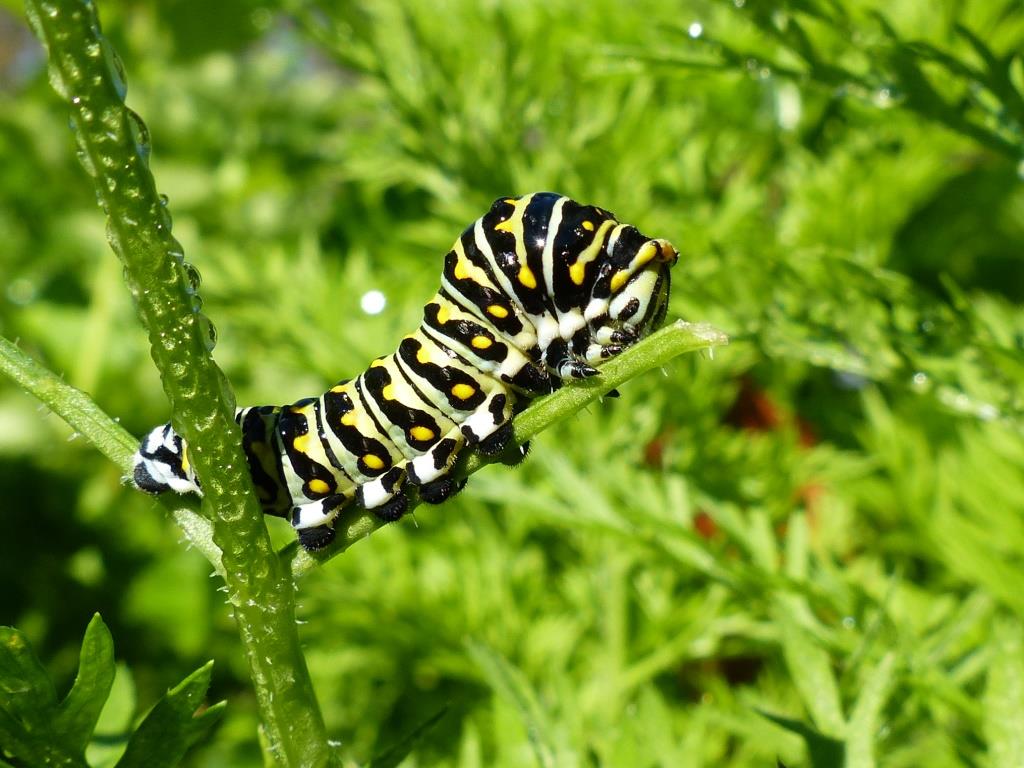
Nightly frosts brush the garden, but botanical energy continues to surge. Carrots, lettuces, and chard are all thriving in the cool sunshine. Black swallowtail butterflies have tapped this energy, laying eggs on the carrot leaves. The caterpillars fall into an inert stupor during the cold nights, but turn into animated single-minded leaf-munchers when the sun touches their skin. They are all in their last stage of molt. The next step will be transformation into overwintering pupae.

2014-10-22 swallowtail caterpillar 0102014-10-22 swallowtail caterpillar 0042014-10-22 swallowtail caterpillar 005For reasons unknown to me, Linnaeus named many swallowtails for prominent figures in Homeric/Greek poems. The black swallowtail is named (polyxenes) for Polyxena, the daughter of Priam, King of Troy. She does not appear in the Iliad but other accounts tell that her death marked the end of the Trojan War. The connection between these tales and North American butterflies seems tenuous, at best. But Linnaeus invented the rules of nomenclature, so he could do as he pleased.

Our caterpillars need not fear Achilles and, with luck, the birds will not find them.

Log walkers

I’ve had an infrared-triggered camera set up in Shakerag Hollow for the last few months. The camera takes photos of animals as they climb along or walk around the fallen ash tree. The camera takes color pictures during the day, then at night uses an infrared flash that is invisible to animals.

The huge log is quite a highway. Squirrels are by far the most abundant creatures, but others also make appearances.


This slideshow requires JavaScript.

Sounds from the edge of Boreas’ kingdom

A raven flies to its roost at dusk, wingbeats audible between the calls. Just before this flight, the bird was amusing itself with half a dozen others of its kind by harassing a sluggard-winged eagle. The ravens wove and swooped; the eagle flopped its great wings, finally passing out of sight on the horizon.

I think the squealing call at the end is a younger raven, greeting its homeward-bound parent.

Spectrogram of the same sound. Time moves left to right, pitch increases along the vertical.

Spectrogram. Time moves left to right, pitch increases along the vertical. “Stacked” lines are harmonics.

Night came and with it a frost.

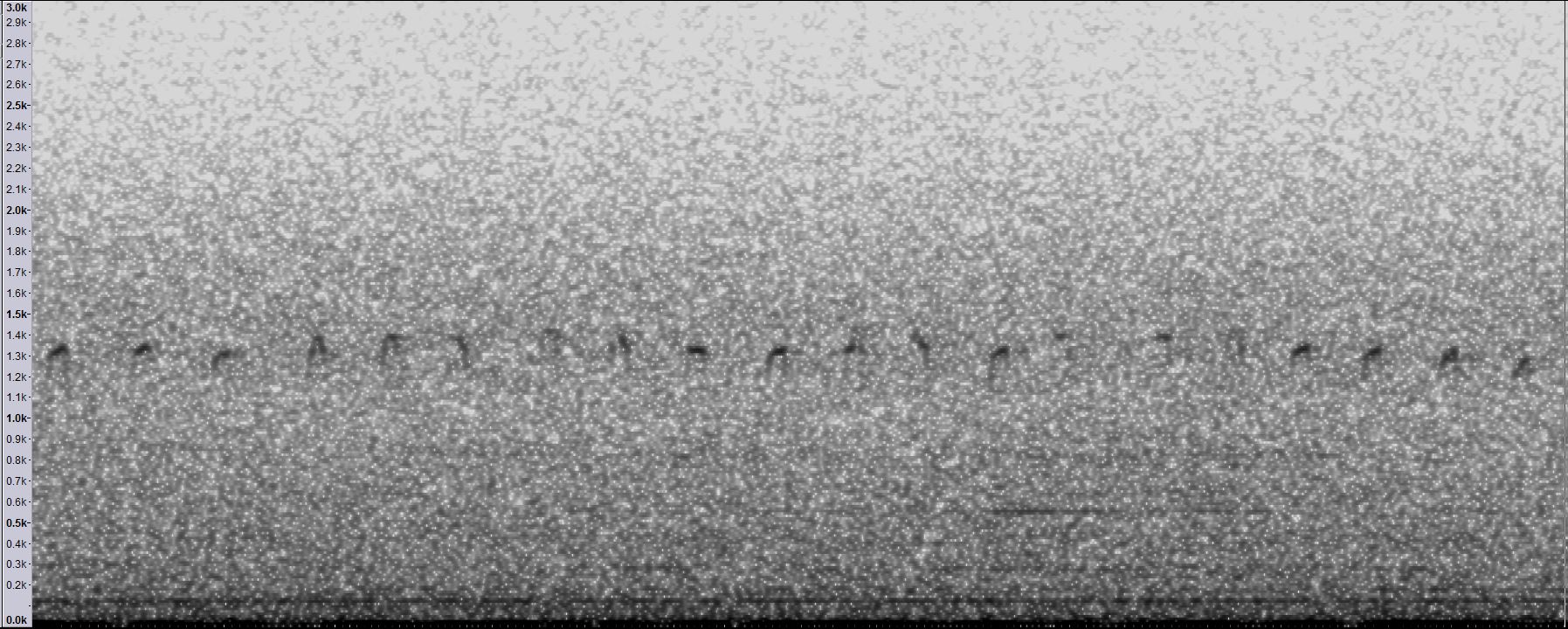
Fir at nightI lingered and was rewarded by the sounds of Northern Saw-whet Owls. These tiny owls are common in dense forests of Canada and the Western US, especially forests with rotten trees to supply nesting holes. In the winter, some birds move south, so Saw-whets can be found all the way to Florida in the right season. The bird gets its name from the supposed resemblance between its repeated whistled call and the action of whetting a saw. The analogy is stretched, unless your saw comes with a flute.

The owls were a distance away, so the following recording has some lower and higher sounds filtered out to make the call come through more clearly.

SawWhetOwlSpectro