Category Archives: Travels

Do southerners walk slower?

One of the few advantages of spending time in airports and train stations is the opportunity these places afford for watching people. Several years ago, Radio Lab ran a piece on how walking speed scales with the size of cities. Apparently, people walk faster in larger cities.

I timed how long it took people to walk twenty paces at my various stops:
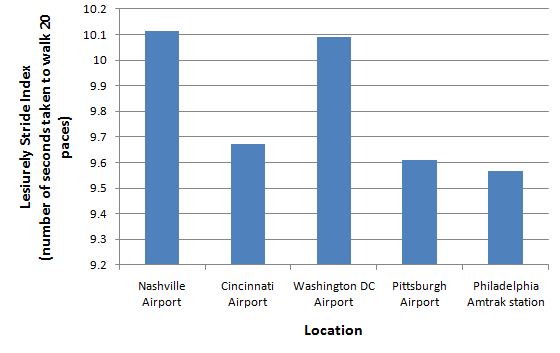
The "Leisurely Stride Index" calculated as an average of twenty people at each of five cities.

Evidently, there are some differences among cities (although the statistical rigor of this test is weak, to say the least).

But, the graphs below show that city size seems to have no correlation with walking speed. Latitude does: people in southern cities, especially the two southernmost in my sample, Nashville and Washington DC, walk with a more leisurely pace.
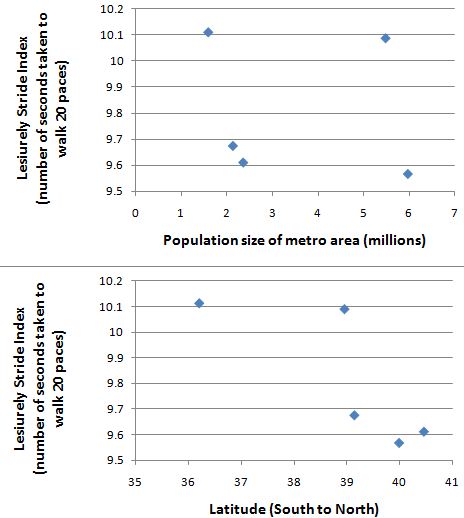
Walking speed plotted against population size (top graph) and latitude (bottom graph)

I suspect that Atlanta would blow this hypothesis out of the water. My few experiences in the airport there have not been conducive to leisurely strides.
Smithsonian

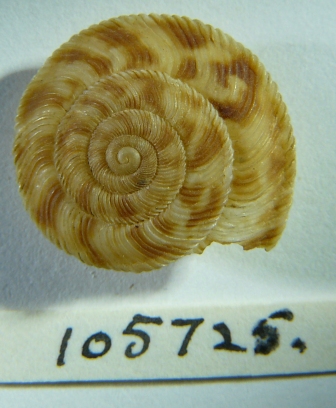
A few doors down from the White House sits the largest collection of molluscs in the country, including the holotype of the “Cumberland tigersnail,” Anguispira cumberlandiana, a species that was first described in 1840. The holotype is surprisingly colorful and fresh-looking, despite its age.

Anguispira cumberlandiana holotype

Anguispira cumberlandiana holotype, bottom view. The streaks on the base of this shell are confounding -- they are seldom found in other members of the "same" species and are very much like the streaks on the base of Anguispira picta shells.

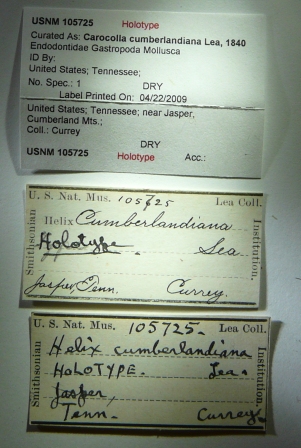
Specimen labels, including those from the 1840s

Bob Hershler, Research Zoologist and Curator of Mollusks, was a very helpful and welcoming host and was kind enough to let me look through some of the other type specimens — the Smithsonian has cabinets full of extraordinary material.

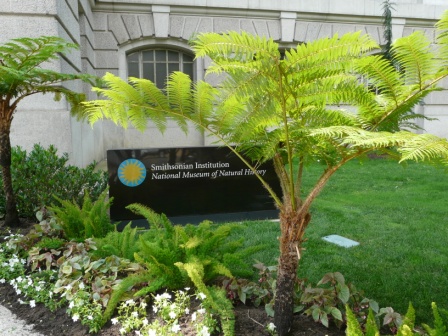
Following up on previous comments about museum street art, the entrance to the museum had no snail sculptures, but some tree ferns appeared as I was working inside. They were on the back of a truck when I walked in, no doubt coming to add summertime botanical interest to the entranceway. I think they are Dicksonia, a south-east Australian/Tasmanian species.

Australia comes to Washington -- tree fern in front of the Smithsonian

City bee

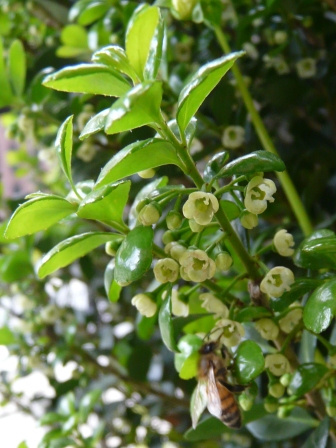
This honey bee was working the ornamental dwarf boxwoods in front of a sidewalk café in downtown Philadelphia.

Bee in the urban jungle

Even the most urban of habitats has a few drops of wild sweetness. Somewhere in the concrete someone has a hive on a rooftop, or wild bees have found a hollow wall.

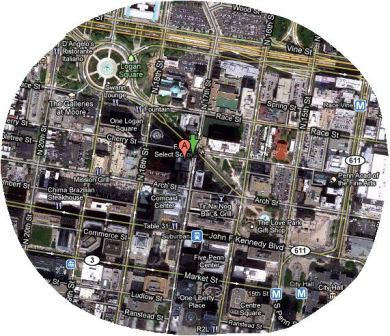
The bee's neighborhood -- her nest is hidden here somewhere

ANSP

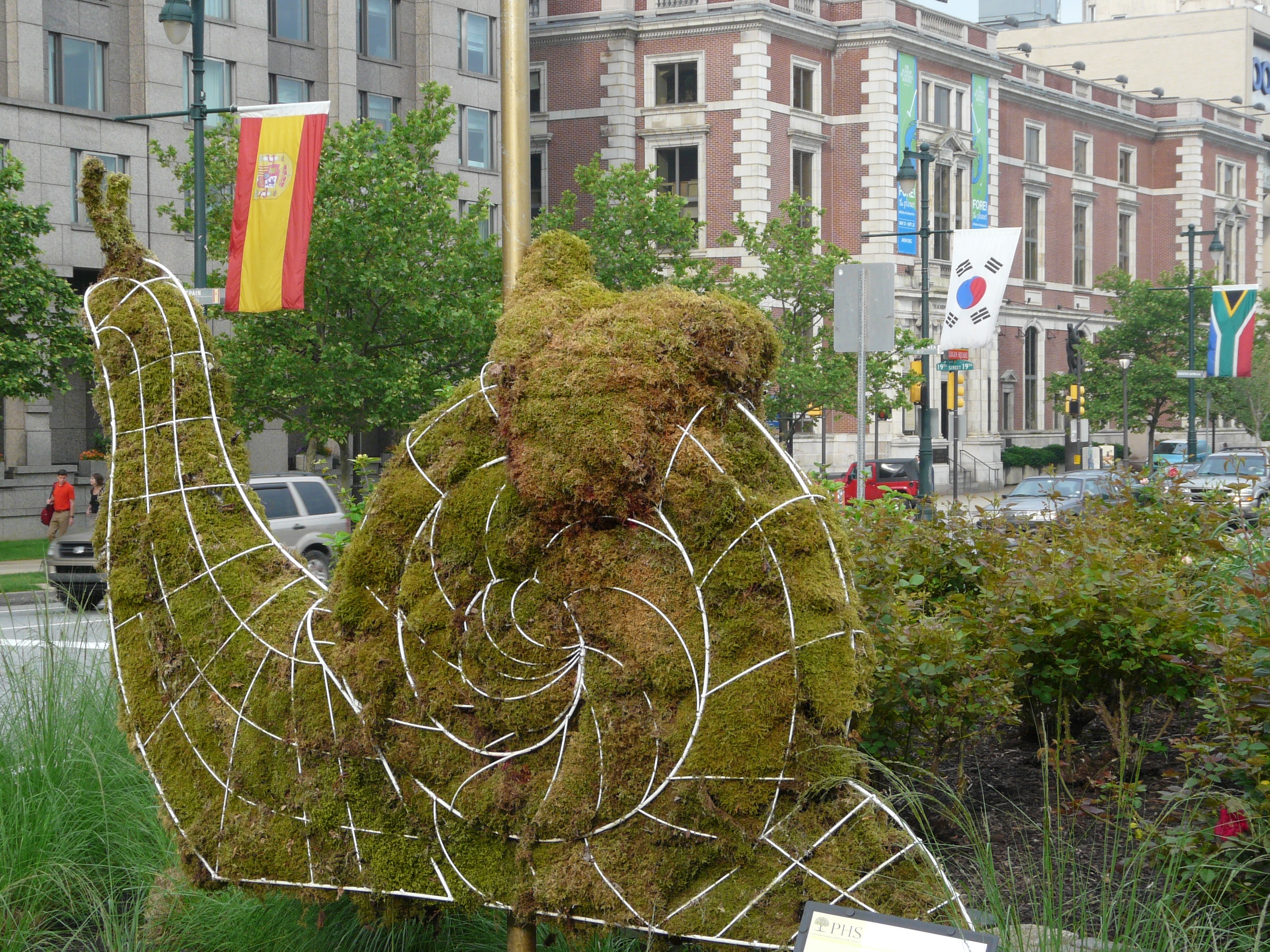
After my last blog post about the lack of street art snails, I was dumbfounded to walk up to the Academy of Natural Sciences in Phildelphia and see this:

Snail outside ANSP (the red brick building behind). There seems to have been some convergent evolution with bryophytes.

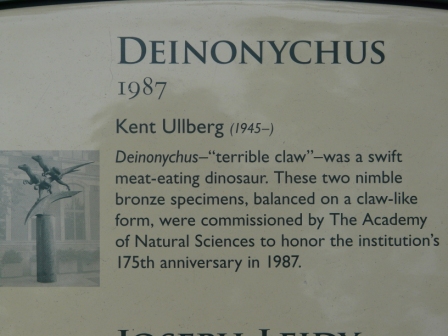
The ANSP also has cool dinos in front:

Deinonychus at ANSP


Thanks to the kind welcome of Amanda Lawless, Research Assistant in the Department of Malacology, I was able to examine more Anguispira specimens, including some from Sewanee collected in the mid-19th century when Sewanee was known as “University Place”:

Old Skool malacology in Sewanee

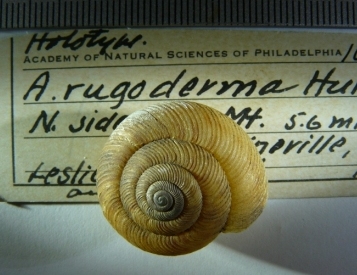
More holotypes. This one is from a species endemic to one small part of Kentucky:

Anguispira rugoderma holotype

A cornucopia of tigersnails!

Anguispira holotype-fest

Ooo la la, Holotypes galore at the Carnegie Museum in Pittsburgh!

Anguispira picta holotype, Carnegie Museum

Specimen labels from Anguispira picta holotype, Carnegie Museum

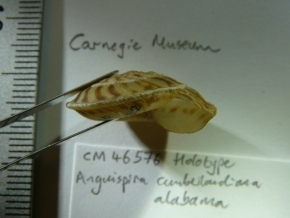
Anguispira alabama holotype, Carnegie Museum

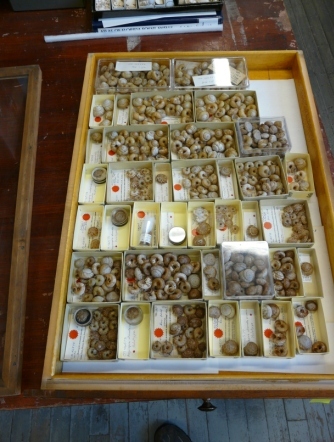
Drawer full of type specimens, Carnegie Museum

These are the original specimens from which the venerable G. H. Clapp described the rare tigersnails (genus Anguispira). These snails live in the rocky limestone outcrops that jut from the low mountain slopes around Sewanee.

After studying these snails for several years it was a treat to see and photograph these beautiful shells. The “holotypes” are the individual specimens to which the name of each species is attached – the throbbing heart of all of biology because without species names, the life sciences could not operate. Yay for taxonomy!

Jia Pan and I have been sequencing the snails’ mitochondrial DNA to peer into their evolutionary history and present-day genetic diversity. Our genetic work suggests that some previously undescribed forms may lurk in the shady mountain coves – we’re now checking to see how the appearance of the shells matches (or not) the genetic information. Thank you to Tim Pearce, Asst. Curator & Head, Section of Mollusks at the Carnegie Museum of Natural History for making my visit such a pleasure.

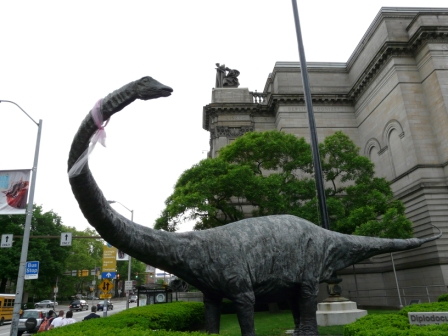
Surprisingly, the museum chose not to feature Anguispira in their street art:

Diplodocus, Carnegie Museum

Diplodocus nameplate, Carnegie Museum

Triceratops in full breeding colors, Carnegie Museum