Yearly Archives: 2012

Goslings and caterpillar

Continuing with the theme of cute animals, I was in Chattanooga today and took time out for a bike ride along the Riverwalk. Young animals from two very different parts of the tree of life caught my attention.

This mixed brood of Canada goose goslings was making its way upstream along the Tennessee River. There are at least two families, possibly three, in this “crèche.” Mixing families like this is common in waterfowl, although less so among Canada geese. There is safety in numbers, so these goslings benefit from each other’s presence.

This pipevine swallowtail caterpillar was crossing the concrete path. Although it looks fearsome, it is harmless to handle. But any would-be predator foolish enough to try to eat the caterpillar will soon regret its decision. These caterpillars feed on poisonous pipevine plants and sequester the toxins in their bodies. The toxins then get passed to the adult butterfly. The adult tastes so nasty that half a dozen other species of butterfly mimic the butterfly’s blue and black colors, gaining protection through deception. Predators generally leave these mimics alone for fear of biting into a pipevine swallowtail. The photo below is from last summer — note the remarkable iridescent blue. Although I frequently encounter the adults I have never before seen the caterpillar. So a close encounter with this bristly rubbery beast made my day. I put it back in the vegetation, away from the walkway.

Mammoths

The discovery of the remains of a miniature mammoth on the Mediterranean island of Crete was announced last week. These mammoths stood about waist-high and the reconstruction of the animal in the journal Nature must rank as one of the cutest scientific reports in a long time.

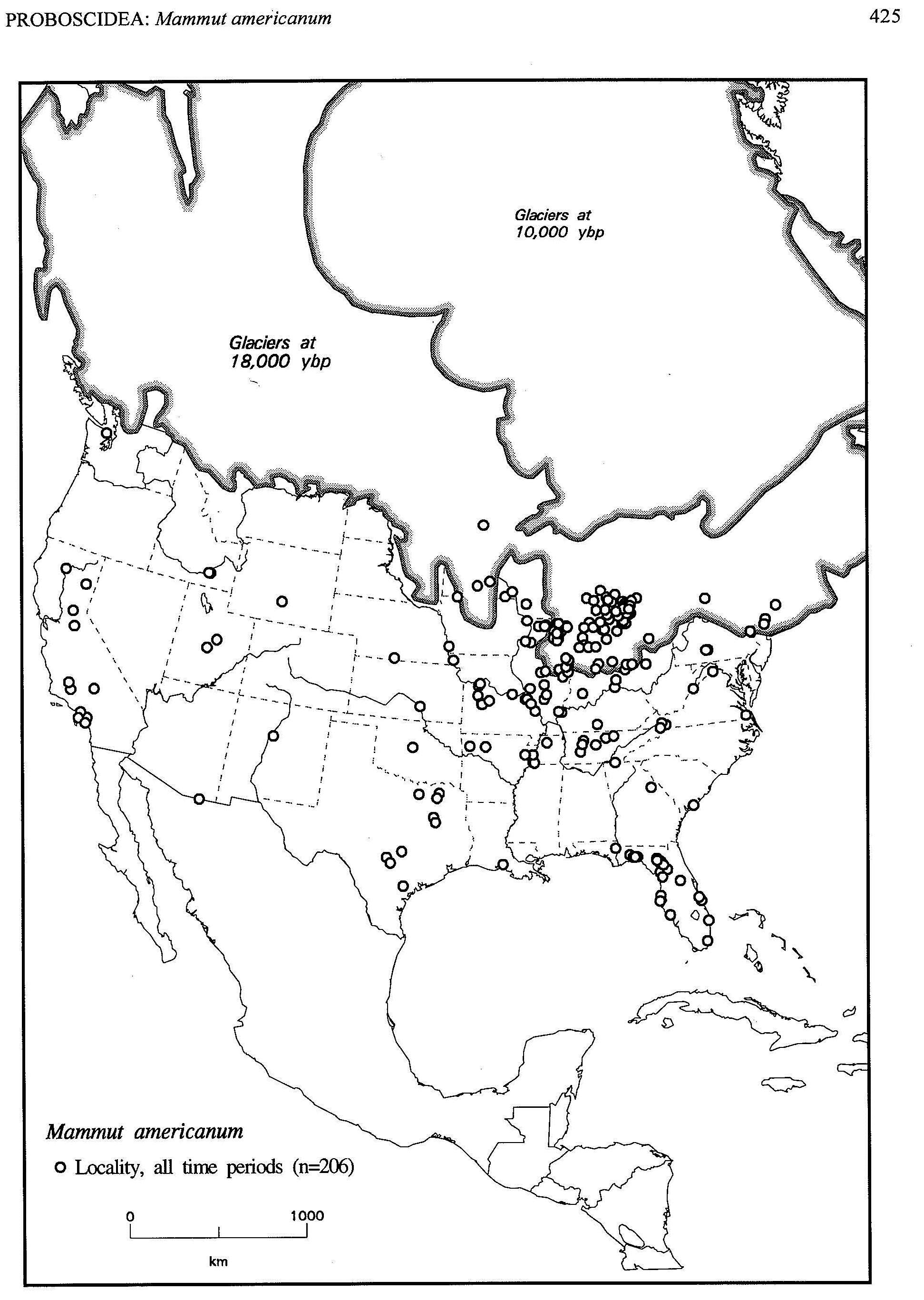
If Crete seems impossibly remote, the map below serves as a reminder that mammoths and mastodons (full-sized: three meters high) roamed North America until very recently. For three million years, this species wandered through forests in small bands, tearing up the vegetation. The “damage” left by the much maligned white-tailed deer is nothing compared to what these giant herbivores wrought. About ten thousand years ago the mammoths and mastodons disappeared. A combination of climate change (the last of many ice ages was ending) and predation (humans had just shown up on the continent) probably did them in.

So, we have to turn to our imaginations to experience what our forests were like for most of their evolution. We sit on a mountain ridge and watch a group of huge elephant-like beings work their way across the valley, twisting at tree trunks with their five meter tusks, ripping and nibbling at branches with their mouths. Their calls? Stirring, no doubt.

Each dot is the location of a fossil. Image from FaunMap: http://www.museum.state.il.us/research/faunmap/ This map is for the American mastodon. The fossils from Crete were mammoths, a different genus.

Trees in Oxford, MS

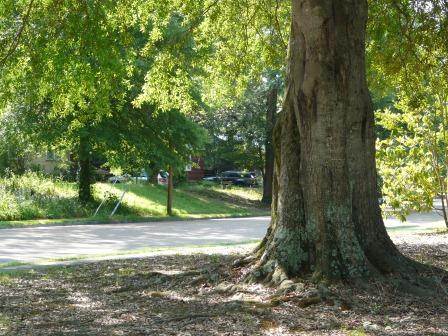
The number and stature of trees in Oxford, MS, is impressive. My stay was quite short, so my ramblings were brief, but it seemed to me that the sylvan nature of town extended well beyond the upscale neighborhoods. Urban trees and other forms of biodiversity are well-known to be associated with the more wealthy parts of towns (e.g., this and this study), so the presence of large trees in less affluent neighborhoods can be thought of as a measure of the “eco-justice” in communities: access to the practical and aesthetic benefits of nature.

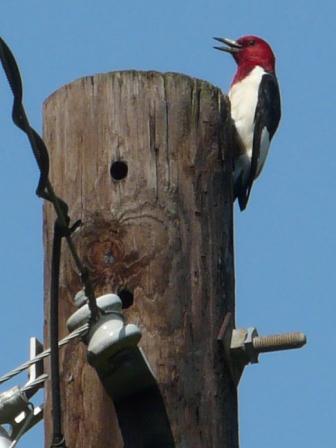
The large trees in the suburbs of Oxford attract a good diversity of bird species, including this red-headed woodpecker that was using the top of the power pole as a place to carry insects or seeds to jab with its beak.

The impressive tress in town contrast with much of the rural land in northern Mississippi where large plantations of loblolly pine dominate. These plantations are planted and cut like crops and, although they have more biodiversity than cotton fields, they generally host fewer species than native forests or residential areas (for my study of these differences on the Cumberland Plateau, see here).

Oxford’s wealth of trees didn’t “just happen.” The town has a tree board and a plan that not only seeks to preserve existing trees but also to expand plantings for the future. So, what lies behind the leafy charm of one of the most beautiful (and consequently one of the more prosperous) southern towns? Proactive urban planning, the work of loving the people and trees of the future.

“Given a choice between grief and nothing, I’d choose grief” — William Faulkner

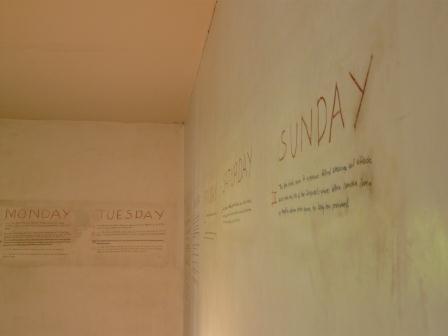
Rowan Oak, the home of William Faulkner from 1930 until his death in 1962, has the feel of a sarcophagus from which the King has been ghosted away. The ornamented shell is there, the bones have moved on, yet the spirit lingers. I think Faulkner would have liked it that way. I’m no expert on his work, but the interpretation (and preservation) of memory runs through his writing. Memory is now preserved and interpreted at Rowan Oak with care and skill.

A few of his own words about time, memory, and writing:

“The aim of every artist is to arrest motion, which is life, by artificial means and hold it fixed so that a hundred years later, when a stranger looks at it, it moves again since it is life.”

“Clocks slay time… time is dead as long as it is being clicked off by little wheels; only when the clock stops does time come to life.”

“I have found that the greatest help in meeting any problem is to know where you yourself stand. That is, to have in words what you believe and are acting from.”

“The past is never dead. It’s not even past.”

…and most telling of all, “Given a choice between grief and nothing, I’d choose grief.” Memory, indeed.

From the house and grounds:

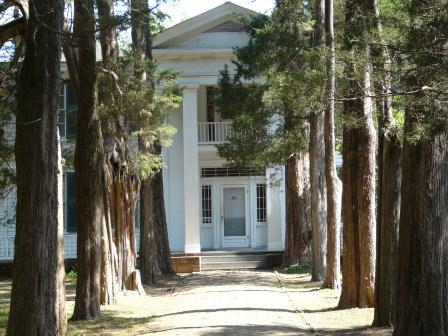
The entrance to the main house. Cedars line the driveway. Although they are not native to this part of Mississippi, they were planted with the hope that they would ward off yellow fever. Now they are grand old trees, filled with woodpecker holes.

Typewriter in his writing room.

Plot outline for The Fable drawn on the wall of the same room.

His thoughts on tools of the trade.

Punctuation to his writing.

More punctuation.

Estelle Faulkner’s watercolors line the walls.

…and she had this window AC unit installed the day after his funeral. He objected to AC until the end. The timing of the appearance of the unit no doubt is loaded with meaning that we’ll never have access to — did she willingly respect his wishes, or chafe at his strong-headed bullying, or did grief finally make the heat intolerable?

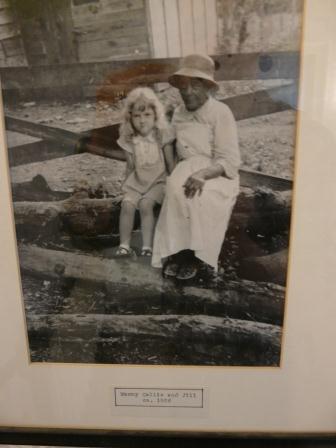
The Faulkner’s servants have a low profile in the house. A form of erasure. “Mammy Callie” is present in the house in this photograph; I did not encounter the other two servants. 

Servants’ quarters in the back of the house. These memories are locked. Hopefully restoration will be coming soon.

The old man’s boots have some miles left in them…

Pricky Pear in bloom

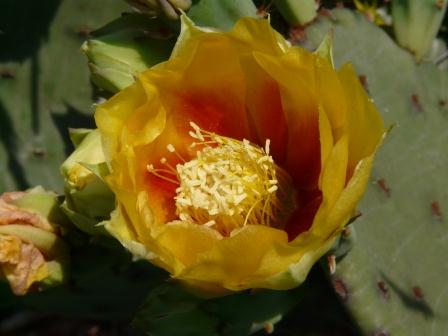
Tennessee’s only native cactus, the prickly pear (Opuntia humifusa) is coming into flower. The flowers stand on top of the fleshy green stems like torches on monuments — an apt comparison in both shape and brilliance of color. The gorgeous intensity of orange and yellow in these flowers is hard to convey. Wow. I feel my wax wings start to melt.

This cactus grows in places that are too hot and dry for most other plants: rocky outcrops, dunes, gravel, and thin rocky soil. I found this cluster of plants on the lichen-encrusted sandstone outcrop behind the Fulford Hall parking lot in Sewanee. There are dozens of cactus plants there, each one bearing several flowers. I’ve never seen such profusion. Perhaps the long warm spring has suited them.

Bumblebees love the flowers. Such is the strength of their desire that several were fighting their way down between the petals of unopened flowers. Later this summer I’ll check the patch again. The pulp of the fat red fruits is edible, although the spines urge caution in this gastronomic quest.

Living Planet Report 2012

The World Wildlife Fund (with its partners the Zoological Society of London, the Global Footprint Network, and the European Space Agency) released its Living Planet Report yesterday, a reminder of the state of our home.

“We are living as if we have an extra planet at our disposal. We are using 50 per cent more resources than the Earth can provide, and unless we change course that number will grow very fast – by 2030, even two planets will not be enough.” [four planets if we all lived like residents of the USA]

“…the Living Planet Index continues to show around a 30 per cent global decline in biodiversity health since 1970”

“These analyses indicate that continuing with “business as usual” will have serious, and potentially catastrophic, consequences. In particular, continued increases in greenhouse gas emissions will irreversibly commit the world to a global average temperature rise of well over 2oC, which will severely disrupt the functioning of almost all global ecosystems and dramatically affect human development and well-being.”

Surely one response to these somber words must be sorrow at the wreckage we’ve left behind in our seemingly heedless passage through life.

When to the sessions of sweet silent thought/I summon up remembrance of things past,/…Then can I drown an eye, unused to flow,/For precious friends hid in death’s dateless night…/…And moan the expense of many a vanish’d sight…

Such a response is not an exercise in pointless self-flagellation. By taking in this knowledge – by not banishing it with distractions, medicating it with irony, or washing it away with psychological salves — we open ourselves to feel the consequence of our actions, to step up and offer a genuine mea maxima culpa, and to spur ourselves to reform (all the while knowing that the “offender’s sorrow lends but weak relief”).

One of the biggest challenges in moving toward a “sustainable” economy is the utter disconnection between our actions and knowledge of their consequences. Our materials and waste generally come from and go elsewhere, making us almost totally unable to comprehend what we’re doing. But the disconnect is also one of the emotions – we’re taught that sadness is a pathology that needs to be quickly erased (conveniently, the economy is happy to sell us aides in this quest), ignoring the possibility that melancholy might be a good and necessary thing sometimes. The WWF report, then, might be a way in which the world’s frayed connections can be brought to consciousness and as a consequence, felt.

Fair enough. But tears are not the only thing that the world calls from our eyes. How about a smiling twinkle? The world outside is not unremittingly dire (and the Sonnet walks us, maybe a little too smartly but hey he only had fourteen lines, from one part of memory to another, a sweeter place). Life’s great and fundamental characteristic is is irrepressibility, a quality that is probably the only reason we’re here after the “long strange trip” of the last four billion years. A very small offering of this Seussian gleam-in-the-eye:

This young downy woodpecker (lower bird on the pole) has been pursuing its parents around the neighborhood for the last day or so, as if attached by a springy leash. The youngster can fly, but only in a comedic blur of wings. The bird squalls continually for food which the tireless parents pick up from the bird feeder, then transfer a few feet to the young woodpecker’s mouth. These birds pursue their roles with vigor and seriousness of purpose, focused, as they should be, on the matter at hand: the goodness of a fat sunflower seed.


Strolling on the beach

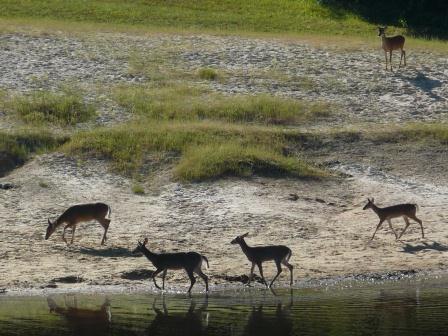
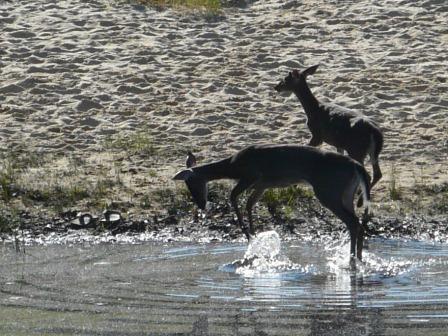
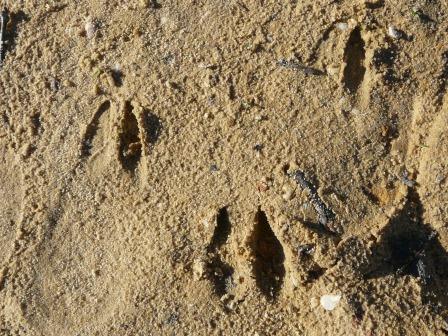
Two days ago these white-tailed deer sauntered out of the woods near Lake Cheston and walked the length of the beach, stopping occasionally to drink from the shallow water. They skipped off after a couple of minutes, leaving some crisp tracks in the sand.

There is nothing quite like the sight of ungulates ambling in the dawn light to take you back to the good old days.

Red fox kits

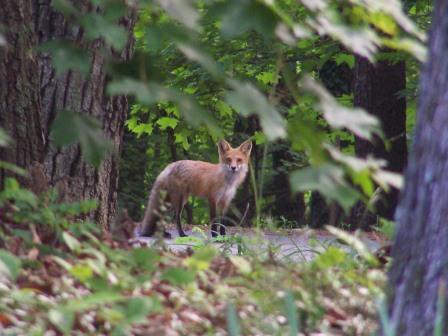
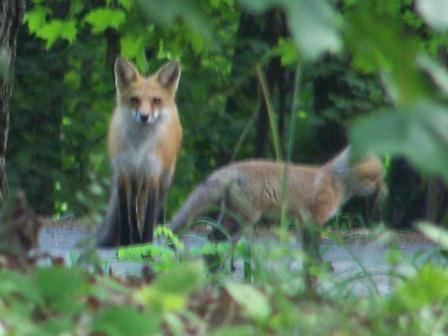
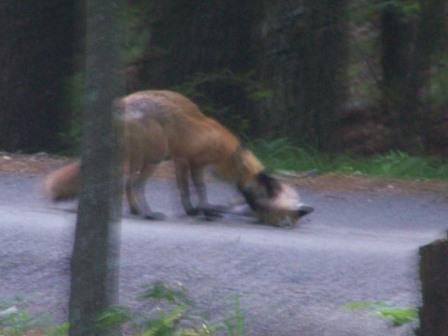
Jeff Heitzenrater sent me these photographs of a red fox mother and her kits (Vulpes vulpes). The foxes had little fear of humans and played openly even as Jeff approached with the camera. They were denning near his house, but have now grown up and moved on. The family group will stay together until late summer or autumn. At first I thought that this must be a gray fox — the tip of the tail seems to be dark, a distinguishing characteristic of the gray fox (red foxes have white tips). But the actual tail tip is hidden in the photos. The shape of the face (narrow muzzle, with large ears), the dark legs, the white wash that extends up the belly to the throat, and the bushiness of the tail all indicate that this is a red fox. If blog viewers have other ideas, please don’t hold back on correcting me in the comments section. In Sewanee, gray foxes are more common (they are woodland creatures) but red foxes do occur here and are fairly common in the valley. The red fox is the most widely distributed canid in the world, occurring on five continents. [update added later: Jeff has now sent me another photo (last one below) that clearly shows the white tail tip]

Hot-headed

A virus has delivered a special end-of-semester gift in the form of a cold and mild fever. I know this is a common experience among teachers: our immune systems carry us through to the moment that grades are due, then dump us over the cliff, their patience finally worn to nothing.

But the point here is not to whine about minor ailments or the rhythm of the semester, but to ask why fevers mess with our minds. High fevers bring on full blown hallucinations; milder versions create a restless cacophony of strange images and thoughts, seeming to rise up through the acidic vapors of the sinuses.

The neurobiological literature is, as far as I can tell, not clear about the causes of all this confusion. For major hallucinations, it seems that an imbalance between inhibition and excitation in the brain creates sensory illusions. In other words, some parts of the brain are shooting out way too many signals which, when combined with dulling of the parts of the brain that say “stop,” creates the neural mirages we call hallucinations.

For the milder confusion of a low fever, I suspect that mistiming plays a part. All our thoughts exist as relationships among nerves. These relationships depend critically on the timing of which nerves fire when. Even a simple thought, like an imagined object, is held in a network of neural firing patterns that shifts five times per second. So, thought is like music — it depends on relationships among dozens of players and the timing of those relationships determines the nature of the melody. When we heat up the brain with a fever, chemical reactions quicken slightly, throwing off the tempo.

Taking an aspirin is therefore like switching on the metronome. Click, click, click. Back to coherence.

Banded Hairstreak butterfly

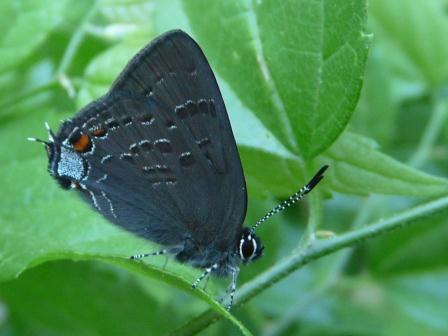
This freshly emerged Banded Hairstreak (Satyrium calanus) was perched on a hackberry leaf outside my back door. Butterfly colors come from tiny scales that cover the wings. As these scales gradually wear away, so does the vibrancy of the insects’ colors. Only butterflies that have newly emerged from their chrysalis look so tidy and fresh. The stripey antennae on this hairstreak add some panache.

This species has just one generation per year. Adults mate in early summer, then lay their eggs on oak and hickory twigs, placing the eggs near the twigs’ buds. The eggs remain dormant until the next spring, when the caterpillars emerge and eat the fresh greens sprouting from the trees’ buds. So, the individual in the photograph is nearly a year old, having spent most of last year as an egg.