Yearly Archives: 2012

Results of the 15th Annual Sewanee butterfly count

Number of species detected: 24 (a little lower than most years)

Number of individuals detected: 414 (way higher than most years)

Average temp: also approx 414

We found almost no butterflies over the majority of the areas surveyed. It is much too dry and baking. But in areas that had been irrigated or that were near bodies of water, we found impressive aggregations of butterflies supping on nectar. By far the most abundant species was the sachem (Atalopedes campestris). We saw 213 of these little skippers; the previous record for the species was 26 in 2001. This species thrives in disturbed areas where its caterpillars feed on grass.

Female sachem (photo from a previous year)

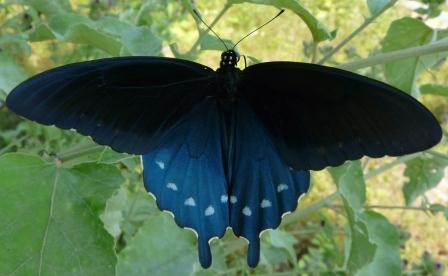
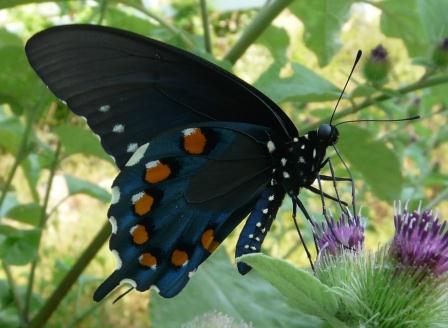
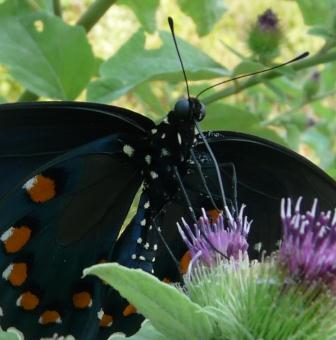
We also came across this spectacular pipevine swallowtail (judging from its freshness, it was newly emerged from its chrysalis):

Thank you to my co-leader, David Coe, and to brave heat-defying participants Louise Kennedy and Tam Parker.

Complete results are summarized below:

Common name Scientific name 2012 count
Pipevine Swallowtail Battus philenor 2
Eastern Tiger Swallowtail Papilio glaucus 1
Spicebush Swallowtail Papilio troilus 4
Cabbage White Pieris rapae 13
Orange Sulphur Colias eurytheme 7
Gray Hairstreak Strymon melinus 1
Red-banded Hairstreak Calycopis cecrops 4
Eastern Tailed-Blue Everes comyntas 47
Spring Azure Celastrina ladon 5
American Snout Libytheana carinenta 5
Gulf Fritillary Agraulis vanillae 3
Variegated Fritillary Euptoieta claudia 6
Great Spangled Fritillary Speyeria cybele 1
Pearl Crescent Phyciodes tharos 7
American Lady Vanessa virginiensis 4
Red Admiral Vanessa atalanta 1
Common Buckeye Junonia coenia 1
Common Wood-Nymph Cercyonis pegala 1
Silver-spotted Skipper Epargyreus clarus 74
Horace’s Duskywing Erynnis horatius 1
Least Skipper Ancyloxypha numitor 2
Fiery Skipper Hylephila phyleus 10
Little Glassywing Pompeius verna 1
Sachem Atalopedes campestris 213

A strange potato

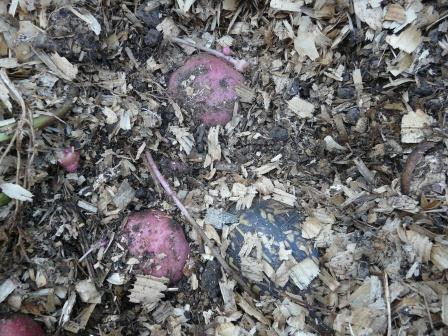
I came across this odd potato while digging the last row of the early crop of potatoes. The spud in question was mottled brown and yellow; its skin seemed rather tough.

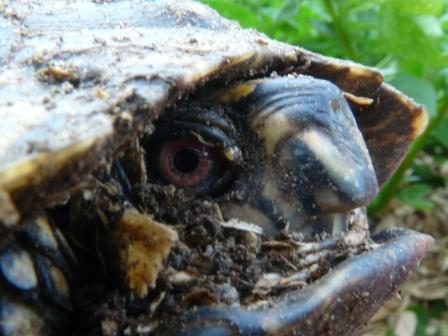
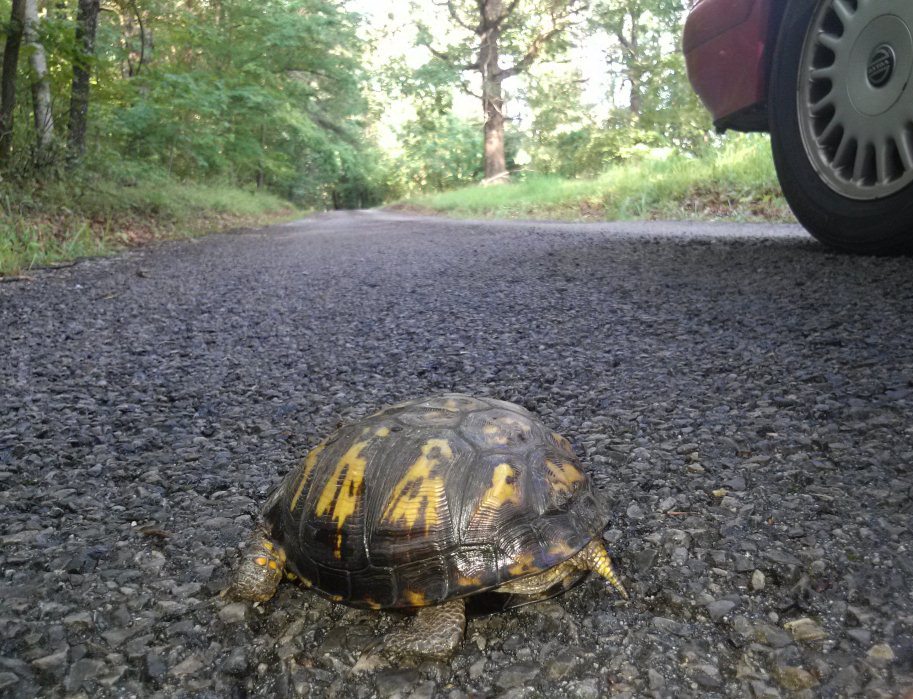
I grubbed around with my hand and pulled up the prize. He regarded me with a grumpy red eye.

This eastern box turtle had dug himself down into the mulch that I hill up around potato plants. He was a good six inches down, where the soil is still somewhat moist and cool. All this happened several days ago. I replaced him, carefully covered him again with soil, and marked the spot so that I would not spear him with my garden fork. He’s still there: when I wiggle my fingers down I can touch his shell.

The technical name for this kind of summertime dormancy is estivation (aestivation in the Old World). The turtle is conserving water, saving energy, and waiting out this interminable heat. Which animal is smarter: the one snoozing in the shady soil or the one toiling to earn his potatoes with the sweat of his brow? I have my opinion on this; I’ll let you form your own.

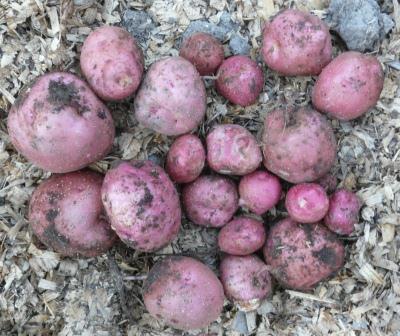
The potato plant that he cuddled up to yielded the biggest load of spuds that I’ve even seen from a single plant (boastful evidence below). So, this fellow either brought good vibes with him or he has a taste for moisture that led him to the most productive spot in the garden. Both, perhaps.

Making a #hash of things…yes, here we go

Last week, 350.org launched a twitterstorm to increase the profile of their campaign to end subsidies for fossil fuels. The storm was timed to coincide with the Rio+20 meetings. What’s a twitterstorm? A tempest of tweets, all with the same message, all sent at about the same time. The storm makes a tidal surge, hopefully breaching the dunes on the shores of the internet.

So what? Isn’t this less than a tempest in a teacup? After all, twitter is just thought, mere ether (miasma, some would say), with no physical substance; no tea, no cup. Perhaps. But the history of humanity (and the experience of our everyday lives) is surely a testament to the power of that ether to come to ground and change the world (how did that long-buried CO2 get burned up in the first place?). In the big scheme of things, one twitterstorm is a tiny gust, but the wind from this storm even pushed briefly into the normally airtight halls of power in DC.

The campaign’s launch persuaded me to sign up, dipping my toe (inexpertly, I’m sure) into the stream of @s, #s, RTs, and other obtuse ciphers of this clipped form of speech. I have a not-so-hidden agenda, a plan that has been brewing in various incoherent ways for a year now: to gather a cadre of naturalists to sing “nature” into the twitmosphere while digging deeper into the particularities of our places. The exact form of the idea is still composting, but some mature humus of thought will hopefully emerge soon. For now, I’m tweeting one natural history observation per day: a notable sighting, a sensory impression, or an interesting ecological interaction. With just 140 characters to play with, the right voice is not self-evident, so I’m goofing around. For now, I’m tweeting pretty much into the void, like praying to a non-existent god, or speaking a poem into air with no-one to hear. I’d be delighted to have this void populated by a few ears. So I invite you to take a look (you don’t have to be on Twitter to check it out) or to join me.

Unlike this blog, which I’ve tried to keep fairly clear of politics, I’m also retweeting a little information from ongoing environmental activist campaigns. In the very short time that I’ve been signed up, I’ve been pleasantly surprised at what a great tool Twitter is for keeping on top of what is happening in DC where, for better or worse, the fates of real storms in our atmosphere and biosphere are being decided.

I’m interested to see where, if anywhere, this little experiment goes. In my limited experience, the intersection between the sets (naturalists), (academics), and (twitter) is very, very small. My hunch is that this need not be the case: there is some creative potential to be played with in that space.

The usual critique of twitter, that it is just trivial chatter and therefore worthless, seems off the mark. Trivial chatter is part of our inheritance as ultra-social primates, a kind of linguistic grooming. Now that we don’t have fleas to pick off each other (or so I hope), social media fill the void. From ectoparasites to smartphones; our opposable thumbs come in handy once again.

“So little cause for carolings / Of such ecstatic sound / Was written on terrestrial things”

Now that the summer season is wearing on, the thrushes are singing at dusk. More than any other songbird, their voices seem to rise as the sun sets. There is something irredeemably sad in the fluting of a thrush as the western horizon sweeps up and takes away the light.

We’ve heard Thoreau’s springtime rapture over the same song; Hardy’s refrain takes over as days shorten, with Hughes’ black silent waters lapping close.

But “irredeemable” must be a lie. Hardy kindles his hope and even Hughes bends to be blent in the prayer. And the thrush remains beautifully inscrutable in his otherness.

Lyme disease, foxes, and coyotes

A gray fox swaggered across University Ave this morning, its bushy tail bouncing as it trotted. It was headed to the patch of woodland behind Otey Parish Hall and the Duck River Electric building. I’ve seen fox scat on the road there, so I think this must be a resident, perhaps the same animal that I saw last summer with a rabbit in its mouth.

This has been a busy few months for fox and coyote sightings in Sewanee. Now, a paper in the Proceedings of the National Academy of Sciences has added some insight into the tangle of interactions among these wild dogs and their prey. Apparently, tick abundance and Lyme disease risk is affected by the numbers of foxes and coyotes. The paper examines data from the northeast, but its results may also be relevant here.

Lyme disease (caused by the bacteria Borrelia burgdorferi) is transmitted to humans by tick bites (especially bites from nymphal stage of Ixodes scapularis, the black-legged tick) But humans are not the main host of these ticks, so the abundance of ticks is determined by the abundance of their other mammalian hosts, especially mice. Foxes and coyotes both prey on mice, so you’d think that more foxes and more coyotes would mean fewer mice, and therefore fewer ticks, and therefore fewer Lyme disease cases. But things are not quite so simple.

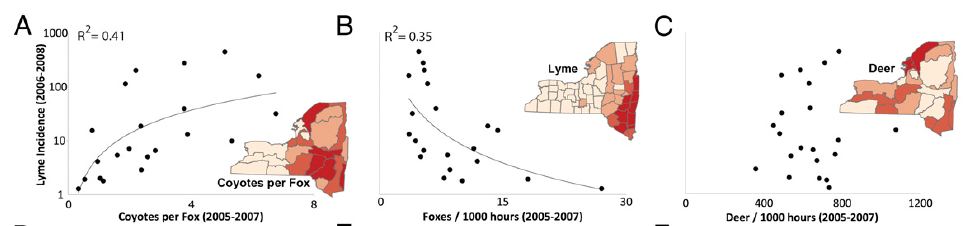
The abundance of foxes is indeed correlated with a decreased risk of Lyme disease. Foxes love to eat mice and fox populations can get quite dense, so mice fare poorly in areas with healthy fox populations. Coyotes also eat mice, but coyotes live at lower population densities than foxes. Coyotes also drive out foxes. So the overall effect of coyotes on Lyme disease is a positive one: more coyotes = fewer foxes = more mice (despite the few that get eaten by coyotes) = more ticks = more Lyme disease. And deer? There was no correlation with Lyme disease; mouse abundance drives the dynamics of the disease and deer abundance seems to have little effect (except in areas that have no deer — an unusual situation these days — that do have lower incidences of Lyme).

Excerpt from one of the paper’s figures, showing correlations (or lack thereof) between Lyme disease and either coyotes per fox (positive correlation), foxes (negative correlation), or deer (no correlation).

An important caveat: this paper examined correlations among estimates of the abundance of different animals. But correlations are slippery things. They seem to imply that we’ve discovered a cause-and-effect relationship, but this is often misleading. So I’m sure this story will evolve as scientists tease out the subtleties (does the effect of foxes depend on the availability of other prey?) and alternative explanations (might some unknown causative third variable be correlated with coyotes and Lyme?). I wonder how domestic cats play into all this. They are major predators on mice and often live at densities well above what could be supported without the subsidy of store-bought cat food. Do they also suppress Lyme?

Some notes for blog readers in the south:

1. We’re well outside the “hotspot” of Lyme disease, as shown on this CDC map. The disease does not seem to be increasing in many parts of the south. But, in Virginia and other areas that are close to the center of Lyme’s activity, the disease is increasing quite rapidly.

2. The south is blessed with other tick-borne diseases. Southern Tick-Associated Rash Illness is one; Rocky Mountain Spotted Fever is another.

3. Although we do have black-legged ticks here, lone star ticks and dog ticks are more common. These are not prime carriers of Lyme, but they can transmit the other tick-borne diseases.

For more info about ticks, the CDC site has some good links and great pictures (which will make your skin crawl). Obviously, if you have medical concerns about a bite, check in with an MD, not a Rambler.

Upcoming events: The Forest Unseen

This weekend and next week I have several book readings and lectures in east and middle Tennessee. If you live close by, I hope that you’ll consider attending. All are welcome. Please email me (dhaskell@sewanee.edu) if you have questions.

Chattanooga, TN: Artifact, 6-9pm, Saturday June 23rd, 2012. Hand-made Book Fair. In the words of the organizers: “It will be weird, it will be awesome, there will be useful handmade books on sale starting at 10 bucks! There will be a reading! There will be two readings! BYO refreshments, though we will have a short supply of wine at first.” I’ll do a short reading, as will Aubrey Lenahan. 1080 Duncan Ave, Chattanooga, TN. The folks at Artifact have designed a great poster which you can view on their website. Free and open to the public.

Nashville, TN: Sigourney Cheek Literary Garden, Cheekwood, 1200 Forrest Park Drive, Nashville, Tennessee. 3pm, Sunday, June 24th, 2012. I’ll give a reading and talk about the context for the book. There is no additional charge for the event but the usual Cheekwood admission price applies ($12 for adults; discounts for students, retired, etc).

Sewanee, TN: Sewanee School of Letters. Gailor Auditorium, Gailor Hall, University of the South. 4:30pm, Wednesday, 27th June, 2012. I’m speaking as part of the Guest Lectures series. Free and open to the public.

Monteagle, TN: Monteagle Assembly lecture. 11am, Thursday, 28th June, 2012. In Warren Chapel. The Assembly was “established in 1882 as a Chautauqua, a place where our members and guests gather in the summer for fellowship and for spiritual and intellectual growth.” If you’re coming from outside the Assembly, allow some extra time to get through the gates, parking, find the lecture, etc. One of the Assembly’s charms is its forest-like labyrinthine layout. I believe that this lecture is free and open to the public.

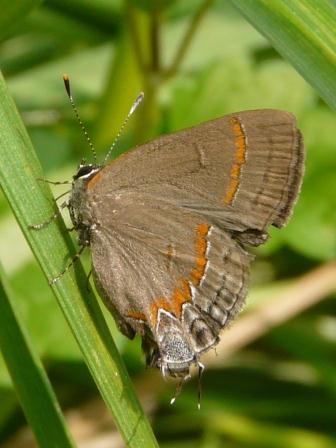
And, for a break from “What do you read, my lord? / Words, words, words,” David Coe and I are leading the annual butterfly census (our 15th year, I think) on Saturday June 30th. We leave from the Lake Cheston Pavilion in Sewanee at 9am, then the TN Ave Memorial Cross at 1pm. This is part of the continent-wide annual NABA survey, so our data is combined with data from hundreds of other surveys to give a large-scale and long-term view of butterfly populations.

As a sampler, here is a red-banded hairstreak that I photographed last April:

Mayapple fruit

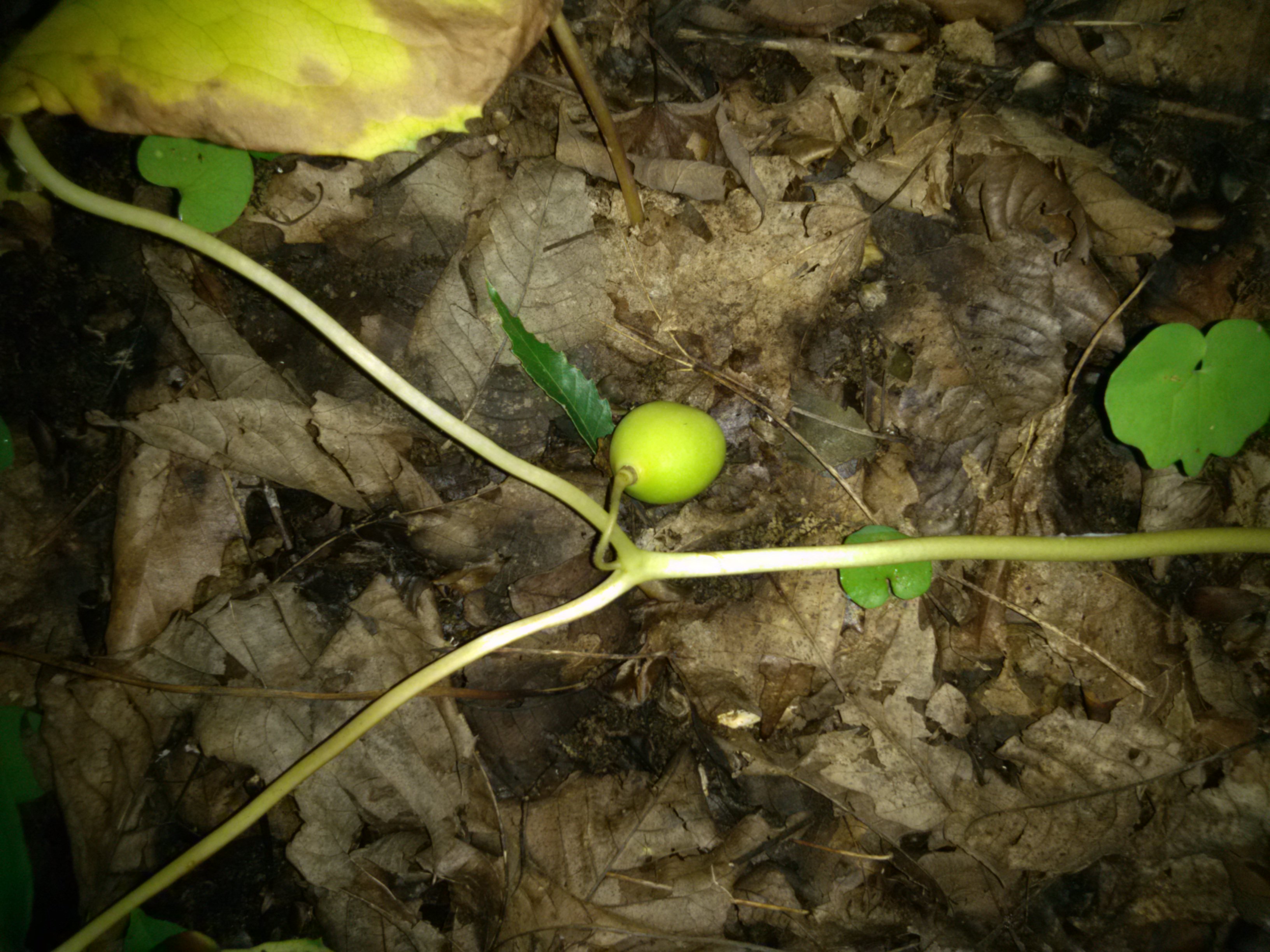
On a recent walk in Shakerag Hollow I ran across this mayapple (Podophyllum peltatum) plant lying prostrate on the ground, its fruit resting on the leaf litter surface. This is box turtle food. Turtles love the fruits and serve as seed dispersers for the plant. The fruit is the size of a small lemon.

Mayapple contains chemicals that are used in anti-cancer drugs, so our health depends, in small part, on the ecological services provided by box turtles. One more reason to drive carefully? I moved this fellow (red eyes, domed plastron = a male) out of the way last week…

Sourwood in bloom

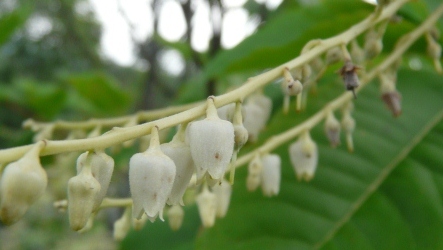
Most local trees bloom in the spring or early summer, but sourwood (Oxydendrum arboreum) waits until summer is well underway to grow its graceful clusters of small white flowers. These clusters arch out from the tips of twigs and, although each flower is quite small, the mass of flowers is visible from some distance. Bees love the nectar of this tree and in places where sourwood is plentiful “sourwood honey” is considered a fine complement to a slice of bread (I’m afraid that my bee-keeping knows no such temporal precision — whatever the bees gather over the course of the summer is what I get in the jar).

Sourwood is something of a botanical misfit. It grows as a small tree, yet its closest local relatives in the “Heath” family (Ericaceae) are all shrubs or tiny herbaceous flowers: mountain laurel, blueberry, azalea, wintergreen, and so forth. Like these kin, sourwood grows mostly on poor, acidic soils and relies on symbiotic fungi to help its roots find nutrients in these challenging conditions. Sourwood doesn’t quite fit with the “trees” either. Even when full grown, it is never as large as the oaks and hickories with which it grows; its trunk is seldom straight, usually leaning to one side; and, like its cousins the shrubs, it often sprouts more than one stem from the base.

The kinship to blueberries is evident in the flowers which are shaped like urns or bells. Unlike blueberries, sourwood fruits are, unfortunately, mere dry capsules.

Rejuvenating redwoods, dying oaks, The Grateful Dead, et al.

The last few posts have suffered from an excess of coherence and narrative continuity, so here are some true ramblings from Santa Cruz, CA (and for those who are still in awe of planetary motion, my last post also has some new Venus photos from a grad student that I met at the viewing at UCSC who kindly shared his images via email)…

Santa Cruz sits at the intersection of the cold ocean, the foggy redwood forests, and the blazing hot oak savannahs. Walking for thirty minutes in almost any direction will carry you into a new ecosystem. So variegation of microclimate is extreme.

San Francisco was built from lime and wood taken from this area, so almost all the forests are full of redwood trees growing in little clusters around huge, hundred-year-old stumps. The younger trees are still impressive: very very tall. There is almost no light in the understory, so even on a bright sunny noon, you gaze through the aromatic gloom. These trees drink water from the air. Even though their roots are dry, they get enough moisture from the near daily dousing in ocean fog to keep growing even in rainless months. How do we know this? The oxygen isotope ratios in fog differ from those in rain, so plant physiologists can read the isotopic “fingerprint” of oxygen in the trees, then deduce the source of water.

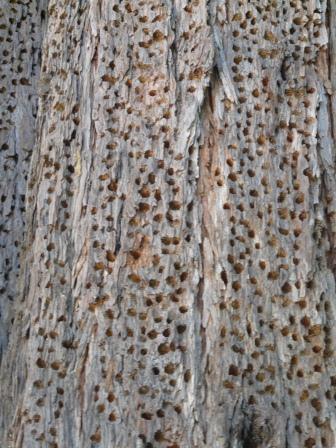
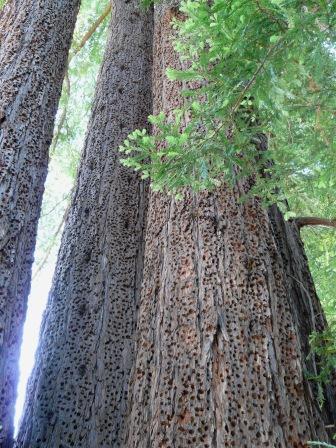
The redwood below has been adopted and turned into a granary by a family of acorn woodpeckers. Each hole is a storage place for an acorn. The family makes its nest in the tree then defends their nest, their stored food, and their honor from other woodpecker families, all of whom are thieves and cheats. Very much like Scotland, with less rain.
Oaks in California are being slammed by “sudden oak death,” a descriptive enough name for the disease (caused by an exotic species of protist, Phytophthora ramorum, the same genus that causes blight in potatoes, die-offs in peppers, and all kinds of destruction in many other tree species). The disease starts as lesions on leaves (these are tan oak leaves)…
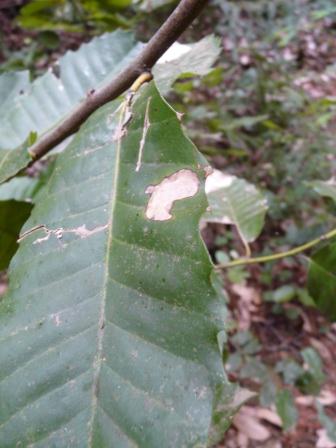
…then kills the whole tree in about a year. Most of the tan oaks in the understory seemed to have the disease. (And, yes, I thoroughly washed my shoes on my return to Tennessee).
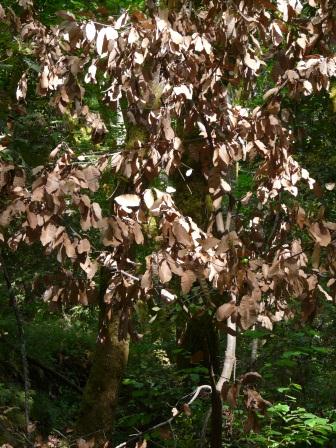
Other understory plants are doing much better. These are huckleberries, a close relative of the blueberry:

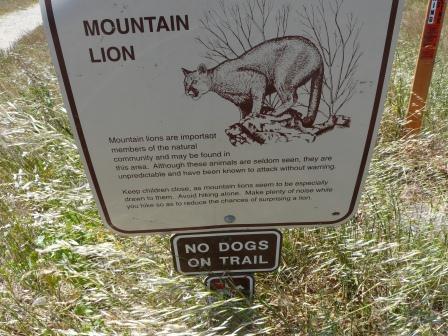
Mountain lions roam the woods and occasionally come into town. Warning signs are dotted over campus and the state parks. It is not clear whether the “no dogs” part of the sign is meant as a statement of a regulation or a summary of the outcome of past events:
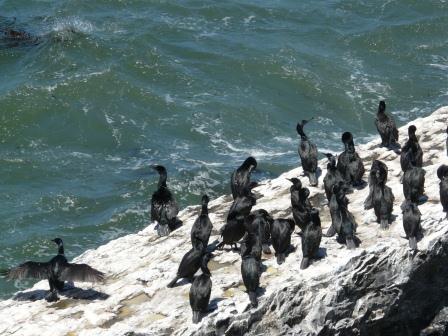
The coast is continually raked by an incredible strong cold wind. Seabirds are abundant. These are Brandt’s cormorants:
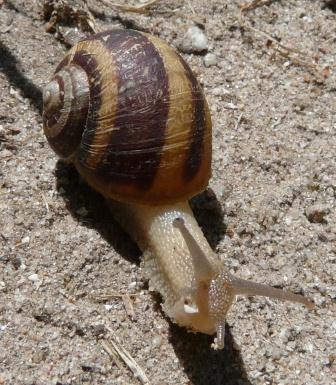
Snails were common in the sandy coastal scrub. They were all, as far as I could tell, the invasive European immigrant, Cornu aspserum, the same species favored in France for eating:
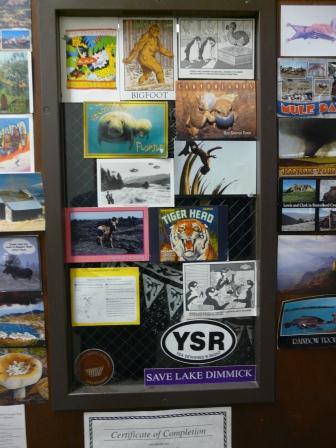
Back on campus, we briefly visited the University library and the Archives of the Grateful Dead, a carefully curated collection of posters, notes, letters, and so forth relating to the band’s long tenure. I was particularly taken by the Ph.D. theses. I know that several of the followers of this blog are Dead fans, so take note: the official opening is coming up at the end of June. There is a slight air of incongruence about an academic archive of Grateful Dead documents, but this strangeness, even dissonance, would have pleased Mr. Garcia, I think.


My visit to Santa Cruz was sponsored by the Department of Environmental Studies and initiated by the graduate students in the department who brought me in as their seminar speaker for this semester. Thank you. And special thank you to Leighton Reid and Rachel Brown who welcomed me and showed me around during my visit.

I’ll close with a shot of a door to a grad student office, chosen almost at random. Sewanee residents may remember those great students who protested the Lake Dimmick development, packing Convocation Hall and speaking with forceful clarity to the Regents. That spirit has now been carried to some far flung parts of the world.
Mass (viewing of) transit

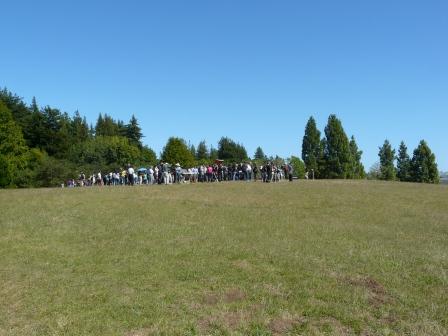
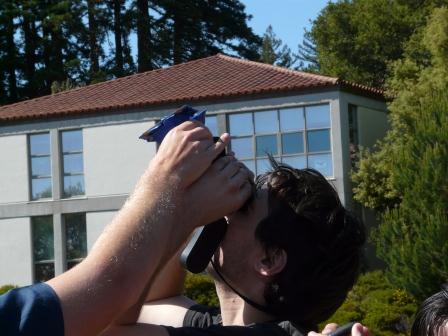
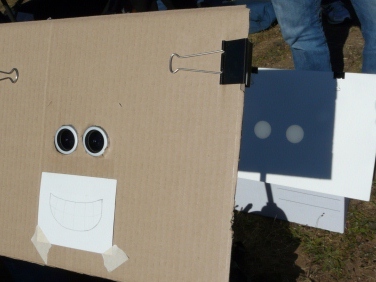
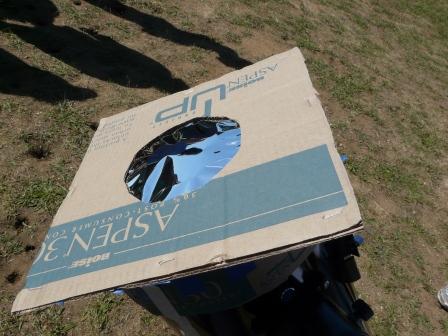
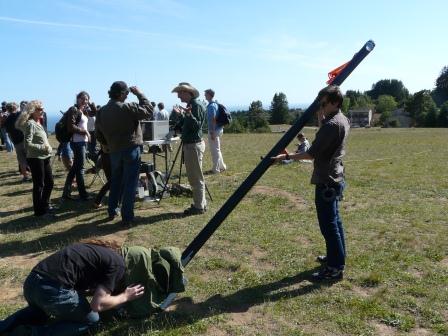
The astronomers at UC Santa Cruz set up a motley army of observational devices on a small knoll on the edge of campus. A hundred or so people squinted through eyepieces, metal tubes, silvery sunglasses with paper frames, kiddie binoculars strapped to paper flipcharts, and heavily shielded cameras. All gazed up.

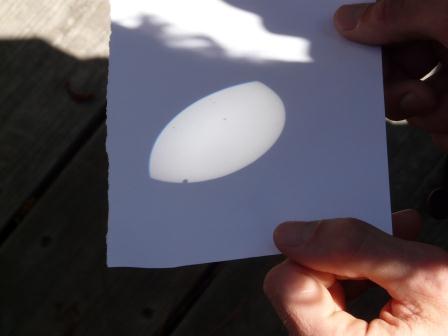
And there was Venus, an inscrutable black disc pimpling the bright sun. I expected that she’d hurl herself across the sky, but she took her time, lingering for hours as she scribed her twisted route. Most surprising of all was the frequency with which the knobs on the telescopes had to be tweaked to reorient the lens. We live on a surface of a planet that is spinning terribly fast. This was a disorienting realization, a jarring yank out of the complacency of my pathetically small day-to-day “world” and into the enormous reality of the chunk of flying space rock that we live on. I felt that I ought really to hold onto something to keep my feet steady as my eyes watched a gyrating Venus from the window of this bullet-train earth. Instead, I pulled myself together and snapped some photos.

The transit’s start:

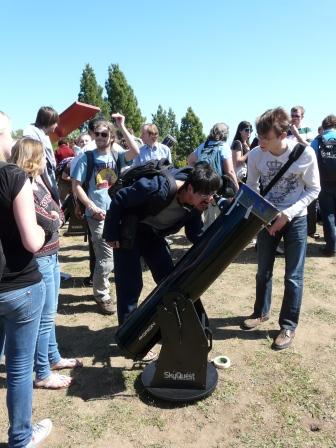
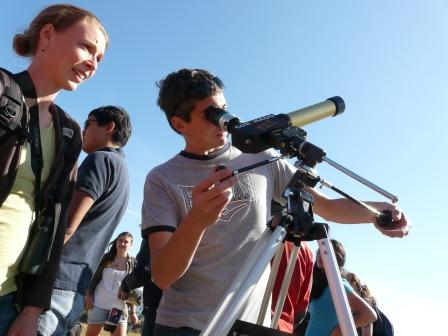
Various viewing devices:

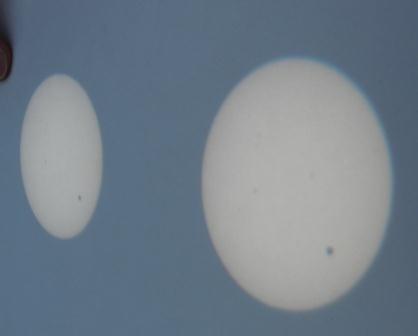
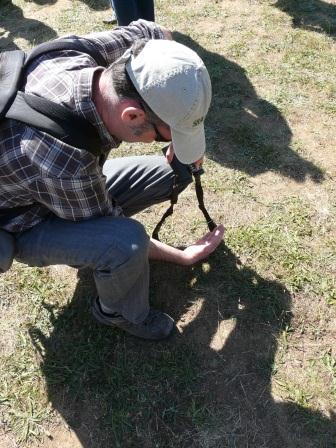
I’m focusing the hot image onto my tender palm using binoculars:

This scope was incredible. The filters in the scope filtered out everything except the 656.28 nm wavelength (see here for the cool background — this is the wavelength created by one type of electron change in Hydrogen). The roiling surface of the sun was visible; flares and loops of light arched from the sun’s edge:

Place your head inside the box at the end of the long tube and observe the image formed by the pinhole:

Out of their usual context, binoculars are weird. These photons have traveled together all the way from the sun to this spot on Earth, only to be split apart at the last moment. Venus and her twin:
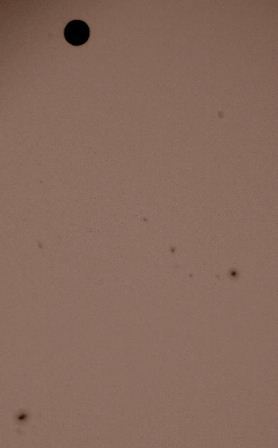
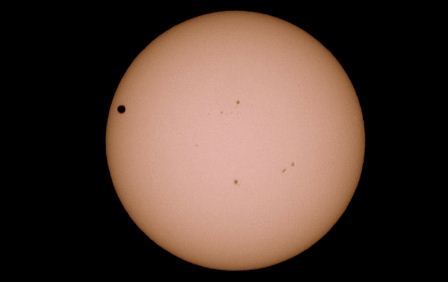
The following photos come from UCSC grad student Tuguldur Sukhbold who was taking photos through his shielded camera. I asked whether he would mind sharing the results and he was kind enough to send me these (with sunspots also visible):