Category Archives: Travels

Florissant fossils

One of the many pleasures of my visit to Yale last month was a visit to the collections of the Yale Peabody Museum. Among its treasures, the museum holds many of the fossils that were collected in the early 1900s from Florissant, Colorado.

The Florissant site is famous for its beautifully preserved plant and insect fossils, remains of the flora and fauna of the late Eocene, about 34 million years ago. In those good ol’ days, the climate was warmer and wetter, so a rich temperate forest grew in what is now a mix of dry, open grassland and ponderosa pine (replete with modern mammals, as I learned during my visit to the site last summer).

Most of the fossils are preserved in the finely laminate shale. Some of these laminae represent one year’s deposition: a layer of diatoms from the summer, overlain with ashy clay in the winter. These are interspersed with coarser material from rivers and landslides.
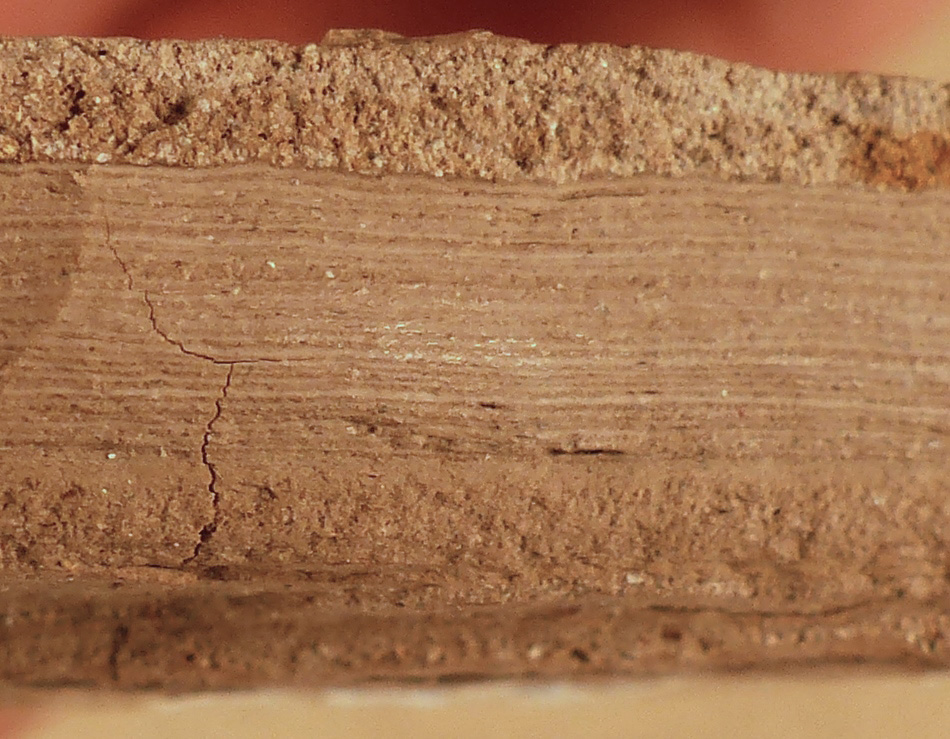
Division of Paleobotany, YPM 30074. Copyright 2014, Peabody Museum of Natural History, Yale University, New Haven, CT. All rights reserved.

Division of Paleobotany, YPM 30074. Copyright 2014, Peabody Museum of Natural History, Yale University, New Haven, CT. All rights reserved. The whole section depicted here is about 5 mm deep.

Many of the animals from the Florissant fossil beds look familiar to us, an indication of the continuity of taxa and their ecological roles across tens of millions of years.
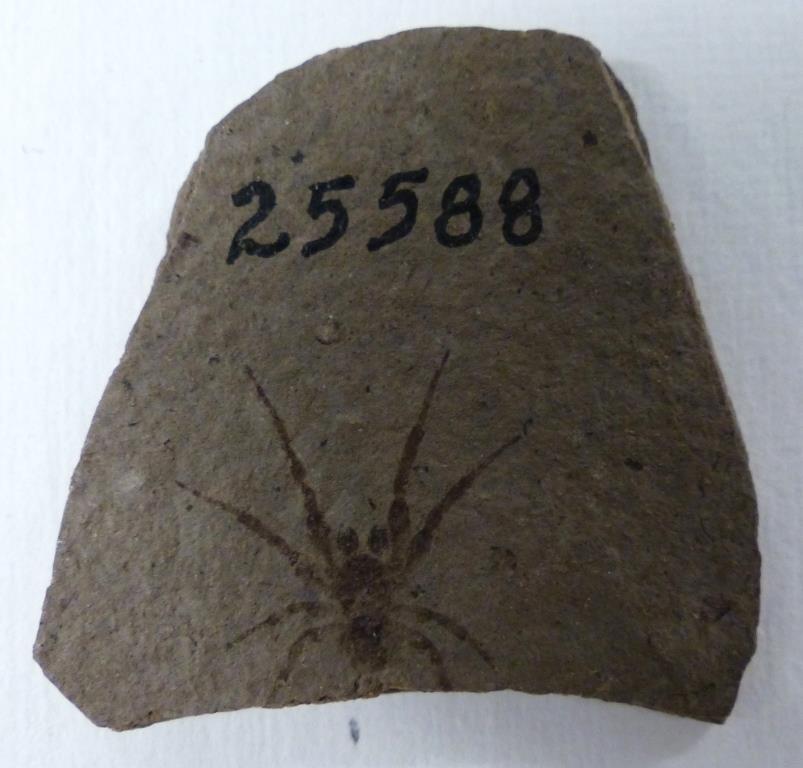
Tethneus twenhofeli (orb-weaving spider). Collected by W. H. Twenhofel, date unknown. Described by A. Petrunkevitch, 1922. (Division of Invertebrate Paleontology, YPM 25588. Copyright 2014, Peabody Museum of Natural History, Yale University, New Haven, CT. All rights reserved.)

Tethneus twenhofeli (orb-weaving spider). Collected by W. H. Twenhofel, date unknown. Described by A. Petrunkevitch, 1922. (Division of Invertebrate Paleontology, YPM 25588. Copyright 2014, Peabody Museum of Natural History, Yale University, New Haven, CT. All rights reserved.)

Cranefly. Collected by J. T. Gregory, 1953. (Division of Invertebrate Paleontology, YPM 50208. Copyright 2014, Peabody Museum of Natural History, Yale University, New Haven, CT. All rights reserved.)

Cranefly. Collected by J. T. Gregory, 1953. (Division of Invertebrate Paleontology, YPM 50208. Copyright 2014, Peabody Museum of Natural History, Yale University, New Haven, CT. All rights reserved.)

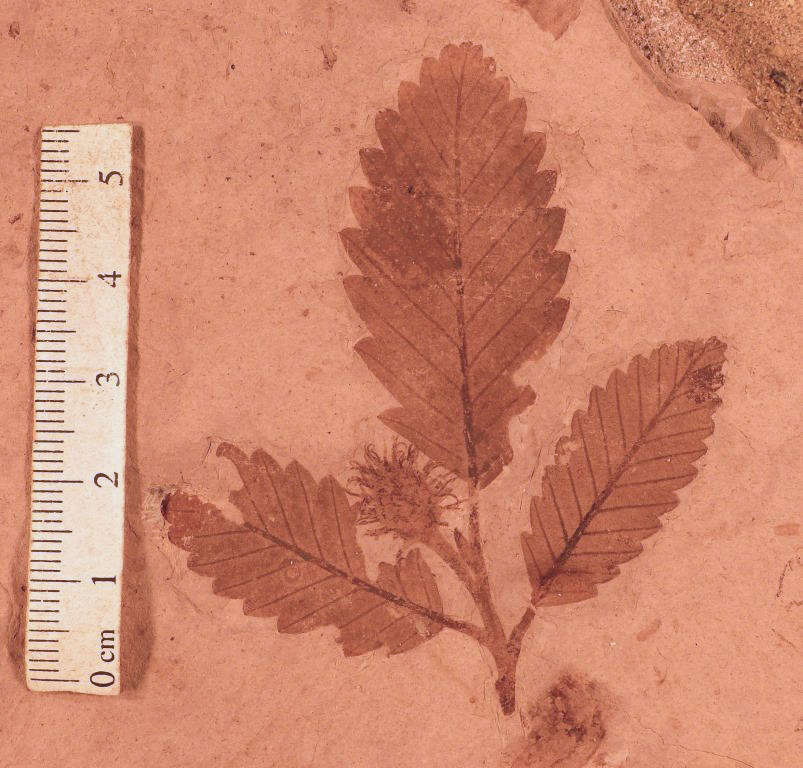
The flora likewise contains many familiar taxa — redwoods, poplars, pines, hickories — but it also contains some enigmatic extinct species. One such puzzle is Fagopsis longifolia, a tree that may belong to the Fagaceae. If this interpretation is correct, Fagopsis is  kin to the modern oaks and beeches.

The following remarkable fossil shows Fagopsis with attached leaves and a fluffy ball of staminate inflorescences (i.e, the “male flowers,” bearing the stamens that produce pollen).
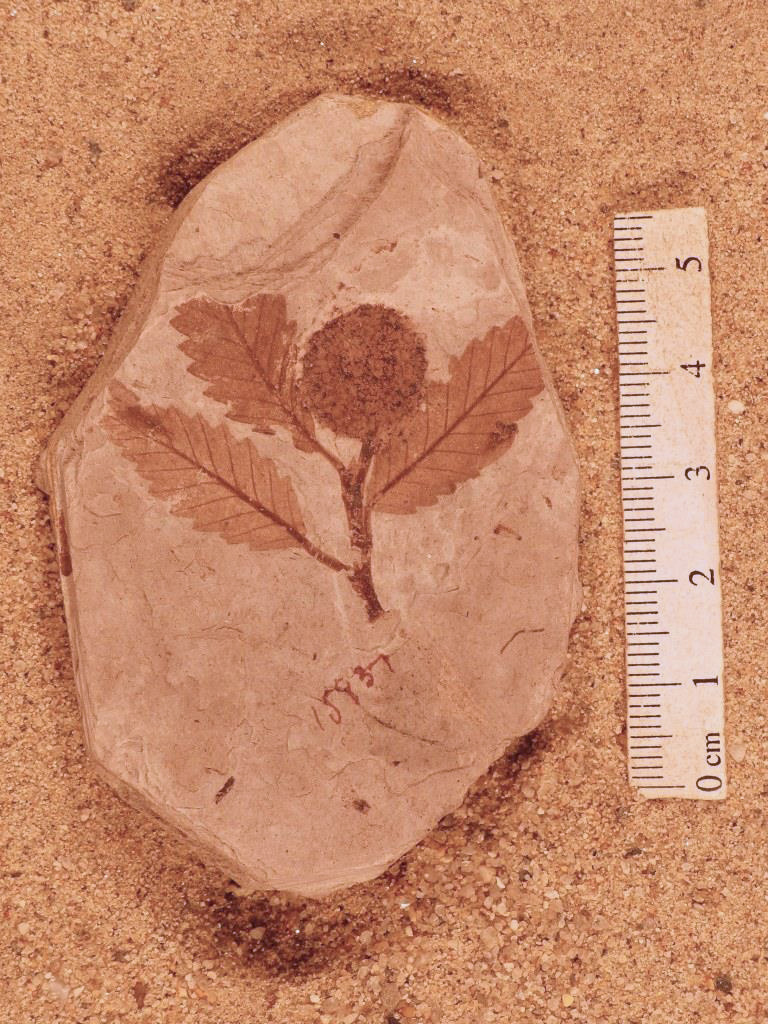
Fagopsis longifolia. Division of Paleobotany, YPM 30249. Copyright 2014, Peabody Museum of Natural History, Yale University, New Haven, CT. All rights reserved.

Fagopsis longifolia. Division of Paleobotany, YPM 30249. Copyright 2014, Peabody Museum of Natural History, Yale University, New Haven, CT. All rights reserved.

The separate pistillate inflorescence (the “female flower”) is also beautifully preserved.
Fagopsis longifolia. Division of Paleobotany, YPM 30121. Copyright 2014, Peabody Museum of Natural History, Yale University, New Haven, CT. All rights reserved.

Fagopsis longifolia. Division of Paleobotany, YPM 30121. Copyright 2014, Peabody Museum of Natural History, Yale University, New Haven, CT. All rights reserved.

Here is a close-up of the same specimen, showing the details of the long styles.

Fagopsis longifolia. Division of Paleobotany, YPM 30121. Copyright 2014, Peabody Museum of Natural History, Yale University, New Haven, CT. All rights reserved.

Fagopsis longifolia. Division of Paleobotany, YPM 30121. Copyright 2014, Peabody Museum of Natural History, Yale University, New Haven, CT. All rights reserved.

The most comprehensive treatment of the Fagopsis is Manchester and Crane‘s analysis of the leaves, flowers, fruits, and pollen of the species. It was therefore a privilege to examine the fossils with Peter Crane and to learn that the species still presents something of a puzzle, not fitting neatly into any modern group.

My thanks to Peter Crane, Shusheng Hu, Susan Butts, Derek Briggs, and Rick Prum for their welcome and assistance at the Museum. If you’re in New Haven, I strongly recommend a visit to the museum.

Icy

I’m in northwestern Ontario, paying a visit to some long-buried ancestors. As a bonus, I get to experience some chilly weather

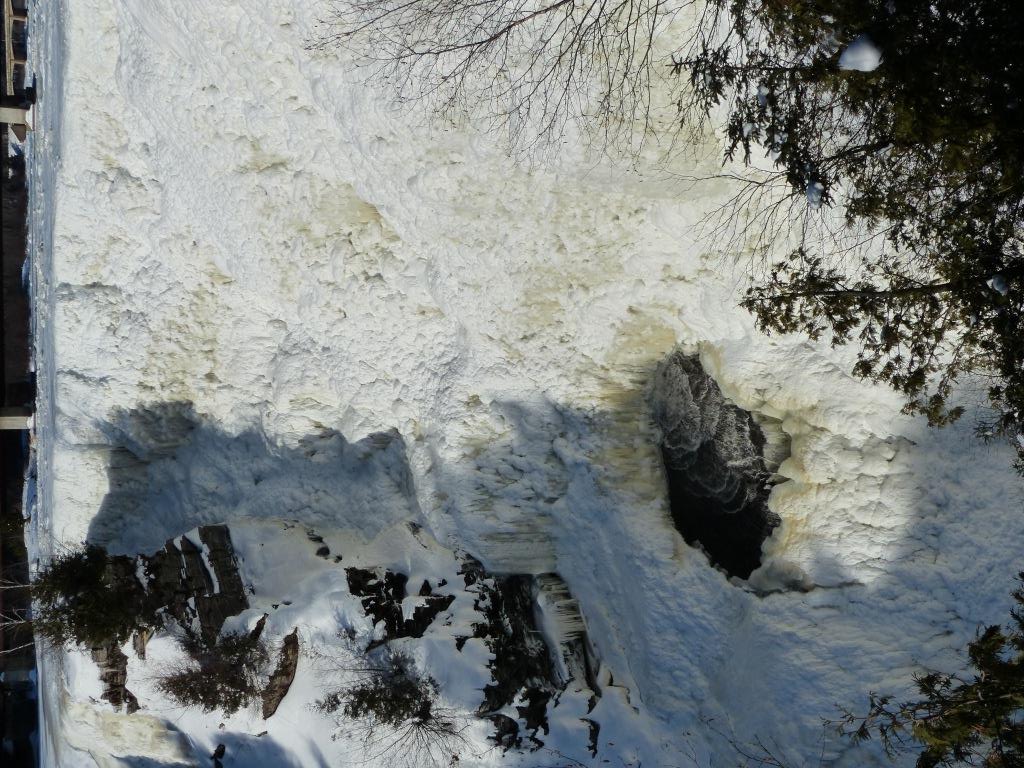
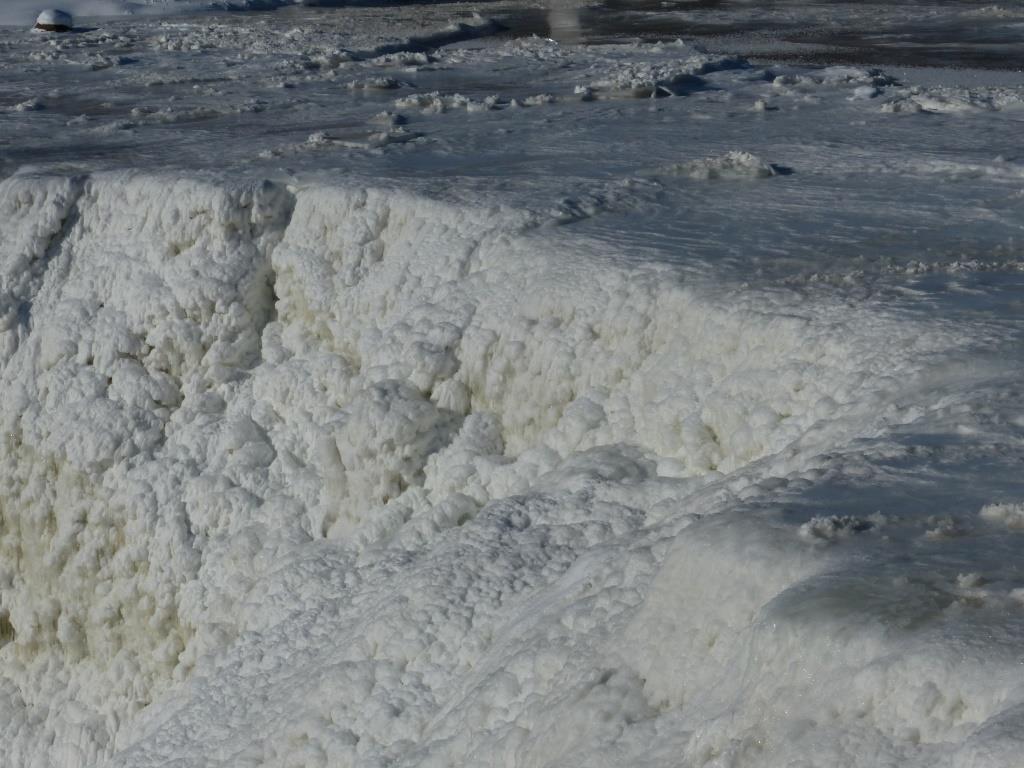
Here’s what happens to a waterfall in a chilly breeze at -25 (-13 Fahrenheit):

The lip of Kakabeka Falls in summertime...

The lip of Kakabeka Falls in summertime…

...and in the winter. All motion ceases.

…and in the winter. All motion ceases.

kakabeka_falls_ice

Some of the upstream river is still unfrozen and it slides behind the “ice falls,” briefly appearing in a pool below, before diving back down.

All this is very impressive, but the birds and mammals are even more staggering. Chickadees bounce among the branches, a goshawk chatters, ravens wing by, and red squirrels are out foraging. I took off my gloves (idiot) to snap a few bird photos. One minute later, the wind and cold did their work and I lost all feeling in my thumb. Its skin still tingles, hours later.

I salute you, boreal masters of mikwan, ice.

kakabeka_chickadee

Black-capped chickadee

Pine grosbeak

Pine grosbeak

Blue homunculi invade the woods

The Ad Council and the US Forest Service evidently could not find a single charismatic native species with which to advertize the Southern Appalachians forests, so they imported Belgian cartoon characters and released them into the woods near Chattanooga. They photographed the results of this reckless transplant and, for the edification of us all, hoisted their snapshots onto a billboard. Walking in the strip mall, we cast our eyes to the heavens and are exhorted to get out and see some Nature-Sony. (The woods are now co-branded with Sony pictures, where movie ads are PSAs.)

smurf

Without a hefty dose of smurfshrooms, people are gonna be disappointed. Thankfully, anti-semitic, misogynistic, blue commune-dwellers are rare creatures in the forest.

But asinine illusions scrawled on billboards? Ah, there’s an American species that our institutions can get behind.

A sound: Ed Abbey snorts from his grave.

A dream: vultures on the billboard; a stucco of guano.

Late-blooming catchflies (and STDs?)

The south-facing sandstone cliffs of the Cumberland Plateau soak up heat all summer, then bathe the early winter forest in emitted warmth. Trees close to the cliffs keep their leaves for weeks after others have turned bare. Joseph Bordley and I took a walk along the cliffs yesterday to see what might be stirring. One of our finds were these round-leaved catchflies, Silene rotundifolia, growing out of cracks in the rock face. They’re still in bloom, although their pollinators (mostly hummingbirds) are long gone. A phenological time warp in the cliffs’ bubble of heat?

silenerotundifoliaThese plants might have caught more than flies. The anthers seem too fuzzy and purple for normal pollen. I’d welcome insight from botanists: does this look like normal Silene to you? If this is an infection, anther-smut fungus is the culprit.

silenerotundifolia1silenerotundifolia2The smut fungus infects cuts off the normal process of pollen production and converts the anthers to fungus spore factories. The spores are purple, hence the species name Microbotryum violaceum. The ovaries are also destroyed or damaged, so the plant is sterilized by the infection.

Microbotryum smut fungus is a sexually-transmitted disease, the gonorrhea of flowers. As bees, flies, or hummingbirds move among flowers they carry with them not just pollen, but unwanted fungal colonists. The pollinators’ promiscuous feeding habits makes them ideal transmitters of disease, poxed Don Juans that plants cannot turn away.

A study of herbarium records found that incidence of the fungus has increased over the last century in two closely related species, S. virginica and S. caroliniana. In Europe, the fungus seems to have spread northward after the last ice age, following its host plants as they expanded their range. Whether that is also true in North America is not known.

Apparently, the disease has not been found in S. rotundifolia, so I’m particularly keen to hear from readers who can comment on whether or not the anthers in the photos above are infected.

Bibliography:

Antonovics, Janis, Michael E. Hood, Peter H. Thrall, Joseph Y. Abrams, and G. Michael Duthie. 2003. “Herbarium Studies on the Distribution of Anther-Smut Fungus (Microbotryum Violaceum) and Silene Species (Caryophyllaceae) in the Eastern United States.” American Journal of Botany 90 (10) (October 1): 1522–1531. doi:10.3732/ajb.90.10.1522.
Vercken, Elodie, Michael C. Fontaine, Pierre Gladieux, Michael E. Hood, Odile Jonot, and Tatiana Giraud. 2010. “Glacial Refugia in Pathogens: European Genetic Structure of Anther Smut Pathogens on Silene Latifolia and Silene Dioica.” PLoS Pathog 6 (12) (December 16): e1001229. doi:10.1371/journal.ppat.1001229.


A couple of interesting opportunities from Orion…

…the wonderful magazine, not the belted constellation. Check ’em out:

1. Orion is teaming up with Bread Loaf Writers’ Conference and Middlebury College’s Environmental Studies Program to offer the Bread Loaf Orion Environmental Writers’ Conference. This is a residential conference, so it is available only to those with spare time and money, but for those who can attend it promises to be a fruitful week. The organizers have kept costs low (compared to other events like this) and are offering some financial help. The list of faculty and staff is amazing.

2. Two of the best writers of our time, Robert Macfarlane and Rebecca Solnit, will discuss writing in an open phone/web conference on December 5th. Registration is free. This should be a great discussion and no-one has to burn fuel to get there, so it’s a low-carb event.

Mandalas at National Academy of Sciences

Mandalas take many forms. These circular representations of the Universe are most well developed in Buddhist and Hindu traditions, but they also appear in other realms, some of them quite unexpected. Jung thought that the mandala was an archetype, “the psychological expression of the totality of the self,” a interesting interpretation, albeit one that is perhaps at odds with the self-transcendent meaning seen by many others.

Two mandalas converged in National Academy of Sciences building on the Washington Mall last week. I brought one of them, embedded in the words of The Forest Unseen. I discovered the other mandala as I entered the building and looked up. The dome of the Academy’s Great Hall is representation of the totality of science, with the words “Ages and cycles of nature in ceaseless sequence moving” scribed on its inner rim. Do I hear an echo of Buddhist impermanence here in a space opened in 1924 as a “Temple of Science“?

NASMANDALAAt the center: the sun. Around: symbols of the various divisions of early Twentieth Century science (information theory, quantum mechanics, and genomics are missing, among others). The artwork was created by Hildreth Meière, one of the most prolific and honored of the Art Deco  public artists, and one of America’s most lauded mosaicists. For this project she used tile painted with hot gesso, producing a luminous, textured surface.

For better photos than my cameraphone shot above, see the NAS’s flickr page. NAS also has some excellent information about the meanings of the various elements in the design. If you have an iPad, you can get an app that walks you through the symbolism of the dome, a joy that is not yet available to the unpadded.

As I walked into the building to receive the book’s award and to talk about the forest mandala, my sweaty-palmed tension was eased a little by Meière’s mandala. Science and mandalas can, perhaps, be in fruitful conversation.

The Yamaki’s White Pine

I was in the Washington DC area earlier this week. Luckily, I had a free morning on the day before the mafiosi closed the federal government, so I was able to visit the National Bonsai and Penjing Museum at the National Arboretum.

Bonsai is an interesting art form, a complicated intertwining of human desires and plant physiology. The trees seem both ensnared and exulted. The trees’ caretakers both control the trees and are their servants. Bonsai and Penjing honor natural landscapes and tree growth forms, yet do so in an entirely human context, providing an interesting metaphor for people’s relationships with the broader community of life.

One of the most striking trees is the Yamaki pine, a tree that first entered cultivation in 1625. It was collected from the wild on Miyajima, the “Shrine Island” in Hiroshima Bay, in the southern part of Japan. The tree is a Japanese white pine, Pinus parviflora, a species closely related to the American white pine, Pinus strobus.

This slideshow requires JavaScript.

The tree outlived the Edo period into which it was born. Worldwide, the human population has increased nearly fifteenfold during the tree’s life. During this time we’ve discovered all kinds of Earth-shaking technologies.

One of these innovations resulted in the atomic bomb, dropped by the U.S. just two miles from the tree’s home in Hiroshima. Thanks to the fortuitous placement of a nearby wall, the tree survived. Decades later the Yamaki family, tenders of the tree for the last five human generations, gave the tree to the country that had bombed their homeland. We cannot presume to understand all the layers of personal meaning in the Yamaki’s gift of this ancient tree. But against the backdrop of what happened at Hiroshima, their actions evince a love of peace and a depth of generosity that are staggering and inspiring.

A few miles down the road from the bonsai, we have the other end of the spectrum of human maturity: bullying and whining from those in power, and a vortex of anger and recrimination swirling out from this epicenter of malign human relationships. If victims of nuclear warfare can extend the hand of friendship, then so too can the rest of us. Among the many messages I hear in this tree, a question: Can I rise above the corrosive emotions and thoughts that well up within? As I drove past the Capitol building, the answer was: Not yet, unfortunately.

For more information about the tree’s story, see the National Bonsai Foundation’s overview.

Mammal fest

We’ll get to weighty matters shortly, but first some photos of gratuitously cute mammals from my trip to Colorado. One of the more zoologically startling features of the western U. S. is the number of mammals wandering in plain view. The furry-faced, doe-eyed, jaunty-eared denizens of Tennessee tend to stay out of sight in the thick woodland, so mammalogists must be content with scat and sketchy tracks (not counting the white-tailed deer on the porch). Not so in the wilder parts of Colorado.

Golden-mantled ground squirrel. Mueller State Park, Colorado.

Golden-mantled ground squirrel. Mueller State Park, Colorado.

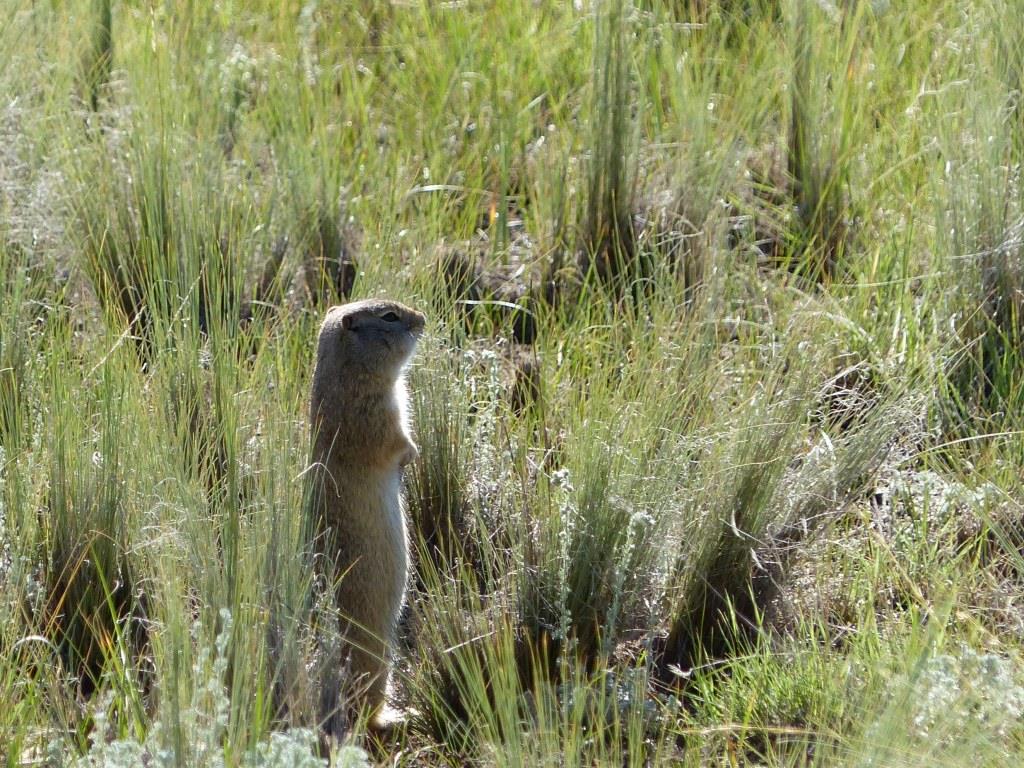
Richardson's Ground Squirrel. Florrisant Fossil Beds National Monument.

Richardson’s Ground Squirrel. Florissant Fossil Beds National Monument.

Colorado Chipmunk. Florrisant Fossil Beds National Monument.

Colorado Chipmunk. Florissant Fossil Beds National Monument.

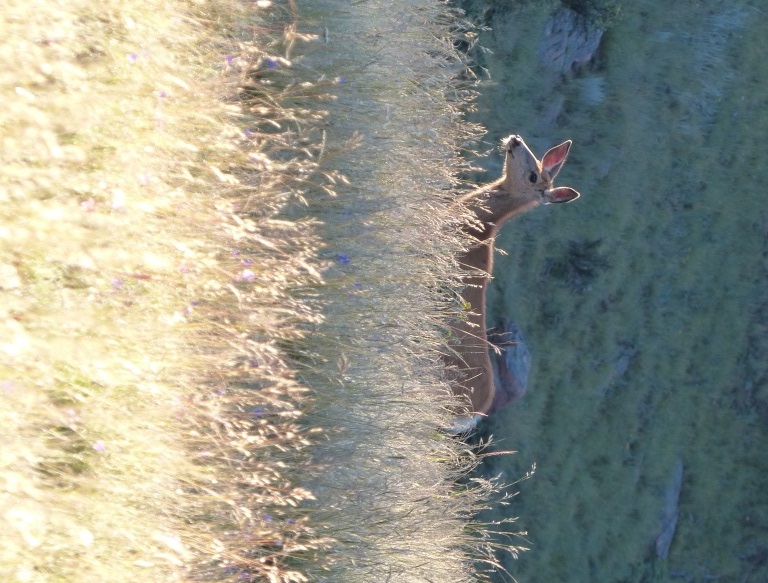
Mule Deer. Mueller State Park.

Mule Deer. Mueller State Park.

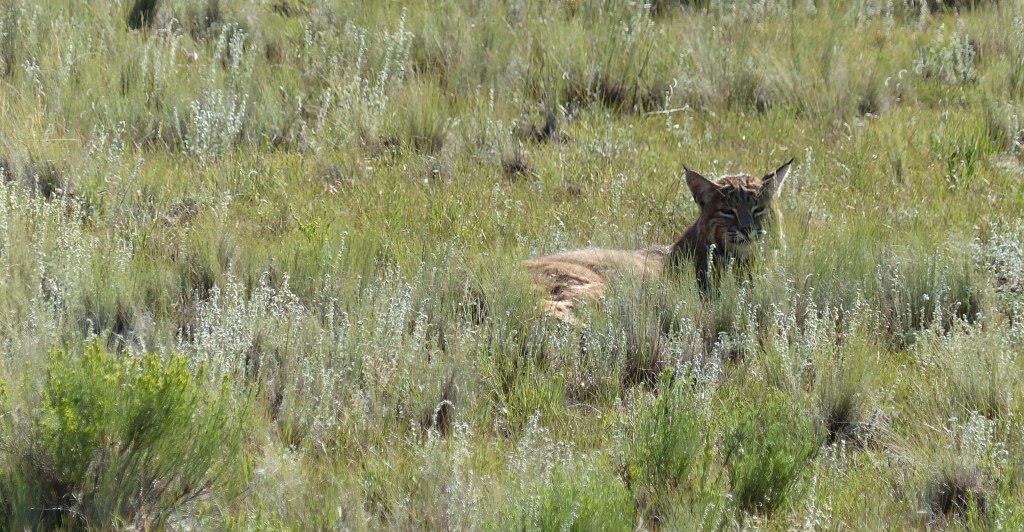
Bobcat. Florrisant Fossil Beds National Monument.

Bobcat. Florissant Fossil Beds National Monument.

Trespass being considered by Cottontail rabbit (either Mountain or Eastern Cottontail, the bobcat would know for sure). Florrisant Fossil Beds National Monument.

Trespass being considered by Cottontail rabbit (either Mountain or Eastern Cottontail, the bobcat would know for sure). Florissant Fossil Beds National Monument.

After a few days wandering among these animals and flipping through the field guide, a question emerges: Why so many squirrely creatures in the west? The Field Guide to the Mammals has twenty four pages of ground squirrels, almost all from the west. The one eastern species, the eastern chipmunk, has twenty two cousin species in the west. A rodent biodiversity bomb has flung fat-cheeked squeakers into every grassy glade, forest edge and rock pile west of the Mississippi.

A recent paper by Ge et al, evolutionary biologists working at the Chinese Academy of Sciences, helps us to understand what happened. The ground squirrels (Xerinae, a subfamily comprising the chipmunk, marmots and other ground squirrels within the rodent family, the Sciuridae) originated in Europe about thirty five million years ago. From there the animals spread to Africa and North America. The group’s explosive diversification happened later, about sixteen million years ago, and seems to have been triggered by climatic changes.

The same cooling drying climate that separated the American and Asian forests created a grand opportunity for ground squirrels. As forests retreated, open meadows, grassy plains and sparsely vegetated mountainsides took over, especially in the arid west. This change, combined with the highly variegated landscape (not too many other places in the world have such a complex mix of mountains, plains, deserts), caused the ground squirrels to speciate into the many species we see today. Some of these then colonized other parts of the world, probably after they moved west over the Bering land bridge. For the marmots, chipmunks and ground squirrels, Manifest Destiny did not end at the Pacific Ocean. They kept going and colonized Siberia, Asia and Europe: the far, far, Wild West.

We hear in this story echoes of our own. Homo sapiens is also a creature of the grasslands, brought into being by forests in retreat from a cool, dry climate.

Note how the ground squirrels survey their homes: on two legs.

Note their social systems: they often live in close-knit groups in stable villages.

We’re lucky that their thumbs are not quite as agile as our own and that their food didn’t take quite as much brainwork to catch.

…and an altogether different encounter with the waters of Colorado.

Driving south from Denver, headed to the mountains for some quality time with Rocky Mountain fossils and a campsite, the radio news interrupted my freewheeling reveries. A giant wave of mud had smashed through Manitou Springs, burying part of downtown, killing a driver on the main highway, and destroying dozens of cars and several buildings. The national news gave just a sketch, so I pulled over and got the local paper: grim news of a “massive and deadly flash flood,” caused by rain over a mountainside burn scar. The scar was left by the Waldo Canyon fire that burned 18,000 acres of land in 2012, stripping the mountains of vegetation and leaving dangerously unstable soil behind.

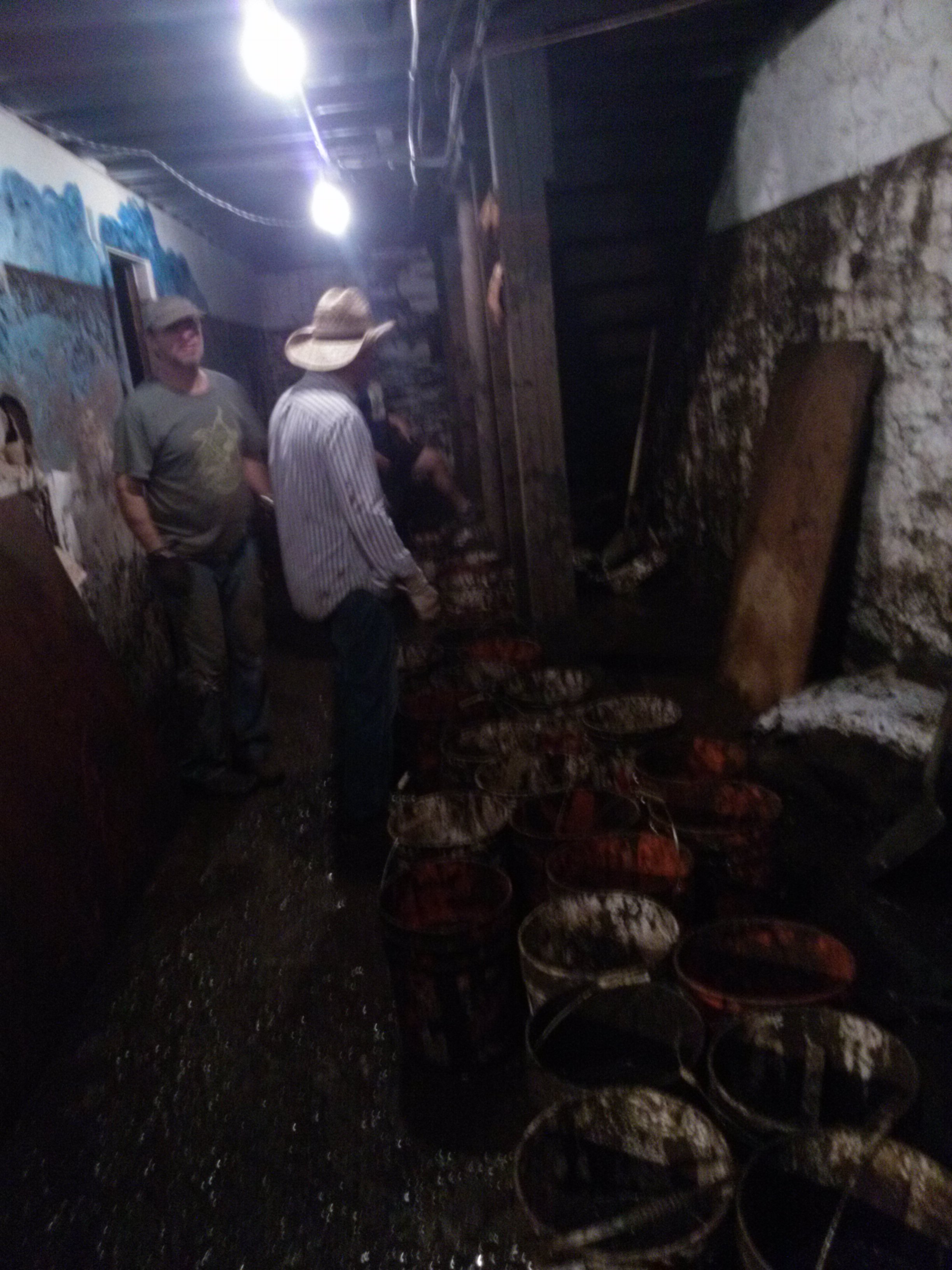
The paper mentioned a need for volunteers, so I put my plans on hold for a day and made a small diversion into Manitou. After signing up with a coordinator I spent several hours shoveling mud out of a basement. The flood water line was about six feet off the ground and ground level was another six feet above the creek: the flash flood was huge, almost unimaginable given the tiny rivulet – three feet across, a few inches deep — that ran in the creek bed when I was there. In the basement, ankle-deep black mud covered everything. Dozens of local residents and a motley group of volunteers dug and carried out the slurry, one five gallon bucket at a time. By day’s end, the basement was clear of ooze, if not clean. Outside, piles of mud and smashed debris were piled next to the road.

IMG441IMG452

Not visible, but far worse than the physical damage, was the human cost: a life lost, homes destroyed, businesses losing both infrastructure and sales at the busiest time of year in this tourist-driven economy. And the weight of knowing that this is not the end: the burn scar remains. The Denver Post reports that this flash flood was the third of the year and ten more years remain before the scar will stop spilling soil into the canyon. All this compounds the pre-existing high flood risk in a town where many of the historic buildings are built along the creek. Local, state and federal agencies are working hard to build upstream mitigation ponds and barriers. This latest flood will spur further action, with funds more readily available now that the area is an official “disaster emergency”.

Two days later, on my return journey, I drove back into town and bought some breakfast. Bucket-carrying is one way to lend a hand; supporting local businesses is another. These are small actions, I know, not at all commensurate with the magnitude of what happened. And crushingly small when we reflect that fires and floods are projected to surge worldwide in the next decades. As I was shoveling mud, unbidden memories and images came roiling up. The smell of dead animals and endless miles of devastation in southern Mississippi after Katrina, tales told by Haitian friends of awful mudslides in their hometowns, images of New York subways inundated after Sandy. Bucket and breakfasts seem mighty, mighty small.

“…beauty on the water, and the great heron feeds”

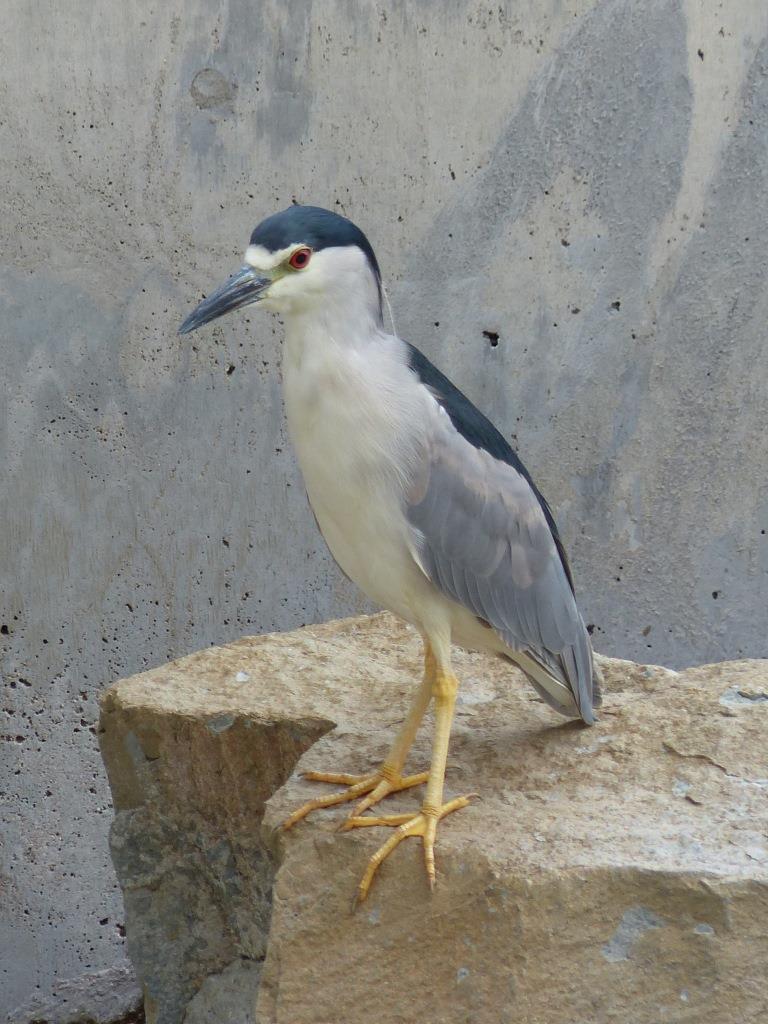
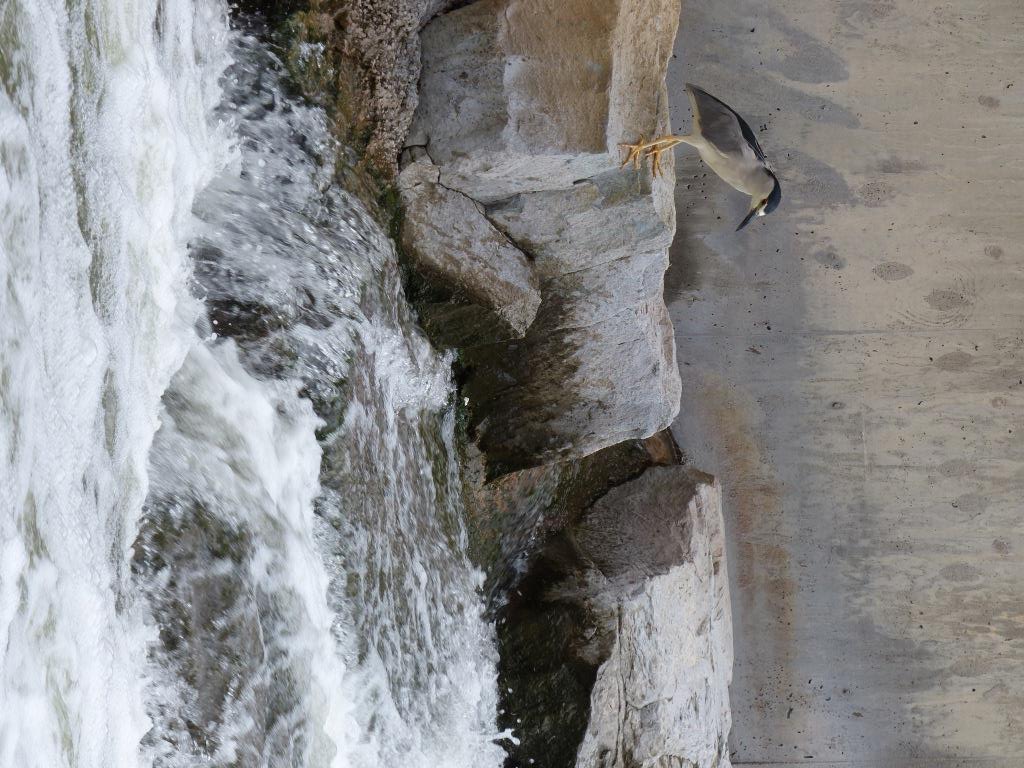
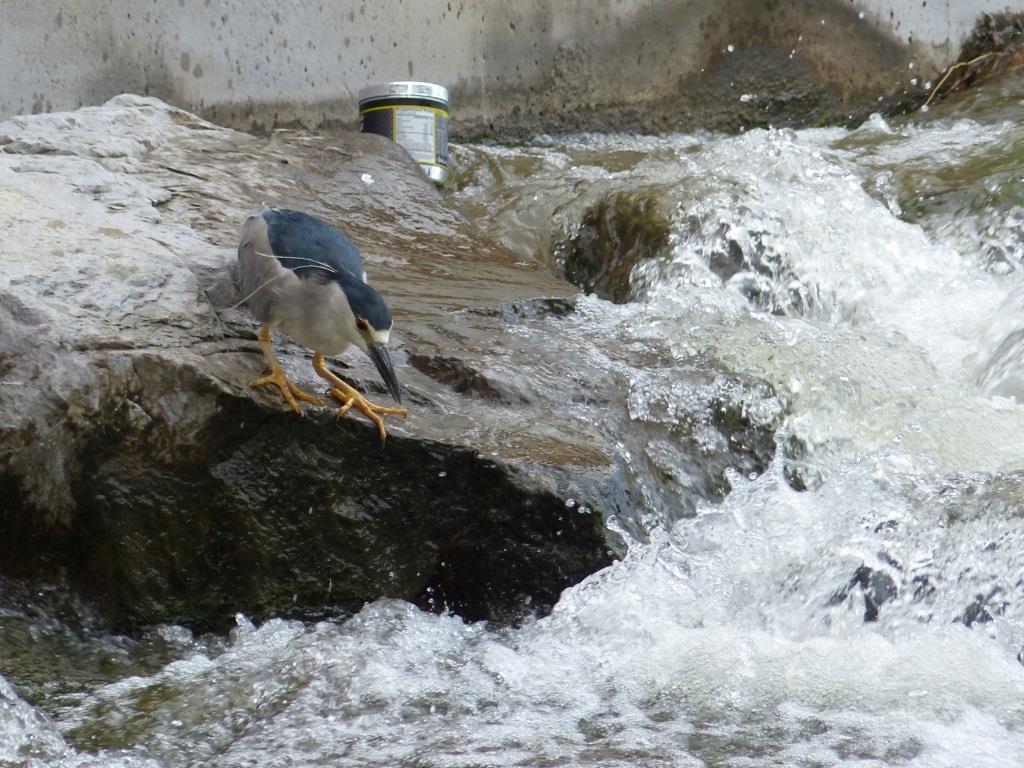
This black-crowned night-heron was stalking the hissing water along Cherry Creek in Denver. The walkway and bike trail along the creek is used by hundreds of people each day, so the bird paid no heed to the human traffic. Just like the famous animals of the Galapagos, urban animals (human and non-human alike) can be observed in close quarters.

nightheronclosenightherongazenightheroncrouchnightheronjoggerCherry Creek runs through the heart of town. On its banks Denver’s history has played out: the brutal removal of Arapahoe Indians, the booming population of immigrant settlers whose incomprehension of flash floods caused early versions of Denver to wash downstream, typhoid epidemics as the creek’s waters served both as drinking water source and sewer, extensive industrialization that turned the creek into an inaccessible tangle of railroads and warehouses, and the work of generations of civil servants whose commitment to reclaiming the vitality of the creek has turned it into a much-used garland of greenways and parks.

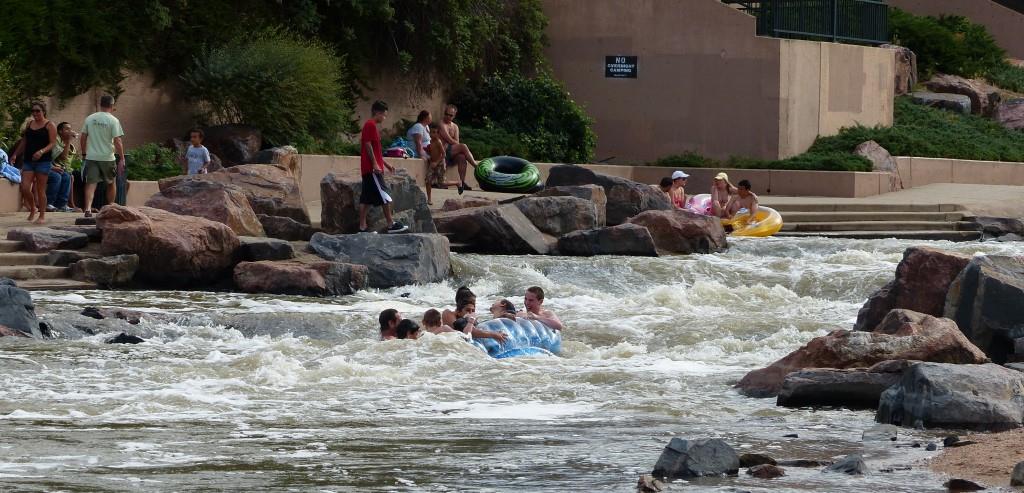
On Saturday afternoon, the confluence of Cherry Creek and the South Platte hosted nearly two hundred picnickers, swimmers and walkers. Hundreds more passed on the riverside trails. This is a phenomenal achievement for Denver: no longer are the joys of Colorado’s waters available only to those with the money and time to drive to wilderness fly-fishing spots. Some of that wild water flows right through the city, bringing fish to the night-heron and pleasure to the weekend amblers. The water erodes just a small part of the many, many barriers that divide our society.

south platte denver