Category Archives: Travels

Humanitarian assistance for Gaza: where to donate.

My last blog and facebook posts have been a little bleak. On a more proactive note, here are some ways to help people in Gaza. These organizations help people directly, using money for humanitarian assistance, not for arms.

The United Nations Relief and Works Agency for Palestine Refugees, working under the mandate of the UN General Assembly. UNWRA’s work “encompass education, health care, relief and social services, camp infrastructure and improvement, microfinance and emergency assistance, including in times of armed conflict.” I saw UNWRA’s work during my visits to the refugee camps in the West Bank: they run schools and clinics. Many people in Gaza are currently crowded into UNWRA’s schools, hoping for shelter, but sometimes getting bombed anyway. UNWRA has launched an emergency appeal. For US donors, the US Friends of UNWRA provides a mechanism to donate within the US tax code (i.e., 501(c)(3) tax credits).

Doctors Without Borders/Médecins Sans Frontières (MSF): Operate clinics in Gaza and work in the Al Shifa hospital. They also work in many other parts of the world and are very highly rated in Charity Navigator.  “MSF observes neutrality and impartiality in the name of universal medical ethics and the right to humanitarian assistance and claims full and unhindered freedom in the exercise of its functions” (from their Charter). Donate here.

(For US residents, the bill for arms comes due on April 15th: about $3 billion each year flows from US taxpayers to the Israeli military. US AID spends about 5% of that amount in non-military spending in the West Bank, often on projects mitigating the consequences of Israeli military rule. For example, when the Israeli military closes roads to all Palestinian cars, turning the roadways into settler-only routes, US AID builds another road to connect major West Bank cities. Hamas’ funding sources are less clear, but their rockets come from Iran, Syria, or are “home-made”; various Middle Eastern states have been implicated in funding their military wing.)
Listen: underwater crackly, groany kōans

Drop a hydrophone into shallow salt water at latitudes less than 40° and you’re likely to hear a crackling sound, sometimes so loud that it drowns out almost all other underwater sounds. This din is created by snapping shrimp, tiny crustaceans that click one of their front claws so fast that the motion creates a bubble of air, a cavitation in the water. The rapid opening and closing of the bubble generates sounds as loud as 200 dB (as loud or louder than dolphins and whales) and very briefly heats the bubble to a temperature just shy of that on the surface of the sun. Understandably, nearby prey are stunned, as was I when I read these figures. The shrimp also use their loud, hot snaps to wrangle over territories and to attract mates.

Here are the sounds of these creatures recorded from the dock at St Catherine’s Island (if you’re an email subscriber or viewing on a phone, you might need to click on the header link to go to the website to get sounds…):


In some tropical sponge-dwelling snapping shrimp “a sentinel shrimp reacts to danger by recruiting other colony members to snap in concert for several to tens of seconds” (Tóth and Duffy 2005). So these shrimp are somewhat like crows, honeybees, and other social creatures: networking information through their societies.

Another sound from the dock, heard amid the shrimp (I filtered out many of the high frequencies to make the sound a little easier to hear):


This is the territorial call and the mating cry of a toadfish. These ogre-like creatures sit under rocks or in crevices the bottom of the seafloor, waiting to ambush smaller fish and other morsels. The Billy Goat Gruff of the seas. Their mouths are liked toothed baseball mitts.

Despite its unappealing visage, the toadfish has much to recommend it to the curious naturalist. The call is produced by vibratory muscles attached to the swim-bladder (bagpipes?). These muscles are the fastest known among all vertebrates. Once mating is done, the male toadfish defends the eggs, then guards the hatchlings until they find their own bridge to hide under.

NASA once sent toadfish into space. According to Wikipedia, they found that toadfish inner ear bones developed in the same way in orbit as back here on planet Earth. Good to know. This study also answers the kōan,

Can a toadfish in space orbit be said to be under his rock?

But poses a new one,

If a toadfish vibrates his swim bladder in the vacuum of space, is he singing? And, for extra kōa-credit, who might answer his airless call?

For now, toadfish are hiding under their rocks with even greater diligence, fearing capture for space experiments, waiting for Homo sapiens to pass on by. Here is the sound of our departure from the dock, heard from the toadfish’s watery home:


Many thanks to Dr John Schacke from UGA and the Georgia Dolphin Ecology Program who helped me to understand what I was hearing.

Washed up

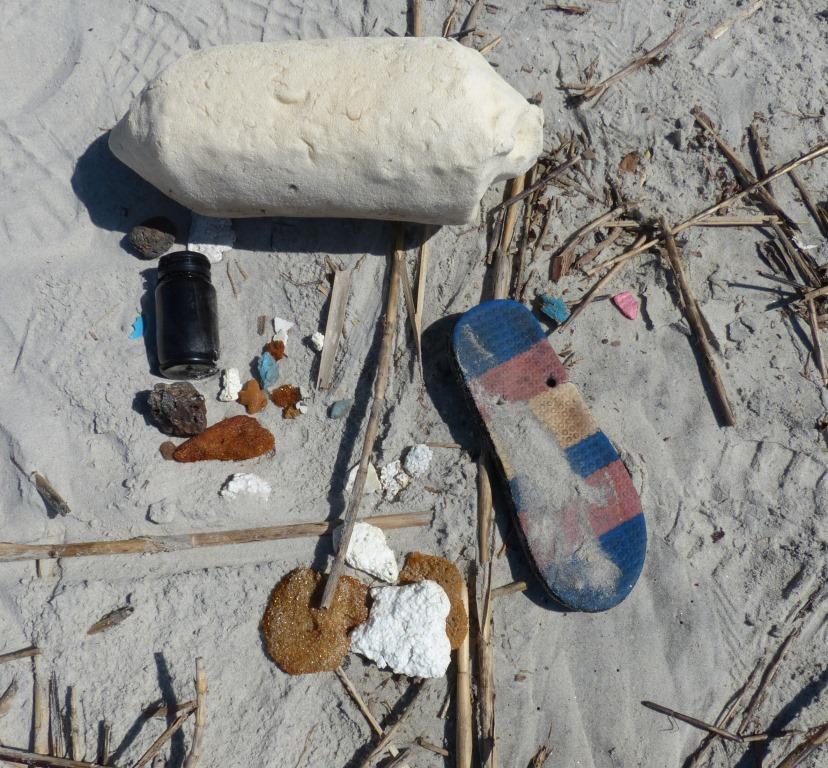
The students in the Sewanee Island Ecology Program have repeated the studies that I began last year of “trash” on the beaches of St Catherine’s Island, GA. We search standardized transect lines in the wrack on the upper beach.

If our samples are representative of the whole beach, and assuming a 20 meter wide wrack line, a 10 km stretch of beach would have just shy of half a million individual pieces of anthropogenic debris. Foam pieces are the most common (80% of pieces), followed by other plastics. Half of all debris pieces were 2cm wide or smaller. These data only include pieces of debris that are visible on the surface. Much more is likely buried deeper. We did not examine microscopic fragments.

Here are some photos of some of the items we found.

stcatsbeachdebris0

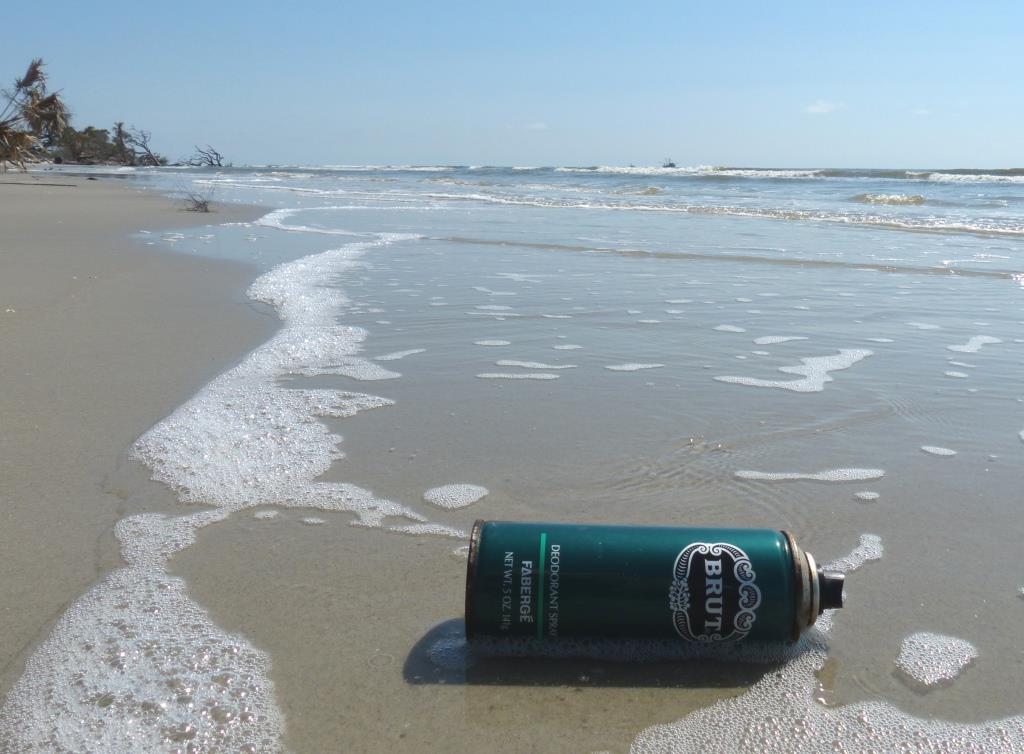
Brut. Advertized on their websites as the “Essence of Man.” Indeed. This one washed up from …somewhere… as we were walking our transects.

stcatsbeachdebris

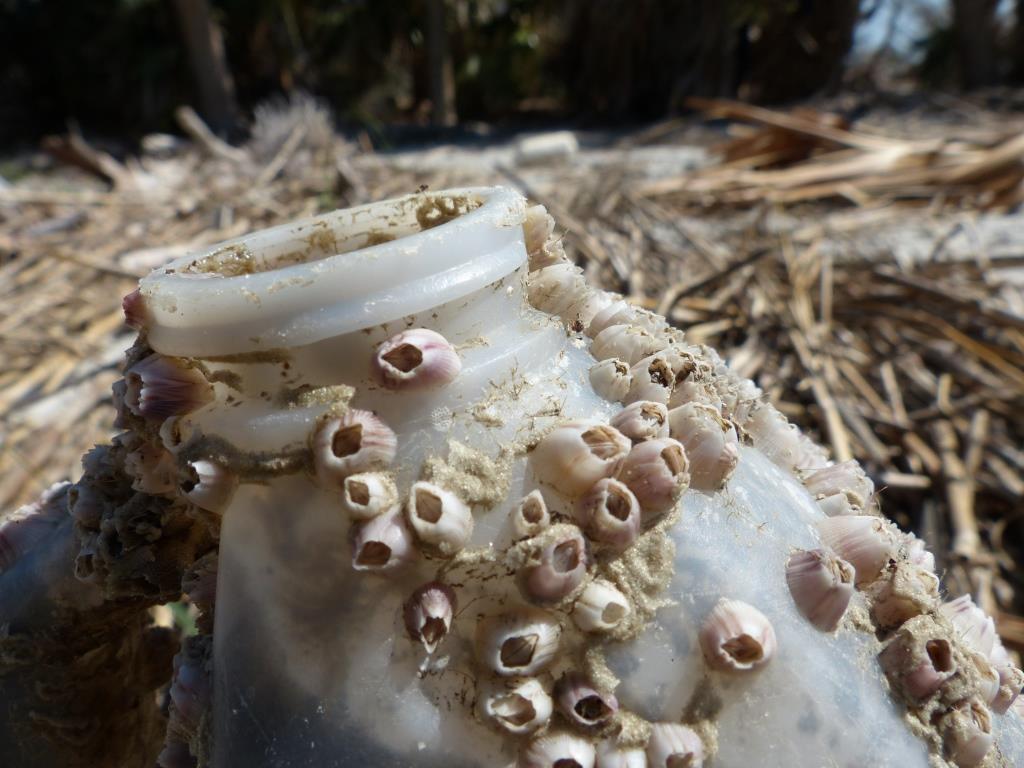
Epibionts on plastic bottle. Darwin would be proud. It’s all about barnacles.

stcatsbeachdebris2

Still life with pill bottle.

stcatsbeachdebris3

Just what the ocean needs, a little more engine oil. Probably drilled from under the ocean. Sustainability is all about closing the circle…

I also made some sound recordings along the beach. The first is made with a hydrophone, a microphone that picks up sounds below the surface of the water. I suspended it in some gentle surf. The second recording is the same surf, but recorded with a regular microphone, in the air, at the top of the beach.

Garlic mustard, when it’s at home

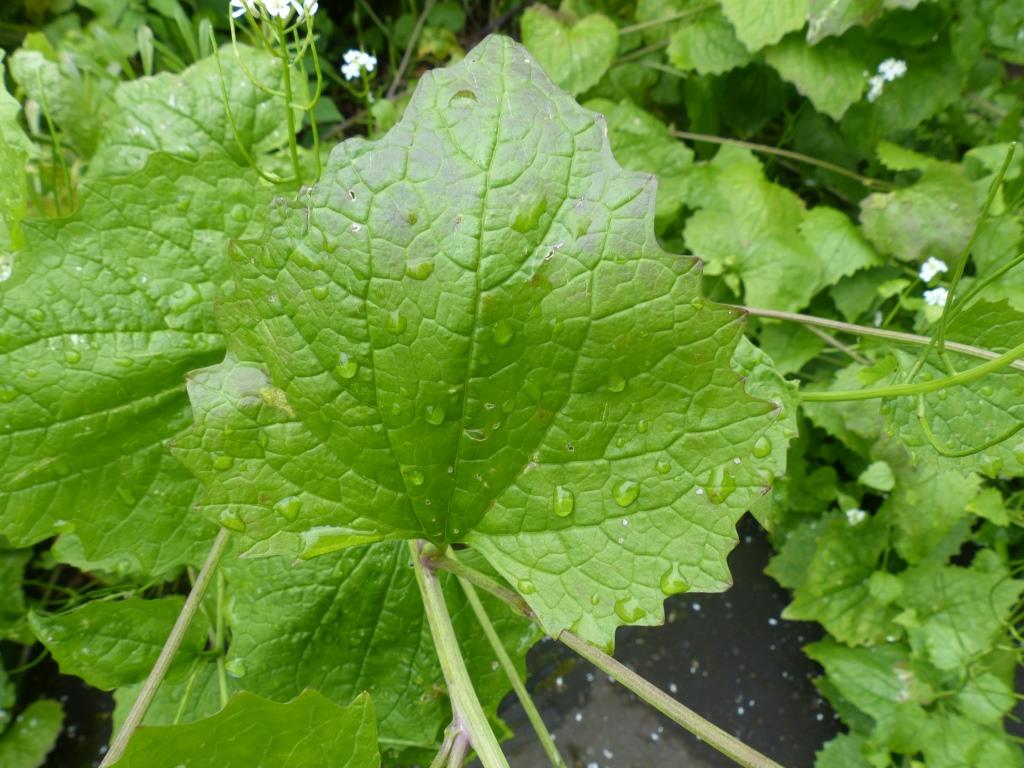
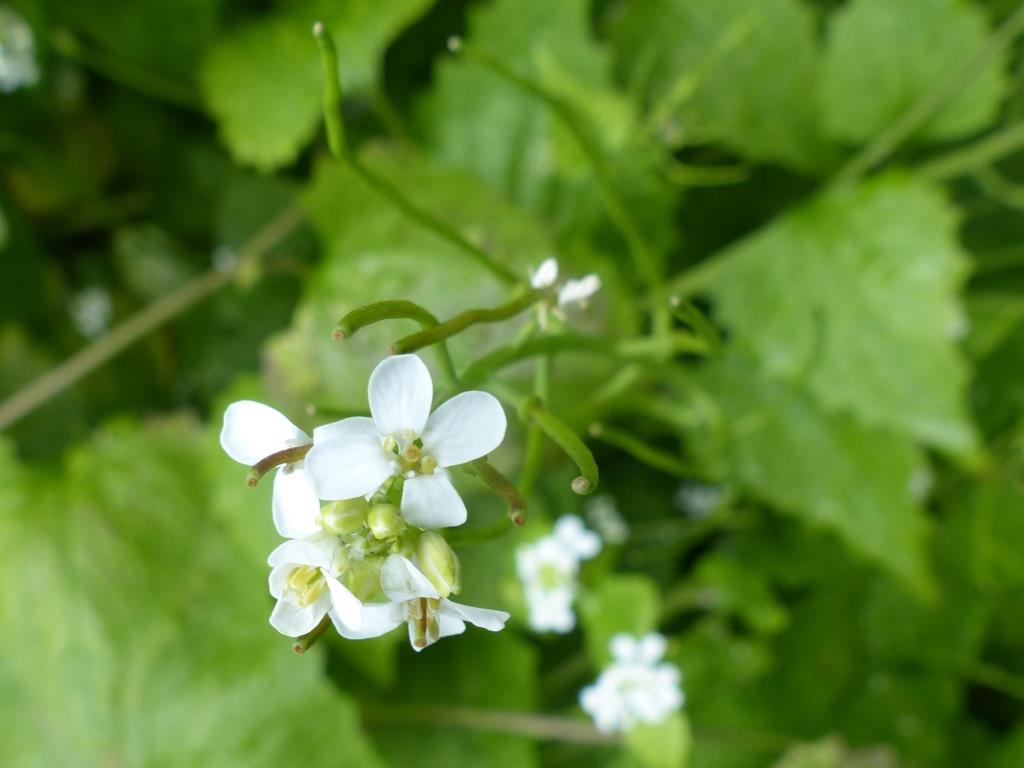
Naturalists from North America will recognize this plant, the maligned, non-native garlic mustard (Alliaria petiolata). I photographed this one in South Queensferry, Scotland. Recognition is likely not the only response to the sight of these leaves and flowers. Hands and elbows may start twitching in anticipation of the pleasure of uprooting the plant. This tugging reflex is organized into gatherings called “pulls” where people mass to yank swaths of the plant from the soil, bag the plants, then consign them to the landfill or fire. Depart from me, you who are cursed, into the eternal fire prepared for the devil and his angels.

garlicmustard

garlicmustard2This vigorous dislike has a good ecological foundation. The plant invades woodlands and smothers native plants, reducing botanical diversity. Chemical weapons are used in this process: garlic mustard releases chemicals into the soil that sap the vitality of surrounding plants. These chemicals act by suppressing the germination and growth of mycorrhizal fungi whose mutualistic relationship with plant roots helps many forest plants to grow successfully.

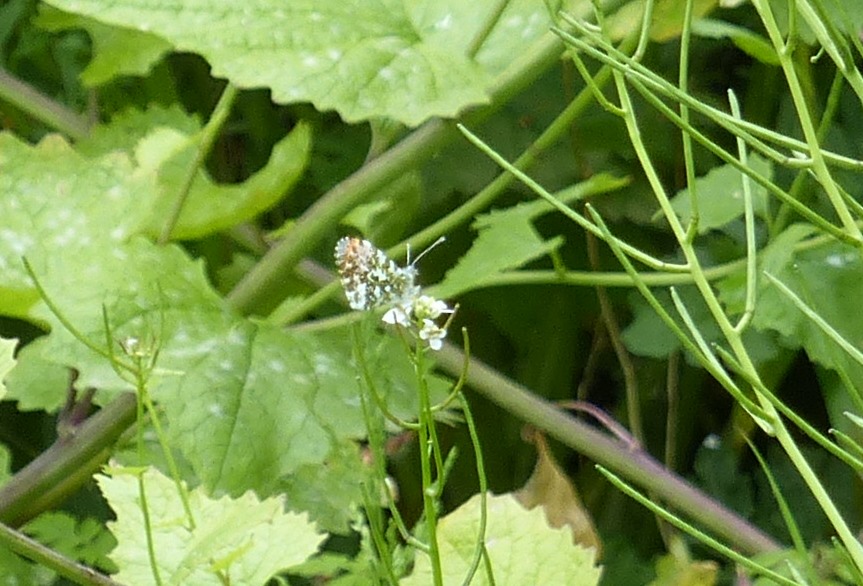
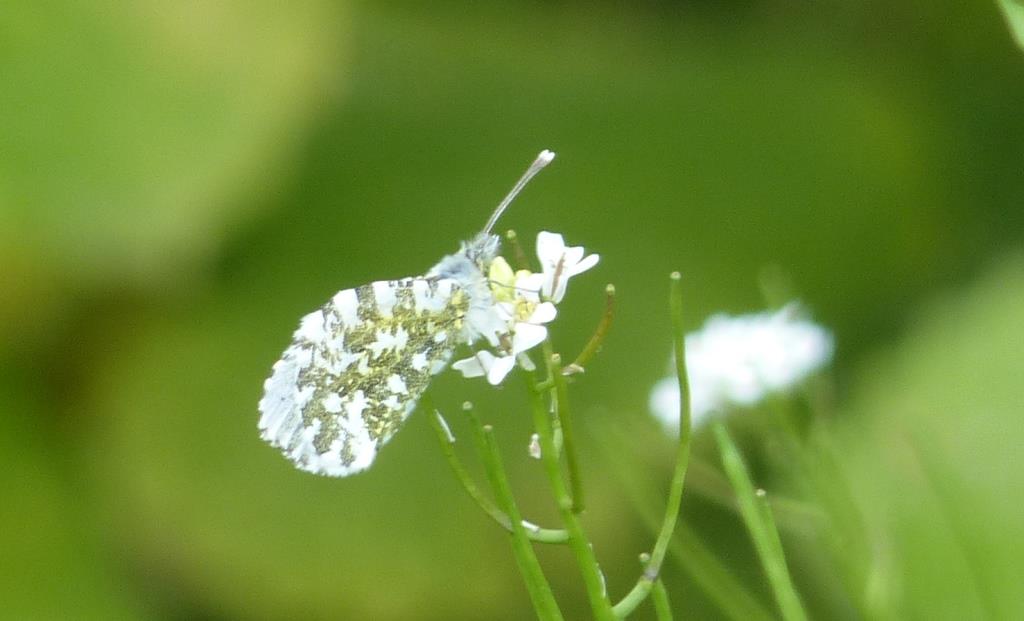
In the UK, where garlic mustard is native, the species is known as Jack-in-the-hedge and is fairly common in damp hedgerows and field edges. Unlike their American counterparts, local naturalists esteem the plant for its role as the host plant for caterpillars of several native butterflies. The orange-tip (Anthocharis cardamines) is the most well-known of these. This conspicuous white butterfly with bright orange wing tips often loiters in patches of Jack-in-the-hedge. The green-veined white (Pieris napi) is another species that uses the plant as a primary host for its caterpillars. The small white (Pieris rapae) — sometimes known as the “cabbage white” — will lay its eggs on Jack-in-the-hedge when it can’t find a gardener’s cabbage or broccoli.

In North American, the plant’s relationship with butterflies is not so nurturing. The West Virginia white butterfly (Pieris virginiensis) normally lays its eggs on native toothwort (Dentaria), but the female butterflies are also attracted to garlic mustard. Unfortunately for the caterpillars of these fooled females, the novel chemical mixture in garlic mustard prevents the youngsters from growing. The plant is therefore an ecological trap: drawing in butterflies with the promise of good food, then killing them.

This confused tale has its origins in the close family ties among the species involved. Toothwort and garlic mustard both belong to the family Brassicaceae. North American butterflies are drawn to the presumably familiar scent of the import. But family resemblance only goes so far. American butterflies have not evolved the particularities of biochemical detoxification needed to feed on garlic mustard, whereas their European kin in the same subfamily of butterflies (Pierinae) have mastered these mechanisms. Whether evolution will be fast enough to allow the Americans to adapt remains to be seen.

It doesn’t help that butterflies in Bible Belt states are kept in the dark about natural selection, giving the missionary mustards a boost in their colonial quest.

Orange-tip butterfly, male, on Jack-in-the-hedge. South Queensferry, Scotland.

Orange-tip butterfly, male, on Jack-in-the-hedge. South Queensferry, Scotland.

Orange-tip butterfly, female. South Queensferry, Scotland.

Orange-tip butterfly, female. South Queensferry, Scotland.

Satsuki bonsai

image

“Satsuki” bonsai at the National Bonsai Collection in Washington, DC.

These small trees (Rhododendron indicum) are native to Japan and grow  just a few feet tall in the wild. They are cultivated for their prolific blooms and tolerance of pruning. They make gorgeous bonsai and the National Arboretum has several in full bloom. If you’re in the DC area, I recommend a visit. The exhibit closes on June 2. Of course, the rest of the bonsai collection is also looking great as the trees enjoy the early summer rains.

wpid-img774.jpgThe contrast between the quiet, organized art in the collection and the immediate surroundings of the National Arboretum is striking. Large encampments of homeless people crowd below interstate underpasses and the mentally ill shuffle down buckled sidewalks, talking to no-one and everyone.

Beauty and brokenness. A dissonance that seems particularly painful so close to Washington’s power and wealth.

What Pope Francis might see in the backstreets of Bethlehem

The Pope is visiting Bethlehem tomorrow, holding a Mass in Manger Square and meeting with Palestinian officials. He’ll also meet with some Palestinian refugees.

It is striking to consider what Jesus would be born into today. (Click on the images to see the full picture and caption, then press Esc to return to the blog.)


The main refugee camp lies adjacent to the town of Bethlehem and, like other Palestinian camps, has been in existence since just after 1948 when Palestinians were displaced by the creation of the State of Israel. The United Nations Relief and Works Agency for Palestine Refugees (UNRWA) is charged by the UN to care for health, education and social services of “persons whose normal place of residence was Palestine during the period 1 June 1946 to 15 May 1948, and who lost both home and means of livelihood as a result of the 1948 conflict.” There are about 5 million refugees, located in the West Bank, Gaza, Jordan, and Syria. Many refugees seek, so far to no avail, the “right of return” to their former homes. Some families still hold the keys to their former homes and the rusted old key has become a symbol of what they have lost and what they hope to regain. Of course, current Israeli policy does not favor any such outcome. Instead, Palestinian land continues to be taken by settlements and the snaking path of the separation wall.

No room at the Inn. The modern equivalent of the manger is a UN refugee camp nestled against a concrete wall studded with gun towers. An unlikely place for a prince of peace to be born. But then again, an animals’ feed trough in a town under Roman occupation was hardly a throne of privilege. It will be interesting to hear what the Pope has to say on these matters.

The long-standing awful track record of the Roman Pontiff (and many, many other Christians) of not treating Jews and Muslims as fellow, equal human beings is well known; pogroms, crusades and genocides are part of the Christian legacy. That a Pope would visit with some Muslim refugees, then walk in the Holocaust memorial (Yad Vashem), a place that makes clear the complicity of previous Christian leadership in the Shoah, and finally honor a Zionist leader (Theodor Herzl) whom previous Popes had refused to support is perhaps a small sign of the Vatican trying to acknowledge past wrongs and find a more peaceful future.

Convergence, divergence

During my visit to Israel and the West Bank, I rambled through the Hebrew University Botanical Garden to get a better sense for local plant diversity. In addition to the many species that were unfamiliar to me, I saw some old friends with countenances adapted to local climes.

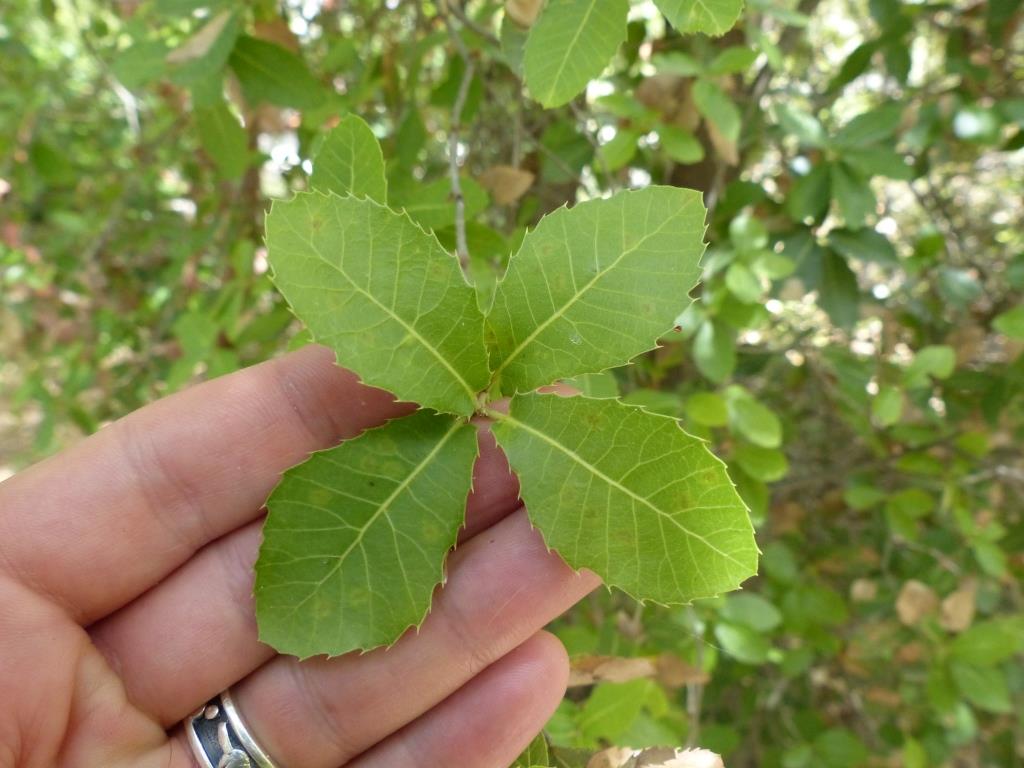
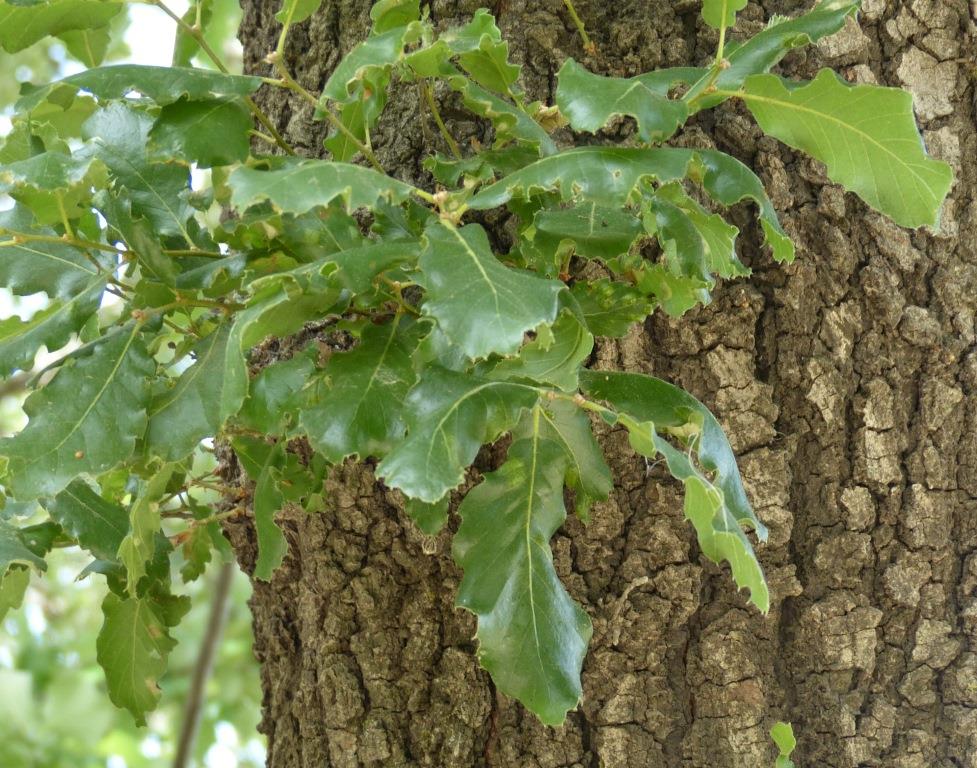
What form does an oak tree take in a seasonally dry climate with many leaf-munching herbivores? Both of the oaks that I encountered offered the same answer: a thick, water-holding leaf with prickly edges. These oaks have become holly-like. I was reminded of the holly trees growing under the dry overhangs of the Cumberland Plateau in Tennessee. Tough plants that can take months of drought.

Quercus calliprinos, Valonia oak.

Quercus calliprinos, Palestine oak. An evergreen species.

Quercus ithaburensis, Valonia oak.

Quercus ithaburensis, Valonia oak. Sometimes evergreen.

The same thick-leaved, spiny leaf form was also true for ash:

Fraxinus syriaca, Syrian ash, considered by some a sub-species of Fraxinus angustifolia, Narrow-leaved ash.

Fraxinus syriaca, Syrian ash, considered by some a sub-species of Fraxinus angustifolia, Narrow-leaved ash.

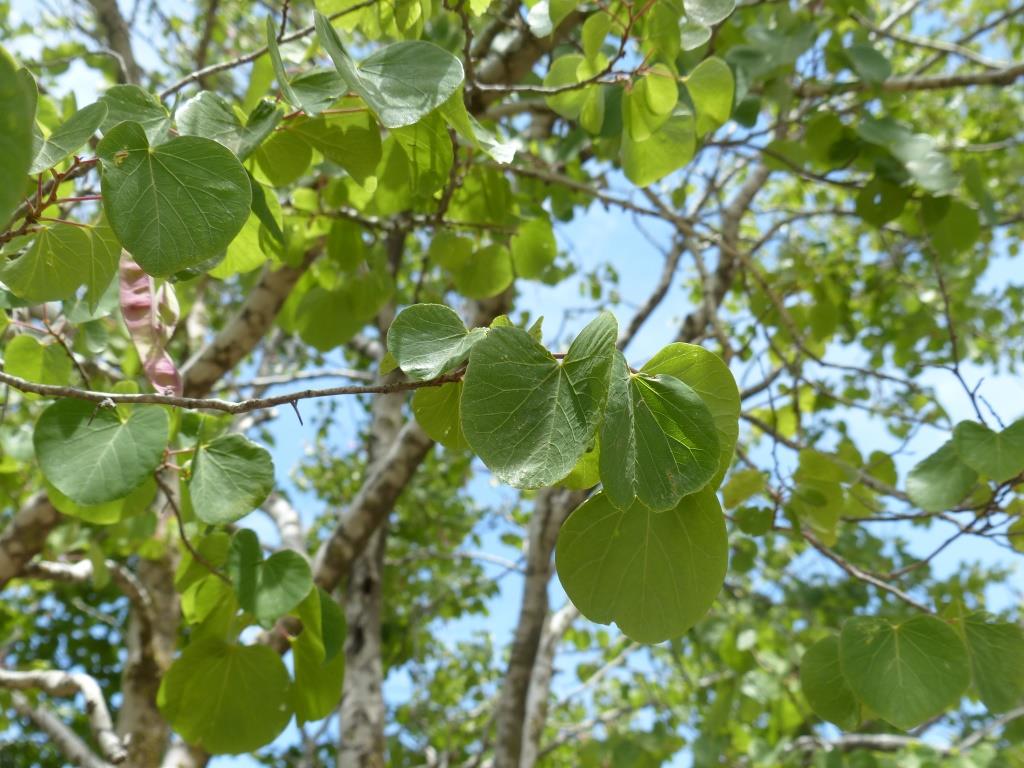
But plants of moister habitats looked remarkable similar to their North American cousins. If you live in the south-eastern U.S., this might look familiar:

Cercis siliquastrum, close relative of Cercis canadensis, the Eastern redbud. This Middle Eastern species is sometimes called the "Judas tree," an ugly name for a tree that festoons itself in pink and has, presumably, no quarrel with either Judas or his betrayed companion.

Cercis siliquastrum, close relative of Cercis canadensis, the American Eastern redbud. This Middle Eastern species is sometimes called the “Judas tree,” an ugly name for a tree that festoons itself gaily in pink every spring and has, presumably, no quarrel with either Judas or his betrayed companion.

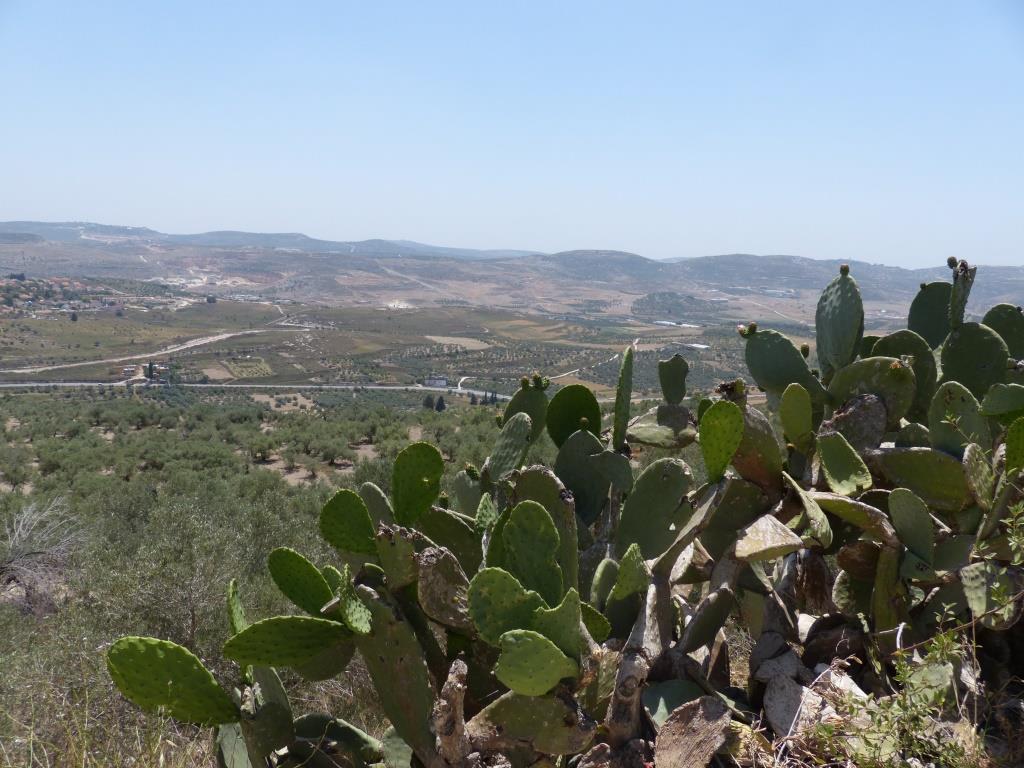
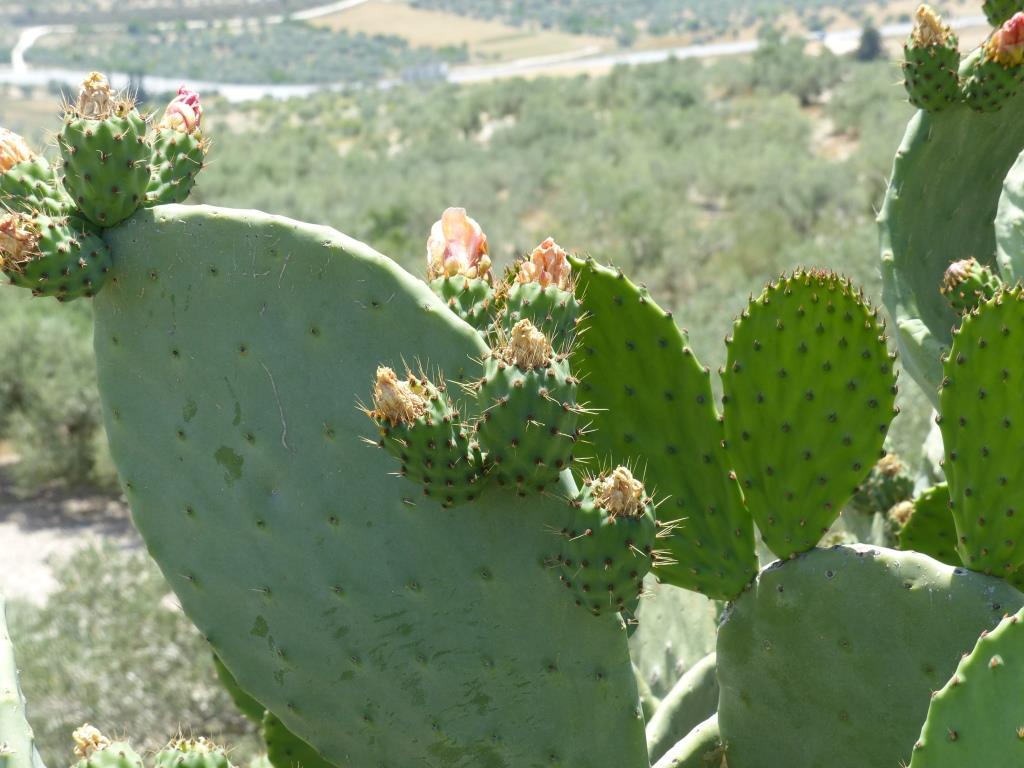
Here’s an entirely different kind of plant, one truly adapted to the dry. It comes with some strangely intertwined cultural stories. These photographs are from the northern part of the West Bank.

57The plant is a prickly pear cactus, Opuntia ficus-indica, and is often planted as a boundary around fields, a living barbed-wire fence. Its fruit, once dethorned, is a delicacy. For Palestinians, the plant is a symbol of bitter tenacity under hardship. It appears in poems, posters, and cartoons. The cactus’ name is subbar, closely related to (and sometimes used interchangeably with) sabr, patient enduring. Israelis use the cactus for an entirely different symbol. A “sabra” is a Jew born in Israel or in the territories that Israel occupies. Thorny on the outside but sweet on the inside, like cactus fruit, sabra is used as a term of pride, affection, and connection to the land.

There is a biogeographic irony here. The plant itself is native to Mexico and was imported to the region. So these conflicting symbols derive from a plant that is rooted elsewhere. It might not be stretching the point too much to say that the same is true of some of the conflict in the region. Few other places in the world are as affected by the actions of other countries and by ideas imported from abroad.

The botanical garden itself has felt these foreign influences and conflicts. When the British still controlled the land, immigrant Jews who were part of the European Zionist movement established the garden and Hebrew University. Then the garden become part of the new Israel in 1948, but was entirely surrounded by land occupied by Jordan. Israel took over this land in 1967 during the six-day war. A Hamas bombing a dozen years ago brought suicide terrorism to the heart of the University. And the tension about the fate of eastern Jerusalem still draws the attentions, helpful and otherwise, of governments from across the world. An overseas cactus naturalized and rooted in Middle Eastern soil is therefore perhaps an apt metaphor.

Another sunny day in Jerusalem

image

I ran into some vigorous protests today. After Israel’s Independence Day celebrations, the Palestinians wanted their say. Many of those present were the descendents of those who lost homes and land in 1948 and later. Of course, the wall and the Israeli West Bank settlements have continued this loss of land.

After allowing the protesters 40 minutes of chanting, the security forces waded in and hauled off two men — they knew who they wanted. Later, various people got shoved and beaten, including some older women, young boys, and Palestinian medics. A group of “tween” girls led the later chanting and paid the price by being chased down and thrown around. One needed bandages. One soldier was about to shoot a girl with rubber bullets at point blank until his comrades yelled at him to stop. I’m sure that most or all of these soldiers would rather not be having to do this. They have all the physical weapons on their side, but the taunts of the crowd must bite. Then again, the memory of suicide bombings and other atrocities hardly encourages gentleness.

The protest was led by women. Later, after dark, young men took to the Old City’s streets, singing in call-and-response. In the narrow streets, they roared. The crowd dispersed without trouble, but the night is not done.

Meanwhile, hundreds of busloads of sunburned tourists wander the Holy City, seeking their Gods of love among stones that have surely seen more millennia of human blood than any other rocks. Living history, indeed.

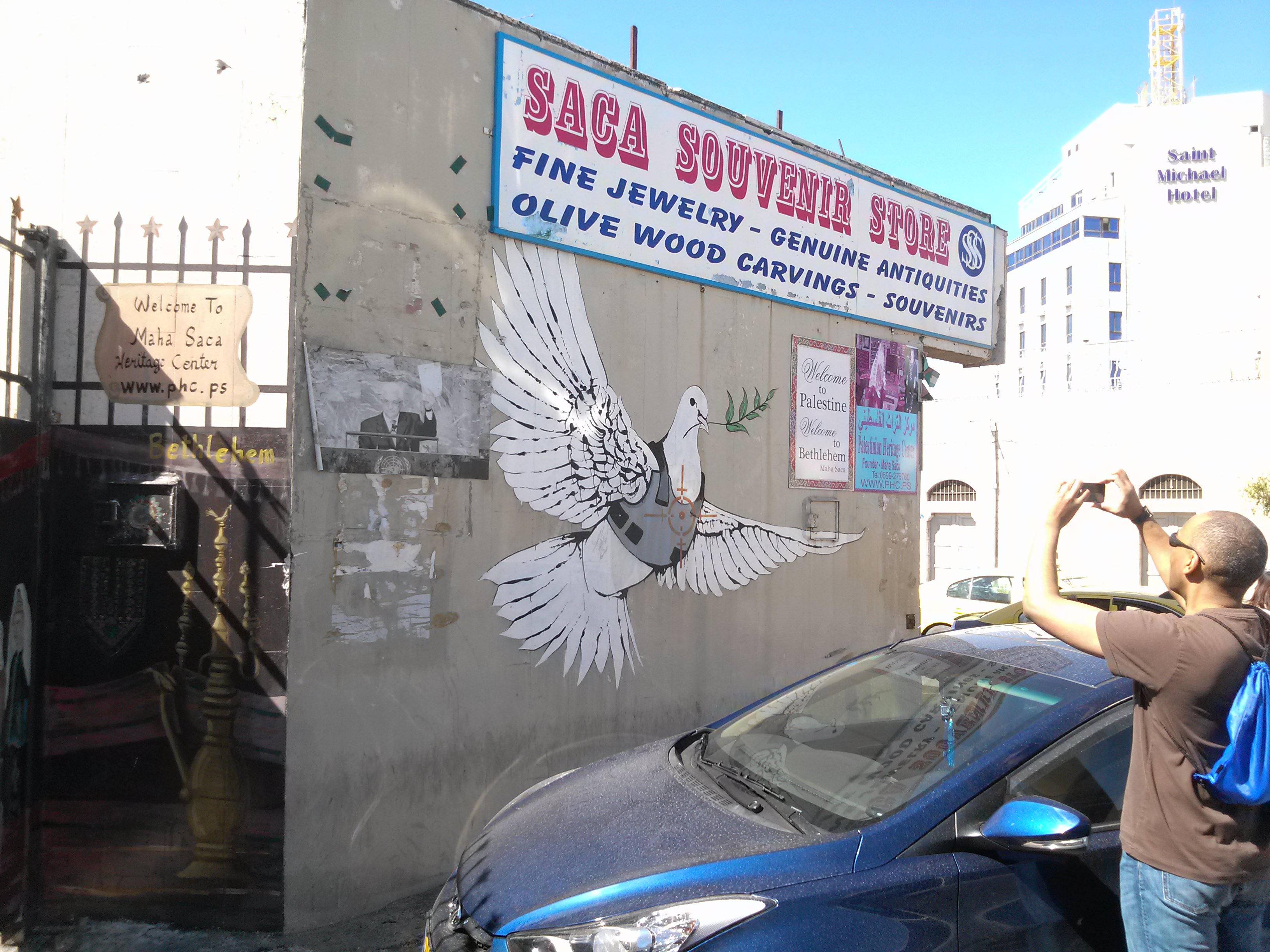
To close, here’s a Banksy from a building just behind the 8-12 ft concrete wall that separates the people of Bethlehem from Israel.

wpid-img733.jpg

Ramble, the noun: Birding Central Park.

I made a very brief trip to Manhattan earlier this week. As I rambled between meetings, I found The Ramble, proper noun.

IMG712_rambleI thought the claim to being one of the “top bird-watching locations in the United States” was a little hubristic. Sure, there are tons of birders in the megalopolis, but could this little patch of woods in Central Park truly yield “top” numbers of birds? Despite the rain and my skepticism, I walked on.

Forty-five minutes later, I repented of my woodsy Tennessee haughtiness. I’ve never seen so many catbirds, ovenbirds, waterthrushes, and other migrant species crammed into so small a space. I saw thirty four species and many more must have lurked behind the veil of hazy drizzle. The full list is appended at the end of this post. (Three Northern Waterthrushes in the space of a few yards? Outrageous.)

No doubt the profusion of birds reflects the paucity of habitat all around (I spent several hours watching street trees away from the park and saw just one warbler). The Ramble is therefore a refuge for these migrants, an atoll of green in a sea of gray. Pity the insects, worms, and snails here. So many hungry birds must clean out the food supply pretty quickly. But for bird-watchers: a top place indeed. The health and diversity of the herbaceous and woody plants was also impressive.

The Ramble offers fine opportunities to observe the behavior of birders. Every walkway and prospect was enlivened by the movement of binocular-wielding bipeds. Some snuck, some sauntered, and not a few moved with great haste from place to place blasting iPod recordings into the bushes to draw out the birds. This latter group also pished and squeaked with great gusto. (These are vocalizations peculiar to birders, nominally uttered to attract birds, but whose psycho-spiritual origin is perhaps found in the atavistic impulse to appease the gods of the woods and simultaneously repel non-believers.)

All in all, a fine place to ramble.

IMG717_cpViewIMG718_nycOn a similarly feathered topic, the second installment (of three) of the New-York Historical Society’s Audubon exhibit is open until later this month. I wrote about the first exhibit here. I also strongly recommend this current show. Getting close to his graphite and pigment is a stirring experience.

The Rambler’s list (via ebird.org):

Crazy-ass birders: lots
Canada Goose  2
Mallard  4
Double-crested Cormorant  4
Green Heron  1
Rock Pigeon (Feral Pigeon)  12
Mourning Dove  5
Red-bellied Woodpecker  1
Northern Flicker  1
Red-eyed Vireo  1
American Crow  1
Ruby-crowned Kinglet  2
Veery  2
American Robin  8
Gray Catbird  16
European Starling  9
Cedar Waxwing  1
Ovenbird  7
Worm-eating Warbler  1
Northern Waterthrush  3
Common Yellowthroat  3
American Redstart  2
Northern Parula  3
Magnolia Warbler  2
Blackburnian Warbler  1
Yellow Warbler  1
Blackpoll Warbler  1
Black-throated Green Warbler  2
White-throated Sparrow  2
Northern Cardinal  3
Red-winged Blackbird  1
Common Grackle  2
Baltimore Oriole  1
House Finch  1
House Sparrow  19

Bluebell Island…some botanical treasures

The South Cumberland Regional Land Trust trip to Bluebell Island today was a great success. The bluebells are just opening up. A few are in full bloom. The next week promises a fine display.

Some favorite species:

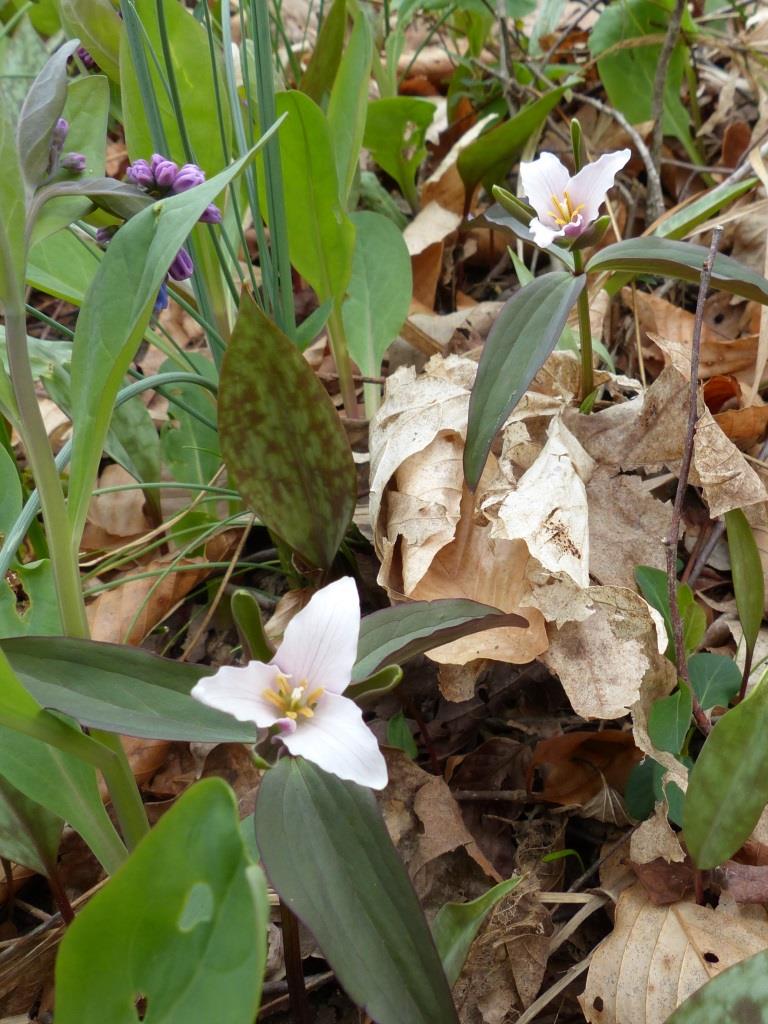
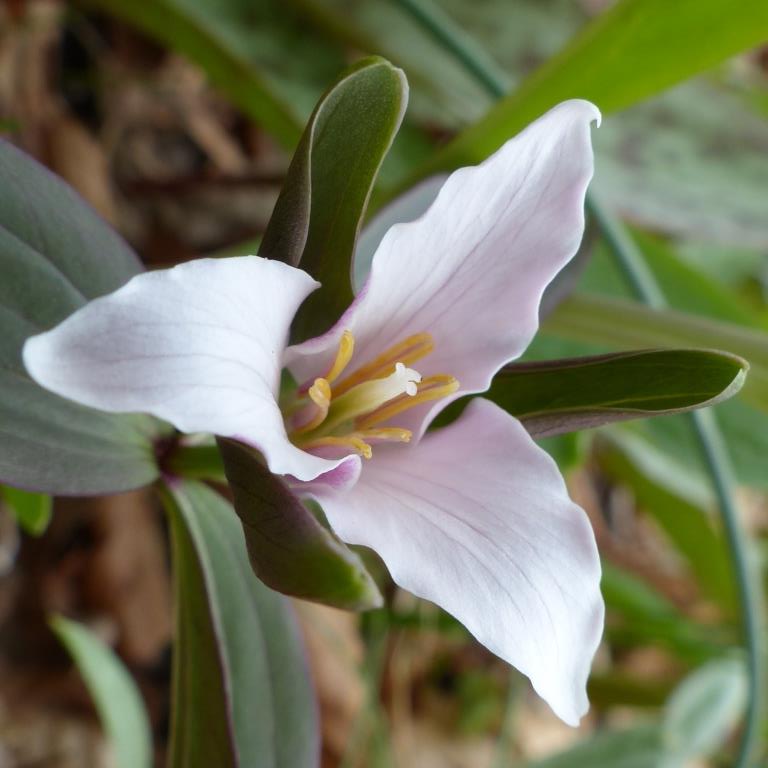
Two rare dwarf trillium were in bloom:

...only ones know to exist anywhere around here.

…these two plants are the only ones known to exist anywhere around here.

Delicious blooms.

Delicious blooms. Pollinators, do your work. Seeds needed.

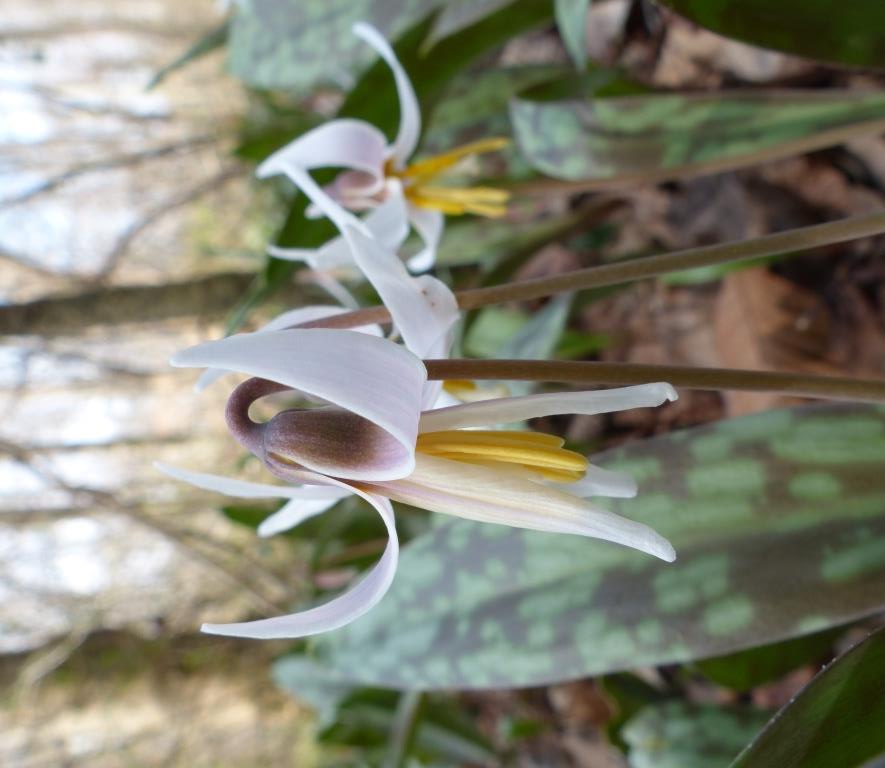
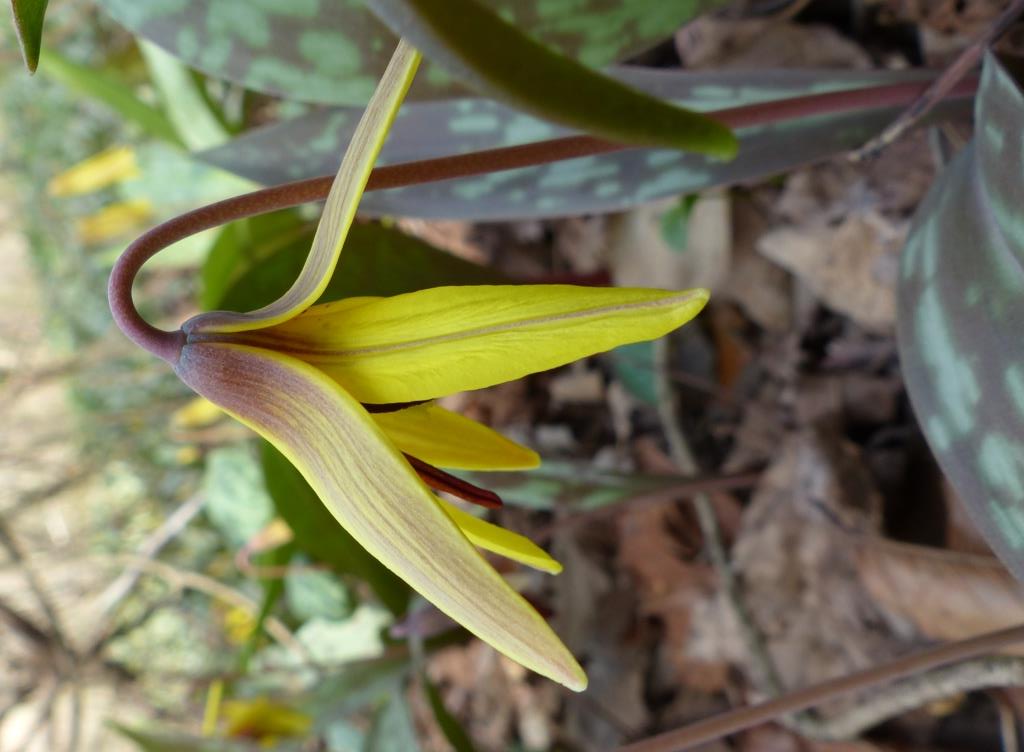
Also present were both white and yellow trout lilies, growing side by side. Genetic incompatibility keeps them from interbreeding, even if pollen gets mixed up by the work of insouciant bees.

White trout lily: Erythronium albidum

White trout lily: Erythronium albidum

Yellow trout lily: Erythronium americanum

Yellow trout lily: Erythronium americanum

Thank you, South Cumberland Regional Land Trust, for keeping this botanical treasure thriving.