Category Archives: Shakerag Hollow

Walking fern, Asplenium rhizophyllum

These ferns were rooted in the moss on the north side of a large boulder in Shakerag Hollow.
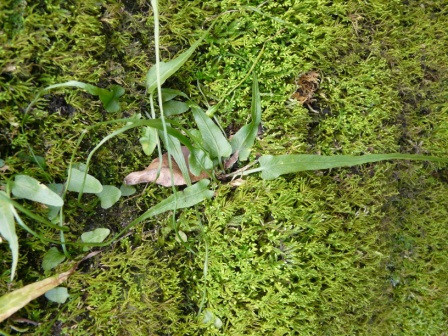
The fronds arch through the air and, when they are fully grown, their skinny ends touch down into the moss…

…and root, producing a new fern, a clone of the parent. This baby will ultimately grow into an independent individual, arch its own fronds outward, and continue the “walk” across the boulder.

Walking ferns need a moist carpet to take root and they are seldom found away from thick mossy mats. Unfortunately their diminutive charm makes them attractive to plant-thieving gardeners. Transplants seldom survive, so it is best to leave them unmolested in the woods.
Gnawing our way into autumn

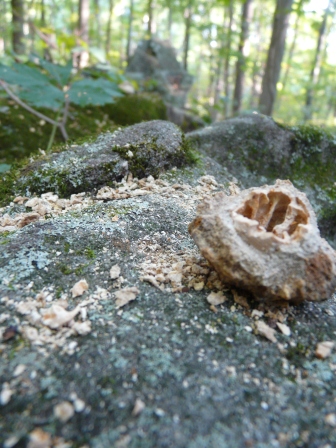
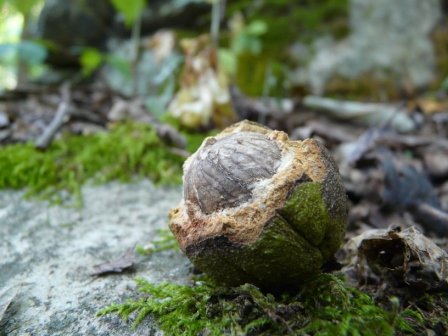
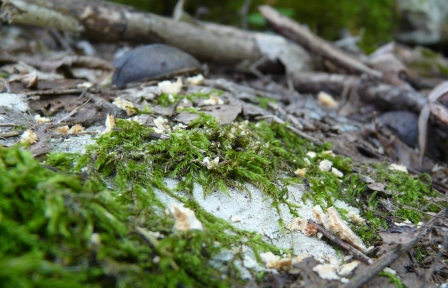
Hickory nuts are not quite ripe in Shakerag Hollow, but the squirrels have started in on them already. You can locate hickory trees by the gnawing, scraping sounds coming from the canopy. Below, the ground is strewn with discarded nuts and fragments of shell.

Shagbark hickory has the sweetest nuts (pignut hickory, above, and other species have more bitter flesh) and the ground below these trees looks like a woodshop floor, covered with sawdust. These squirrels have impressively tough and persistent teeth.

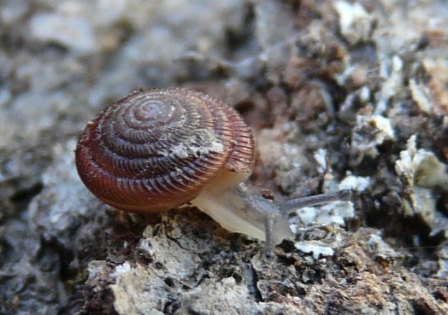
Gastrodonta interna on the prowl

Early this morning in Shakerag Hollow the humidity was so high that water droplets drifted through the air. We were walking in a halo.

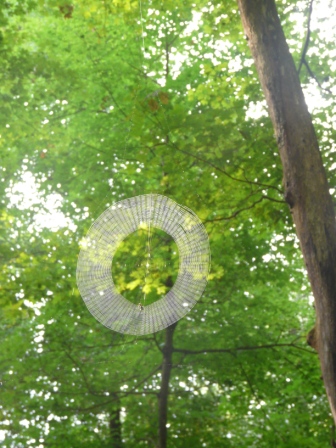
The settling water ruined the invisibility of spider webs. This one hung ten feet above the ground.

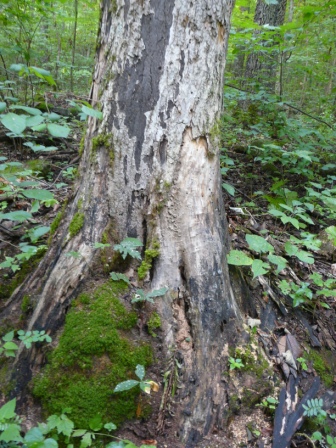
Snails and slugs were active, especially around the bases of dead trees. Probably at least half of the species of land molluscs in this forest dwell in or under dead wood.

Gastrodonta interna, the “brown bellytooth,” was particularly abundant. The small ribs on its body whorls make the shell looks like a tightly coiled rope. The shell is small, about 7 mm wide, and has about 8 or 9 whorls.

Bellflowers

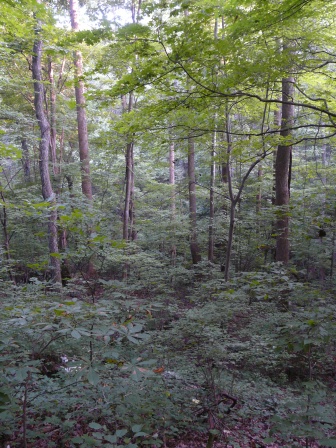
The thick canopy of leaves is casting deep shade in Shakerag Hollow. Two hours after sunrise it is still dark enough to cause katydids to continue their nighttime songs.

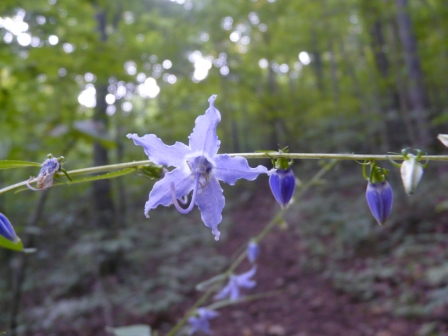
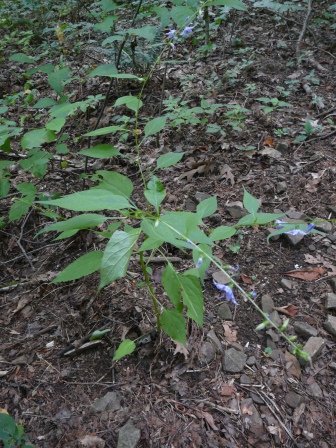
Remarkably, American bellflowers (Campanulastrum americanum) choose this time of year to flower, a strategy that ensures they have few competitors for pollination but little sunlight. They hold their thumbnail-sized blooms on long, bendy stalks above rough, tapered leaves.


Shakerag Hollow

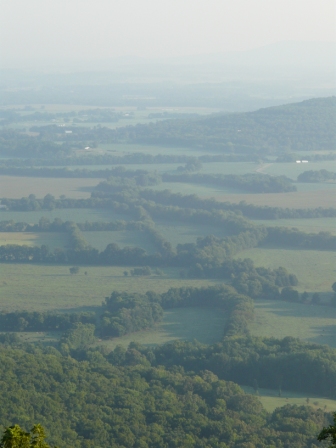
At 6:30am it was already muggy. The thickness of the haze behind this indigo bunting is impressive.

Indigo bunting above Roark's Cove, TN

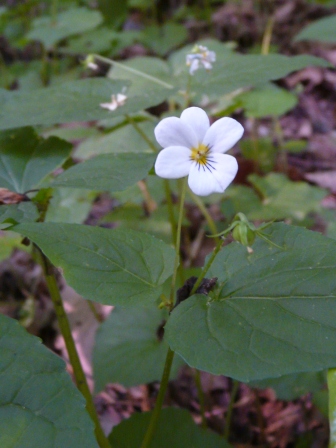
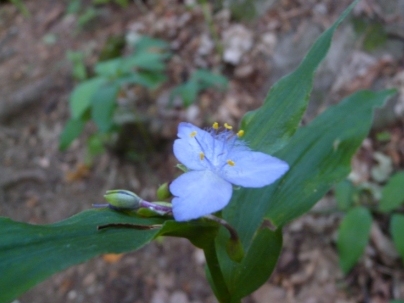
In the cove forest, the tree canopy is so thick that only a few flowers try to squeeze out their living from the meager light of the understory. Most of the spring wildflowers — Hepatica, Trillium, spring beauty — are dying away or setting seed. Violets and spiderworts buck the trend and are fresh and vital.

Canada violet -- grows ankle-high

Wideleaf spiderwort -- their stems grow two or three feet tall with a thumbnail-sized flower at the top

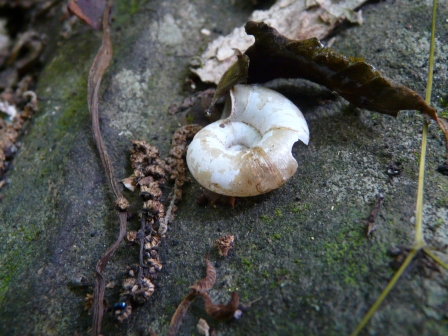
Several snails traversed the moist forest floor. This shell is of their enemy, the flesh-eating Haplotrema concavum snail. This species tracks down other snails by following their scent, then drags them away to eat.

Haplotrema concavum, the "gray-footed lancetooth." This species has a very wide, open coil on its underside.

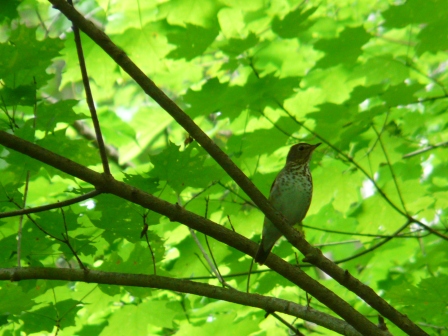
Swainson’s Thrush

A Swainson’s Thrush was singing during my late afternoon walk in Shakerag Hollow. The song is an exquisite series of rising notes, seeming to overlap each other as they spiral up. He sang for several minutes, then watched me from a branch upslope. The photograph is taken from a distance, but his identifying buffy eyering is clearly visible. Swainson’s thrushes breed in Canadian forests, so this bird has many wingbeats to go before he reaches his summer territory.

Swainson's Thrush in Shakerag Hollow, Sewanee, TN