Author Archives: David George Haskell

Broad-winged hawk

I had a sound recorder in my hand when the bird flew over. The hawk’s whistled cry is a quintessential sound of the summer forest. Think: sweat and lush green humidity. The birds are secretive during breeding and so are more often heard than seen. They are much more conspicuous when they migrate in the spring and fall, circling high as they soar to Central and South America .

The recording is quiet, but the two-part whistle is evident. A chickadee calls at the end:
Pileated woodpeckers attracted to Mexican food

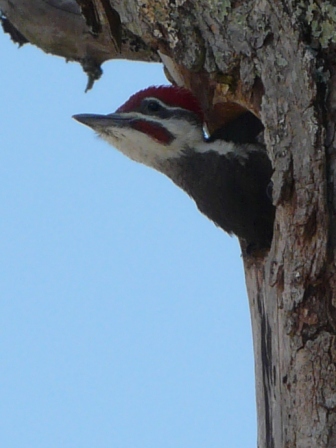
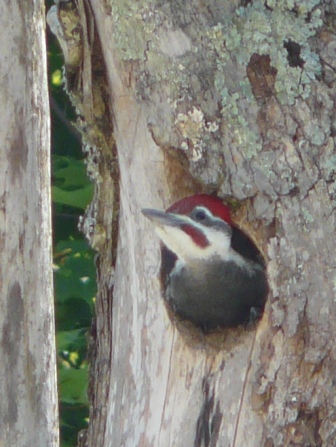
This nestling woodpecker is in the tree next to Mi Casa restaurant. Many thanks to Buck Butler who alerted me to its presence.

I could not stay long enough to watch the nest until the parents returned, so I don’t know if this is the only nestling, or whether there are multiple youngsters who compete for access to the nest hole entrance.

Nestling pileated woodpecker

Free guacamole dip with all beetle larvae

White-eyed vireo nest

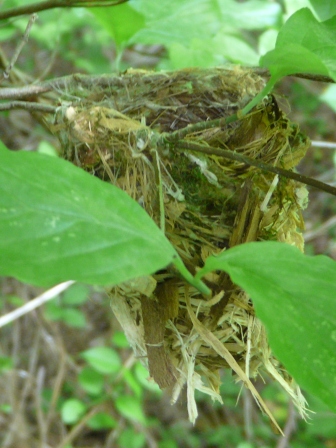
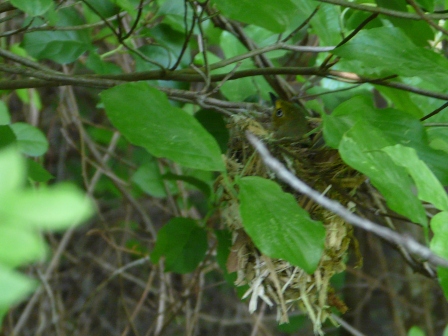
Sarah spotted this nest in the low shrubs near Lake Cheston. The bird has woven a pendulous nest using the V of two twigs as the supporting rim. This is a classic vireo design. Most other songbird species build their nests on top of twigs, not hanging below.

Hanging nest -- the whole thing is a little smaller than a fist.

Sure enough, the mother turns out to be a white-eyed vireo.

White-eyed vireo on her nest. She has a yellow eyebrow stripe and a white iris.

Shakerag Hollow

At 6:30am it was already muggy. The thickness of the haze behind this indigo bunting is impressive.

Indigo bunting above Roark's Cove, TN

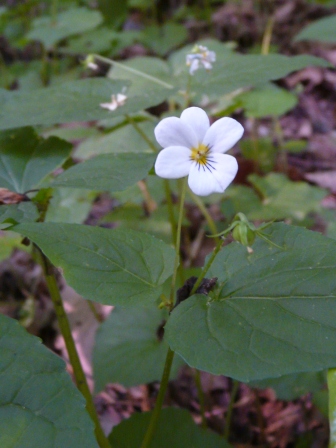
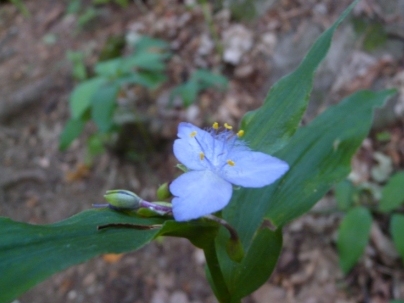
In the cove forest, the tree canopy is so thick that only a few flowers try to squeeze out their living from the meager light of the understory. Most of the spring wildflowers — Hepatica, Trillium, spring beauty — are dying away or setting seed. Violets and spiderworts buck the trend and are fresh and vital.

Canada violet -- grows ankle-high

Wideleaf spiderwort -- their stems grow two or three feet tall with a thumbnail-sized flower at the top

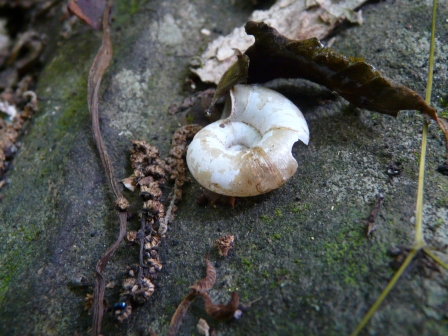
Several snails traversed the moist forest floor. This shell is of their enemy, the flesh-eating Haplotrema concavum snail. This species tracks down other snails by following their scent, then drags them away to eat.

Haplotrema concavum, the "gray-footed lancetooth." This species has a very wide, open coil on its underside.

Getting ready for the year 2024

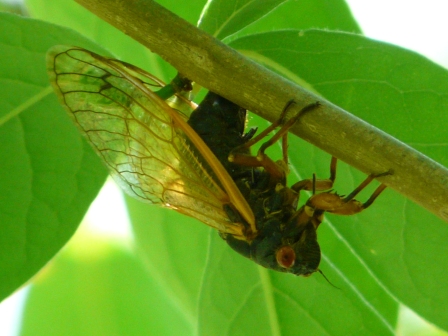
This female cicada was laying eggs today on the spicebush outside our house. She makes a small slit in the stem, then deposits eggs in the opening. The eggs remain on the twig for a few weeks, then the nymphs hatch out and fall to the ground. Here, they burrow down into the soil and live for thirteen years, feeding on tree roots. The Class of ’24 is underway.

Magicicada tredecassini depositing eggs from the tip of her abdomen

And, for some remarkable timelapse photography of an emerging cicada, see Mark Dolejs’ Vimeo post.

Yellow-billed cuckoos

Cuckoo invasion!

These birds are usually scarce, especially in town. But, for the last week or so their hollow cuk cuk cruu calls have rung all around. There are at least three of them around our house and garden, an area of less than an acre. Cuckoos tend to congregate where food is plentiful, then they quickly set up shop to breed. The young birds grow so fast that their immature pin feathers literally pop open as the feathers shoot out. Perhaps the tens of thousands of cicadas in the trees here have attracted several breeding pairs to our neighborhood.

Cuckoos winter in the Amazon rainforest, so the adults in our trees are some of the most well-traveled animals in Sewanee.

Which species of periodical cicada do we have here?

According to the magicicada.org website, three species are possible in Sewanee:

Magicicada tredecim — Underside of abdomen is mostly light orange/caramel. These are the ones that call waaa-oo from the treetops.

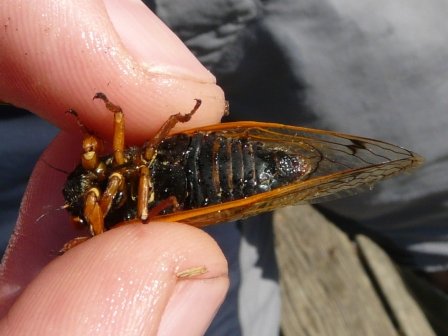
Magicicada tredecassini — Underside of abdomen usually all black, or with faint orange lines.

Magicicada tredecula — Well-defined orange stripes across underside of abdomen.

This individual crashed into my head while I was watering the garden, so I brought him down with the water jet and did some catch-and-release identification: Magicicada tredecassini. The sound he was making seems to match that on the magicicada pages also.

Cicadaroo comes to Sewanee

Here they are! It is finally hot enough for the cicada choir to crawl out of the soil and shake our senses with their sunlight-made-into-sound, a concentrated celebration of a dozen years of Tennessee’s lush photosynthesis.

Early in the morning, they start with the waaaa-oo waaaa-oo chorus call from the treetops. As the day heats up, their raspy courtship calls dominate, interspersed with the wing-clicking of females.

You can hear both the ghostly waaa-oos and the louder rasps in this recording that I made with a Zoom H4: