Author Archives: David George Haskell

Dolly

Humanity’s first successful attempt to clone a mammal from an adult cell stands on an illuminated rotating pedestal in the National Museum of Scotland. Her eyes gaze out quietly, as if at imagined pastures beyond the heads of museum visitors. All that advanced science finally comes to this: taxidermy.
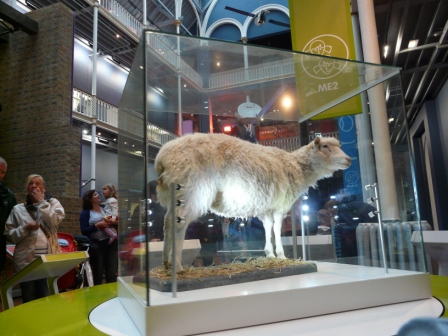
In the 1980s, when I was an undergraduate, I heard a lecture from one of the world’s best cell biologists. He explained why the details of mammalian cell biology and genetics would forever prevent us from cloning a mammal. A decade later, “Dolly” was born. The cell biologist was not a fool – he knew his stuff – but he underestimated our ability to penetrate what seem like solid barriers.

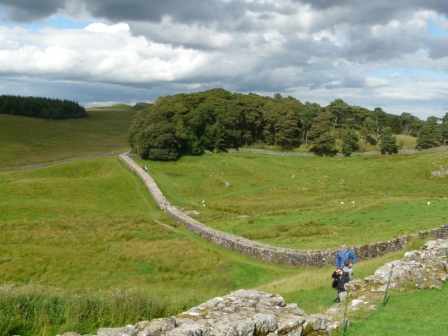
Housesteads Roman fort and Hadrian’s wall

Housesteads fort was one of many along Hadrian’s wall, constructed about 1800 years ago. 

The Romans built to last:

Large parts of Hadrian's Wall are still standing

Underfloor heating system in the commander's house.


Ventilation in the granary.


Fancy latrines.


All watched over by sheep.


Remarkably, the Romans also thought to install places to charge electric vehicles.


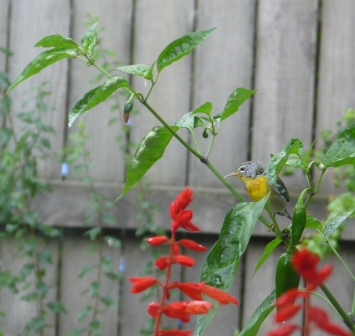
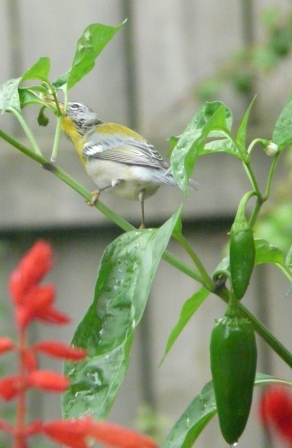
Unusual bird behavior: Northern Parula foraging in potted pepper plant

This Northern Parula was gleaning insects from the potted pepper plant that sits right outside the kitchen window. Parulas are normally found in tree canopies away from human houses, but after the breeding season they wander into other habitats.

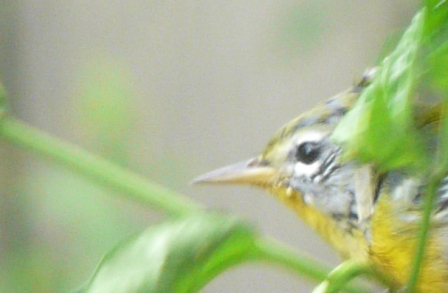
The bird was ramming its sharp beak under leaves...

...and into flowers. Like some other migrant warblers, this species supplements its diet with nectar during the non-breeding season. Not content with sipping, the visitor yanked a few flowers off the pepper plant.

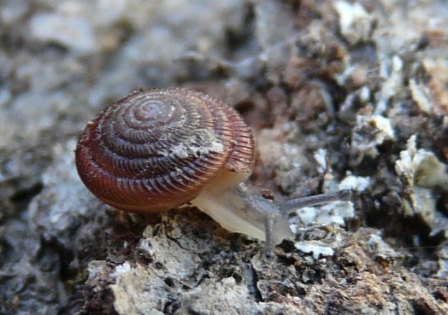
Gastrodonta interna on the prowl

Early this morning in Shakerag Hollow the humidity was so high that water droplets drifted through the air. We were walking in a halo.

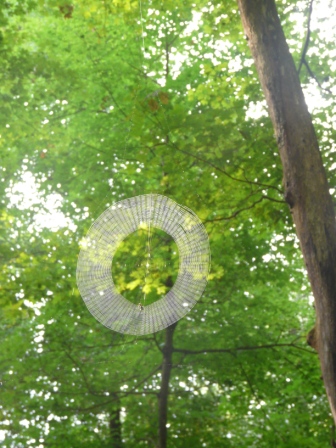
The settling water ruined the invisibility of spider webs. This one hung ten feet above the ground.

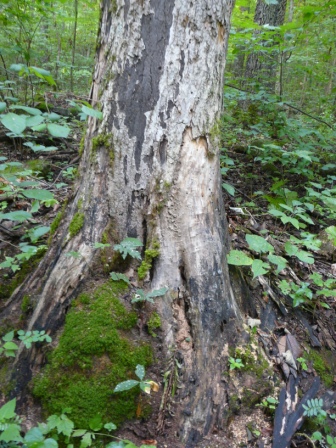
Snails and slugs were active, especially around the bases of dead trees. Probably at least half of the species of land molluscs in this forest dwell in or under dead wood.

Gastrodonta interna, the “brown bellytooth,” was particularly abundant. The small ribs on its body whorls make the shell looks like a tightly coiled rope. The shell is small, about 7 mm wide, and has about 8 or 9 whorls.

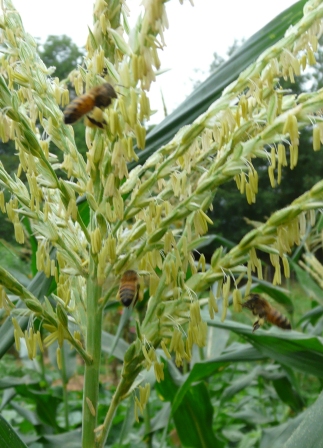
Bees pollinating corn

Corn is usually described as “wind pollinated,” but honey bees love to gather its pollen to take back to their hive to feed to their babies. As the bees rummage through the corn tassels, they release clouds of pollen that drift away to land on the silks of the female flowers. These silks receive the pollen, then the pollen’s sperm cells migrate down the silks to fertilize the eggs in what will become the “ear” of corn. On days when the wind is calm, bees seem to be the primary cause of pollen movement. Corn is therefore perhaps better thought of as both wind and insect pollinated.

Honey bee gathering corn pollen into the "baskets" (corbicula) on her hind leg. These baskets are made of combs of bristles.

Three honey bees work one tassel

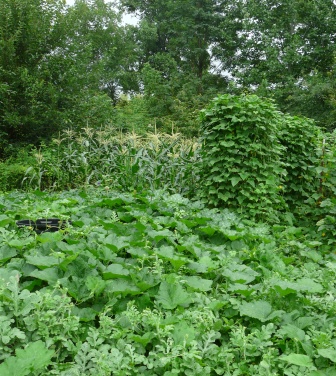
The garden is out of control -- photosynthetic anarchy. Beans, corn, cucumbers, watermelons and squash vie for space in this shot. Quite a change from the diesely air and cracked concrete of Pittsburgh.