Monthly Archives: September 2013

Aphids: The Sequel

I’ve been keeping my eye on the funky residents of the beech aphid colony, watching them groove the summer away. I found the colony back in late July when it was already quite large. It then grew a little, adding new clusters of young aphids, but gradually waned through September. This week, the last beech aphid departed, leaving just a few wisps of wax on the ground below. Over the weeks, the colony added more and more winged individuals. These are the individuals that disperse and mate; all others are asexual and sedentary.

Winged Beech Aphids, feeding among wingless forms (Grylloprociphilus imbricator)
Winged Beech Aphids, feeding among wingless forms (Grylloprociphilus imbricator)

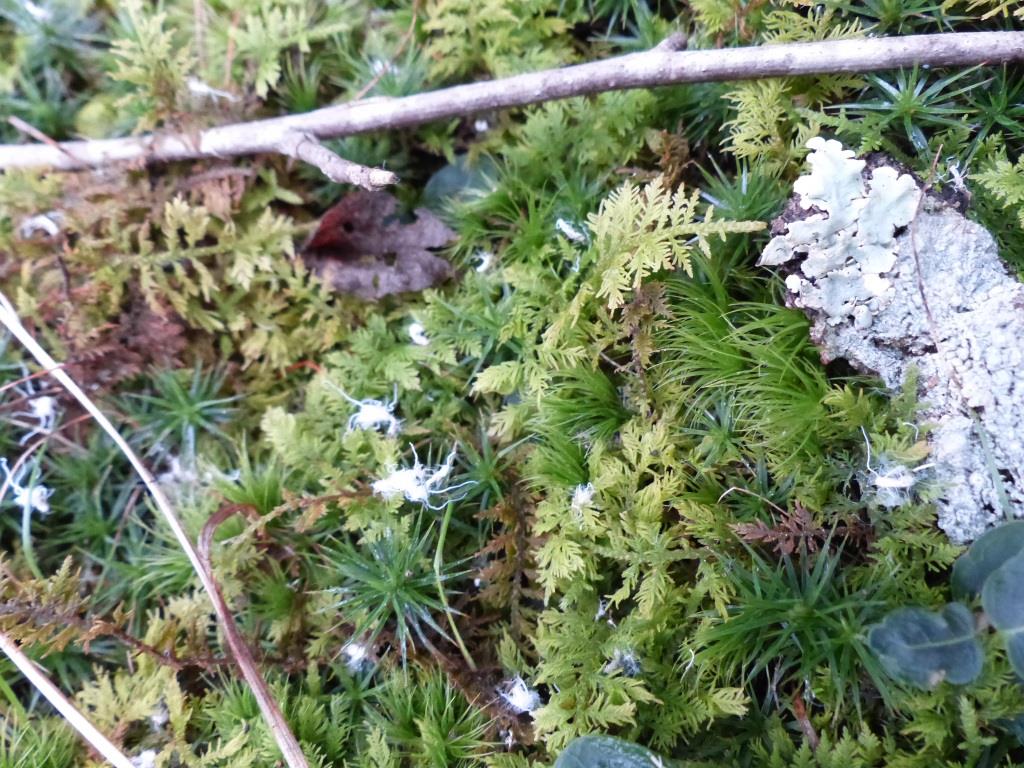
Discarded strands of Beech Aphid wax on the mosses and lichens below the aphid colony

Discarded strands of Beech Aphid wax on the mosses and lichens below the colony

The day before I saw the last beech aphids, two newcomer species arrived on the twigs that had been the colony’s home. One was another aphid, a huge one. I thought at first that the beech aphids had somehow swelled and transformed, but another look confirmed that these new aphids are in fact a different species, the appropriately named giant bark aphid, (Longistigma caryae). For an aphid, they’re monstrously large, perhaps eight times the volume of a typical aphid. They also have long, sturdy hind legs, giving them a cricket-like appearance.

xxxx

Giant bark aphid (youngsters on left, adult on right)

Like other aphids, this species feeds by sliding its needle-like mouthparts into plant phloem and eating the pressurized sugary sap that squirts through the needle into their guts. In their thirst for dilute nutrients like amino acids, they void the excess sugar, dropping sticky honeydew below. This is all too much for many gardeners and the ag extension agencies continue their long tradition of suggesting chemical sledgehammers to crush these nuisances. Malathion and Orthene? Really?

Hidden for now from the nozzleheads, these bark aphids took up residence in exactly the same spot as the beech aphids. I mean exactly: down to the centimeter. Are they exploiting the feeding holes or weakened bark left by their departed distant cousins? The coincidence is striking. The beech tree no doubt let out a sigh. One load of sugar-suckers gone — at last! — and another bunch of free-loaders show up. Bring on the freeze? Come hither migrant warblers?

The new residents brought their own private security team. The guards are paid with sugar and they take their work seriously. I’ve visited several times in the last week and the bark aphids always have three or four large honey-colored ants in attendance. The ants gather honeydew from the aphids, then stand and wait from the next drop. One ant filled her abdomen, then scuttled up the branch and found a skinny-looking sister. They stood head-to-head and the nectar was transferred, causing the second ants’ abdomen to swell into an amber globe. The first ant returned to her charges; the second scurried up the twigs into a blueberry bush, then I lost sight of her. I have no idea where the ants may be nesting. I’m keeping my eyes open.

I’d love to know more about the identify and natural history of the ants that are tending these aphids. Myrmecophiles, your insights would be received with gratitude. [Addendum: The ant is likely a carpenter ant, perhaps Camponotus americanus. . Thank you, Ann Fraser and AntWeb!]

This slideshow requires JavaScript.

Mammal fest

We’ll get to weighty matters shortly, but first some photos of gratuitously cute mammals from my trip to Colorado. One of the more zoologically startling features of the western U. S. is the number of mammals wandering in plain view. The furry-faced, doe-eyed, jaunty-eared denizens of Tennessee tend to stay out of sight in the thick woodland, so mammalogists must be content with scat and sketchy tracks (not counting the white-tailed deer on the porch). Not so in the wilder parts of Colorado.

Golden-mantled ground squirrel. Mueller State Park, Colorado.

Golden-mantled ground squirrel. Mueller State Park, Colorado.

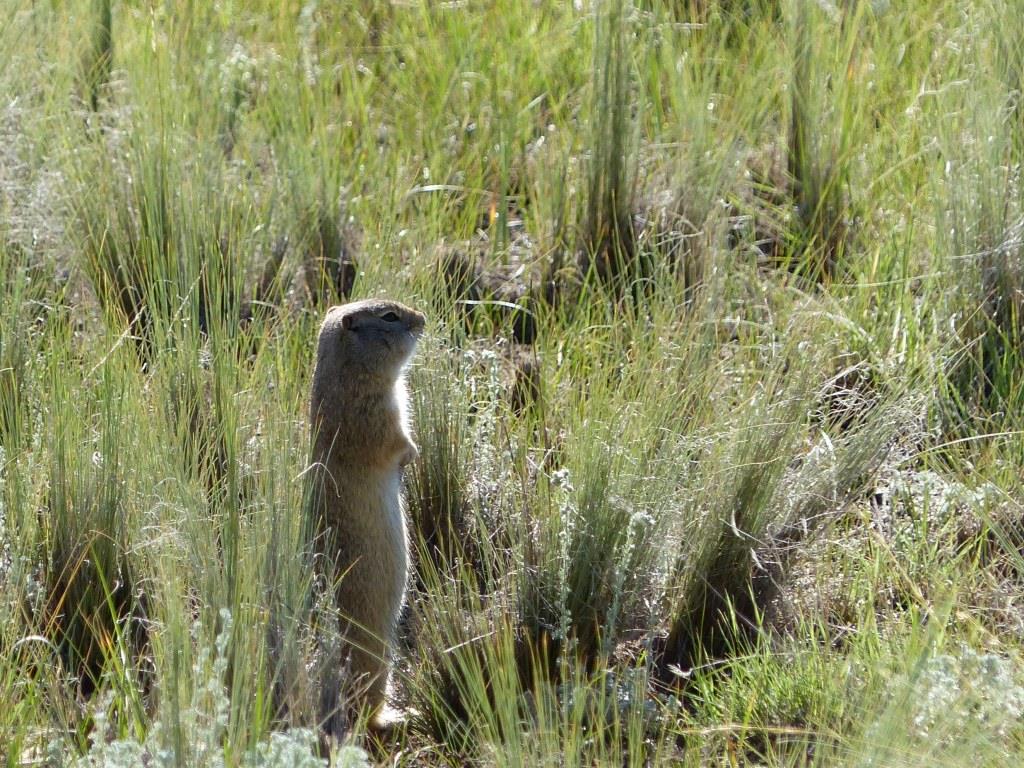
Richardson's Ground Squirrel. Florrisant Fossil Beds National Monument.

Richardson’s Ground Squirrel. Florissant Fossil Beds National Monument.

Colorado Chipmunk. Florrisant Fossil Beds National Monument.

Colorado Chipmunk. Florissant Fossil Beds National Monument.

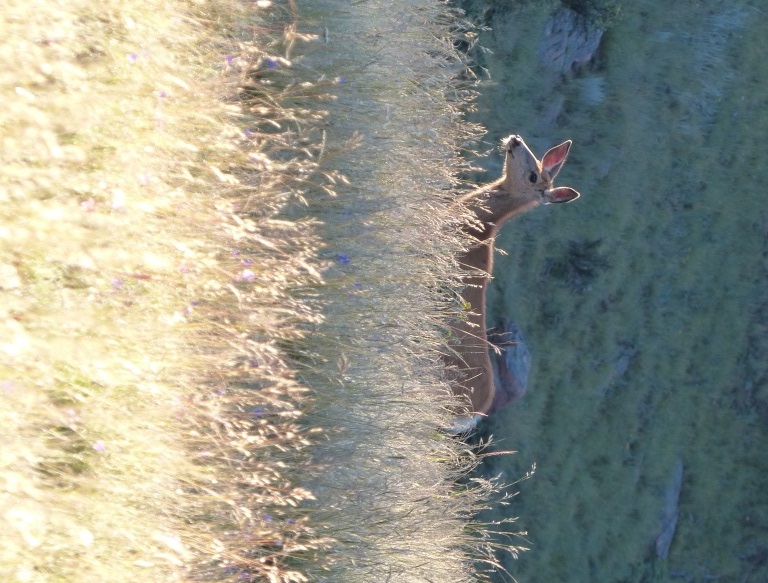
Mule Deer. Mueller State Park.

Mule Deer. Mueller State Park.

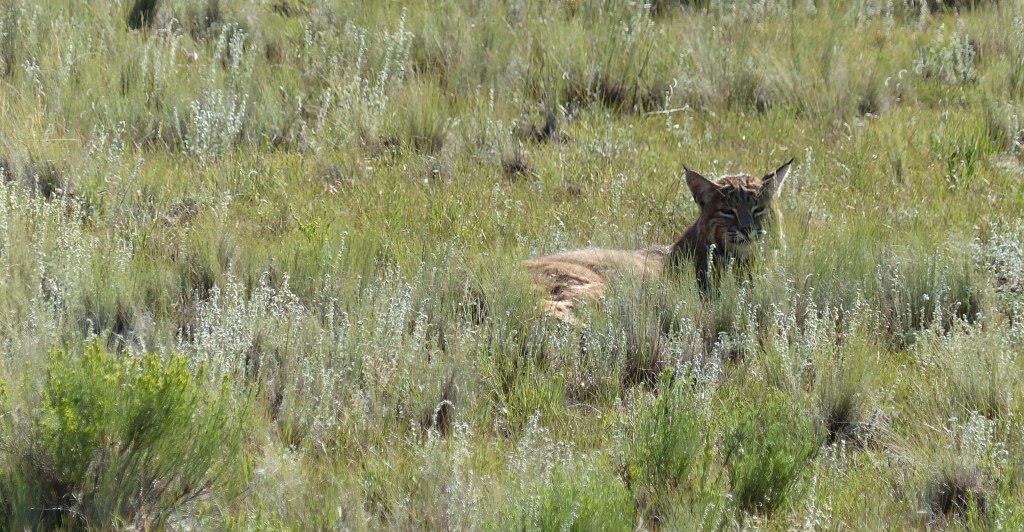
Bobcat. Florrisant Fossil Beds National Monument.

Bobcat. Florissant Fossil Beds National Monument.

Trespass being considered by Cottontail rabbit (either Mountain or Eastern Cottontail, the bobcat would know for sure). Florrisant Fossil Beds National Monument.

Trespass being considered by Cottontail rabbit (either Mountain or Eastern Cottontail, the bobcat would know for sure). Florissant Fossil Beds National Monument.

After a few days wandering among these animals and flipping through the field guide, a question emerges: Why so many squirrely creatures in the west? The Field Guide to the Mammals has twenty four pages of ground squirrels, almost all from the west. The one eastern species, the eastern chipmunk, has twenty two cousin species in the west. A rodent biodiversity bomb has flung fat-cheeked squeakers into every grassy glade, forest edge and rock pile west of the Mississippi.

A recent paper by Ge et al, evolutionary biologists working at the Chinese Academy of Sciences, helps us to understand what happened. The ground squirrels (Xerinae, a subfamily comprising the chipmunk, marmots and other ground squirrels within the rodent family, the Sciuridae) originated in Europe about thirty five million years ago. From there the animals spread to Africa and North America. The group’s explosive diversification happened later, about sixteen million years ago, and seems to have been triggered by climatic changes.

The same cooling drying climate that separated the American and Asian forests created a grand opportunity for ground squirrels. As forests retreated, open meadows, grassy plains and sparsely vegetated mountainsides took over, especially in the arid west. This change, combined with the highly variegated landscape (not too many other places in the world have such a complex mix of mountains, plains, deserts), caused the ground squirrels to speciate into the many species we see today. Some of these then colonized other parts of the world, probably after they moved west over the Bering land bridge. For the marmots, chipmunks and ground squirrels, Manifest Destiny did not end at the Pacific Ocean. They kept going and colonized Siberia, Asia and Europe: the far, far, Wild West.

We hear in this story echoes of our own. Homo sapiens is also a creature of the grasslands, brought into being by forests in retreat from a cool, dry climate.

Note how the ground squirrels survey their homes: on two legs.

Note their social systems: they often live in close-knit groups in stable villages.

We’re lucky that their thumbs are not quite as agile as our own and that their food didn’t take quite as much brainwork to catch.

The Forest Unseen wins “Best Book Award” from the National Academies

The Forest Unseen has won the “Best Book Award” in the 2013 Communication Awards from the National Academies.

I’m absolutely thrilled that they chose the book. Giving voice to the incredible scientific stories that lie hidden away inside the ivory tower was one of reasons I started this project. That the National Academies should find merit in the result of this work is stunning and gratifying, to say the least. I’m also very humbled to be in the incredible company of the other finalists and winners (see below for the full list).

The award is given by the The National Academy of Sciences, National Academy of Engineering, and Institute of Medicine, with support from the Keck Foundation. The full press release is reproduced below and is found on the National Academies website.

Press release: The Forest Unseen Wins Best Book Award From National Academies; Science Magazine, PRI’s ‘The World,’ and USA Today Also Take Top Prizes


WASHINGTON — The National Academy of Sciences, National Academy of Engineering, and Institute of Medicine announced today the recipients of the 2013 Communication Awards. Supported by the W.M. Keck Foundation since 2003 as part of the Keck Futures Initiative, these prestigious annual awards — each of which includes a $20,000 prize — recognize excellence in reporting and communicating science, engineering, and medicine to the general public. The winners will be honored during a ceremony on Oct. 16 at the National Academy of Sciences building in Washington, D.C.


“We had a wide range of outstanding nominees from which to choose,” said May Berenbaum, chair of the 11-member communication awards selection committee, an NAS member, and professor and head of entomology at the University of Illinois, Urbana-Champaign. “The winners are excellent examples of science communication that can inform and engage the public.”


Selected from approximately 300 print, broadcast, and online entries, the recipients of this year’s awards for works published or aired in 2012 are:


Book

David George Haskell for The Forest Unseen (Viking Penguin)

“…for his exquisite portrait of nature’s universe, drawn from one tiny patch of forest.”


Film/Radio/TV

Joanne Silberner, David Baron, and PRI’s “The World” for “Cancer’s Lonely Soldier,” “Pink Ribbons to Haiti,” “An Ounce of Prevention,” and “The Infectious Connection”

“…for shining a light on the hidden toll cancer takes in impoverished nations, killing more people than HIV, malaria, and TB combined.”


Magazine/Newspaper

Eliot Marshall, Elizabeth Culotta, Ann Gibbons, and Greg Miller at Science for their stories “Parsing Terrorism,” “Roots of Racism,” “The Ultimate Sacrifice,” and “Drone Wars,” which appeared in a special issue on human conflict (May 18, 2012)

“…for an articulate, wide-ranging examination of what social scientists have learned about human violence, conflict, and terrorism.”


Online  

Alison Young and Peter Eisler (reporters), John Hillkirk (content editor), and the entire team at USA TODAY for the series “Ghost Factories”

“…for a nationwide investigation of abandoned lead factories that armed reporters and citizens with the knowledge and technology to recognize threats in their own backyards.”


The following were finalists:


David Quammen for Spillover: Animal Infections and the Next Human Pandemic (W.W. Norton and Co.)


Paula Apsell and Sarah Holt for “Cracking Your Genetic Code” (WGBH/NOVA and Holt Productions)


Nell Greenfield-Boyce for “Scientists Take Cautious Tack on Bird Flu Research,” “Scientists Debate How to Conduct Bird Flu Research,” “Bird Flu Studies Getting Another Round of Scrutiny by Panel,” and “Bird Flu Researchers to Meet About Research Moratorium” (NPR)


Jeff Montgomery, Molly Murray, and Dan Garrow for “Climate Change Puts Coast in Crosshairs,” The News Journal, Wilmington, Del.


            The Keck Futures Initiative was created in 2003 to encourage interdisciplinary research and is funded by a 15-year, $40 million grant from the W.M. Keck Foundation.  Nominations for the 2014 Communication Awards will be accepted in early 2014 for work published or broadcast in 2013.  For more information on the National Academies Keck Futures Initiative and the Communication Awards, please visit www.keckfutures.org.  For more information about the W.M. Keck Foundation, please visit www.wmkeck.org.


            Members of the media who would like to attend this year’s awards ceremony on Oct. 16 in Washington, D.C., should email commawards@nas.edu to receive complimentary tickets.


            The National Academy of Sciences, National Academy of Engineering, Institute of Medicine, and National Research Council make up the National Academies.  They are private, nonprofit institutions that provide science, technology, and health policy advice under a congressional charter.  The Research Council is the principal operating arm of the National Academy of Sciences and the National Academy of Engineering.  For more information, visit http://national-academies.org.


Contacts: 

William J. Skane, Executive Director

Molly Galvin, Senior Media Officer

Office of News and Public Information

202-334-2138; e-mail news@nas.edu

http://national-academies.org/newsroom

Twitter: @NAS_news and @NASciences

RSS feed: http://www.nationalacademies.org/rss/index.html

Flickr: http://www.flickr.com/photos/nationalacademyofsciences/sets

Red: A ticket outta here (for travelers that have already come a long, long way)

The coming wave of songbird migration has plants getting excited: finally they can get the kids out of the house before winter’s rigors set in. As thrushes, vireos and warblers move southward by the millions, their hunger creates an opportunity for seed dispersal that many plants have grabbed with enthusiasm. Look around in the late summer woods and you’ll see berries fattening up, preparing the bribe for passing birds. Bright red is the color of choice, the hue most likely to seduce an avian eye, so berries tend toward the garish, not the subtle blush.

We’re a few weeks away from the peak of migration (late September through early October brings the largest numbers), but the plants are ready. These eager food vendors include spicebush, dogwood, yellow Mandarin, Jack-in-the-pulpit, and Solomon’s plume.

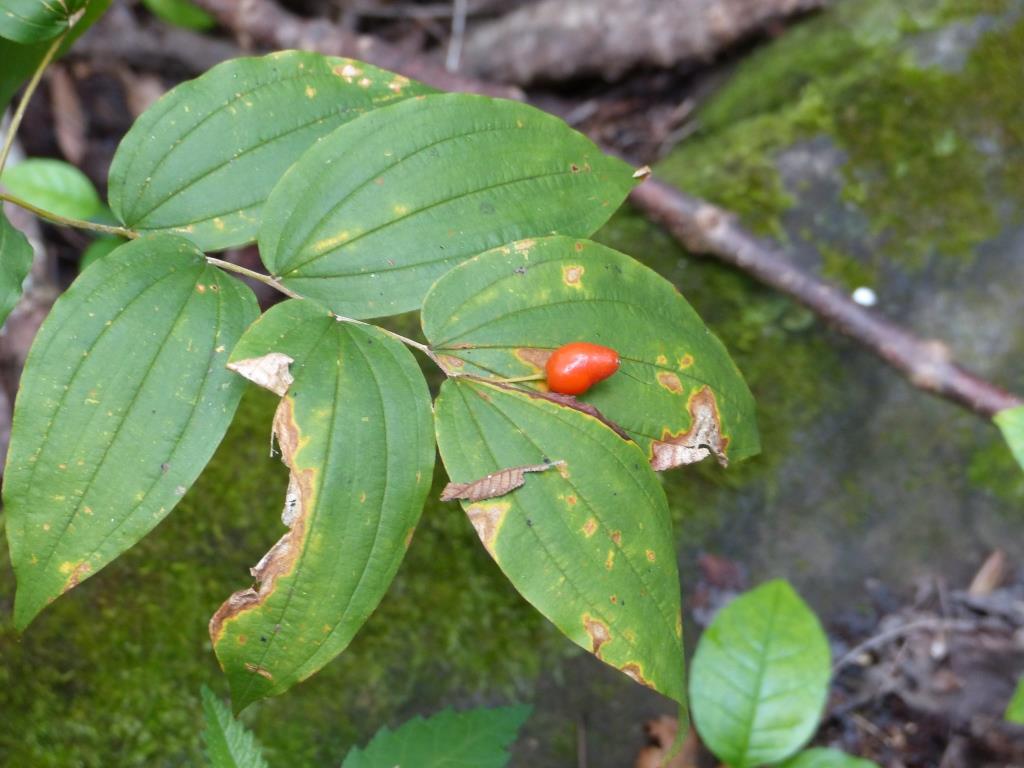
prosartes lanuginosa fruit

Fruit of Yellow Mandarin (also known as Fairybells, Prosartes lanuginsoum)

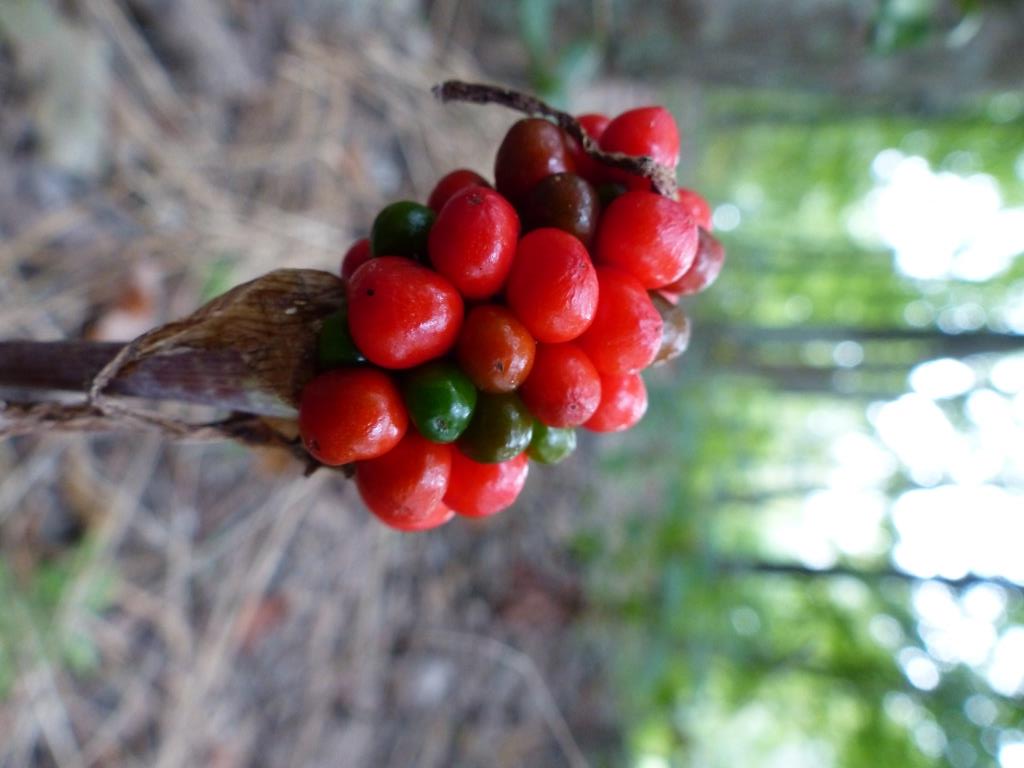
Jack-in-the-pulpit fruits (Arisaema triphyllum)

Jack-in-the-pulpit fruits (Arisaema triphyllum)

Fruits of Solomon's plum (Yellow Mandarin (Maianthemum racemosa). Often also called "False Solomon's Seal."

Fruits of Solomon’s plume (Maianthemum racemosa). Often also called “False Solomon’s Seal.”

Yellow Mandarin has an interesting family tree. It has a few siblings in North America, but all its other close relatives are Asian species. This whole clan was for years classified in one genus, Disporum, but the North American species are now recognized as distinct enough to merit placement in their own genus, Prosartes. Solomon’s plume and Jack-in-the-pulpit also have close relatives in Asia. This Asia-America connection is echoed by the biogeography of many other species, especially among the plants of the Southern Appalachians which often have close affinities to species in East Asia. Boufford and Spongberg, scientists from the Harvard Herbaria, summarized the situation:

The similarities of the forests of Japan, central China, and the southern Appalachians in appearance as well as in ecological associations are in many instances so great that a sense of déjà vu is experienced by botanists by one of the regions visiting the other.

The list of Appalachian species with very close East Asian kin is long and, surprisingly, is much longer than the same list for plants with close kin in western North America. Japan is closer than Oregon, it seems. A few of the more familiar examples include: tuliptree, magnolia, dogwood, Virginia creeper, mayapple, ginseng, partridge-berry, blue cohosh, witch hazel, and honey locust. And, of course, the aptly-named “Mandarin.”

Donoghue and Smith’s analysis of this pattern concludes that close evolutionary connections between East Asian and Eastern North American species are “exceptionally common in plants, apparently more so than in animals.” Their work suggests that “many temperate forest plant groups originated and diversified within East Asia, followed by movement out of Asia at different times, but mostly during the last 30 million years.”

These botanical connections are reminders that Asian and American temperate forests were once connected, a connection that was severed as the world dried and cooled in the late Cenozoic. But it is also the result of a few long-distance dispersal events between climatically similar areas.

Animals move to the beat of a different biogeographic drummer. Their kinship patterns are more predictable: western and eastern North America share many close relatives, connections south to the tropics are also common.

So the migration of American birds is powered by Asian food. The botanical restauranteurs hope that the birds opt for the take-out option, carrying seeds away from the parental storefront. Most of these seeds will land a few meters from the parents, but a very small number might make a huge leap, perhaps landing in southern Mexico or on the coast of South America. There, they’ll likely perish. But the biogeographic future is written by the one or two that can put down roots and flourish.

The same is unfortunately true for plant diseases. A few long-distance migrants are reshaping the forests of the world. It is no accident that so many of the more notable plant-killing invasive diseases in the Southern Appalachians have their origins in Asia. Once they get over here they find a “home way from home,” minus the constraints that they experienced in their homeland.

I’ve rambled about the color red before, both here on the blog (“Quite possibly the most overused image of North American birdlife”) and in The Forest Unseen (“November 5th — Light”). I’ll note briefly here that until the leaves fall in a few weeks, the plants face an uphill battle against the physics of light in the forest. It is dark in the woods these days (photography is impossible without steadying the camera on my boot or using a flash). The summer tree leaf canopy is not only robbing most of the light, it is selectively stripping out the reds. Only when a shaft of sun sneaks through a canopy opening do these fruits truly shine. As autumn comes on, the botanical beacons will light up more often.

Thrushes: get ready.

Oligyra orbiculata

This little snail is an evolutionary oddity, a fish out of water. I found this particular individual clinging to a tree in the upper reaches of Shakerag Hollow. The common name is “globular drop,” quite appropriate given its pea-sized shell and rotund shape. The shell is very thick and feels like a pebble.

oligyra treeUnlike all other land snails and slugs in our region, this species belongs to the family Helicinidae, a group of mostly tropical land snails that are more closely related to the marine snails than they are to other terrestrial snails. The animal’s body reveals this kinship: it has an operculum (a “trap door”) with which it seals its shell when withdrawn, it has just one pair of antennae (other land snails have two pairs), and its eyes are located at the base of the tentacles instead of at their tips. These seemingly minor differences indicate a deep divergence, analogous perhaps to the difference between a bird and a bat. Like birds and bats, the two lineages of snails independently evolved the ability to live in a new habitat — creeping onto land. Not quite as impressive as taking wing, but then what use is a radula in the air?

The following photographs are from another individual, one that lived in the limestone at the bottom of the mountain.

Oligyra orbiculata with operculum protecting the shell aperture.

Oligyra orbiculata with operculum protecting the shell aperture.

One pair of tentacles...

One pair of tentacles…