Category Archives: Plants

Roadside plants (along the Sherwood Rd)

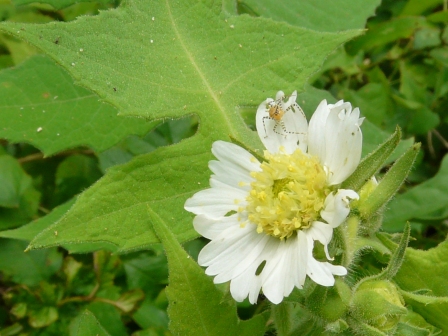
Polymnia -- "leafcup". A biennial, meaning that it takes two years to complete its life-cycle. Flowers form on two-year-old plants. This flower has a stripe-legged insect cavorting across its margin.

Daucus carota -- "Queen Ann's lace." Also note the killer hemipteran.

Ruellia carolinensis -- "Carolina wild petunia." Not a true petunia at all, but the name has stuck.

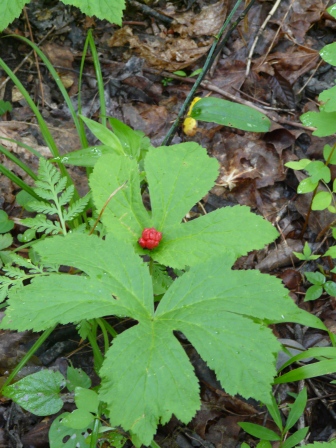
Goldenseal in fruit

I came across several huge patches of goldenseal while walking among the limestone outcrops on the lower mountain slopes near Sherwood. This species is heavily harvested for the herbal medicine trade, so these large clusters are uncommon. The location will remain undisclosed…

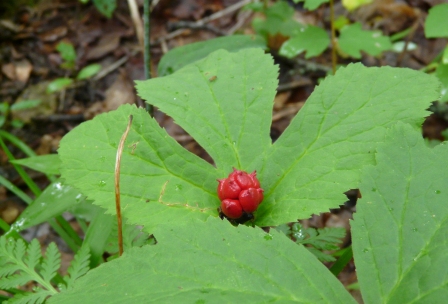
The two large, palmate leaves of goldenseal, with fruit held between them

The fruit is a cluster of small red berries

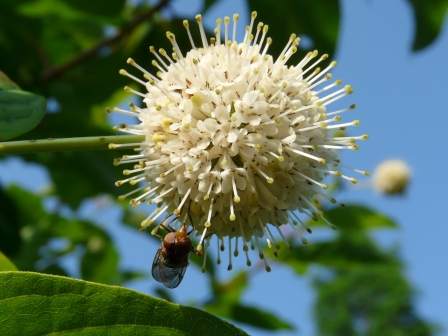
Buttonbush in bloom

Buttonbush (Cephalanthus occidentalis) is a wetland species of shrub. We have several in the soil around the overflow area of our duck pond. The shrubs grow to head-height and produce globular flowers in the summer. The flowers are rich nectar sources, so they attract a number of insects.

Buttonbush being visited by a fly. Note the long styles projecting from each flower in the globe. Unlike the flowers of most other plant species, the area at the top of these styles (the stigma) serves both to release pollen and to gather incoming pollen. To prevent self-fertilization, the buttonbush first releases its own pollen, then when this is complete the plant switches to receiving pollen from other plants.

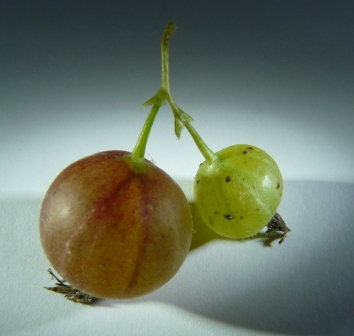
Gooseberries are ripe

This fruit is not much grown in North America, which is a pity. The fruit is tart and flavorful, like a cross between an apple and a blackberry. Gooseberry shrubs struggle in the heat and dry soil here, so ours grow in a partly shaded area near a large apple tree. Their lack of popularity may be due to the fact that federal and state governments banned them for many years, fearing that they would spread a blister fungus to white pine. This fungus uses gooseberries and its relatives as an alternate host. The bans have now been lifted and many varieties are now available to American gardeners.

Gooseberries fresh from the garden.

Shakerag Hollow

At 6:30am it was already muggy. The thickness of the haze behind this indigo bunting is impressive.
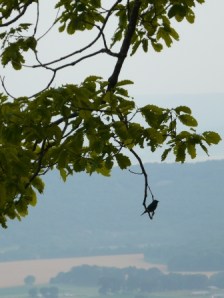
Indigo bunting above Roark's Cove, TN

In the cove forest, the tree canopy is so thick that only a few flowers try to squeeze out their living from the meager light of the understory. Most of the spring wildflowers — Hepatica, Trillium, spring beauty — are dying away or setting seed. Violets and spiderworts buck the trend and are fresh and vital.

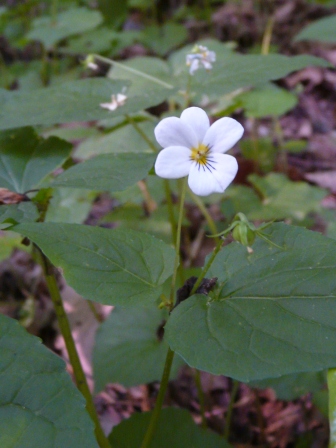
Canada violet -- grows ankle-high

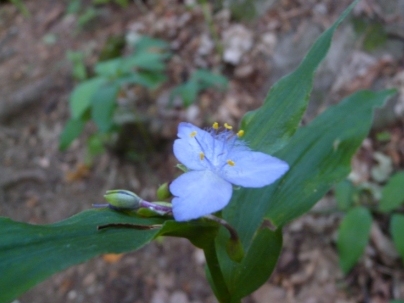
Wideleaf spiderwort -- their stems grow two or three feet tall with a thumbnail-sized flower at the top

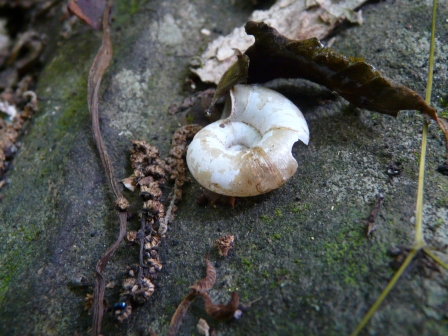
Several snails traversed the moist forest floor. This shell is of their enemy, the flesh-eating Haplotrema concavum snail. This species tracks down other snails by following their scent, then drags them away to eat.

Haplotrema concavum, the "gray-footed lancetooth." This species has a very wide, open coil on its underside.
Thriving spuds

Happy Solanum tuberosum

So far, this has been the best potato year ever. The relatively cool and wet weather has let them grow into gloriously lush plants. In most years, potatoes struggle a bit in the heat — Tennessee’s summer is not well-matched to plants’ genes which yearn for the cooler Andes (or perhaps for Ireland).