Category Archives: Plants

Meadow Beauty waiting for a buzz

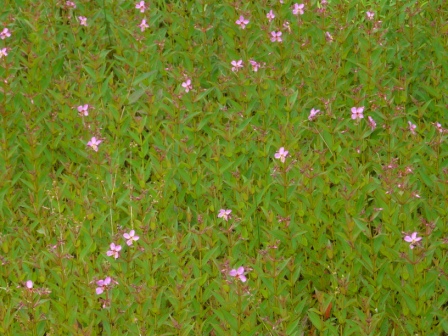
Virginia Meadow Beauty (Rhexia virginica) is growing in thick mats over the Lake Cheston spillway. The flowers have exaggerated, twisted stamens whose bright yellow contrasts with the purple petals. The stamens hold pollen which is gathered by bumblebees using “buzz pollination”. The bees grab the stamens, then vibrate the muscles in their thorax to make a buzz that causes the stamens to release pollen. In this way, the plants keep pollen thieves away, allowing only reliable bumblebees to carry away the cargo. Tomatoes are pollinated in the same way — stand next to a tomato plant and listen to the short zaps as bumblebees work the plants.

Virginia Meadow Beauty
Welcome bumblebees

Low down

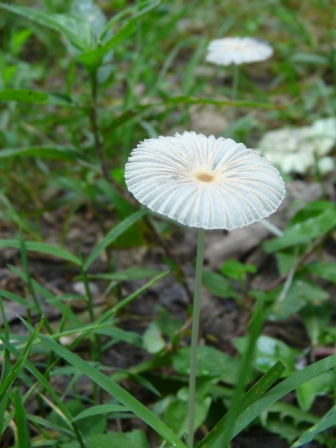
Growing close to the ground:

Small red 'shrooms, about 3-4 cm tall. I think they are Catharellus cinnabarinus, the Cinnabar Chanterelle

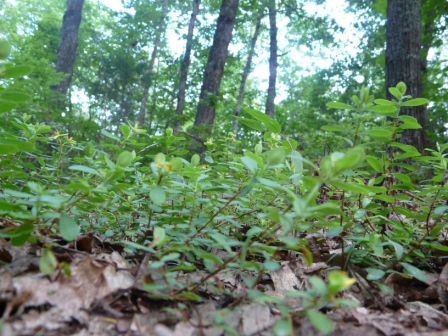
Reclining St Andrew's Cross, Hypericum straulum. Grows about 10-15 cm high along the trail, a bit higher farther back in the woods.

The species gets its name from the elongated X of the petals.

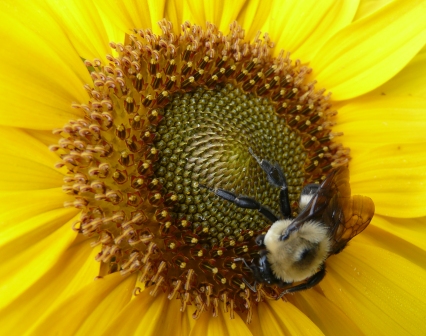
Bumblebee studies Fibonacci series

The number of spirals of florets in the center of the sunflower always follow the Fibonacci series. This is apparently the result of the angle between adjacent florets, which is about 137 degrees, or the "golden angle", giving the most efficient packing of florets into the head. Bees like golden, especially in the form of pollen.

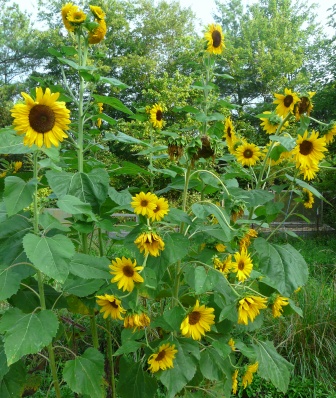
Plenty of material to study.

Nymphs ravish Lake Cheston

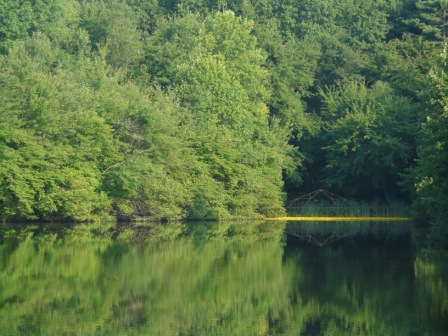
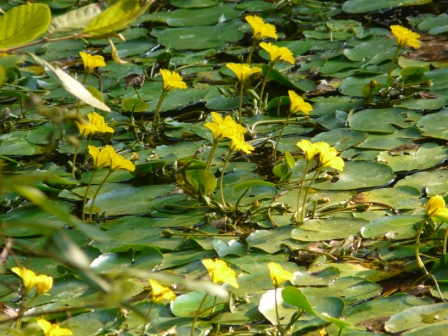
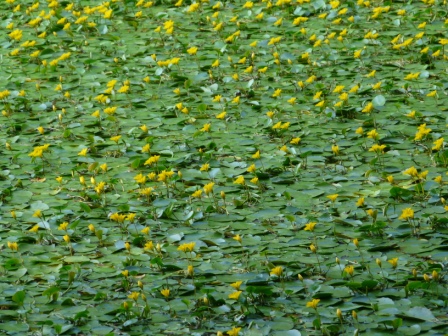
A bright streak of yellow shines from the end of Lake Cheston. These are the morning flowers of Nymphoides peltata, the “yellow floating heart.”

These beauties are considered dangerous. They are banned in Massachusetts and Connecticut. Oregon regards them as a class A weed. Their crime is to be immigrants who tend to thrive in American waters, growing in large mats that potentially compete with other plants. I find it hard to get too worked up about this “invasion” here: all lakes in Tennessee are unnatural, made by damming streams and rivers, so the floatinghearts are just one more layer of biological novelty. Wired Mag has a nice overview of a recent provocative article in the leading scientific journal Nature that questions the scientific and ethical merits of the current anti-exotic species bandwagon.

Garlic harvest

I harvest when the leaves are just starting to turn yellow, a week or two before the books tell me to. In our hot humid weather, late-pulled garlic tends to acquire patches of rot. These are a hardneck variety of garlic that I'll set out to dry for a few weeks.