Category Archives: Archosaurs

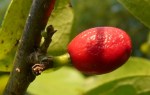
Spicebush berries

Berries on spicebush plants are now fully mature. Migrating birds love them, as do bears and other woodland animals. The berries are fairly fatty so they help animals to stock up on energy for either migration or hibernation. The spicebush plants have presumably timed the ripening of their fruits to coincide with the surge of migrant birds that are now moving through our forests.

I sampled a few berries and they taste like a cross between allspice and liquorice, neither of which are high on my list of flavor preferences but then I’m not a wood thrush or a bear. The aftertaste lingers and matures into a sharp cayenne. According to Foster and Duke’s Medicinal Plants and Herbs, Native Americans used tea from the berries for coughs and other ailments and they squeezed oil from the berries to rub into rheumatic joints.
Clicking on a thumbnail will open a larger image.

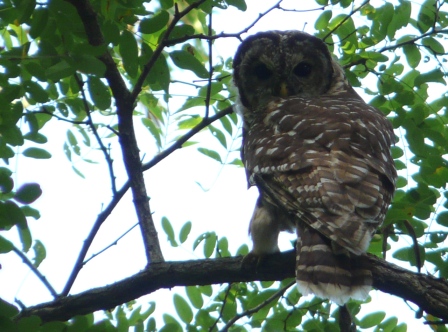
Second owl of the week

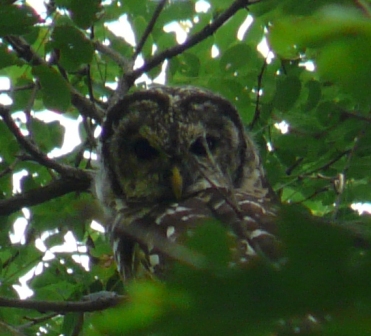
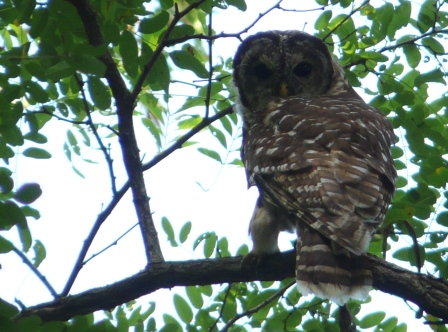
This Barred Owl flew in alarm as we walked past its perch in the dry oak woods south of Tennessee Ave. It perched high on a branch and watched.


Close inspection of its head revealed a halo of downy feathers around its face. This is a youngster, born earlier this summer. It is likely that the parents are still feeding it as it learns to hunt on its own.

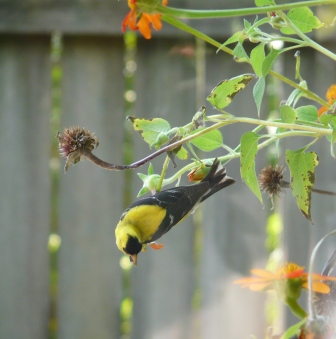
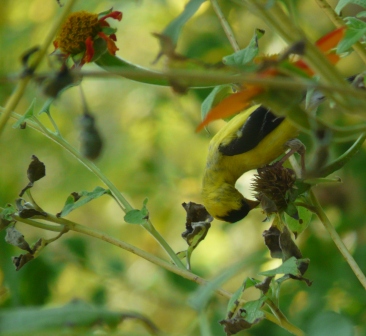
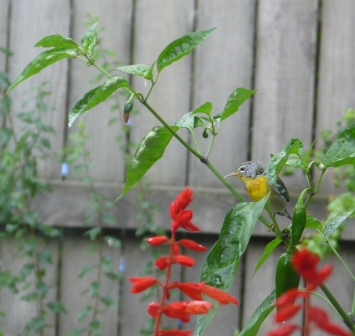
Unusual bird behavior: Northern Parula foraging in potted pepper plant

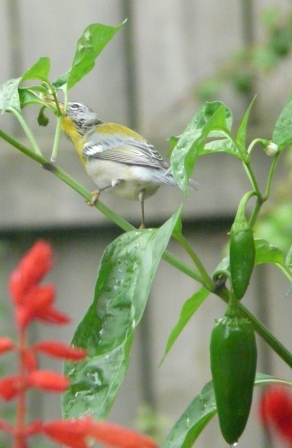
This Northern Parula was gleaning insects from the potted pepper plant that sits right outside the kitchen window. Parulas are normally found in tree canopies away from human houses, but after the breeding season they wander into other habitats.

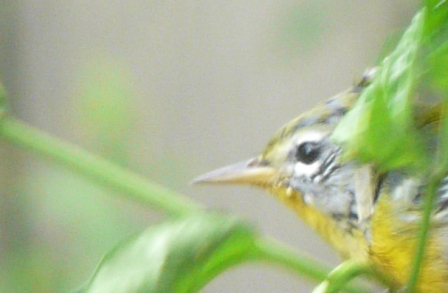
The bird was ramming its sharp beak under leaves...

...and into flowers. Like some other migrant warblers, this species supplements its diet with nectar during the non-breeding season. Not content with sipping, the visitor yanked a few flowers off the pepper plant.

The first signs of the end of summer

A worm-eating warbler was feeding in the shrubs outside our kitchen window this morning. Worm-eating warblers breed in the forest, never in town, so the bird’s presence here was a surprise and a sign that post-breeding dispersal has started. After they have bred, many species of bird wander through habitats that they would never breed in. This warbler is likely one of these amblers, drifting through the thickets in backyards now that its woodland nesting is complete. Next stop: the Caribbean or Mexico for the fall and winter.

Worm-eating warbler, Helmitheros vermivorum, photographed from my kitchen table. This is one of my favorite species -- an unassuming bird with subtle beauty and an unwarbler-like dagger for a beak.