Author Archives: David George Haskell

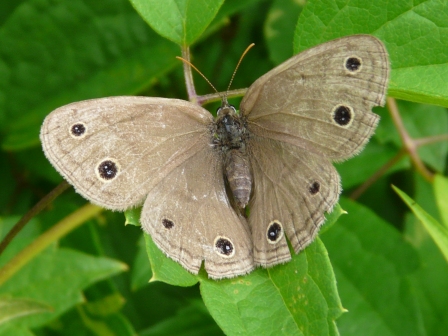
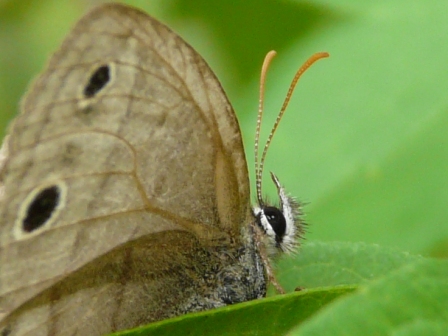
Little wood-satyr

Two spots on each wing characterize this species. Usually they do not sit long enough for a photo, but fly in a "bouncy" way over the tops of vegetation. Their caterpillars feed on grasses. One more reason not to mow the grass.

Cool facial hair and antennae.

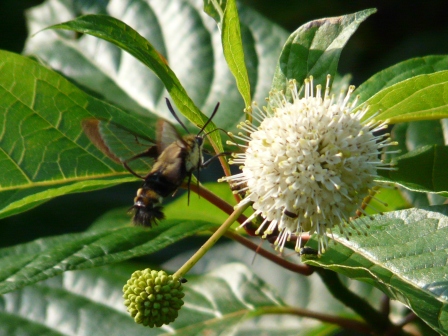
Snowberry clearwing moth

The buttonbushes’ nectar has attracted a hummingbird moth. This insect looks and behaves just like a hummingbird, hovering in front of flowers while it drinks nectar. Both the moths and the birds are endotherms, generating heat internally to power their active flight.

Snowberry clearwing (Hemaris diffinis). Another species that looks similar to this one is the Hummingbird clearwing (Hemaris thysbe), but the Snowberry clearwing has dark (not yellow or light) legs and a black line that runs from the eye down its side.


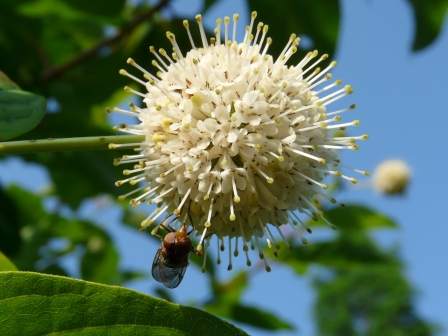
Buttonbush in bloom

Buttonbush (Cephalanthus occidentalis) is a wetland species of shrub. We have several in the soil around the overflow area of our duck pond. The shrubs grow to head-height and produce globular flowers in the summer. The flowers are rich nectar sources, so they attract a number of insects.

Buttonbush being visited by a fly. Note the long styles projecting from each flower in the globe. Unlike the flowers of most other plant species, the area at the top of these styles (the stigma) serves both to release pollen and to gather incoming pollen. To prevent self-fertilization, the buttonbush first releases its own pollen, then when this is complete the plant switches to receiving pollen from other plants.

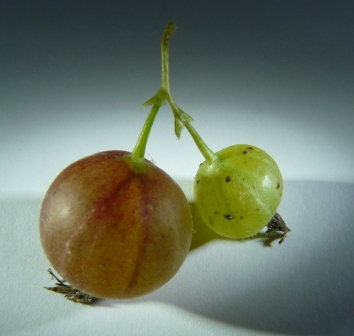
Gooseberries are ripe

This fruit is not much grown in North America, which is a pity. The fruit is tart and flavorful, like a cross between an apple and a blackberry. Gooseberry shrubs struggle in the heat and dry soil here, so ours grow in a partly shaded area near a large apple tree. Their lack of popularity may be due to the fact that federal and state governments banned them for many years, fearing that they would spread a blister fungus to white pine. This fungus uses gooseberries and its relatives as an alternate host. The bans have now been lifted and many varieties are now available to American gardeners.

Gooseberries fresh from the garden.

The king and queen of Bonnaroo

Kingbirds sing from the treetops on the festival grounds.

Eastern kingbird, barely visible, centered in the O of ROO in the hand/globe sculpture. He sings without amplification.

The queen? Perhaps Alison Krauss who, with an inflection of a sung note, can send chills down the spines of thousands of listeners standing in the Tennessee afternoon sun.

Alison Krauss and Union Station. Approximate air temperature: sunny side up.

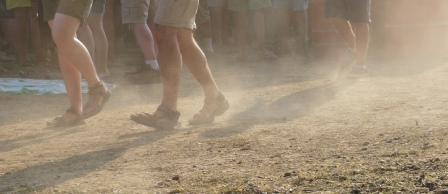
The royals preside over a Dominion of Dust.

Quarter of a million feet on a few dozen acres.

Nightfall.
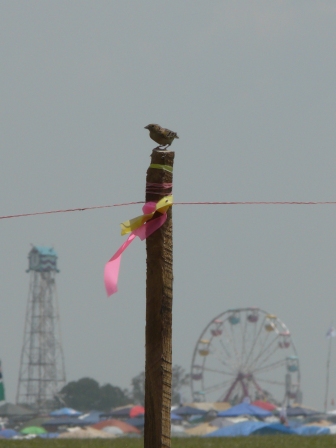
Grasshopper Sparrow plays Bonnaroo

tik tik bzzzzzz

I stepped out of my car into the vast field that is the Bonnaroo parking area and immediately heard the avian headliner for the day: a grasshopper sparrow singing from a post. This is not a common bird, so I knew immediately that I’d come to the right place for acoustic revelry. No doubt the bird wonders why eighty thousand people just showed up in his territory.

Grasshopper sparrow with Bonnaroo's firetower and Ferris wheel in the background.

Cope’s Gray Tree Frogs

Despite the lack of rain, the tree frogs have been calling every night from our small pond.

The croak calls are the tree frogs; the sweeter trill is an American toad.

In the morning, about a dozen small clutches of eggs were floating on the water surface.

Cope's gray tree frog eggs. The whole cluster is about as big as a my thumbnail.

The eggs will hatch in less than a week, then the tadpoles will take another month or so to develop. To make sure that the ducks don’t destroy all the eggs, I have scooped some of the eggs masses out of the pond. I’m keeping them in a bucket until they hatch, then I’ll return the tadpoles to the pond. Ducks don’t seem to be good at catching tadpoles.

Visual confirmation of the waaa-oo cicada

…also known as Magicicada tredecim. I’ve been hearing them for weeks, but this is the first one I have managed to catch and examine closely. Regrettably, all the thirteen year cicadas seem to be fading away now. So long, until 2024…

Magicicada tredecim. Underside of abdomen is mostly orange. Compared to Magicicada tredecassini, which is often found at ground level, this species seems to prefer the treetops.

Egg-laying box turtle

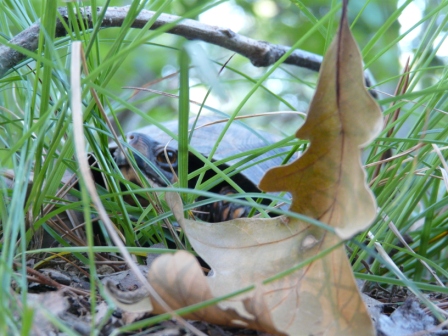
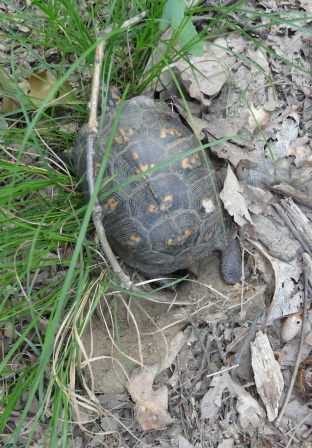
Junebug (dog, not beetle) and I walked to Piney Point early this morning and found a box turtle laying eggs in the sand on the side of the trail.

Turtle, viewed from turtle-height. Note the brown eye (females are brown-eyed, males are red-eyed.)

She has dug a shallow pit in the dry, sandy soil. No eggs were visible yet. If this clutch is successful, the young will hatch out in two to three months.

Trail to Piney Point, Sewanee, TN

Looking across Shakerag Hollow from Piney Point

Ripening wild blueberries growing in cracks in the sandstone at Piney Point