Author Archives: David George Haskell

Convergence, divergence

During my visit to Israel and the West Bank, I rambled through the Hebrew University Botanical Garden to get a better sense for local plant diversity. In addition to the many species that were unfamiliar to me, I saw some old friends with countenances adapted to local climes.

What form does an oak tree take in a seasonally dry climate with many leaf-munching herbivores? Both of the oaks that I encountered offered the same answer: a thick, water-holding leaf with prickly edges. These oaks have become holly-like. I was reminded of the holly trees growing under the dry overhangs of the Cumberland Plateau in Tennessee. Tough plants that can take months of drought.
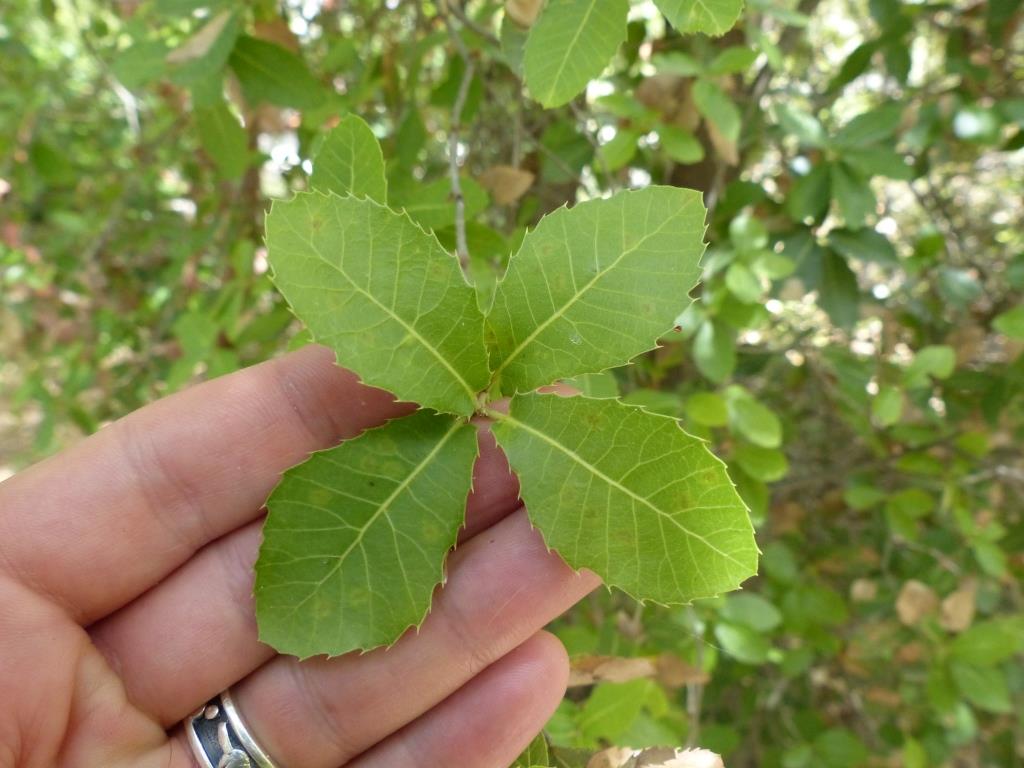
Quercus calliprinos, Valonia oak.

Quercus calliprinos, Palestine oak. An evergreen species.
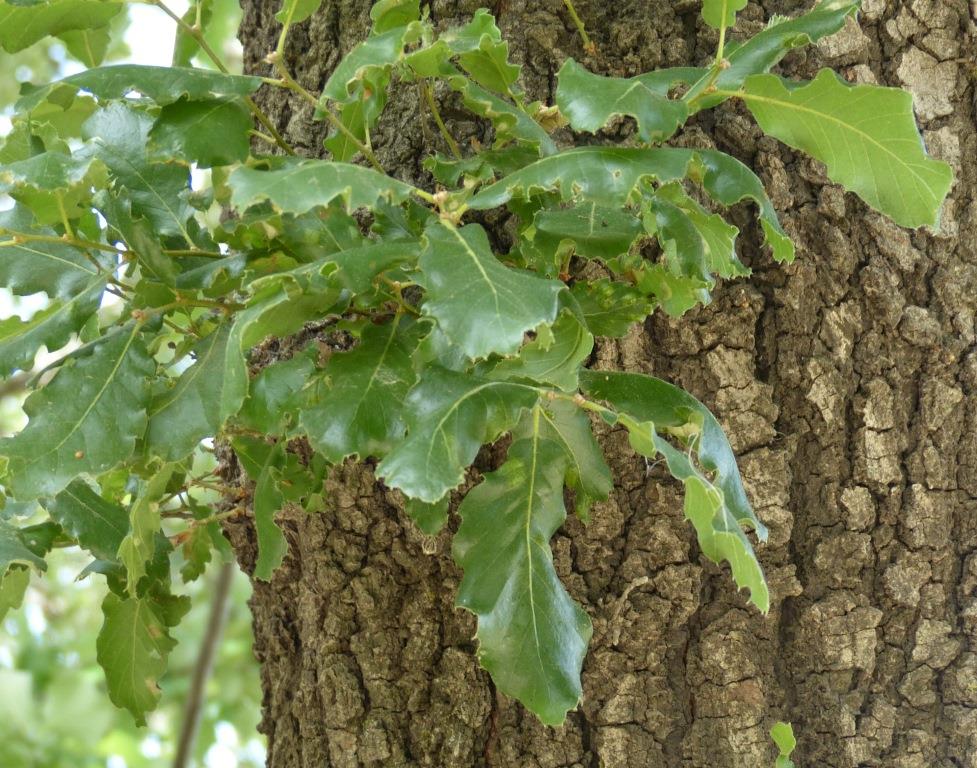
Quercus ithaburensis, Valonia oak.

Quercus ithaburensis, Valonia oak. Sometimes evergreen.

The same thick-leaved, spiny leaf form was also true for ash:

Fraxinus syriaca, Syrian ash, considered by some a sub-species of Fraxinus angustifolia, Narrow-leaved ash.

Fraxinus syriaca, Syrian ash, considered by some a sub-species of Fraxinus angustifolia, Narrow-leaved ash.

But plants of moister habitats looked remarkable similar to their North American cousins. If you live in the south-eastern U.S., this might look familiar:
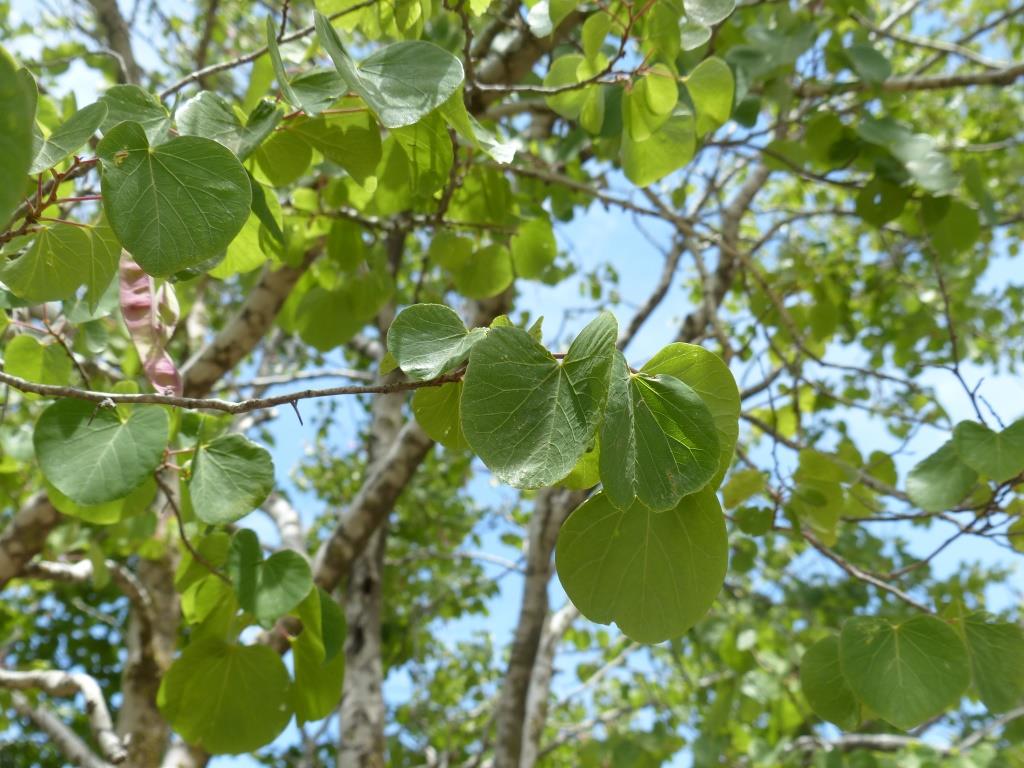
Cercis siliquastrum, close relative of Cercis canadensis, the Eastern redbud. This Middle Eastern species is sometimes called the "Judas tree," an ugly name for a tree that festoons itself in pink and has, presumably, no quarrel with either Judas or his betrayed companion.

Cercis siliquastrum, close relative of Cercis canadensis, the American Eastern redbud. This Middle Eastern species is sometimes called the “Judas tree,” an ugly name for a tree that festoons itself gaily in pink every spring and has, presumably, no quarrel with either Judas or his betrayed companion.

Here’s an entirely different kind of plant, one truly adapted to the dry. It comes with some strangely intertwined cultural stories. These photographs are from the northern part of the West Bank.
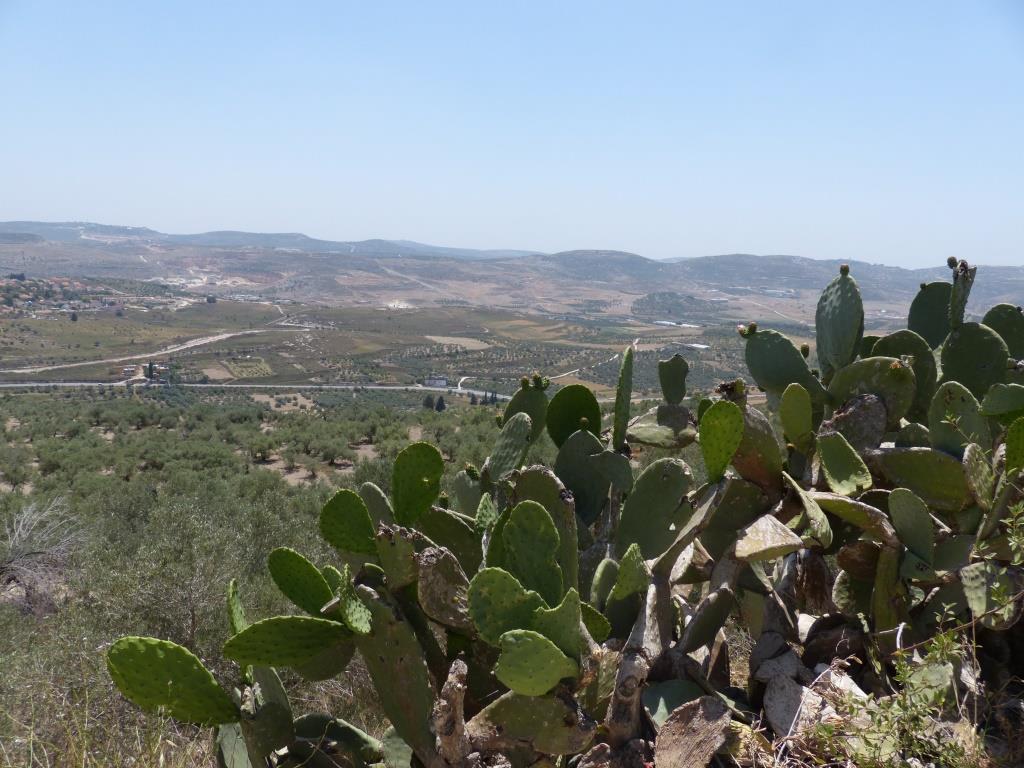
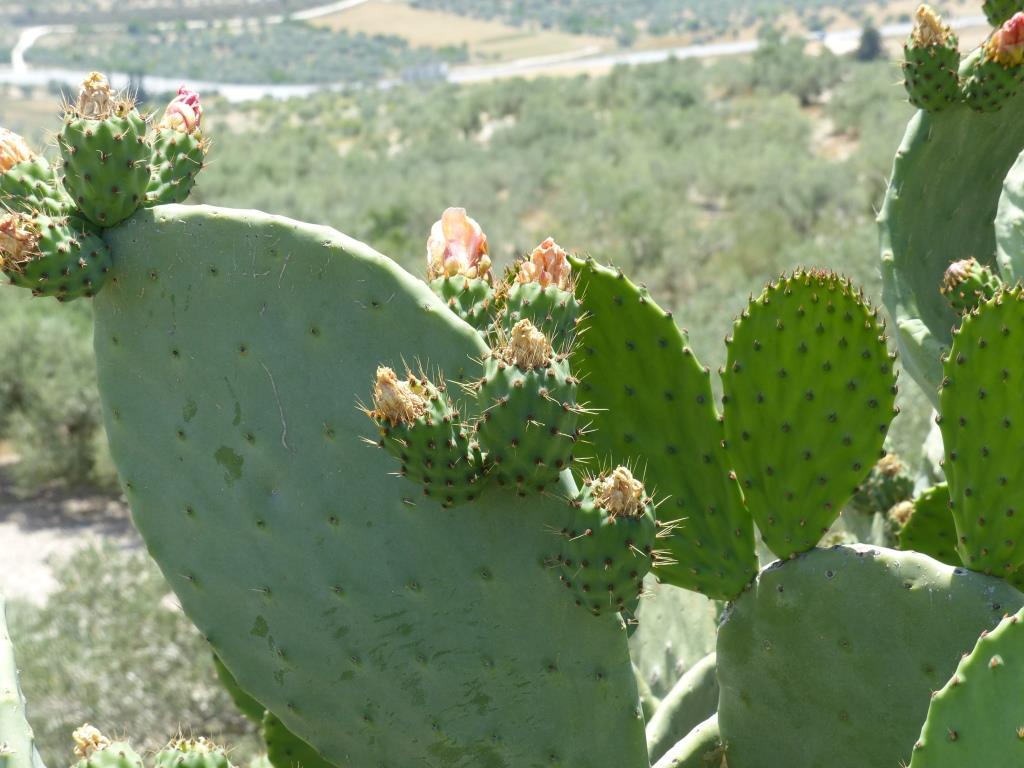
57The plant is a prickly pear cactus, Opuntia ficus-indica, and is often planted as a boundary around fields, a living barbed-wire fence. Its fruit, once dethorned, is a delicacy. For Palestinians, the plant is a symbol of bitter tenacity under hardship. It appears in poems, posters, and cartoons. The cactus’ name is subbar, closely related to (and sometimes used interchangeably with) sabr, patient enduring. Israelis use the cactus for an entirely different symbol. A “sabra” is a Jew born in Israel or in the territories that Israel occupies. Thorny on the outside but sweet on the inside, like cactus fruit, sabra is used as a term of pride, affection, and connection to the land.

There is a biogeographic irony here. The plant itself is native to Mexico and was imported to the region. So these conflicting symbols derive from a plant that is rooted elsewhere. It might not be stretching the point too much to say that the same is true of some of the conflict in the region. Few other places in the world are as affected by the actions of other countries and by ideas imported from abroad.

The botanical garden itself has felt these foreign influences and conflicts. When the British still controlled the land, immigrant Jews who were part of the European Zionist movement established the garden and Hebrew University. Then the garden become part of the new Israel in 1948, but was entirely surrounded by land occupied by Jordan. Israel took over this land in 1967 during the six-day war. A Hamas bombing a dozen years ago brought suicide terrorism to the heart of the University. And the tension about the fate of eastern Jerusalem still draws the attentions, helpful and otherwise, of governments from across the world. An overseas cactus naturalized and rooted in Middle Eastern soil is therefore perhaps an apt metaphor.

Another sunny day in Jerusalem

image

I ran into some vigorous protests today. After Israel’s Independence Day celebrations, the Palestinians wanted their say. Many of those present were the descendents of those who lost homes and land in 1948 and later. Of course, the wall and the Israeli West Bank settlements have continued this loss of land.

After allowing the protesters 40 minutes of chanting, the security forces waded in and hauled off two men — they knew who they wanted. Later, various people got shoved and beaten, including some older women, young boys, and Palestinian medics. A group of “tween” girls led the later chanting and paid the price by being chased down and thrown around. One needed bandages. One soldier was about to shoot a girl with rubber bullets at point blank until his comrades yelled at him to stop. I’m sure that most or all of these soldiers would rather not be having to do this. They have all the physical weapons on their side, but the taunts of the crowd must bite. Then again, the memory of suicide bombings and other atrocities hardly encourages gentleness.

The protest was led by women. Later, after dark, young men took to the Old City’s streets, singing in call-and-response. In the narrow streets, they roared. The crowd dispersed without trouble, but the night is not done.

Meanwhile, hundreds of busloads of sunburned tourists wander the Holy City, seeking their Gods of love among stones that have surely seen more millennia of human blood than any other rocks. Living history, indeed.

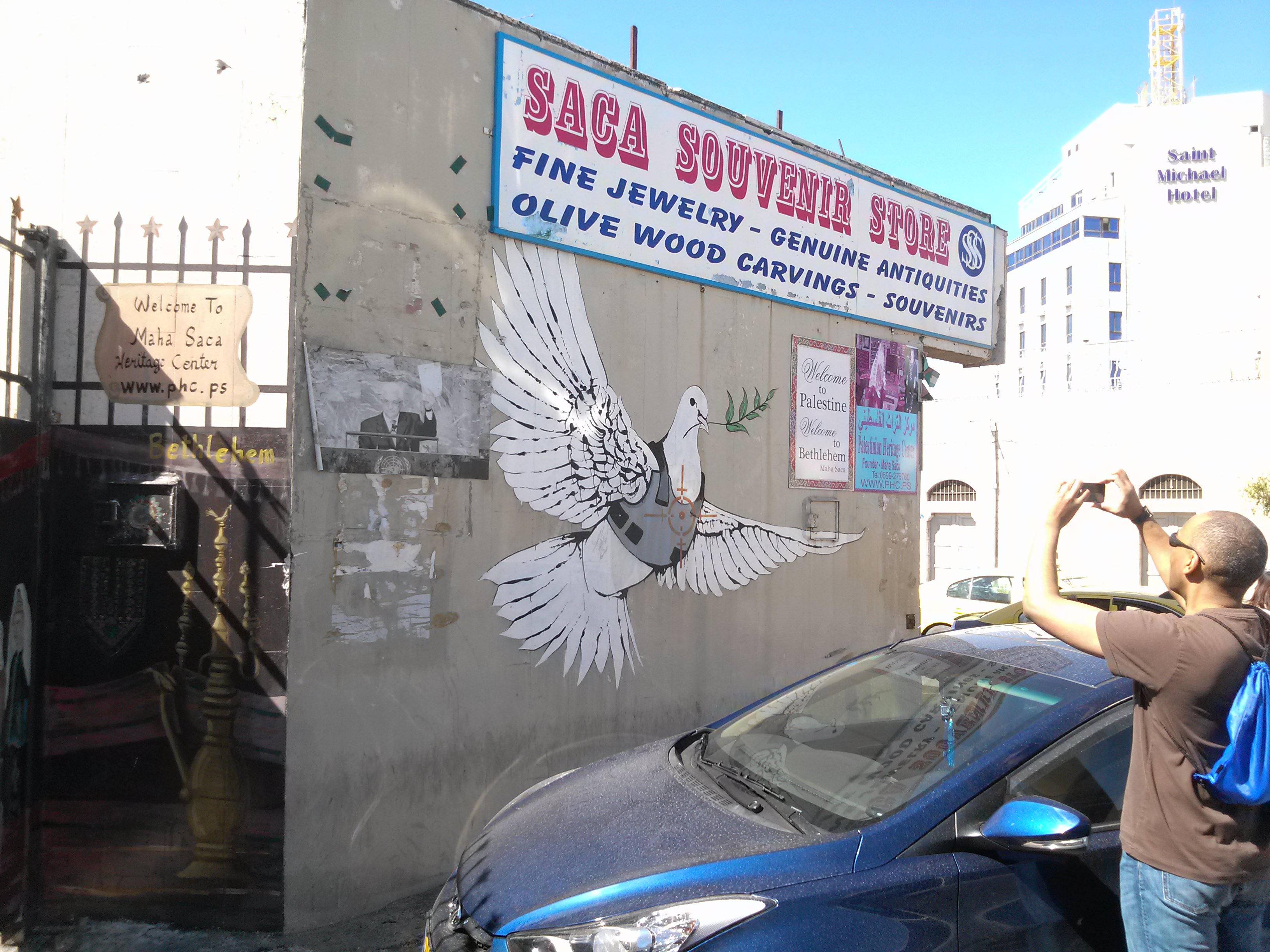
To close, here’s a Banksy from a building just behind the 8-12 ft concrete wall that separates the people of Bethlehem from Israel.

wpid-img733.jpg

Get me to a nunnery

image

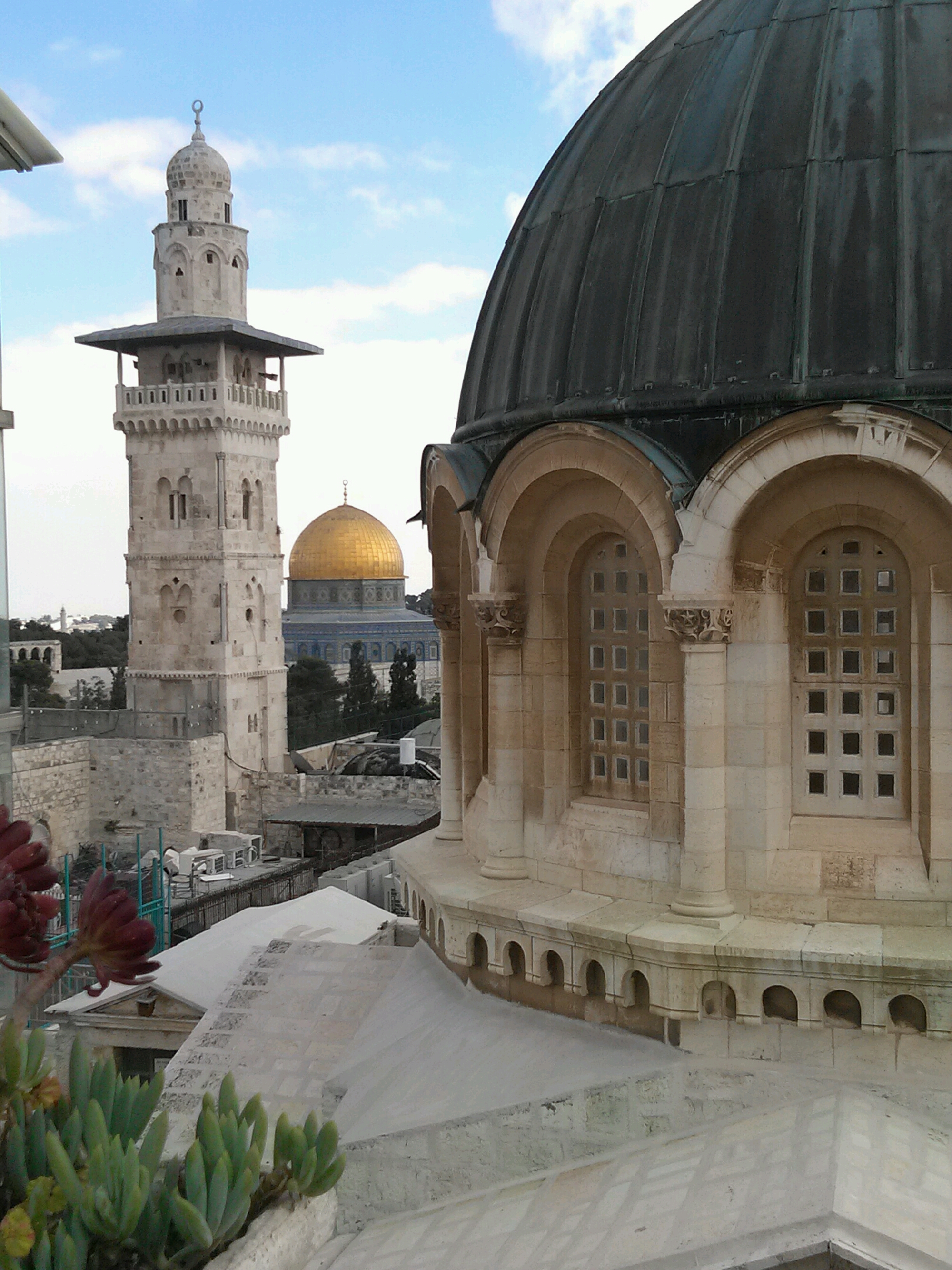
View from roof of Ecce Homo convent, Jerusalem. Soundtrack: roosters, calls to prayer from Dome of the Rock, African Gray parrot from store in street, multilingual tourguides expounding on politicized archaeology, stray cats pawing through trash. Dorms: suitably monastic. Plans: listen some more.

Ramble, the noun: Birding Central Park.

I made a very brief trip to Manhattan earlier this week. As I rambled between meetings, I found The Ramble, proper noun.

IMG712_rambleI thought the claim to being one of the “top bird-watching locations in the United States” was a little hubristic. Sure, there are tons of birders in the megalopolis, but could this little patch of woods in Central Park truly yield “top” numbers of birds? Despite the rain and my skepticism, I walked on.

Forty-five minutes later, I repented of my woodsy Tennessee haughtiness. I’ve never seen so many catbirds, ovenbirds, waterthrushes, and other migrant species crammed into so small a space. I saw thirty four species and many more must have lurked behind the veil of hazy drizzle. The full list is appended at the end of this post. (Three Northern Waterthrushes in the space of a few yards? Outrageous.)

No doubt the profusion of birds reflects the paucity of habitat all around (I spent several hours watching street trees away from the park and saw just one warbler). The Ramble is therefore a refuge for these migrants, an atoll of green in a sea of gray. Pity the insects, worms, and snails here. So many hungry birds must clean out the food supply pretty quickly. But for bird-watchers: a top place indeed. The health and diversity of the herbaceous and woody plants was also impressive.

The Ramble offers fine opportunities to observe the behavior of birders. Every walkway and prospect was enlivened by the movement of binocular-wielding bipeds. Some snuck, some sauntered, and not a few moved with great haste from place to place blasting iPod recordings into the bushes to draw out the birds. This latter group also pished and squeaked with great gusto. (These are vocalizations peculiar to birders, nominally uttered to attract birds, but whose psycho-spiritual origin is perhaps found in the atavistic impulse to appease the gods of the woods and simultaneously repel non-believers.)

All in all, a fine place to ramble.

IMG717_cpViewIMG718_nycOn a similarly feathered topic, the second installment (of three) of the New-York Historical Society’s Audubon exhibit is open until later this month. I wrote about the first exhibit here. I also strongly recommend this current show. Getting close to his graphite and pigment is a stirring experience.

The Rambler’s list (via ebird.org):

Crazy-ass birders: lots
Canada Goose  2
Mallard  4
Double-crested Cormorant  4
Green Heron  1
Rock Pigeon (Feral Pigeon)  12
Mourning Dove  5
Red-bellied Woodpecker  1
Northern Flicker  1
Red-eyed Vireo  1
American Crow  1
Ruby-crowned Kinglet  2
Veery  2
American Robin  8
Gray Catbird  16
European Starling  9
Cedar Waxwing  1
Ovenbird  7
Worm-eating Warbler  1
Northern Waterthrush  3
Common Yellowthroat  3
American Redstart  2
Northern Parula  3
Magnolia Warbler  2
Blackburnian Warbler  1
Yellow Warbler  1
Blackpoll Warbler  1
Black-throated Green Warbler  2
White-throated Sparrow  2
Northern Cardinal  3
Red-winged Blackbird  1
Common Grackle  2
Baltimore Oriole  1
House Finch  1
House Sparrow  19

The heartbeat of a twig

We mammals tend to regard plants as stationary objects, inert beings that form a backdrop for the more exciting lives of those us of driven by heartbeats and nerves. Here’s some data from a twig on the sugar maple in my backyard that might call us to a more expansive view of our botanical cousins. The graph shows how the diameter of a growing twig changes over a week.

Maple graph

Measurements made by Ecomatik dendrometer

This is the pulse of the tree: one heartbeat every twenty four hours. The twig is fattest at dawn, then the twig shrinks as the water-conducting vessels, the xylem “tubes,” get pulled inward by the draw of passing water. Like a straw that collapses inward under the influence of an enthusiastic drinker, the twig shrinks and reaches its narrowest point in the early afternoon when the leaves are hemorrhaging water to the hot, thirsty sunshine. The twig then gradually swells as the sun lowers and darkness comes. The movement is slight, a few hundredths of a millimeter each day.

Note that the graph shows an upward trend. This young green twig is adding wood, growing day by day.

All around us: every twig throbbing with life.

What a beech twig hears…

…when a gust of wind passes over its leaves. These are the vibrations that tremble through the wood. Inaudible to our ears, but the tree’s cells are shaken (not stirred) and any insect in the twig could detect the vibrations through its feet.


I recorded this today using a tiny accelerometer on the twig’s surface. The leaves have been out for a week or two, so they are still very delicate.

“But their comprehensive silence stays the same”? Not so, Professor Nemerov, not so.

Pollinators, come get it

Shakerag Hollow continues its tumble through spring. The earliest blossoms are gone and fruits are fattening in their place. So goes the bloom of youth. The later flowers have now stepped forward and are waving for all they’re worth at the motley collection of pollinating bees, wasps, and flies. A few of my favorites:

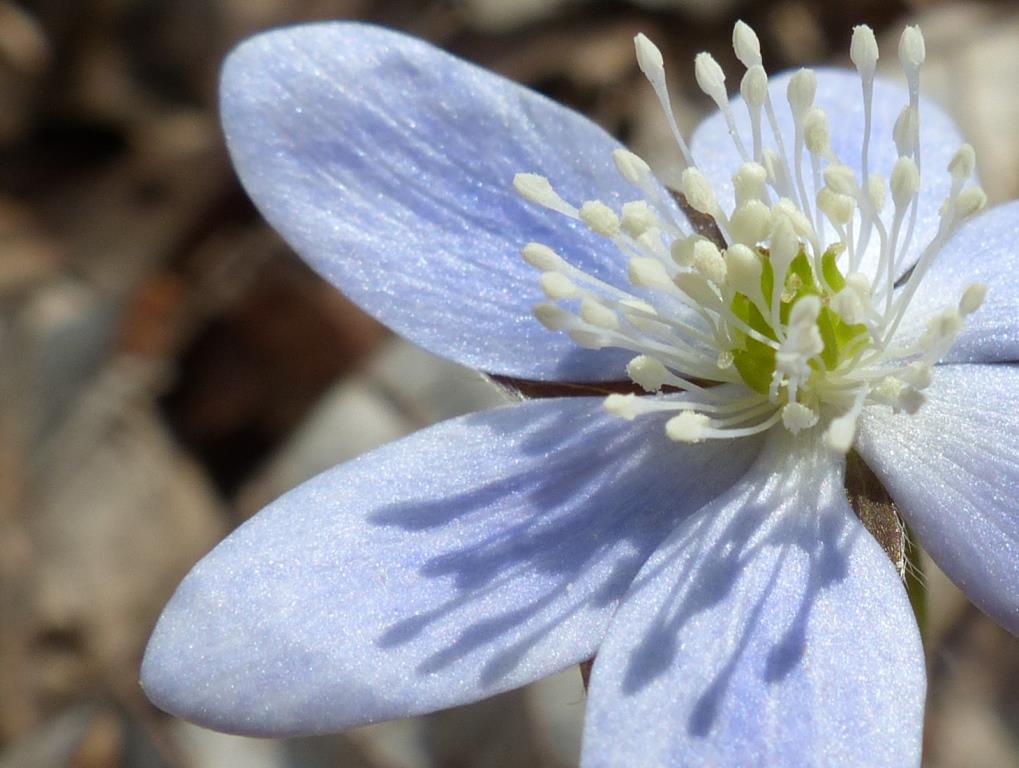
Hepatica. Most bloomed weeks ago; a few persist.

Hepatica. Most bloomed weeks ago; a few persist.

Larkspur. So violet it makes your eyes hurt.

Larkspur. So violet it makes your eyes hurt.

Wild geranium. A lighter shade of pale?

Wild geranium. Violet calmed.

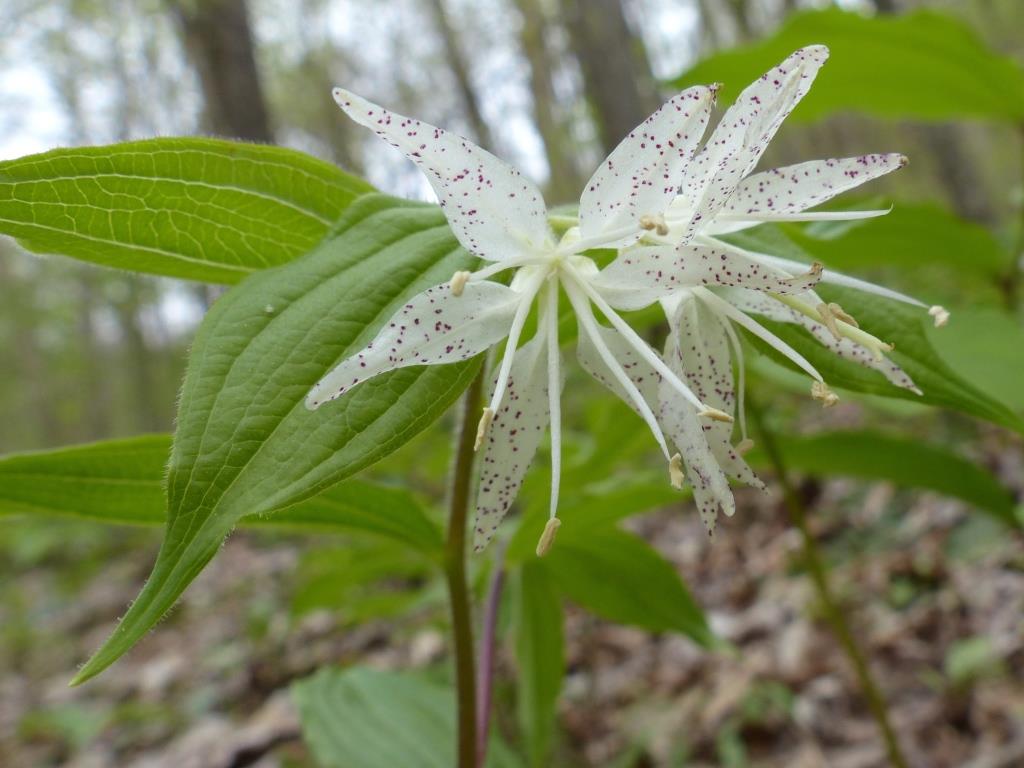
Spotted Mandarin. Coolest name in the woods.

Spotted Mandarin. Most fabulous name in the woods.

Celandine poppy. The zenith.

Celandine poppy. The zenith. The nonpareil.

Bluebell Island…some botanical treasures

The South Cumberland Regional Land Trust trip to Bluebell Island today was a great success. The bluebells are just opening up. A few are in full bloom. The next week promises a fine display.

Some favorite species:

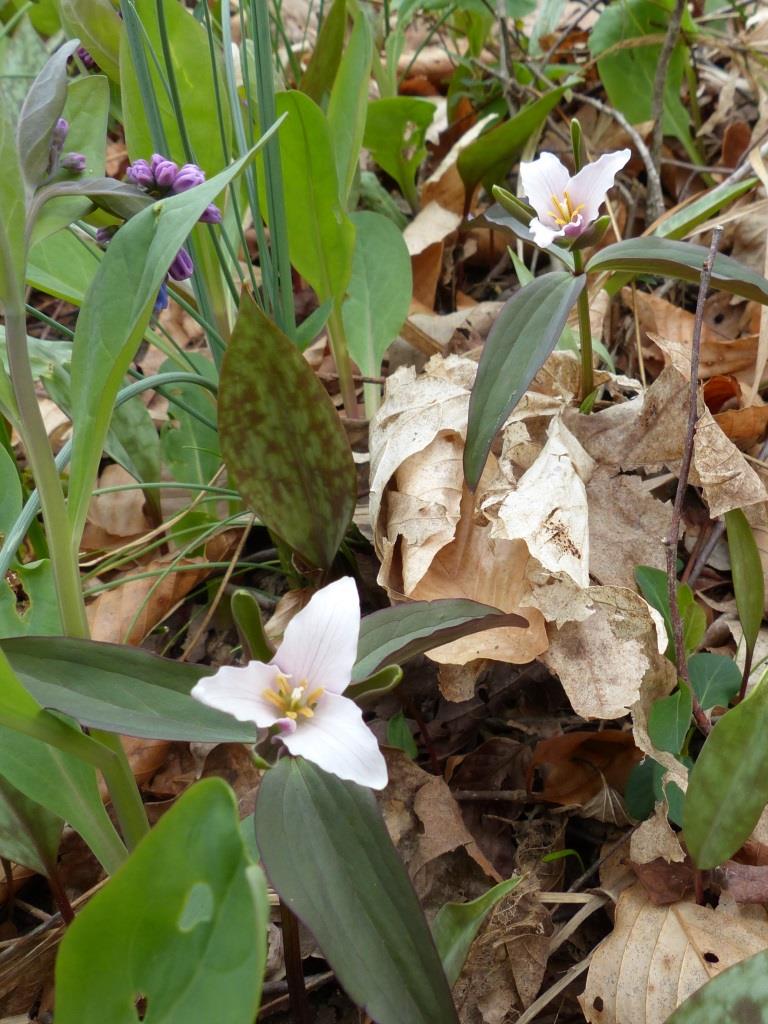
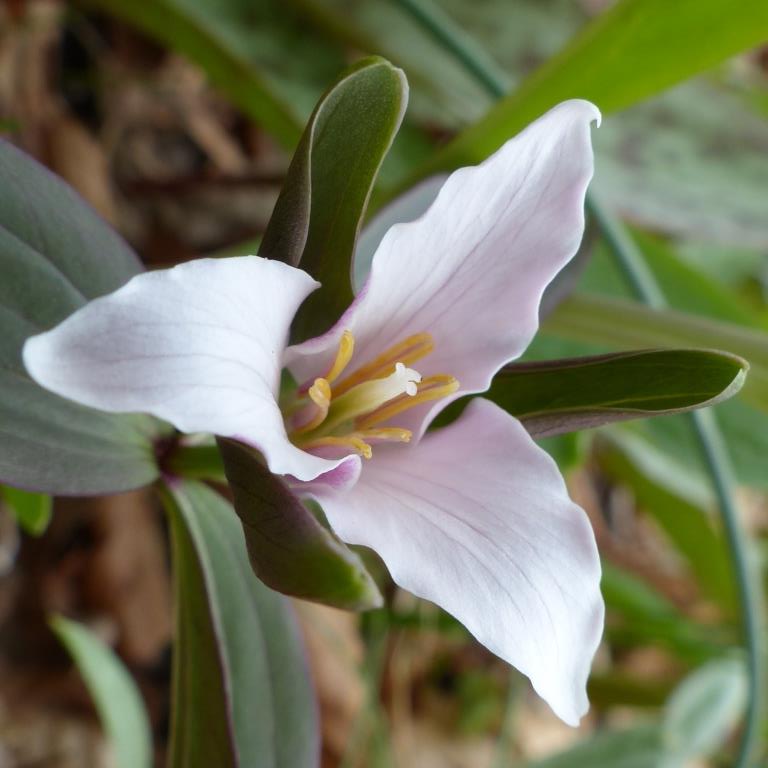
Two rare dwarf trillium were in bloom:

...only ones know to exist anywhere around here.

…these two plants are the only ones known to exist anywhere around here.

Delicious blooms.

Delicious blooms. Pollinators, do your work. Seeds needed.

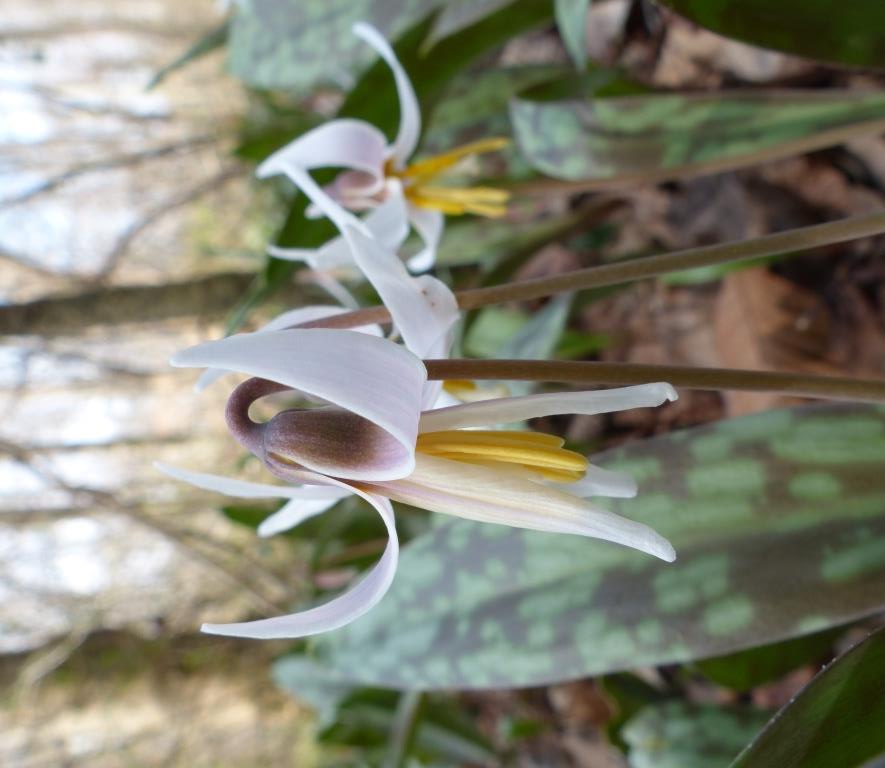
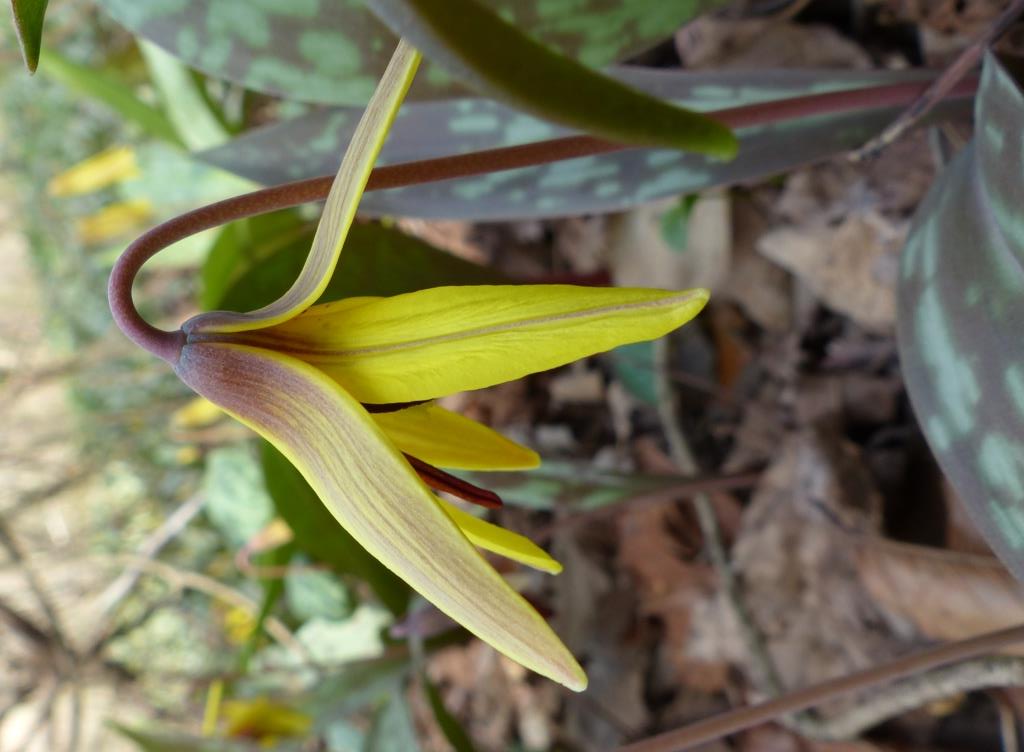
Also present were both white and yellow trout lilies, growing side by side. Genetic incompatibility keeps them from interbreeding, even if pollen gets mixed up by the work of insouciant bees.

White trout lily: Erythronium albidum

White trout lily: Erythronium albidum

Yellow trout lily: Erythronium americanum

Yellow trout lily: Erythronium americanum

Thank you, South Cumberland Regional Land Trust, for keeping this botanical treasure thriving.

Begone umbral winter

The spring equinox has passed, so light has the upper hand now. Darkness creeps away.

The plants in Shakerag Hollow know this and are starting to crack out of their winter shells.

Bloodroot. Waiting, waiting for bees.

Bloodroot. Waiting, waiting for bees.

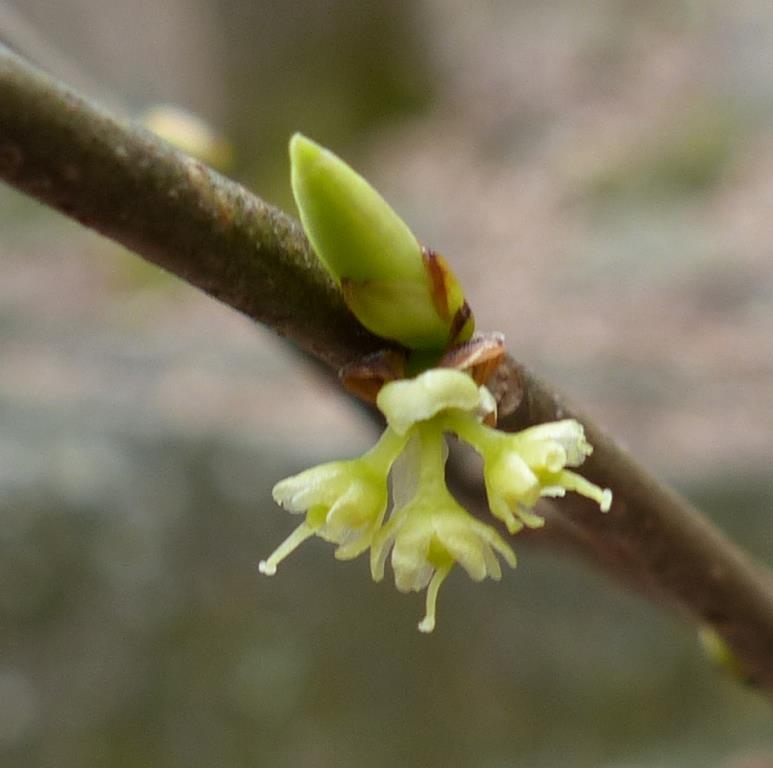
Spicebush: female flower. These will turn to the bright red drupes so loved by migrant birds. Fast food for autumnal  avian wanderers starts right here.

Spicebush: female flower. These flowers will turn into the bright red drupes so loved by migrant birds. Fast food for autumnal avian wanderers starts right here.

Spicebush: male flower. This species is dioeceous, meaning that each plant is either male or female with, no doubt, a few exceptions.

Spicebush: male flower. Spicebush is dioecious, meaning that each plant is either male or female with, no doubt, a few individuals that break the rules.

Above, the robber baron trees are constrained by their size to delay leafing out. In the delay, a herbaceous and shrubby party below.

Above, the robber baron trees are constrained by their size and must delay leafing out until hard freezes are over. They keep Lent, it seems. The pagans below the canopy live under a different set of rules and hold a weeks-long herbaceous party.

Toads, Saint Patrick, and biogeography

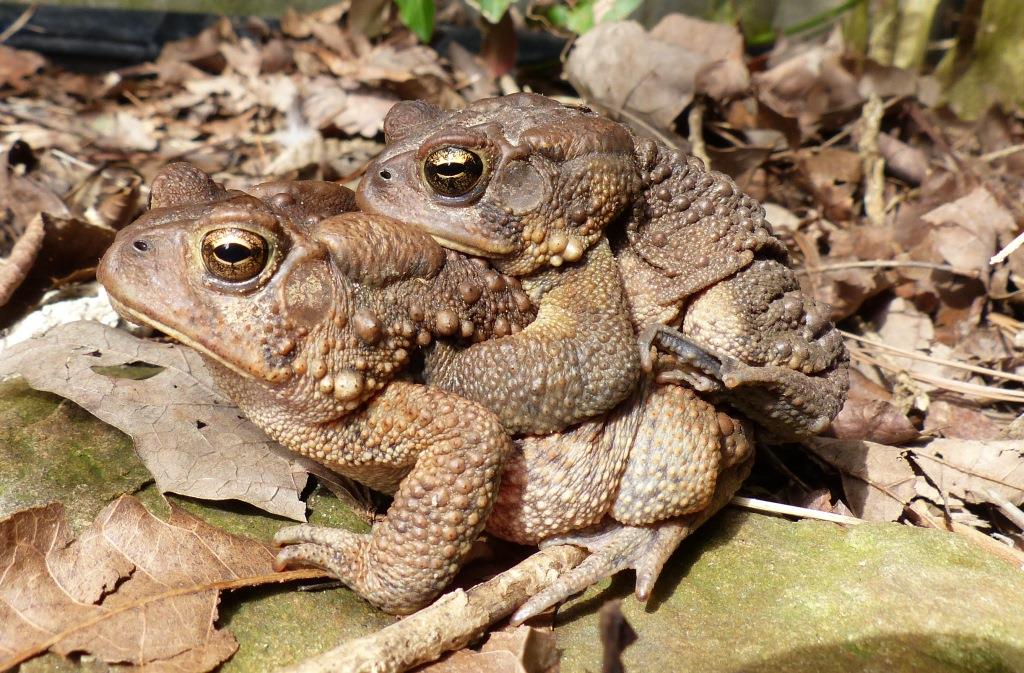
Warm the soil, add an inch or two of rain. The result: toads. Defrosted and ready to grasp springtime’s possibilities.

toads_amplexusAs I write, I hear one trilling in the pond outside. Hopefully the next weeks will bring dozens more. Toad song after a long, long winter is melodious glory.

Thanks to St Patrick (on whose feast day I’m posting this), the Irish don’t get to delight in the sounds of Bufo bufo, the common European toad. Apparently Patrick kicked them out along with the snakes. It is a herpeto-theological mystery why the saint chose not to preemptively bar more pestiferous species — biting flies, fungal blights, or the English — instead of the humble toad. His work was incomplete, though: the rarer natterjack toad has a toe-hold in a few parts of Ireland.

These tales of missing species from islands point at an important area of study in biology, namely the curious fauna and flora of isolated land masses. The technical term is “disharmonious.” Islands have communities that contain some, but not all, of the species of nearby continents (the islands are therefore out of “harmony”). The more distant the island, the more peculiar the biological community, all a result of the unlikelihood of colonization. Ireland is missing just a few European species. In contrast, the Galapagos islands sit far out to sea and are missing most of the species of mainland South America. Indeed, so few colonists have made it to these outposts that in situ evolution has provided much of the local diversity. The same is true of the Hawaiian islands and other oceanic isolates.

This disharmony is hard to explain from a creationist perspective, so it is no accident that islands feature prominently in the thinking and writing of the originators of the theory of natural biological evolution, Darwin and Wallace. To them, the idea that the distribution of animals and plants is explained by the particularities of historical accident seemed a more fruitful hypothesis than de novo creation.

Now of course, we’re erasing all this isolation with our planes and ships. Our mobility is undoing St Patrick’s work, homogenizing the world, sometimes with regrettable consequences: here is a list of the non-native species currently threatening Ireland’s biodiversity. More saints needed?