Author Archives: David George Haskell

Jerusalem, before Ramadan sunset

image

The streets are jammed and the food vendors are almost crushed by the crowds surging at them. Then the sun drops, the sawm (fast) is over, and the evening iftar feast begins. Just thirty minutes after the streets were choked with people, emptiness descends and yowling cats emerge the tear at trash bags, disturbed only by the occasional hurrying passersby carrying a steaming pan of food.

A few miles south, rockets fly and a ground invasion seems imminent. War’s juxtaposition with the everyday life of peacetime. Incomprehensible.

Hidden communities of fungi nestled within tree leaves

A maple leaf is more than it appears to be. Its substance is made not just from plant cells, but from a community of many species. “Maple” is in fact part plant, part fungus, part bacteria. Just as the human body is comprised of a vast “microbiome,” plants are also composite creatures.

To get a glimpse at this diversity, I cultured some of the fungal species found on and within the maple leaves growing on the tree by the front door.

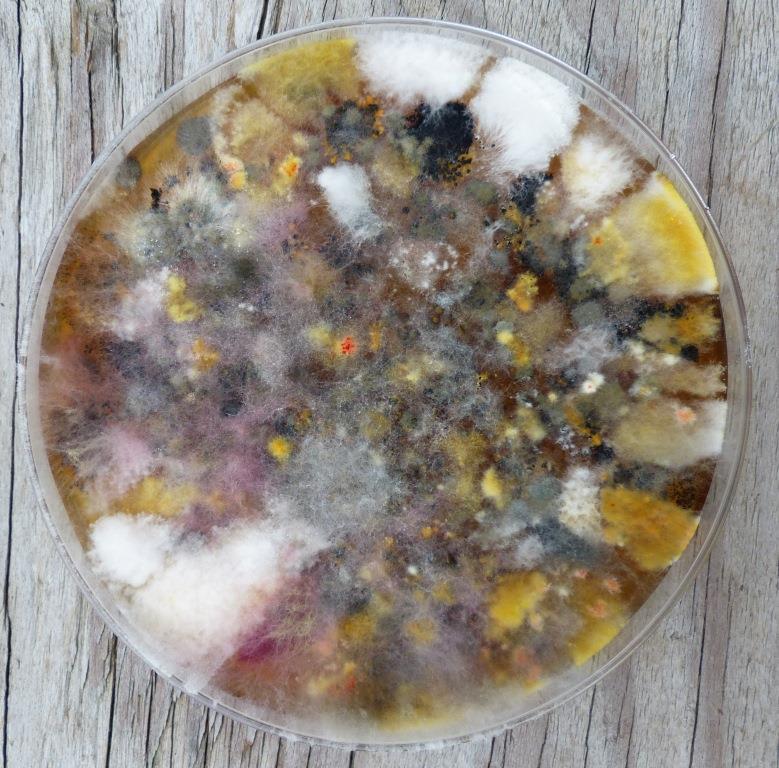
To look at the fungi on the leaves’ surfaces, I dabbed maple leaves onto pertri dishes containing agar and fungus food, then waited a few days. Here is one such dish, displaying the diversity of species found on the leaf. Of course, many fungi don’t like petri dishes, so what we see below is a mere fraction of what is actually present on the leaf. The leaf itself is not so thickly coated; the petri dish gives fungi a place to grow and reveal themselves to our eyes.
maple_print

These fungi from the surface are a mixed bag. Some are potentially harmful to the leaf and will ultimately eat the leaf away when it drops in the autumn. Others are likely protective or live as commensal squatters. Some feed on the droppings of caterpillars or the honeydew of aphids. A few might have drifted from the humans, goats, and stacked firewood below.

To peek at fungi that live inside the leaf, “endophytes,” I sliced some leaves into tiny pieces, sterilized their surfaces, then placed them onto petri dishes. Compared to the leaf “prints” taken from the surface, it took a couple of days longer for these endophytic fungi to appear on the dishes, but they too showed quite a diversity of forms. Here are two examples:

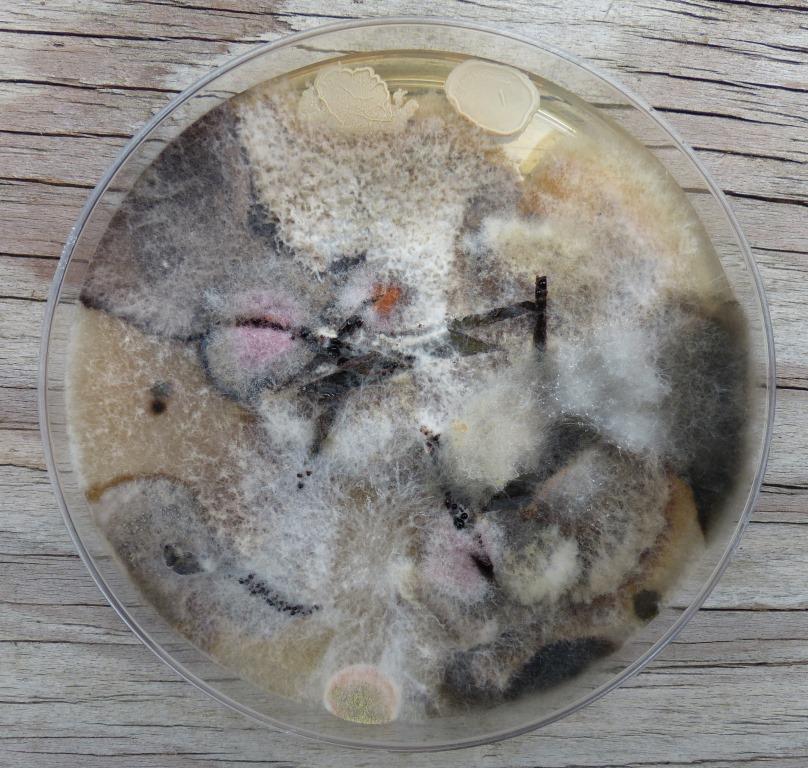
Maple_endoMaple_endo2To make sure that I was not simply growing fungi that were wafting in the air or present on my forceps, I also ran some “control” plates which yielded either nothing at all or a few white blobs.

How endophytic fungi interact with tree leaves is largely unknown. But one of their roles is protective, secreting substances that deter the growth of pathogenic fungi. For example, endophytes isolated from Douglas maple release a chemical that poisons a variety of nasty plant diseases.

Interestingly, endophytes in sugar maple leavs seem to be more diverse in old growth forests than they are in younger, managed forests, or in urban areas. But these are preliminary findings. We have only the haziest understanding of the ecology of the fungal world hidden within leaf laminae.

Inside each leaf: a whole community. Within the community: hundreds of stories waiting to be heard. One story is clear, though: if we believe that creatures — humans included — live apart from “the other,” we’re deluded.

Quicksilver

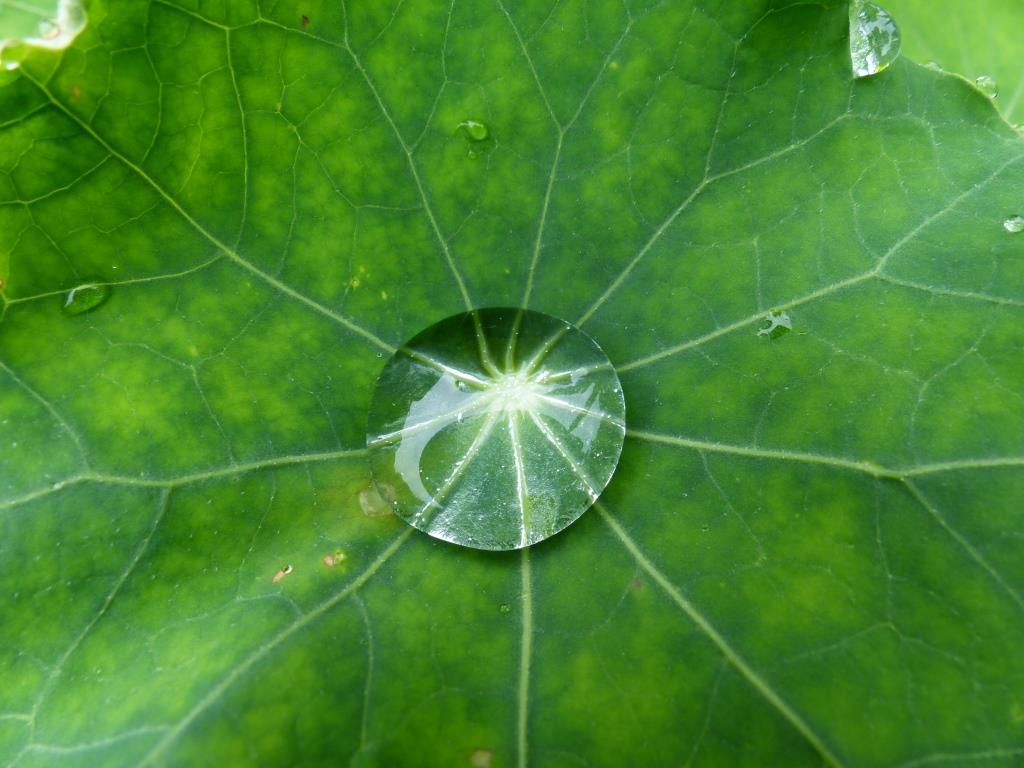
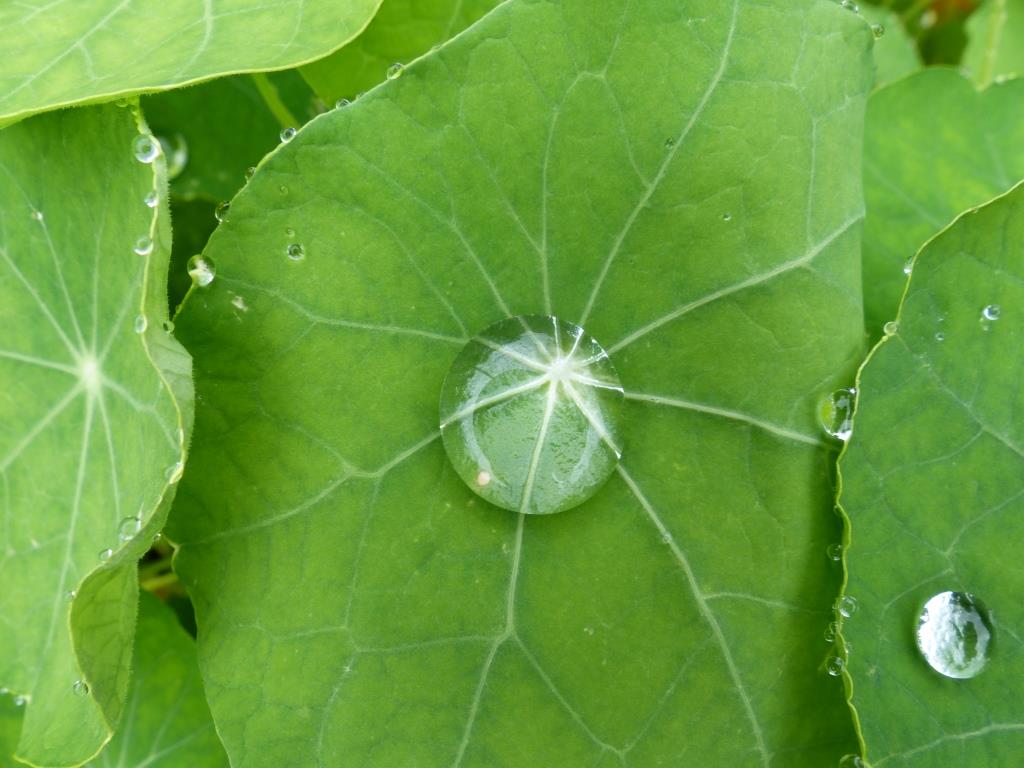
After heavy rain, water turns mercurial on nasturtium leaves. The water balls into a skittering drop, seeming to float just over the leaf’s surface. I was reminded of chasing liquid metal over chemistry lab benches in the days before kids were protected from such amusements. But similar delights, minus the metabolic cost, await in the garden.

2014-06-28 nasturtium 005

2014-06-28 nasturtium 002

The drops were dancing. Water on the leaves of other plants was sluggish, gathering in flat pools or damp stains. These plants were wet, soggy, but the nasturtium leaves were perfectly dry, even where silvery drops had sat a few seconds before.

A recent paper by James Bird and colleagues in Nature reported that nasturtium leaves are covered with “superhydrophobic ridges” (literally, “super-water-fearing ridges”). These minute structures on the leaf surface exert a strong repulsive force on water. When a water drop hits the surface, the repulsion is so strong that the drop recoils, shatters into minute droplets, and jumps back into the air. The Nature paper does not mention this, but my observations suggest that nasturtium leaves only shed large drops. On dewy mornings, smaller drops manage to cling, although they still sit as silvery globes.

Leaves of almost all land plants have a waxy covering that keeps water away from the core of the leaf and eventually causes water to run off. But on nasturtium leaves, water doesn’t just run, it springs and sprints. Nasturtium beats even the former superchampion of “hydrophobicity,” the water-shedding upper surface of lotus leaves. What function might this serve? We do not know, but shedding water must surely combat fungal infections by depriving spores of damp places in which to germinate.

All this makes for ephemeral beauty in the garden. It may also be of practical importance. Surfaces that vigorously repel water not only stay remarkably dry, but they self-clean and resist icing. Engineers would love to incorporate these features into all kinds of surfaces, especially cloth, windows, painted walls, airplane wings, and the insides of ketchup bottles (the BBC has a nice overview).

I look forward to venturing into the woods clad in a coat of nasturtium, a fig leaf for rainy climes.

Listen: underwater crackly, groany kōans

Drop a hydrophone into shallow salt water at latitudes less than 40° and you’re likely to hear a crackling sound, sometimes so loud that it drowns out almost all other underwater sounds. This din is created by snapping shrimp, tiny crustaceans that click one of their front claws so fast that the motion creates a bubble of air, a cavitation in the water. The rapid opening and closing of the bubble generates sounds as loud as 200 dB (as loud or louder than dolphins and whales) and very briefly heats the bubble to a temperature just shy of that on the surface of the sun. Understandably, nearby prey are stunned, as was I when I read these figures. The shrimp also use their loud, hot snaps to wrangle over territories and to attract mates.

Here are the sounds of these creatures recorded from the dock at St Catherine’s Island (if you’re an email subscriber or viewing on a phone, you might need to click on the header link to go to the website to get sounds…):


In some tropical sponge-dwelling snapping shrimp “a sentinel shrimp reacts to danger by recruiting other colony members to snap in concert for several to tens of seconds” (Tóth and Duffy 2005). So these shrimp are somewhat like crows, honeybees, and other social creatures: networking information through their societies.

Another sound from the dock, heard amid the shrimp (I filtered out many of the high frequencies to make the sound a little easier to hear):


This is the territorial call and the mating cry of a toadfish. These ogre-like creatures sit under rocks or in crevices the bottom of the seafloor, waiting to ambush smaller fish and other morsels. The Billy Goat Gruff of the seas. Their mouths are liked toothed baseball mitts.

Despite its unappealing visage, the toadfish has much to recommend it to the curious naturalist. The call is produced by vibratory muscles attached to the swim-bladder (bagpipes?). These muscles are the fastest known among all vertebrates. Once mating is done, the male toadfish defends the eggs, then guards the hatchlings until they find their own bridge to hide under.

NASA once sent toadfish into space. According to Wikipedia, they found that toadfish inner ear bones developed in the same way in orbit as back here on planet Earth. Good to know. This study also answers the kōan,

Can a toadfish in space orbit be said to be under his rock?

But poses a new one,

If a toadfish vibrates his swim bladder in the vacuum of space, is he singing? And, for extra kōa-credit, who might answer his airless call?

For now, toadfish are hiding under their rocks with even greater diligence, fearing capture for space experiments, waiting for Homo sapiens to pass on by. Here is the sound of our departure from the dock, heard from the toadfish’s watery home:


Many thanks to Dr John Schacke from UGA and the Georgia Dolphin Ecology Program who helped me to understand what I was hearing.

Summer Solstice…zoological celebration

A few of the creatures we’ve run into on St Catherine’s Island, GA, during the Island Ecology class:

Anhinga in morning backlight

Anhinga in morning backlight

Carapace of loggerhead turtle washed up on beach. Cause of death is unclear.

Carapace of loggerhead turtle washed up on beach. Cause of death is unclear. Turkey vulture didn’t care about cause of death, but sea turtle program and State of Georgia did. Turkey vulture proceeded without paperwork; humans went to work with datasheets and calipers.

Great egret chicks.

Great egret chicks.

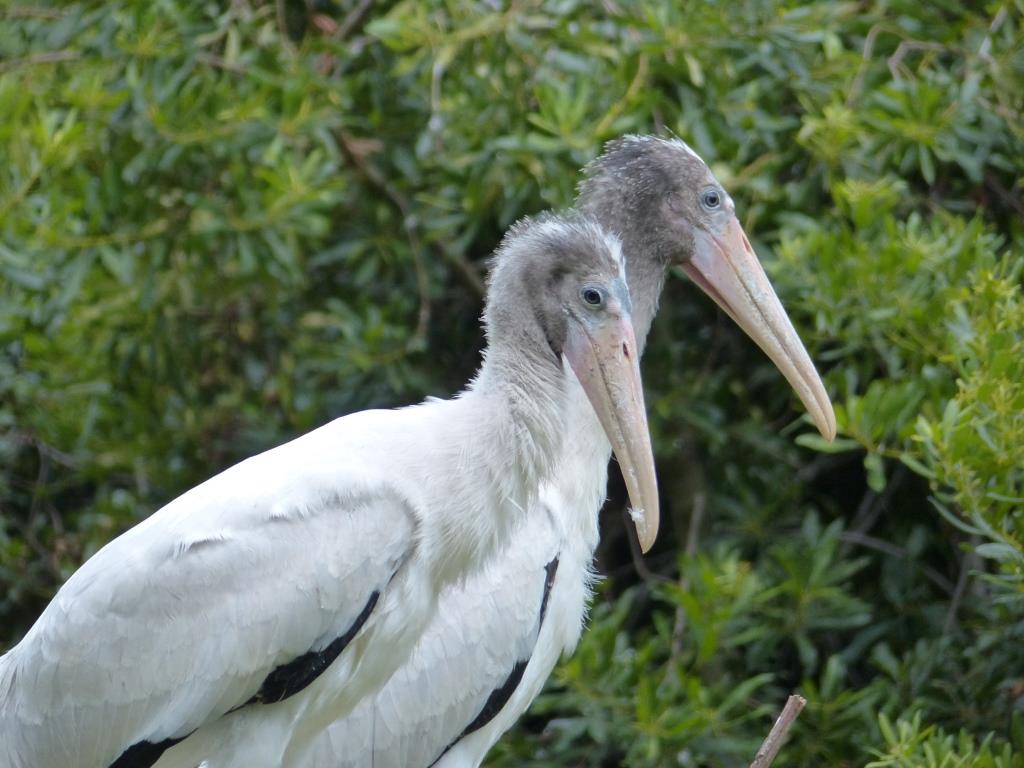
Nestling woodstorks in goofy stage. They still have fluffy heads. All these cute down will fall away to reveal the characteristic bare skin of the adult. This naked head allows them to forage in muddy water without fouling (...fowling...) their feathers.

Nestling wood storks in goofy stage. They still have fluffy heads. All these cute down feathers will fall away to reveal the characteristic bare skin of the adult. The naked head allows them to forage in muddy water without fouling (…fowling…) their feathers.

Dead horseshoe crabs eyes the beach.

Dead horseshoe crab eyes the beach. In addition to these compound eyes, they have smaller eyes on their telson (tail), near their mouth, and on top of their carapace.

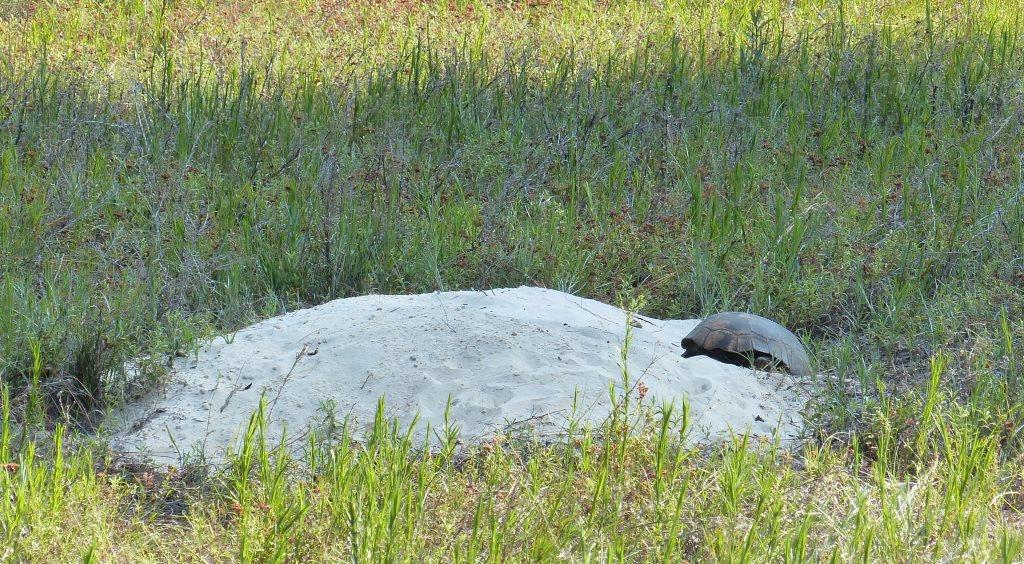
Gopher tortoise on its apron of sand. Its burrow extends many meters below the ground.

Gopher tortoise on its apron of sand. The tortoise is headed for its burrow which extends many meters below the ground.

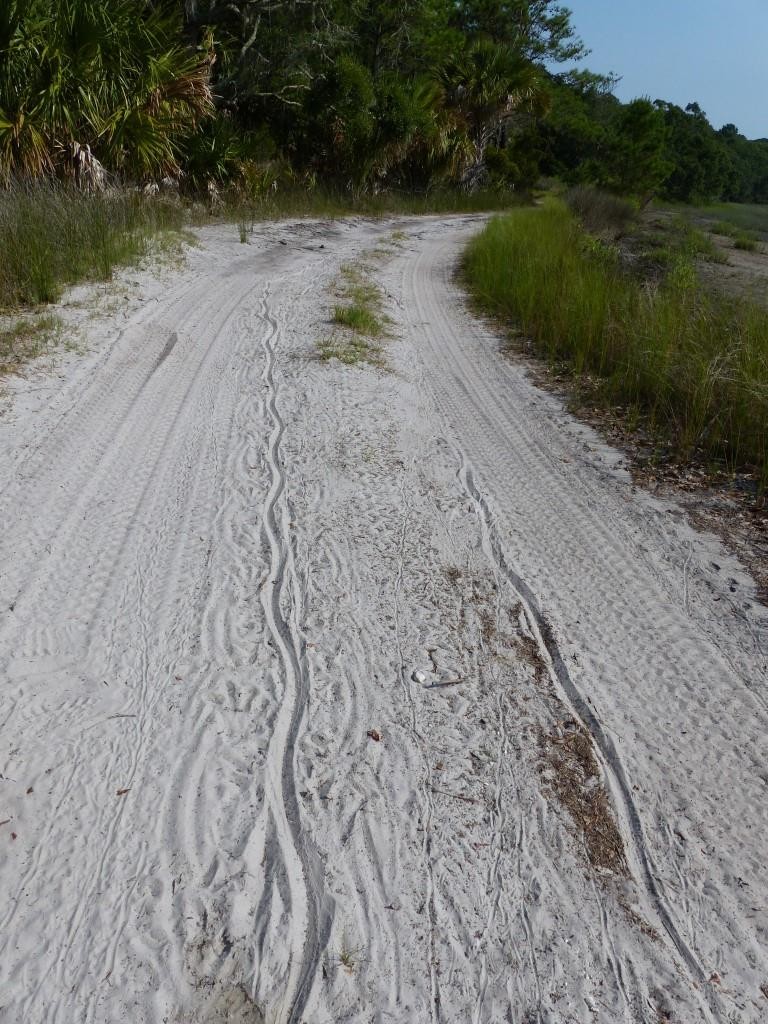
Alligator tracks on the sandy road.

Alligator tracks on the sandy road.

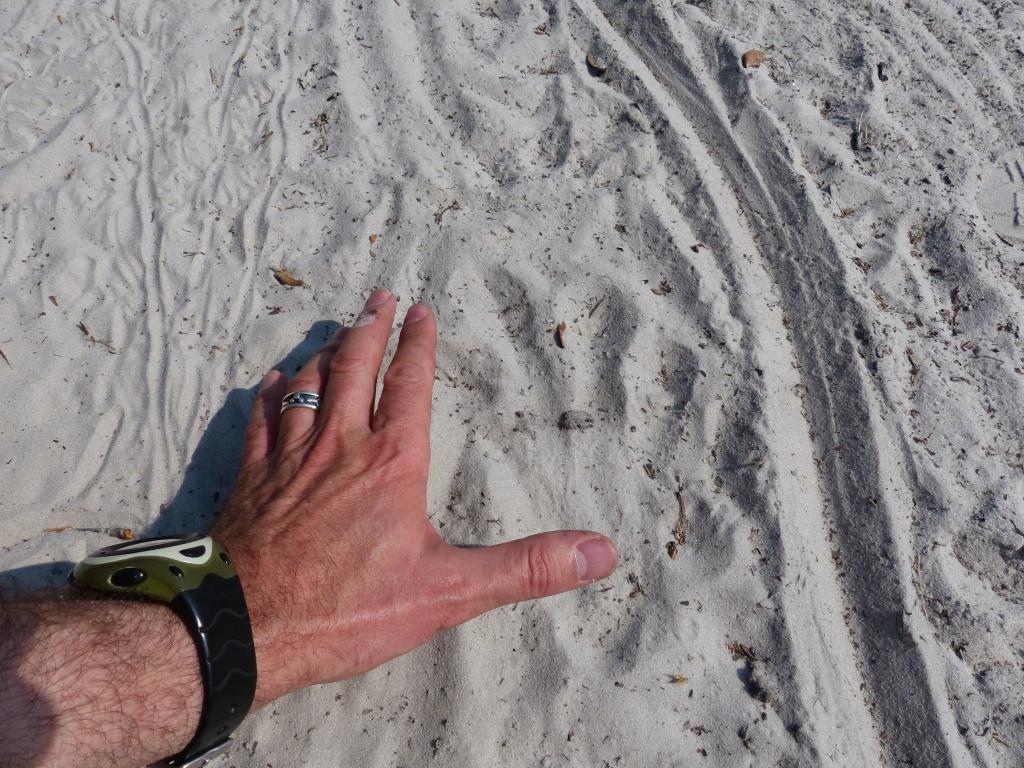
Big Moma Gator footprint and tail drag.

Big Moma Gator footprint and tail drag.

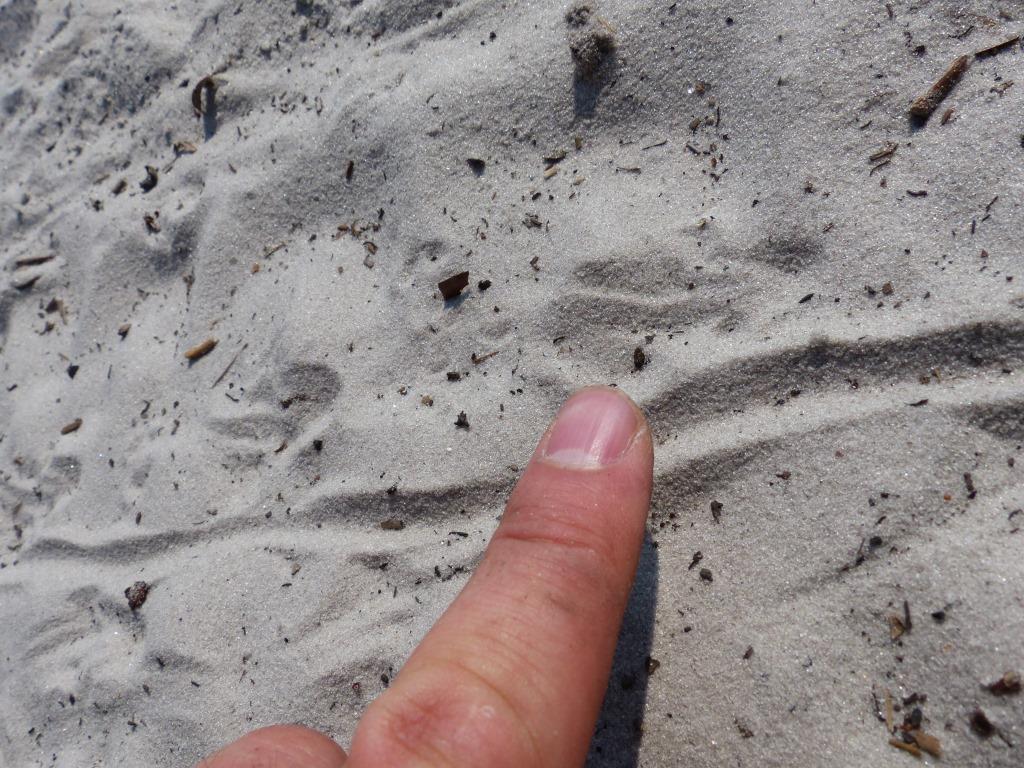
Baby Gator footprint and tail drag.

Baby Gator footprint and tail drag.

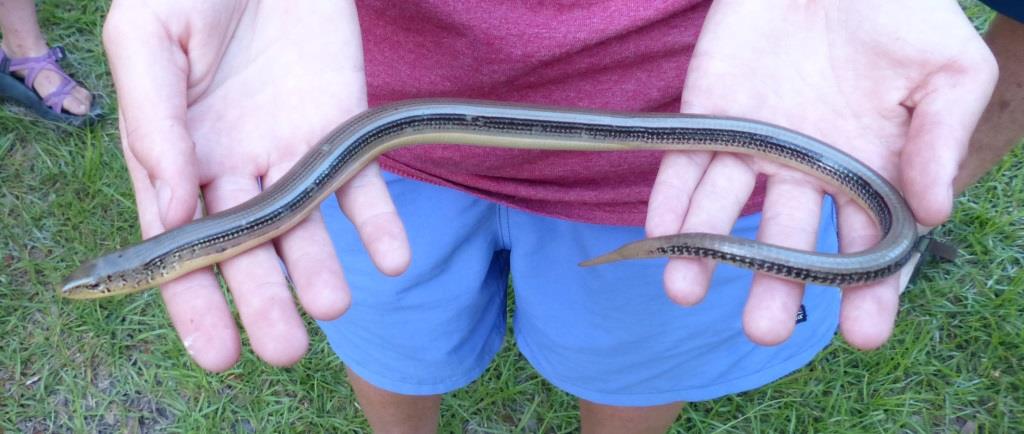
Eastern glass lizard, a legless lizard. This one has lost and regrown its tail. They get their vitrine name from the fragility of the tail.

Eastern glass lizard, a legless lizard (found by Hali Steinmann). This one has lost and regrown its tail. They get their vitreous name from the fragility of the tail.

Glass lizard: note ticks attached in the fold of skin down its flank. The island is amply endowed with ticks. A never-failing succession of them.

Glass lizard: note ticks attached in the fold of skin down its flank. The island is amply endowed with ticks. A never-failing succession of them, in fact.

Vetebra from dolphin. Found by Annya Shalun on beach.

Vertebra from dolphin. Found by Annya Shalun on beach.

Homo sapiens students headed out to gather data on shorebirds.

Homo sapiens students (Annya Shalun and Alec Hill) headed out to gather data on shorebirds.

Washed up

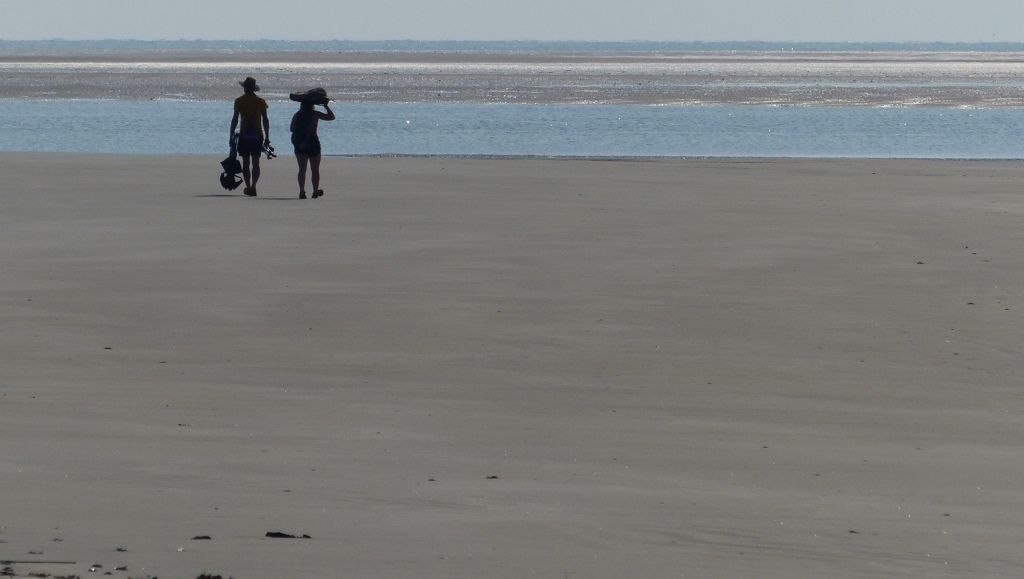
The students in the Sewanee Island Ecology Program have repeated the studies that I began last year of “trash” on the beaches of St Catherine’s Island, GA. We search standardized transect lines in the wrack on the upper beach.

If our samples are representative of the whole beach, and assuming a 20 meter wide wrack line, a 10 km stretch of beach would have just shy of half a million individual pieces of anthropogenic debris. Foam pieces are the most common (80% of pieces), followed by other plastics. Half of all debris pieces were 2cm wide or smaller. These data only include pieces of debris that are visible on the surface. Much more is likely buried deeper. We did not examine microscopic fragments.

Here are some photos of some of the items we found.

stcatsbeachdebris0

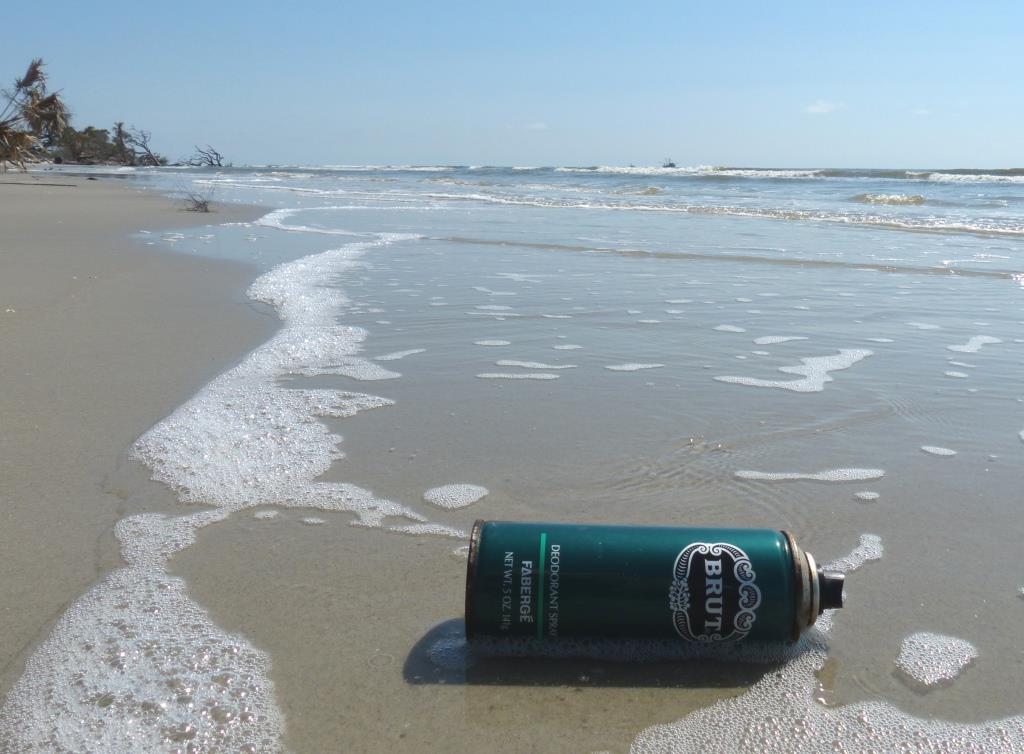
Brut. Advertized on their websites as the “Essence of Man.” Indeed. This one washed up from …somewhere… as we were walking our transects.

stcatsbeachdebris

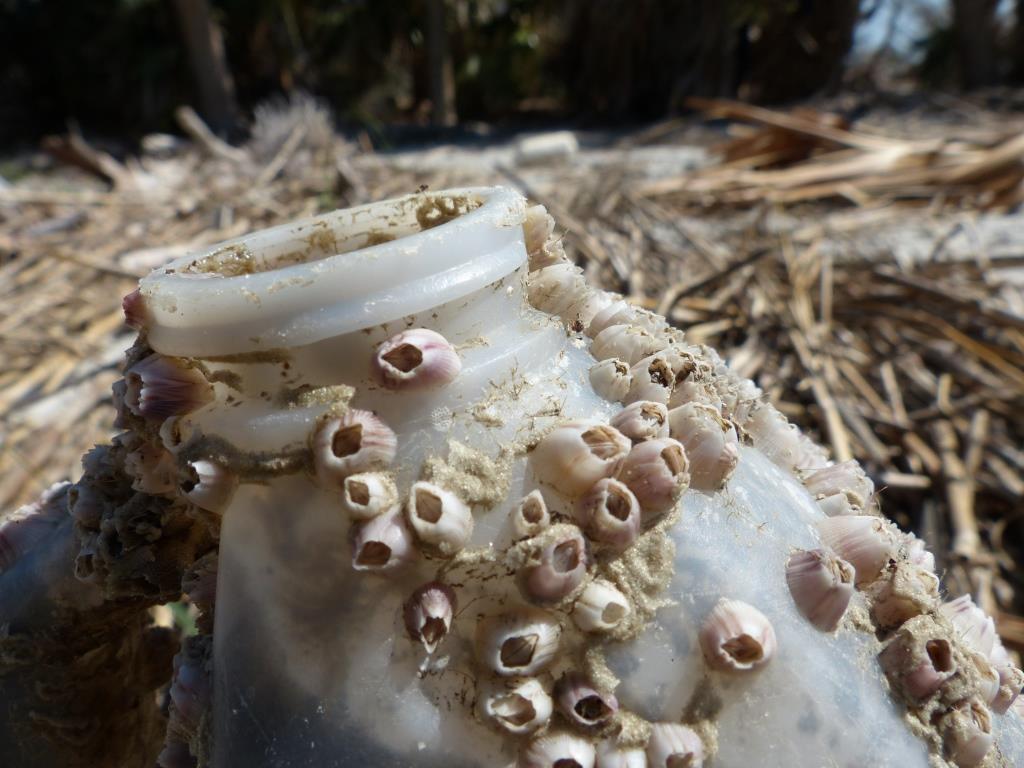
Epibionts on plastic bottle. Darwin would be proud. It’s all about barnacles.

stcatsbeachdebris2

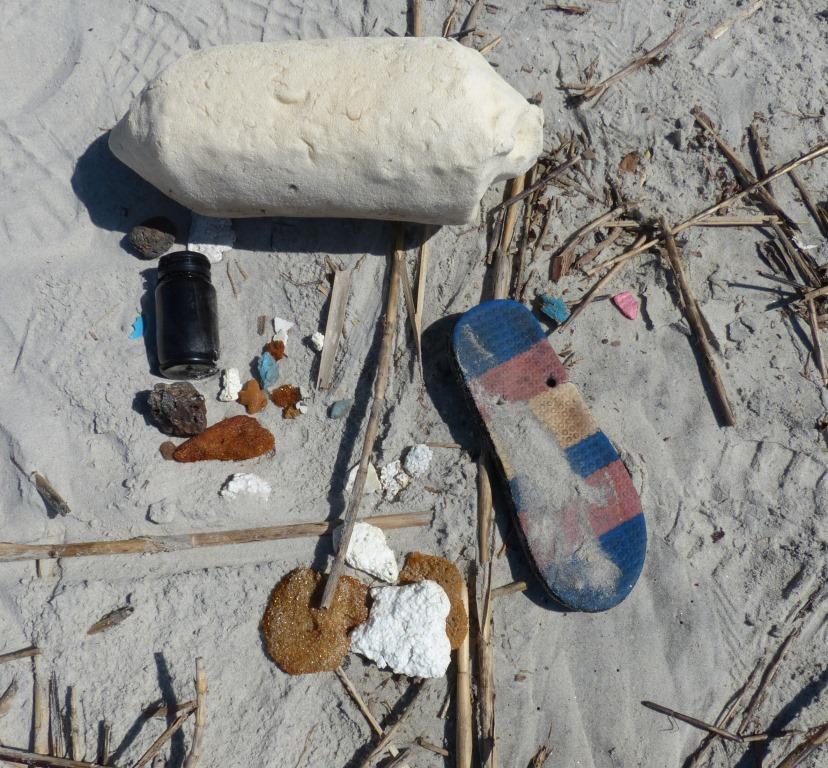
Still life with pill bottle.

stcatsbeachdebris3

Just what the ocean needs, a little more engine oil. Probably drilled from under the ocean. Sustainability is all about closing the circle…

I also made some sound recordings along the beach. The first is made with a hydrophone, a microphone that picks up sounds below the surface of the water. I suspended it in some gentle surf. The second recording is the same surf, but recorded with a regular microphone, in the air, at the top of the beach.

Garlic mustard, when it’s at home

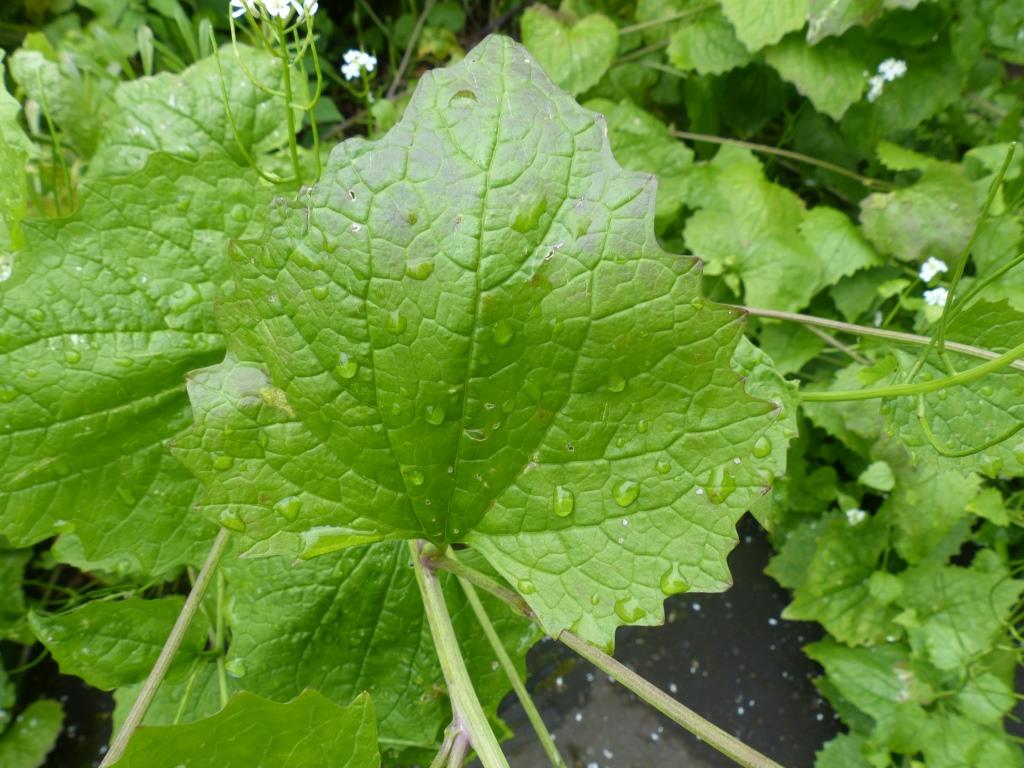
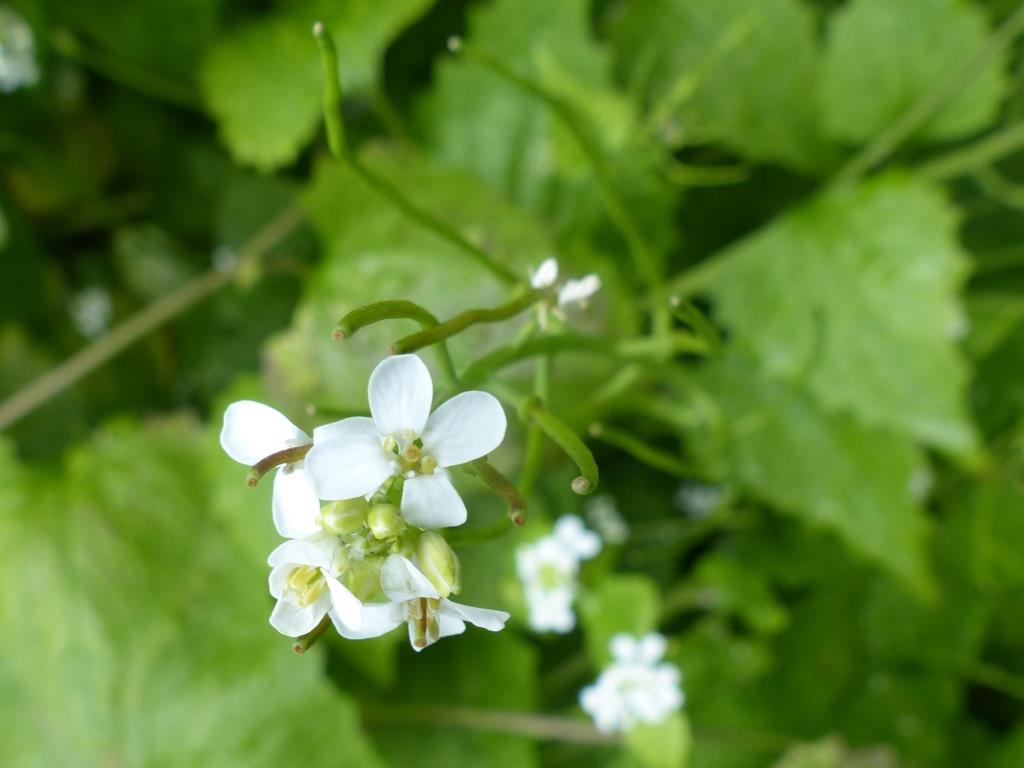
Naturalists from North America will recognize this plant, the maligned, non-native garlic mustard (Alliaria petiolata). I photographed this one in South Queensferry, Scotland. Recognition is likely not the only response to the sight of these leaves and flowers. Hands and elbows may start twitching in anticipation of the pleasure of uprooting the plant. This tugging reflex is organized into gatherings called “pulls” where people mass to yank swaths of the plant from the soil, bag the plants, then consign them to the landfill or fire. Depart from me, you who are cursed, into the eternal fire prepared for the devil and his angels.

garlicmustard

garlicmustard2This vigorous dislike has a good ecological foundation. The plant invades woodlands and smothers native plants, reducing botanical diversity. Chemical weapons are used in this process: garlic mustard releases chemicals into the soil that sap the vitality of surrounding plants. These chemicals act by suppressing the germination and growth of mycorrhizal fungi whose mutualistic relationship with plant roots helps many forest plants to grow successfully.

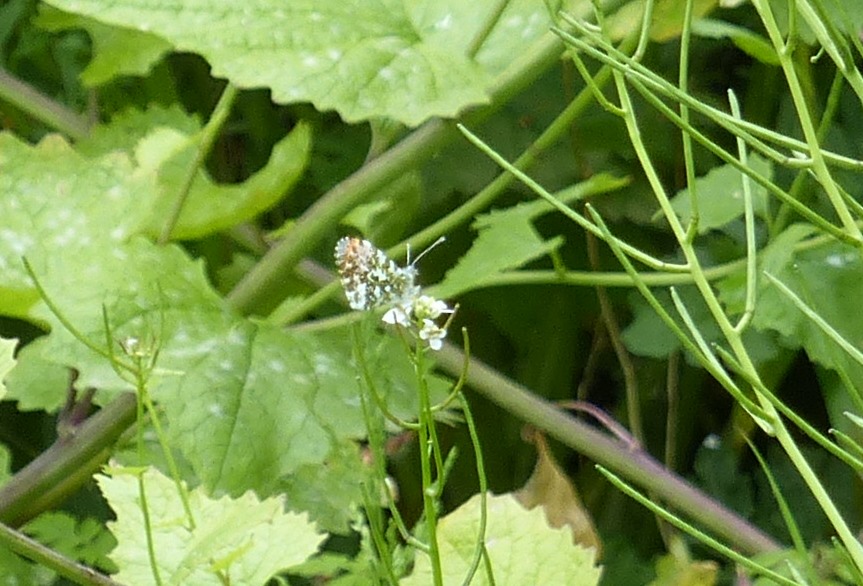
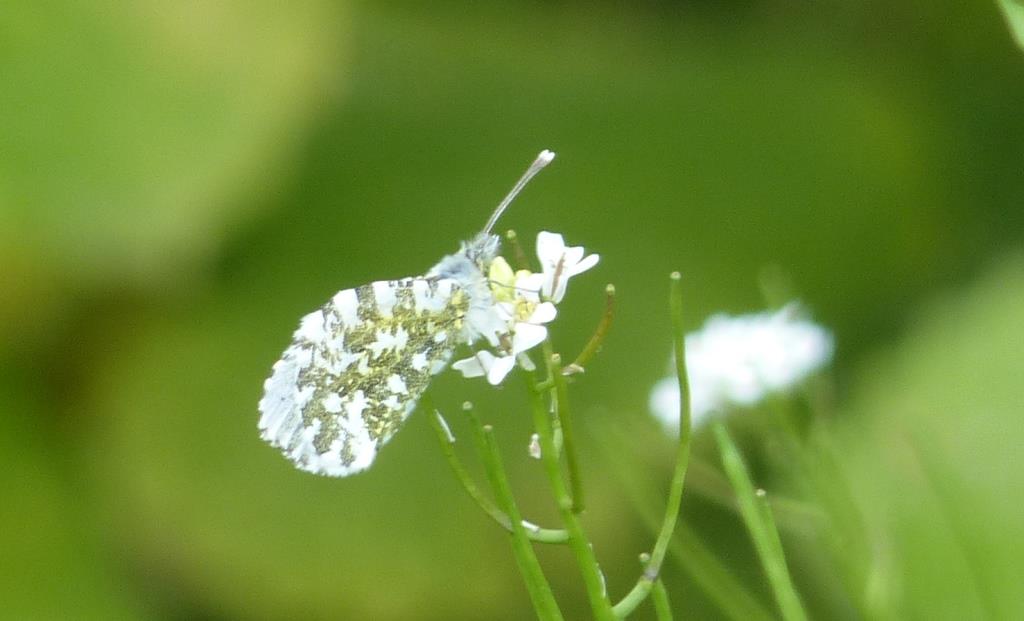
In the UK, where garlic mustard is native, the species is known as Jack-in-the-hedge and is fairly common in damp hedgerows and field edges. Unlike their American counterparts, local naturalists esteem the plant for its role as the host plant for caterpillars of several native butterflies. The orange-tip (Anthocharis cardamines) is the most well-known of these. This conspicuous white butterfly with bright orange wing tips often loiters in patches of Jack-in-the-hedge. The green-veined white (Pieris napi) is another species that uses the plant as a primary host for its caterpillars. The small white (Pieris rapae) — sometimes known as the “cabbage white” — will lay its eggs on Jack-in-the-hedge when it can’t find a gardener’s cabbage or broccoli.

In North American, the plant’s relationship with butterflies is not so nurturing. The West Virginia white butterfly (Pieris virginiensis) normally lays its eggs on native toothwort (Dentaria), but the female butterflies are also attracted to garlic mustard. Unfortunately for the caterpillars of these fooled females, the novel chemical mixture in garlic mustard prevents the youngsters from growing. The plant is therefore an ecological trap: drawing in butterflies with the promise of good food, then killing them.

This confused tale has its origins in the close family ties among the species involved. Toothwort and garlic mustard both belong to the family Brassicaceae. North American butterflies are drawn to the presumably familiar scent of the import. But family resemblance only goes so far. American butterflies have not evolved the particularities of biochemical detoxification needed to feed on garlic mustard, whereas their European kin in the same subfamily of butterflies (Pierinae) have mastered these mechanisms. Whether evolution will be fast enough to allow the Americans to adapt remains to be seen.

It doesn’t help that butterflies in Bible Belt states are kept in the dark about natural selection, giving the missionary mustards a boost in their colonial quest.

Orange-tip butterfly, male, on Jack-in-the-hedge. South Queensferry, Scotland.

Orange-tip butterfly, male, on Jack-in-the-hedge. South Queensferry, Scotland.

Orange-tip butterfly, female. South Queensferry, Scotland.

Orange-tip butterfly, female. South Queensferry, Scotland.

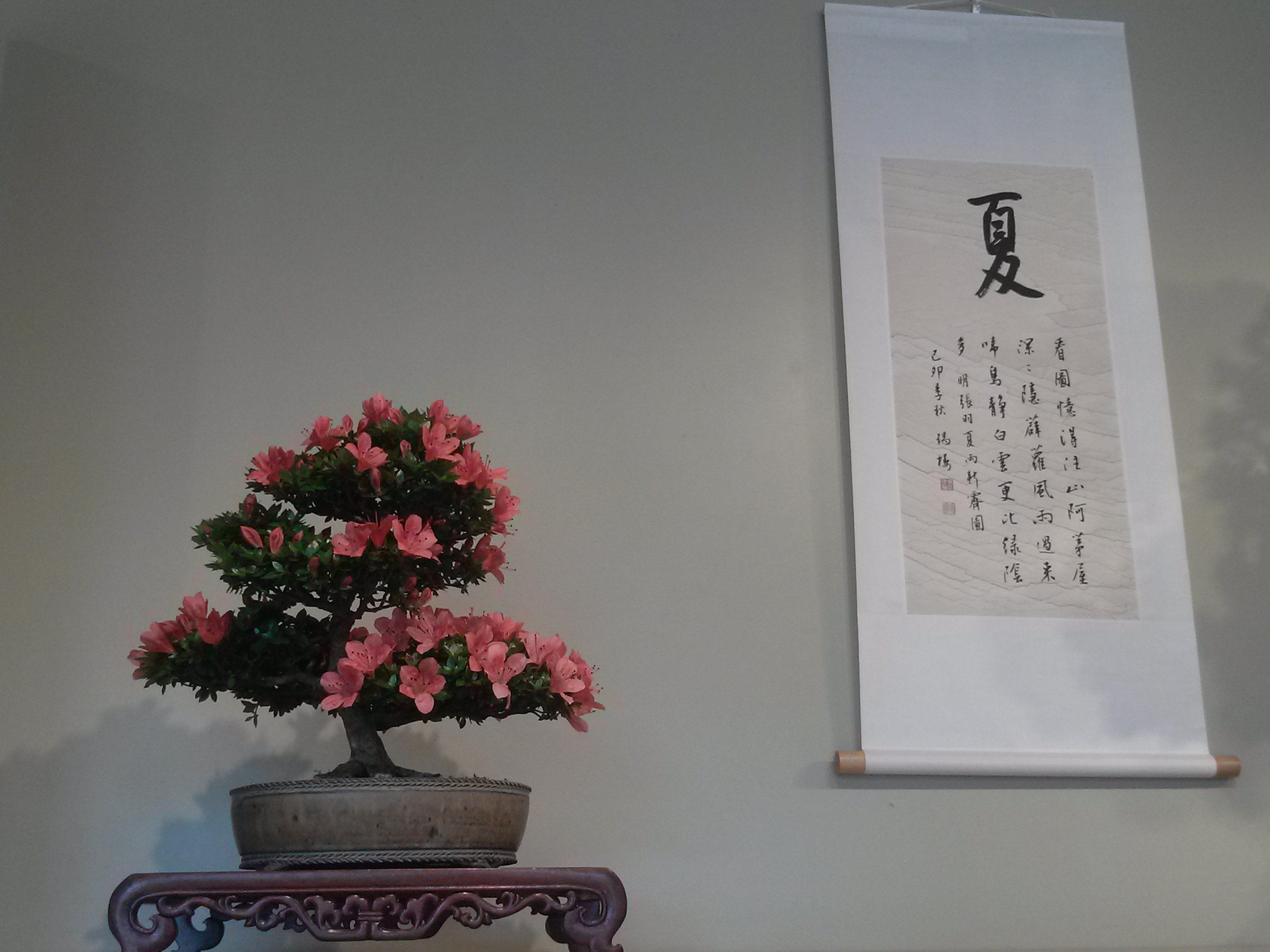
Satsuki bonsai

image

“Satsuki” bonsai at the National Bonsai Collection in Washington, DC.

These small trees (Rhododendron indicum) are native to Japan and grow  just a few feet tall in the wild. They are cultivated for their prolific blooms and tolerance of pruning. They make gorgeous bonsai and the National Arboretum has several in full bloom. If you’re in the DC area, I recommend a visit. The exhibit closes on June 2. Of course, the rest of the bonsai collection is also looking great as the trees enjoy the early summer rains.

wpid-img774.jpgThe contrast between the quiet, organized art in the collection and the immediate surroundings of the National Arboretum is striking. Large encampments of homeless people crowd below interstate underpasses and the mentally ill shuffle down buckled sidewalks, talking to no-one and everyone.

Beauty and brokenness. A dissonance that seems particularly painful so close to Washington’s power and wealth.

Hear this and tremble, carpenters, barn-dwellers, and other lovers of naked wood


The sound of a female carpenter bee (Xylocopa virginica, the “Virginia wood-cutter”) chewing wood fibers at the end of her tunnel inside a piece of exposed wood in a barn. She’s chewing away with her sharp mandibles, making a tubular nest for her eggs. She’ll provision these with nectar and pollen, giving the young a well-protected place to start life. The mother bees overwinter in their tunnels and their offspring often bore new holes close to the natal hole. So a cluster of bees on a single board or in one part of a barn is often a family group. Here’s a photo from 2012 of a modest-sized tunnel. These borings can get much bigger, hollowing entire pieces of wood.

Surely the invention of the saw opened huge new opportunities for this species of wood chewer. Before humans came along, the bees had to wait for branches to crack open or for wood to expose itself in other ways. Carpenter bees must regard humans as evidence of intelligent design: we’re a species whose only purpose is to erect grand temples of dimensional lumber for carpenter bees. Amen, sisters. Teleology is a fine thing.

What Pope Francis might see in the backstreets of Bethlehem

The Pope is visiting Bethlehem tomorrow, holding a Mass in Manger Square and meeting with Palestinian officials. He’ll also meet with some Palestinian refugees.

It is striking to consider what Jesus would be born into today. (Click on the images to see the full picture and caption, then press Esc to return to the blog.)


The main refugee camp lies adjacent to the town of Bethlehem and, like other Palestinian camps, has been in existence since just after 1948 when Palestinians were displaced by the creation of the State of Israel. The United Nations Relief and Works Agency for Palestine Refugees (UNRWA) is charged by the UN to care for health, education and social services of “persons whose normal place of residence was Palestine during the period 1 June 1946 to 15 May 1948, and who lost both home and means of livelihood as a result of the 1948 conflict.” There are about 5 million refugees, located in the West Bank, Gaza, Jordan, and Syria. Many refugees seek, so far to no avail, the “right of return” to their former homes. Some families still hold the keys to their former homes and the rusted old key has become a symbol of what they have lost and what they hope to regain. Of course, current Israeli policy does not favor any such outcome. Instead, Palestinian land continues to be taken by settlements and the snaking path of the separation wall.

No room at the Inn. The modern equivalent of the manger is a UN refugee camp nestled against a concrete wall studded with gun towers. An unlikely place for a prince of peace to be born. But then again, an animals’ feed trough in a town under Roman occupation was hardly a throne of privilege. It will be interesting to hear what the Pope has to say on these matters.

The long-standing awful track record of the Roman Pontiff (and many, many other Christians) of not treating Jews and Muslims as fellow, equal human beings is well known; pogroms, crusades and genocides are part of the Christian legacy. That a Pope would visit with some Muslim refugees, then walk in the Holocaust memorial (Yad Vashem), a place that makes clear the complicity of previous Christian leadership in the Shoah, and finally honor a Zionist leader (Theodor Herzl) whom previous Popes had refused to support is perhaps a small sign of the Vatican trying to acknowledge past wrongs and find a more peaceful future.